
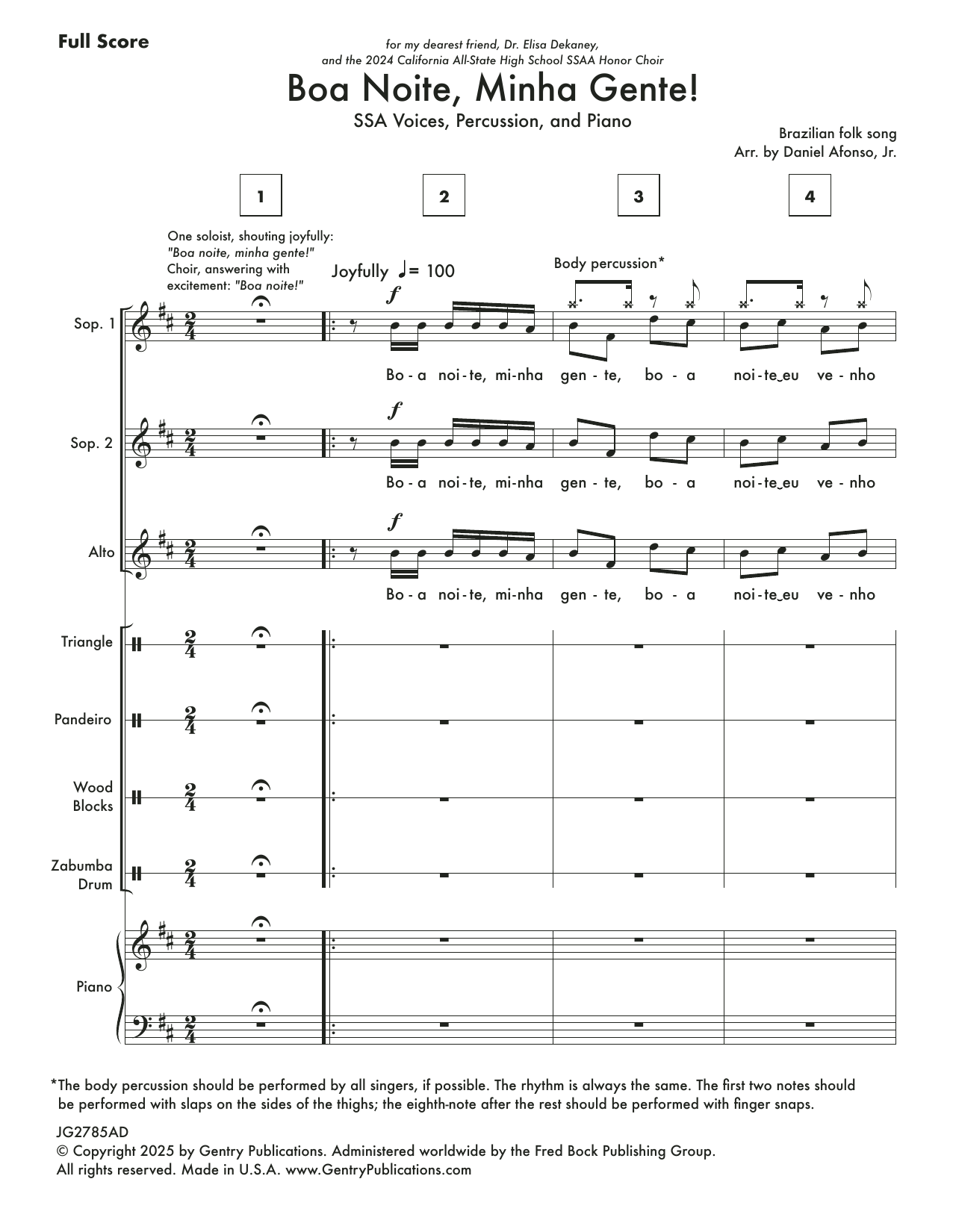

Boa Noite, Minha Gente: Choral Instrumental Pak
Arranged by Daniel Afonso Jr.
Item: 35-PK01615483
$35.00
Pickup currently not available
Buy Extra Parts (Digital PDF Download)
| Product | Price | Quantity |
|---|---|---|
| Boa Noite, Minha Gente - Full Score: Choral Instrumental Pak | $7.00 | |
| Boa Noite, Minha Gente - Percussion: Choral Instrumental Pak | $7.00 |
Parts Added to Cart!
Description
"Boa Noite, Minha Gente" is an SSA choral arrangement by Daniel Afonso, inspired by the baianá, a vibrant folk celebration from Brazil's northeastern state of Alagoas. Traditionally led by women in colorful skirts, the baianá blends elements from Brazilian traditions like pastoril, maracatu, and congo, with lively rhythms supported by instruments such as the zabumba drum and wooden whistles. Based on the folk song "Boa noite, seu Rufino," this piece offers treble choirs an engaging melody and infectious rhythmic groove, making it a captivating choice for both singers and audiences.


Boa Noite, Minha Gente: Choral Instrumental Pak isn't in MakeMusic Cloud just yet...but it could be. Let us know you'd like to see it, and you'll help shape what comes next. In the meantime, start a free trial and dive into thousands of interactive titles your students can play along with today.
Request This Title
Tell us you want it.
Start Your Free Trial
Explore everything that's ready to play right now.
Sample Audio
No sample audio found.
Sample Video
No sample videos found.
Additional Details
Publisher:
Hal Leonard
SKU:
35-PK01615483
More about this title
About the Arranger: Daniel Afonso Jr.
Daniel Afonso Jr. brings deep knowledge of Brazilian musical traditions to his choral arrangements, drawing on his understanding of regional folk celebrations and their cultural significance. His work as an arranger centers on making authentic Brazilian music accessible to treble choirs while preserving the rhythmic vitality and character of the source material.
Why we love this
This arrangement captures the infectious energy of a living folk tradition without requiring your singers to navigate complex rhythmic notation or unfamiliar vocal techniques. The SSA voicing gives every voice a melodic role, and the accompanying instrumental parts translate the zabumba and wooden whistle textures into something your ensemble can actually produce.
What to expect
Bright and celebratory, with the pulse of a street celebration. The arrangement carries the warmth of a regional Brazilian tradition while maintaining enough accessibility that your singers can feel the joy without being overwhelmed by technical demands.
Who it's for
SSA choirs seeking repertoire that connects to world music traditions and offers rhythmic engagement beyond standard concert repertoire. This works equally well for high school treble choirs building cultural awareness and intermediate community choirs looking for music with infectious groove.
How to get the most out of it
- Lock in the rhythmic groove early in rehearsal by having your ensemble clap or body-percussion the zabumba pattern before adding vocals. This grounds the piece and makes the syncopation feel natural rather than imposed.
- Lean into the baianá spirit by encouraging singers to connect with the celebratory, processional character of the dance. The piece thrives on joy and communal energy, not technical precision.
- Balance the melody line so it cuts through the rhythmic accompaniment. In traditional baianá celebrations, the sung line needs to carry over drums and wooden percussion, so your soloists or section leaders should project with confidence.
- If instrumentalists are new to Brazilian rhythms, highlight the relationship between their parts and the vocal line. Hearing how instruments support rather than compete with the melody helps everyone land the style together.
How to use it
Pair this alongside other Latin or world music selections to build a thematic concert around global folk celebrations, or program it as a closing number when you need something that energizes both singers and audience. The accessible vocal writing makes it feasible for spring concert season when rehearsal time is compressed.
Skills your students will build
- Syncopated rhythm reading in a folk music context
- Singing with infectious rhythmic groove and forward motion
- Collaborative singing that honors both melody and accompaniment
- Understanding of Brazilian musical traditions and regional folk celebration