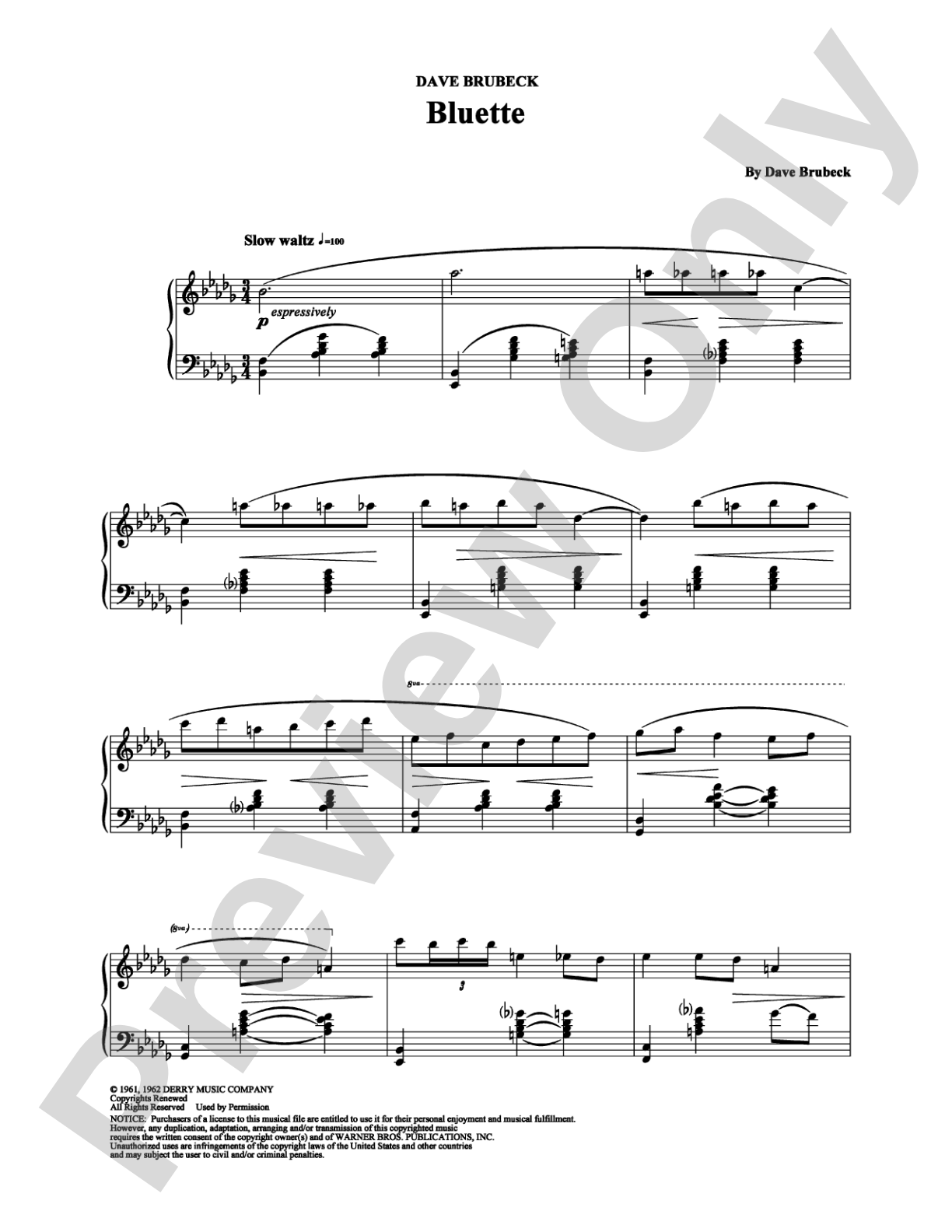
Bluette: Piano Digital Sheet Music

Bluette: Piano Digital Sheet Music

Dave Brubeck

Item: 00-PS-0000878

Digital Download
$3.99
Description

Bluette: Piano Digital Sheet Music isn't in MakeMusic Cloud just yet...but it could be. Let us know you'd like to see it, and you'll help shape what comes next. In the meantime, start a free trial and dive into thousands of interactive titles your students can play along with today.

Sample Audio
No sample audio found.
Sample Video
Additional Details
SKU: 00-PS-0000878

More about this title

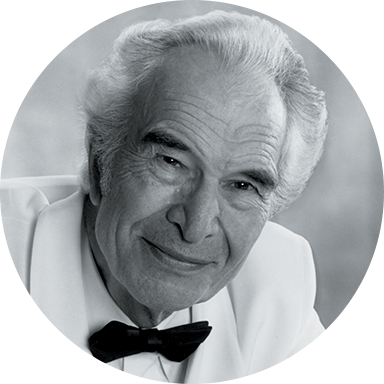
About the Artist: Dave Brubeck

Dave Brubeck

Dave Brubeck was a pianist and composer who shaped modern jazz through both improvisation and rigorous classical training. After studying with Darius Milhaud at Mills College following World War II, he synthesized jazz vocabulary with formal compositional technique, creating works that moved seamlessly between the concert hall and the jazz club. His 1959 album "Time Out" became the first jazz record to sell over a million copies, and the standard "Take Five" remains one of jazz's most recognizable compositions.

Beyond his recordings and performances, Brubeck was a cultural pioneer who actively broke racial barriers in mid-20th-century America. His compositional output extended far beyond jazz into choral music, orchestral works, and large-scale pieces for chorus and orchestra, including the widely performed mass "To Hope!" His contributions earned him the Grammy Lifetime Achievement Award, the Presidential Medal of the Arts, and induction into the American Classical Music Hall of Fame in 2003.

Why we love this

Brubeck's piano writing balances jazz sophistication with genuine accessibility. This piece captures the lyrical, introspective side of his compositional voice without requiring advanced harmonic analysis to appreciate, making it engaging for pianists developing their jazz vocabulary and for audiences hearing Brubeck beyond the famous hits.

What to expect

Bluette unfolds with the quiet confidence of a late-night conversation. The piece has an introspective quality, balancing moments of melodic directness with harmonically sophisticated passages that reward close listening without becoming intellectually exhausting.

Who it's for

Pianists with intermediate to advanced jazz literacy who want to expand beyond standard stride or bebop idioms into composed jazz pieces. Teachers seeking authentic Brubeck material for students serious about jazz performance and composition.

How to get the most out of it

  • Pay close attention to Brubeck's articulation markings; his jazz pieces often use staccato and legato to create rhythmic conversation between the hands, not just to indicate touch.
  • Approach chord voicings as shapes rather than trying to resolve them through traditional harmonic functions; this reflects Brubeck's compositional approach of layering colors.
  • Let space breathe in the piece. Brubeck often leaves room for silence, which gives the melody room to land and invites the listener in.

How to use it

Slot this into a jazz piano recital as a centerpiece that demonstrates compositional craft alongside performance skill. It also works well in an educational concert focused on jazz standards and composed jazz, bridging repertoire for audiences familiar with Brubeck's commercial recordings.

Skills your students will build

  • Interpreting jazz articulation and phrasing in notated scores
  • Navigating non-functional harmony and extended chord voicings
  • Balancing composed precision with jazz-influenced flexibility in tempo and dynamics
  • Understanding Brubeck's compositional voice and approach to melody and structure

You May Also Like