
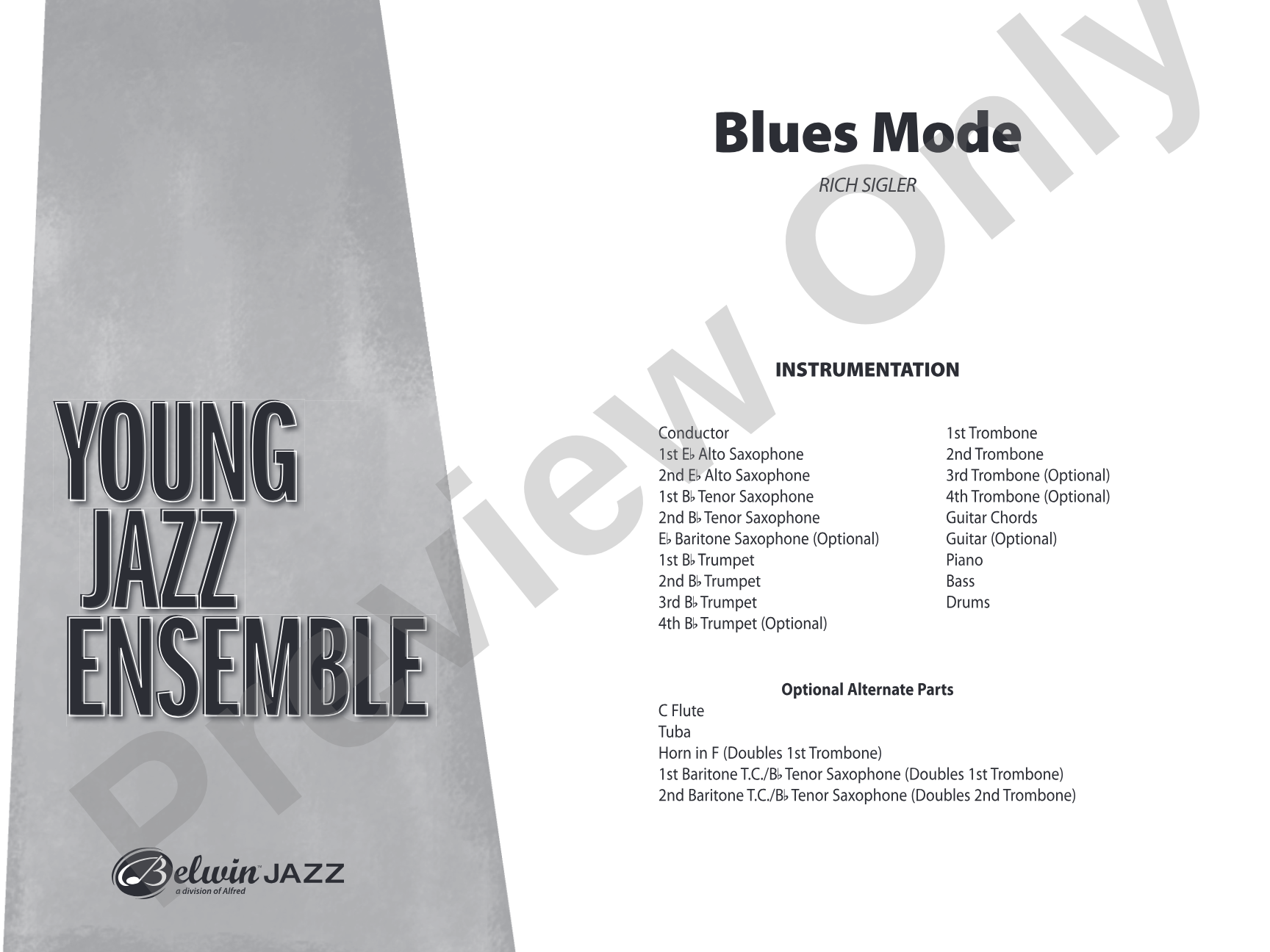
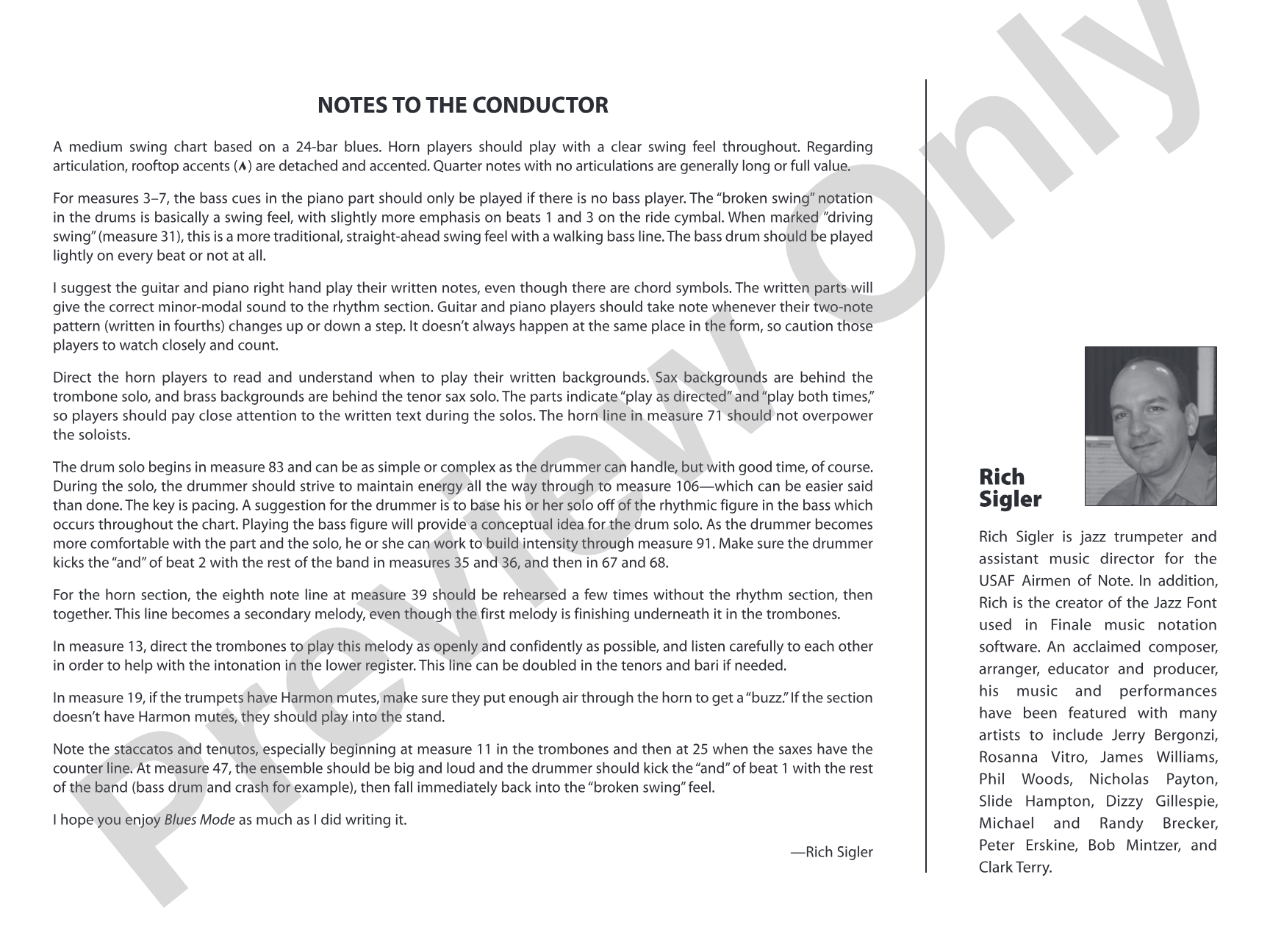
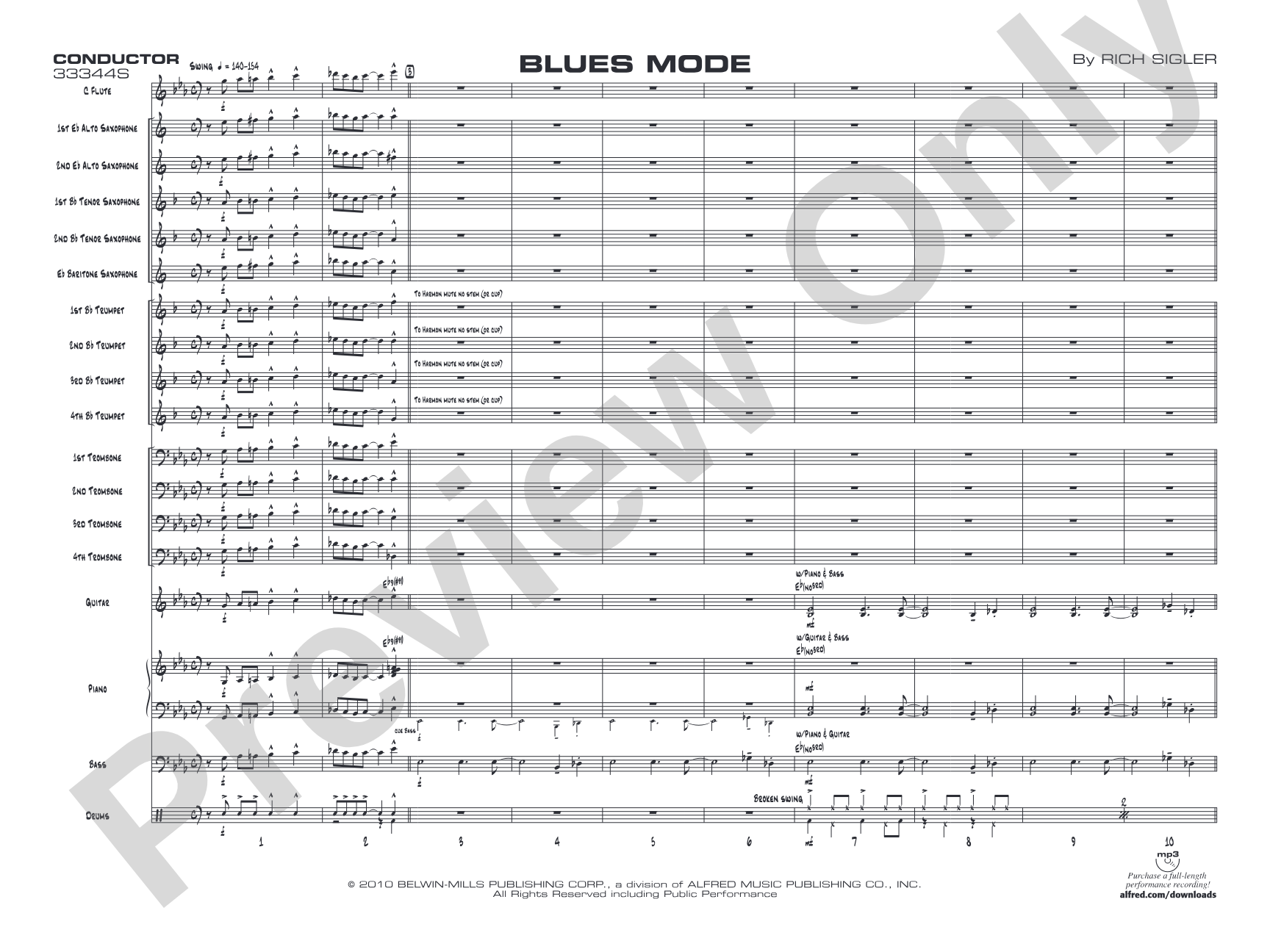
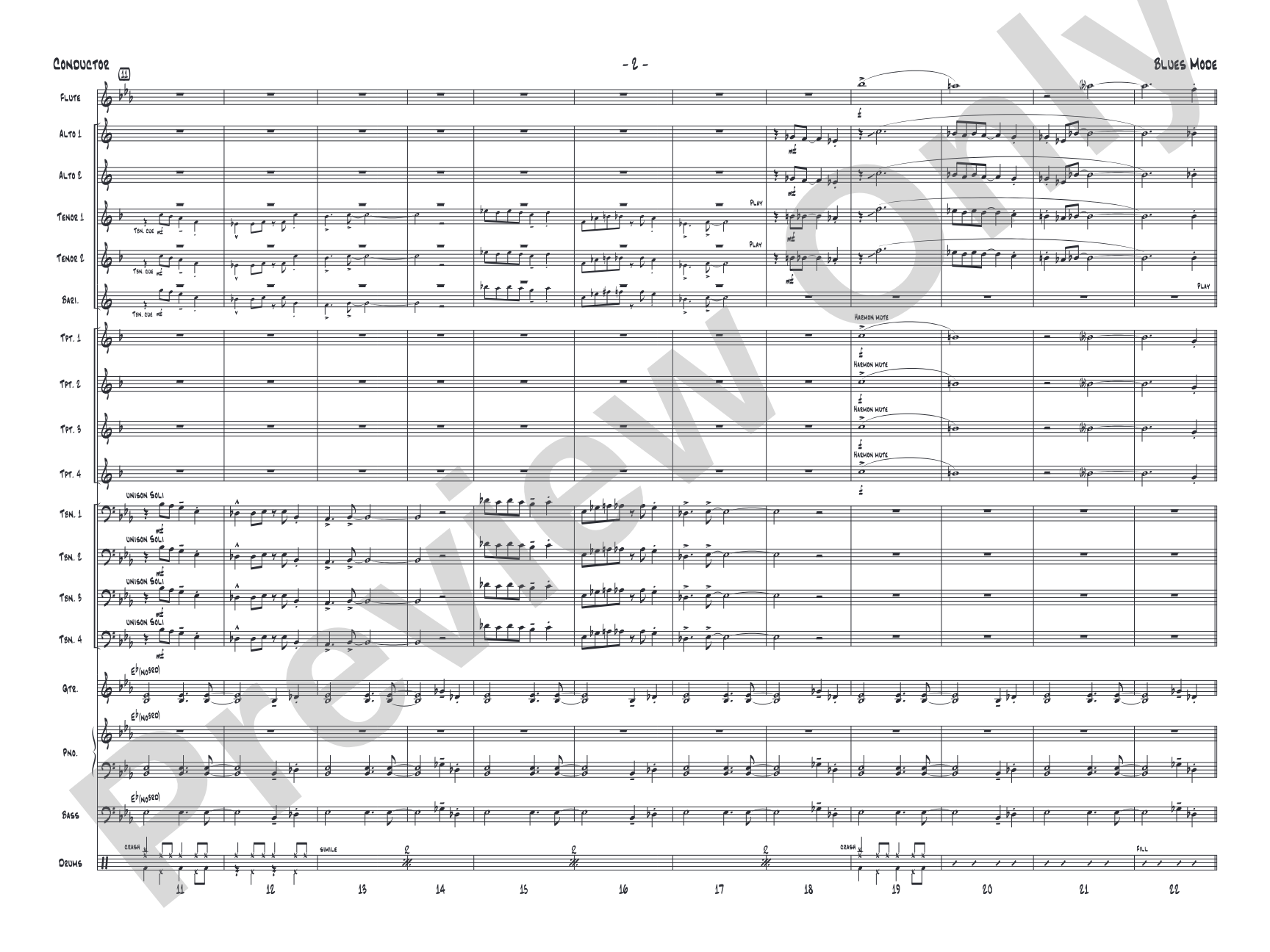
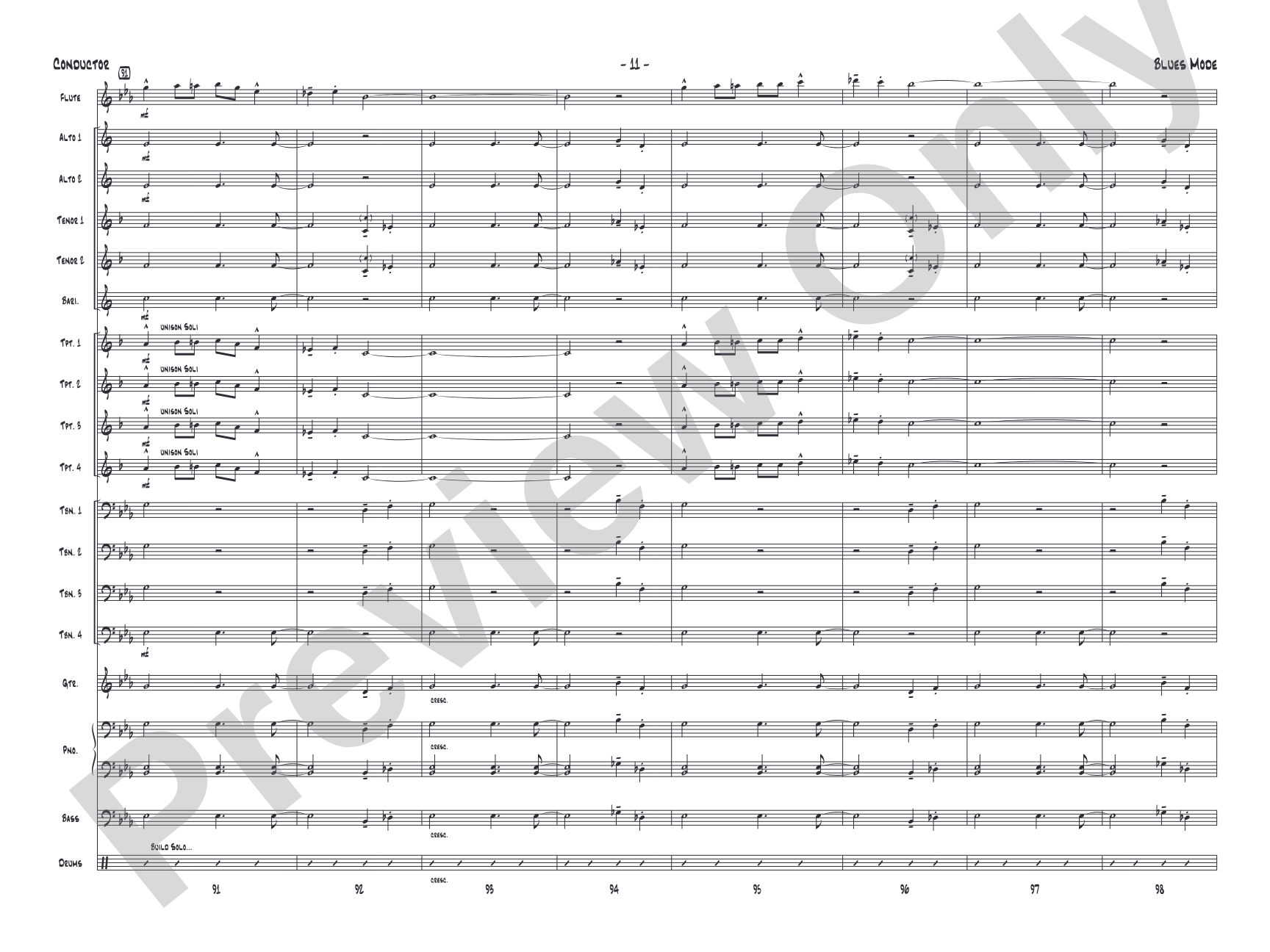
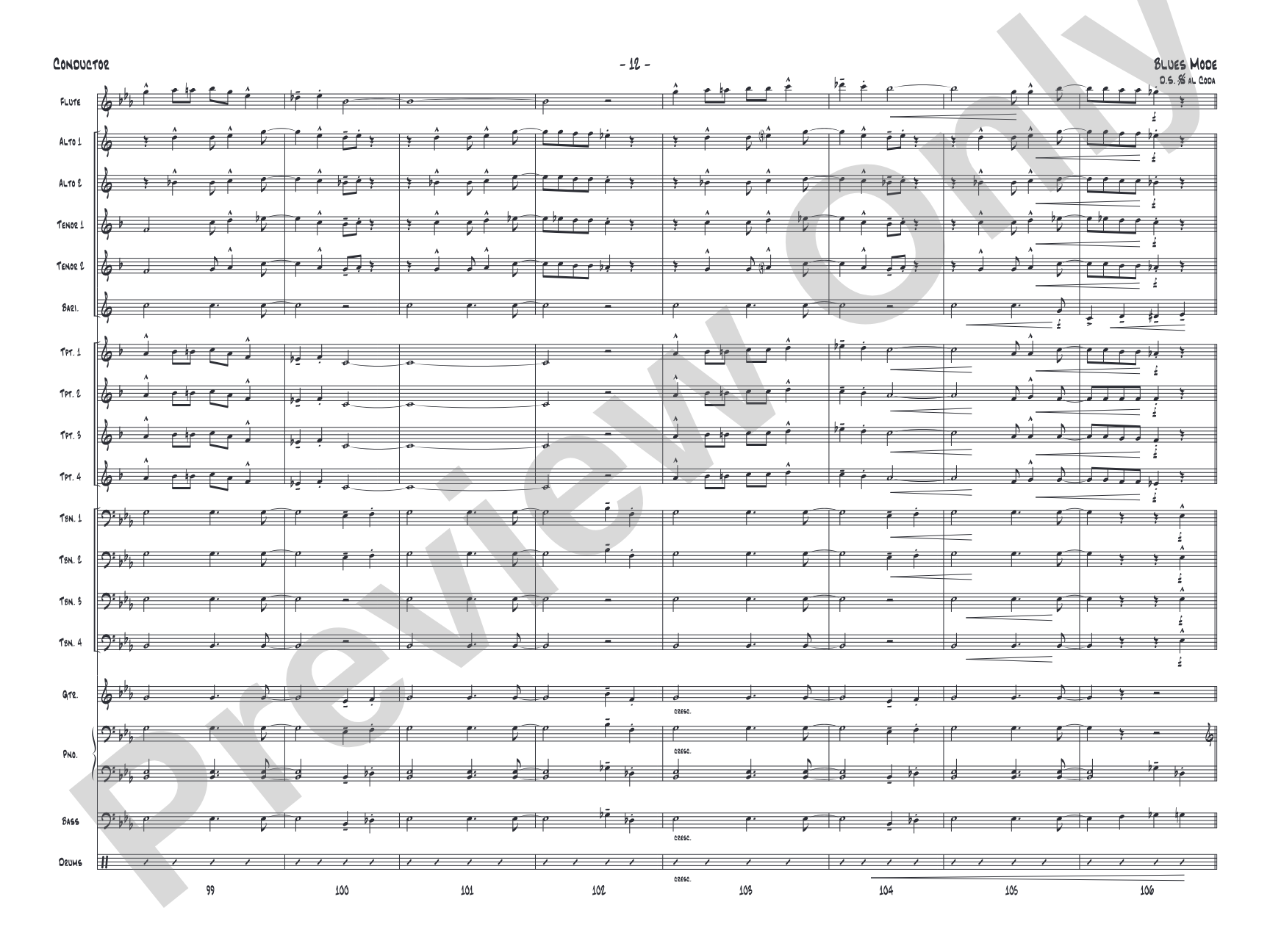
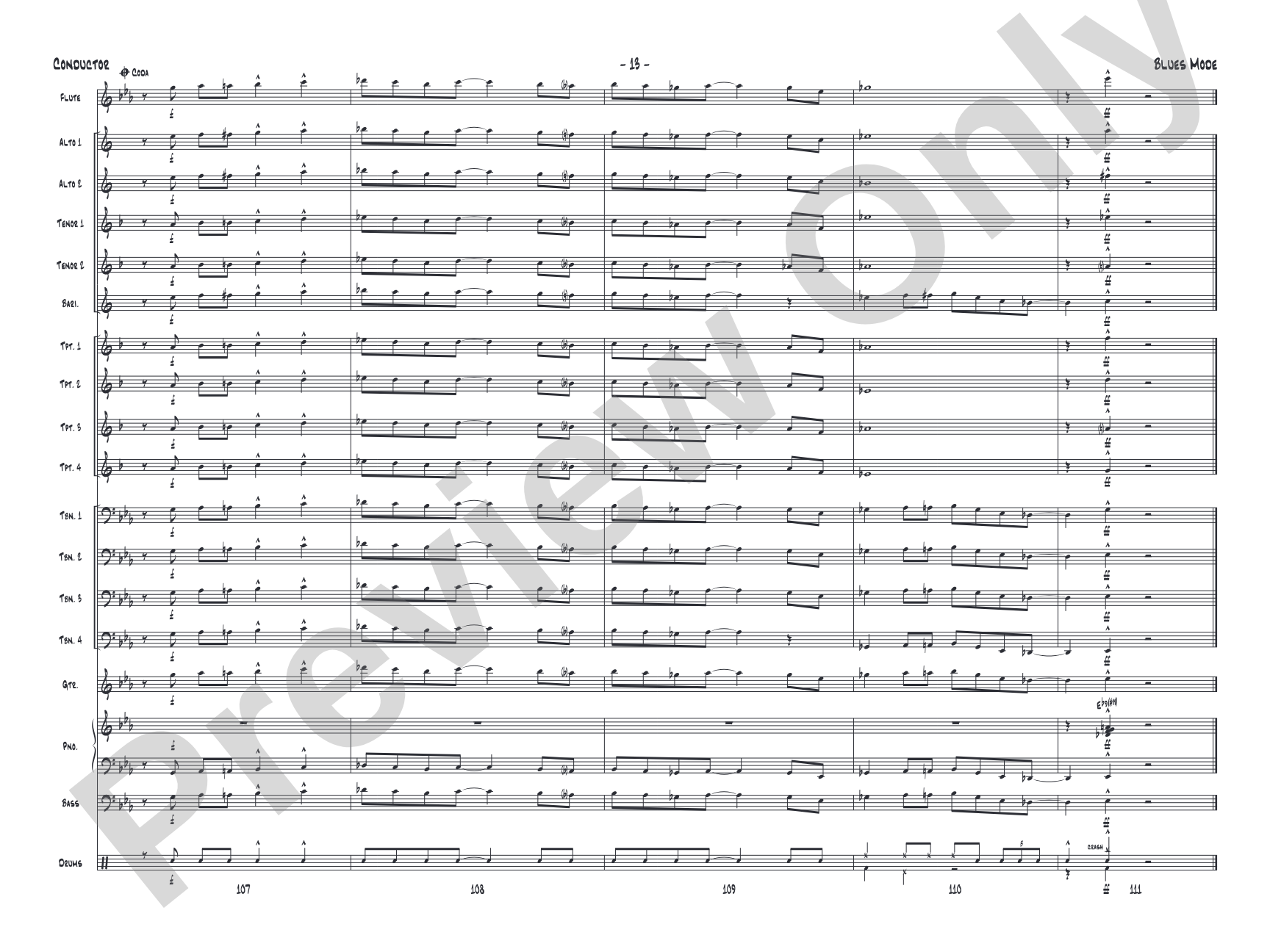

Blues Mode: Jazz Ensemble Conductor Score & Parts
By Rich Sigler
Grade: 2 (Medium Easy)
Item: 00-PK-0006924

$44.00
Pickup currently not available
Buy Extra Parts (Digital PDF Download)
| Product | Price | Quantity |
|---|---|---|
| Blues Mode: Score | $8.00 | |
| Blues Mode: E-flat Alto Saxophone | $3.00 | |
| Blues Mode: 2nd E-flat Alto Saxophone | $3.00 | |
| Blues Mode: B-flat Tenor Saxophone | $3.00 | |
| Blues Mode: 2nd B-flat Tenor Saxophone | $3.00 | |
| Blues Mode: E-flat Baritone Saxophone | $3.00 | |
| Blues Mode: 1st B-flat Trumpet | $3.00 | |
| Blues Mode: 2nd B-flat Trumpet | $3.00 | |
| Blues Mode: 3rd B-flat Trumpet | $3.00 | |
| Blues Mode: 4th B-flat Trumpet | $3.00 | |
| Blues Mode: 1st Trombone | $3.00 | |
| Blues Mode: 2nd Trombone | $3.00 | |
| Blues Mode: 3rd Trombone | $3.00 | |
| Blues Mode: 4th Trombone | $3.00 | |
| Blues Mode: Guitar Chords | $3.00 | |
| Blues Mode: Guitar | $3.00 | |
| Blues Mode: Piano Accompaniment | $3.00 | |
| Blues Mode: String Bass | $3.00 | |
| Blues Mode: Drums | $3.00 | |
| Blues Mode: Flute | $3.00 | |
| Blues Mode: Tuba | $3.00 | |
| Blues Mode: 1st F Horn | $3.00 | |
| Blues Mode: Baritone T.C. | $3.00 | |
| Blues Mode: 2nd Baritone T.C. | $3.00 |
Parts Added to Cart!
Related Items
Blues Mode: Jazz Ensemble Conductor Score |
$8.00
|
View |
Description
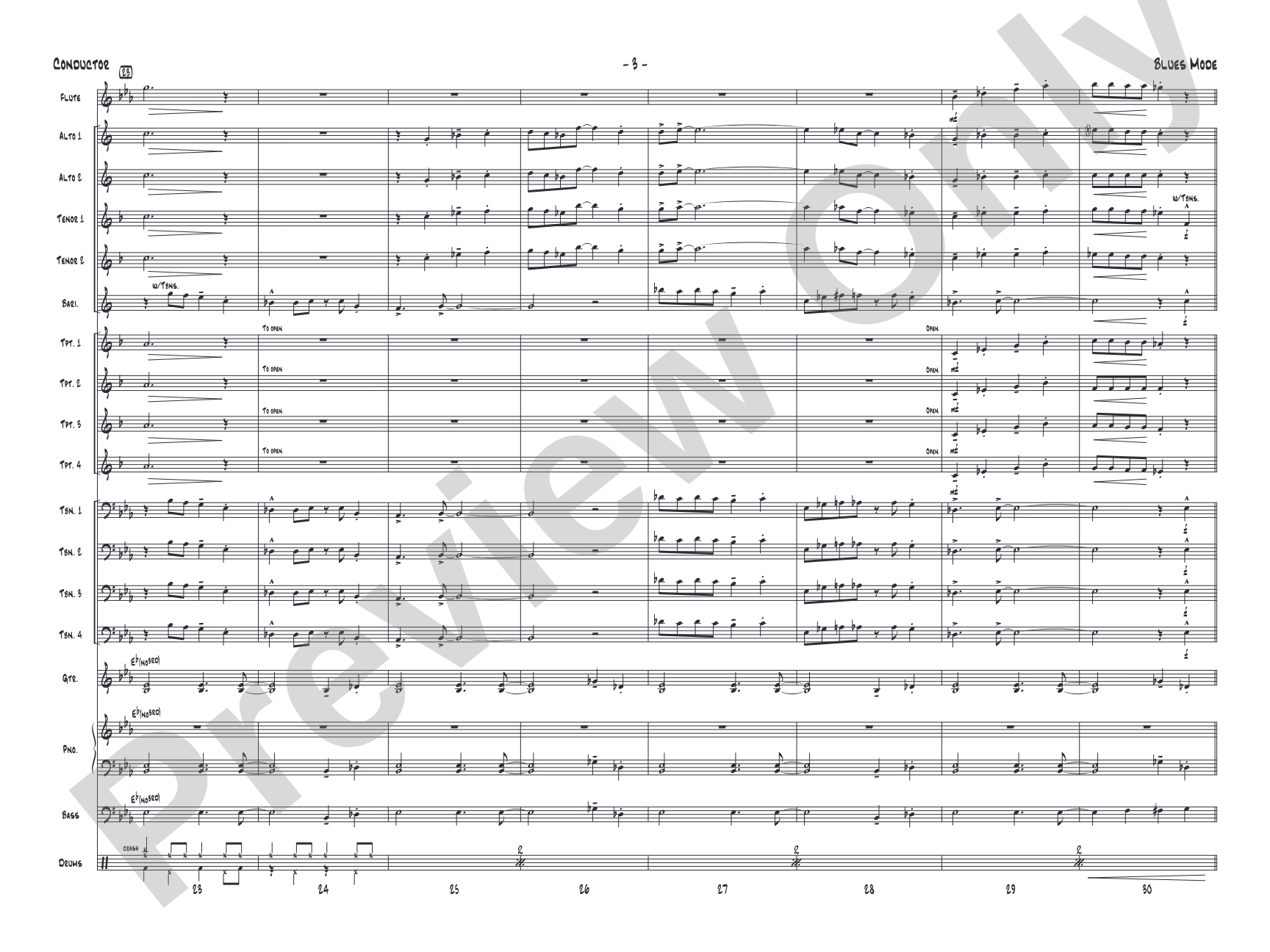
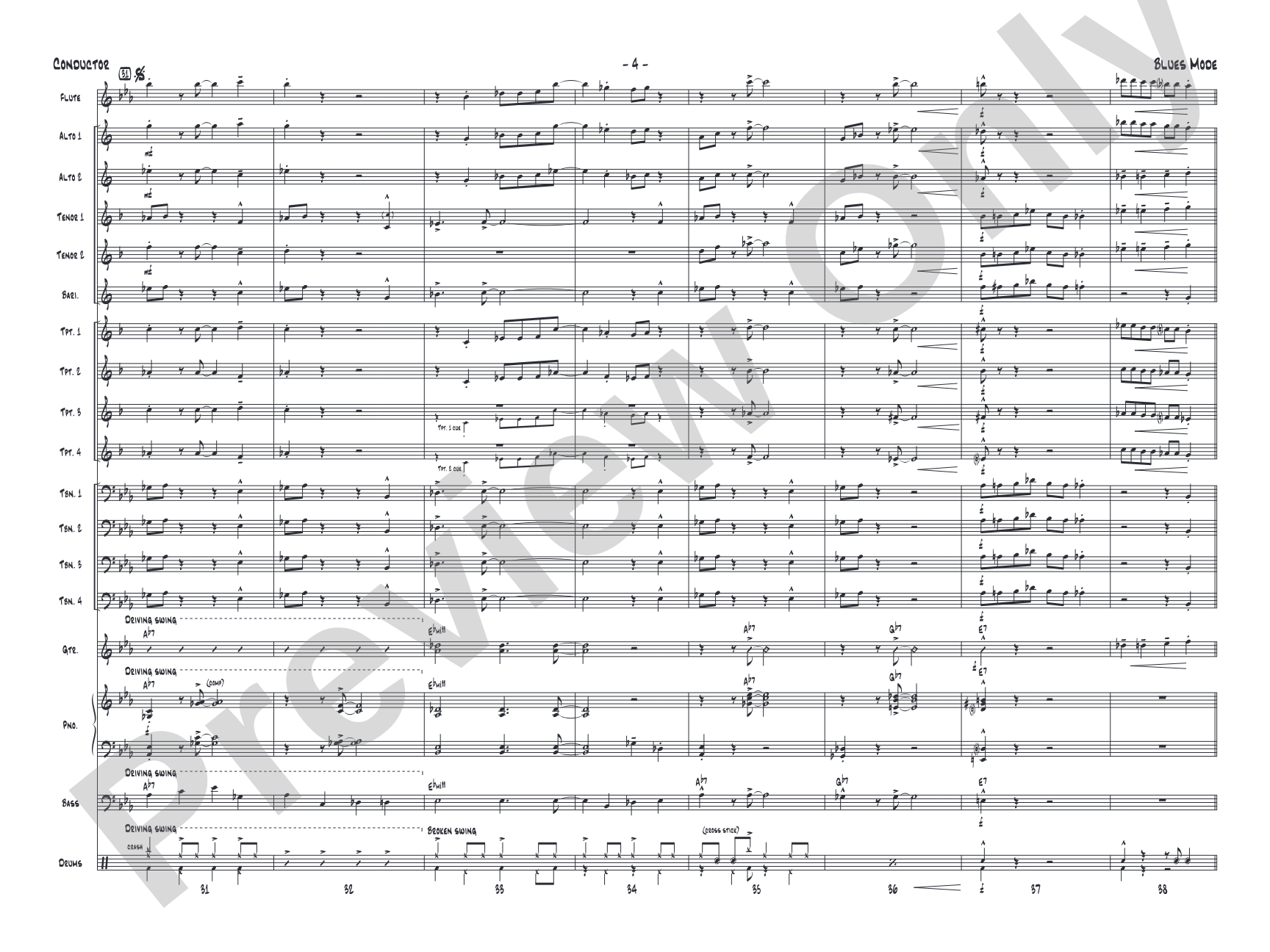
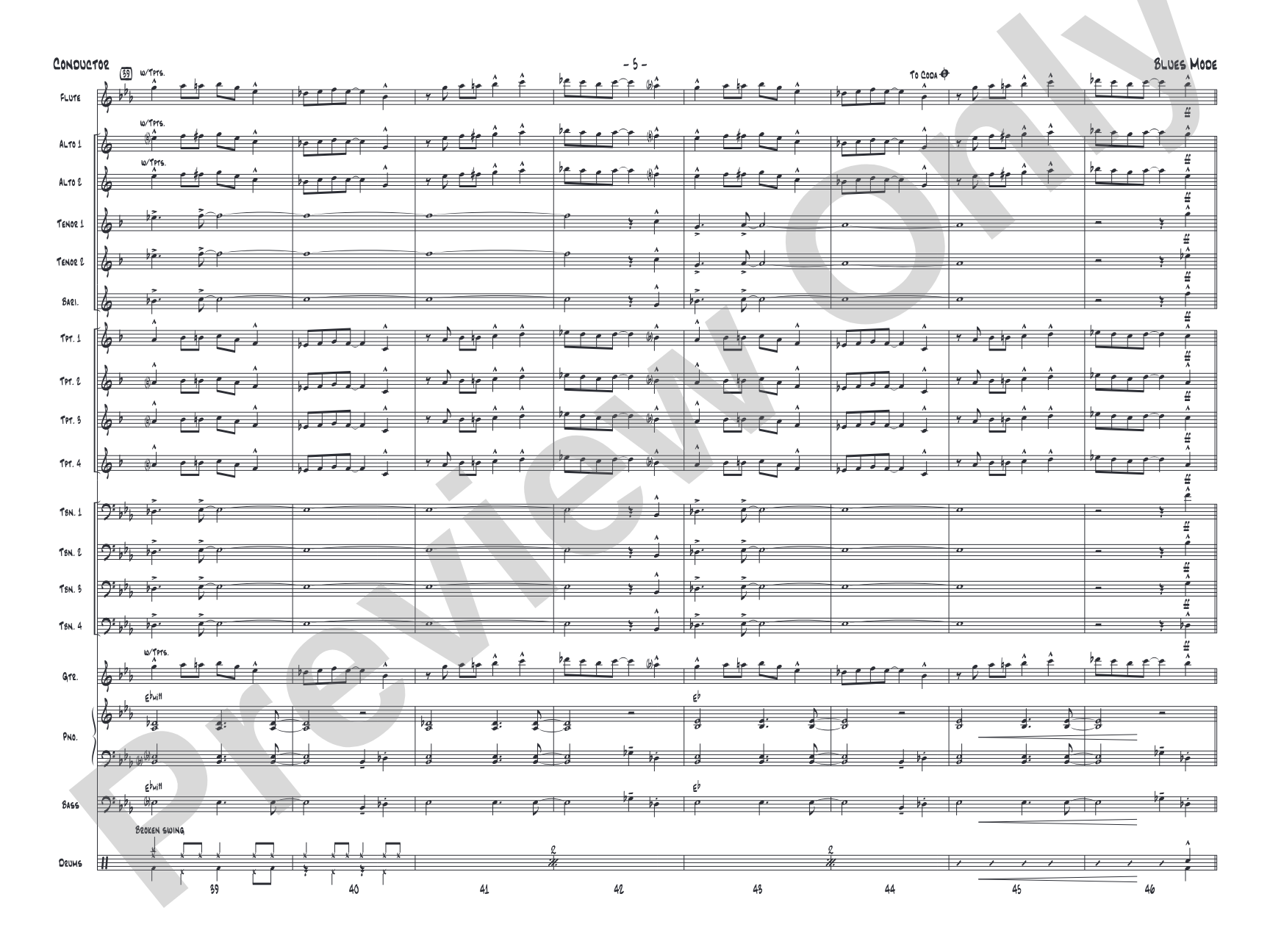
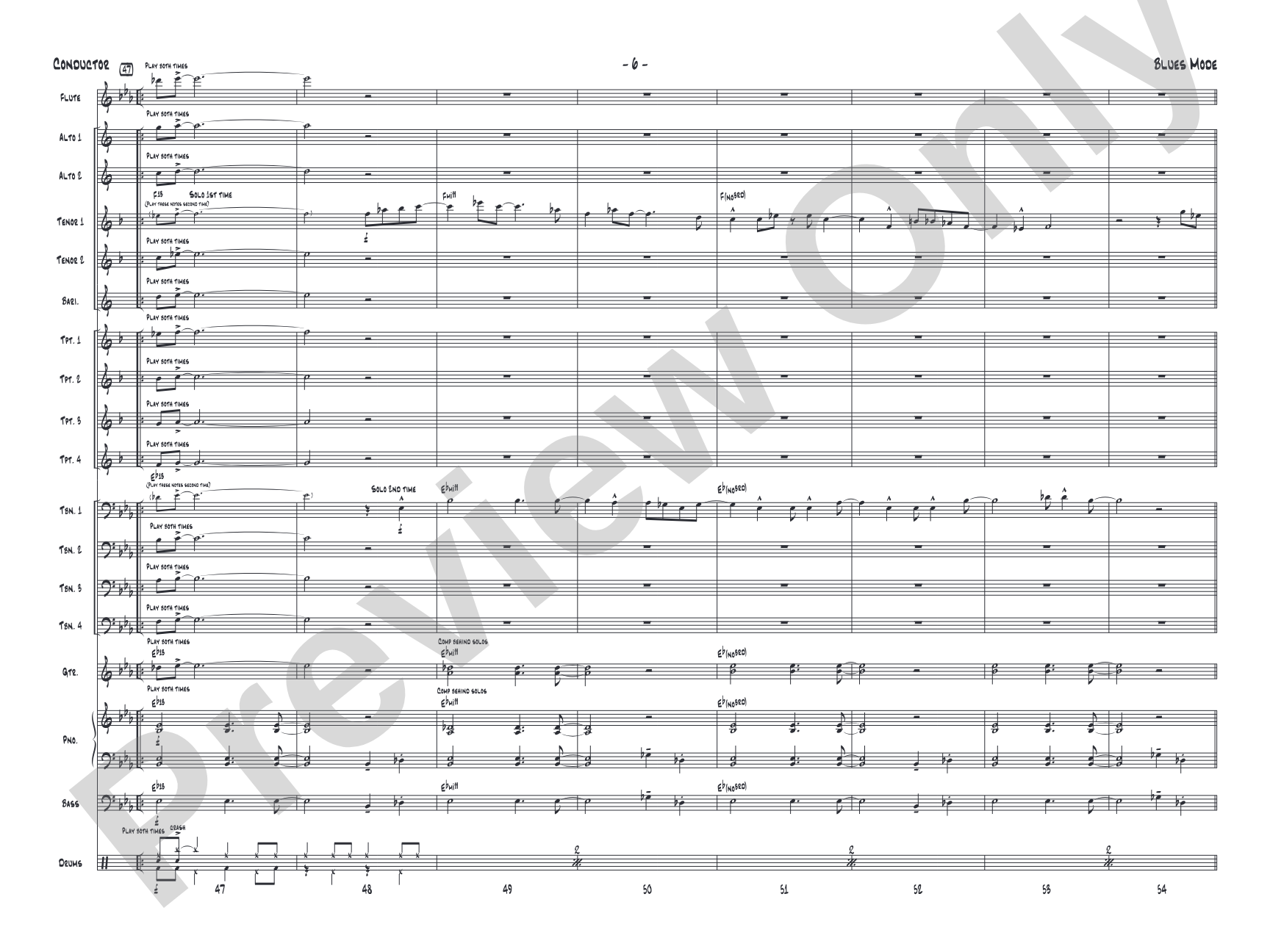
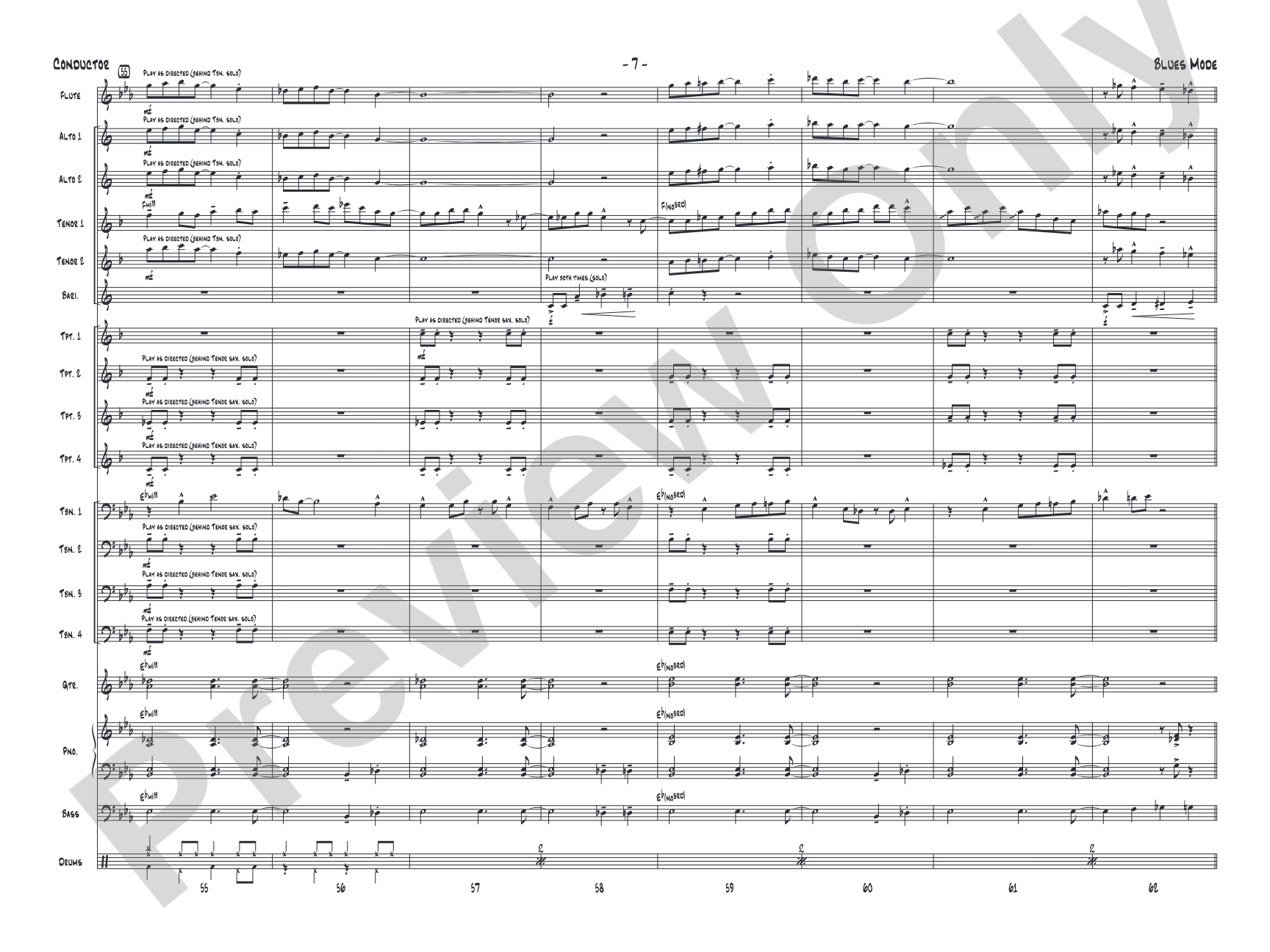
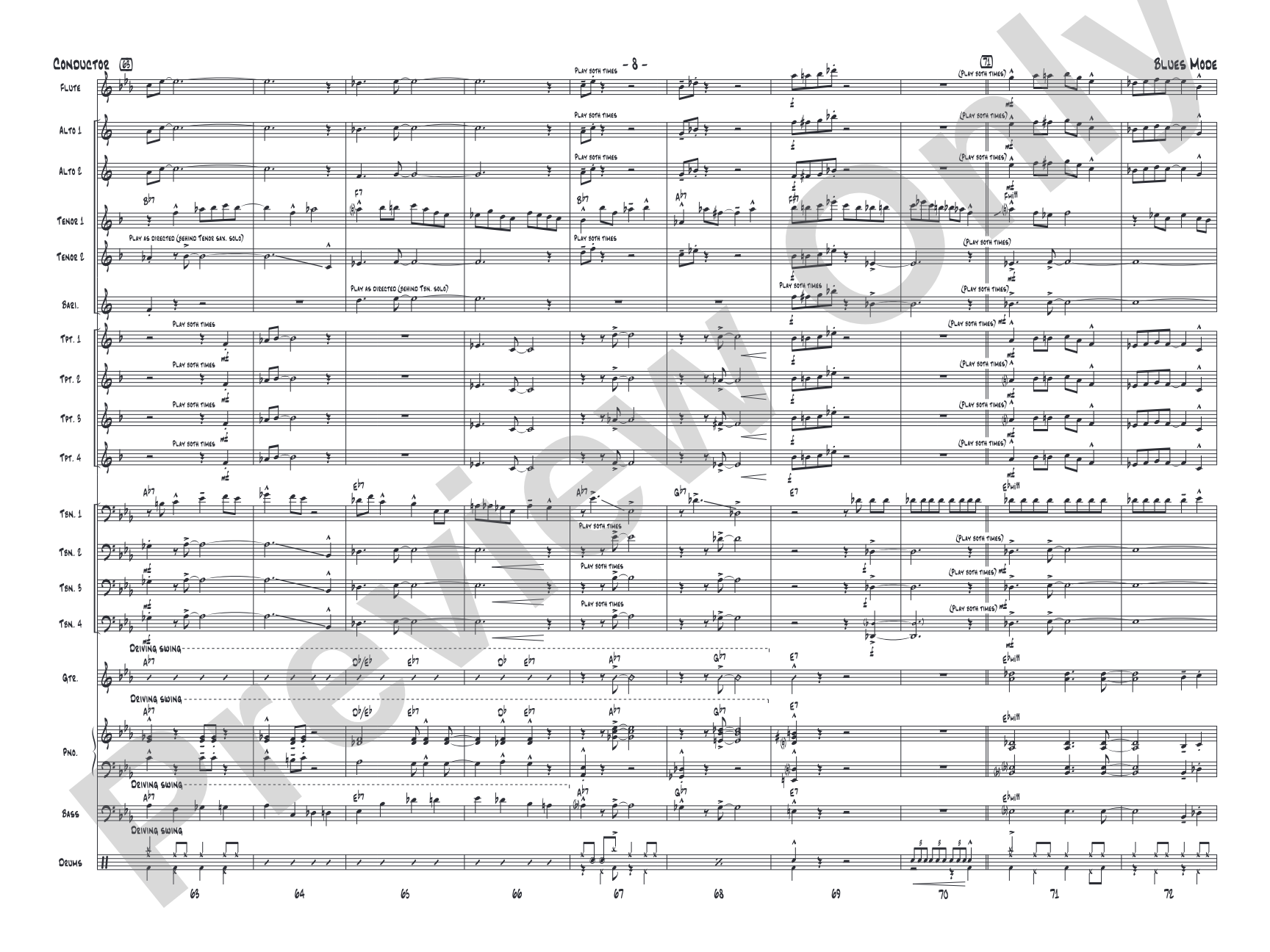
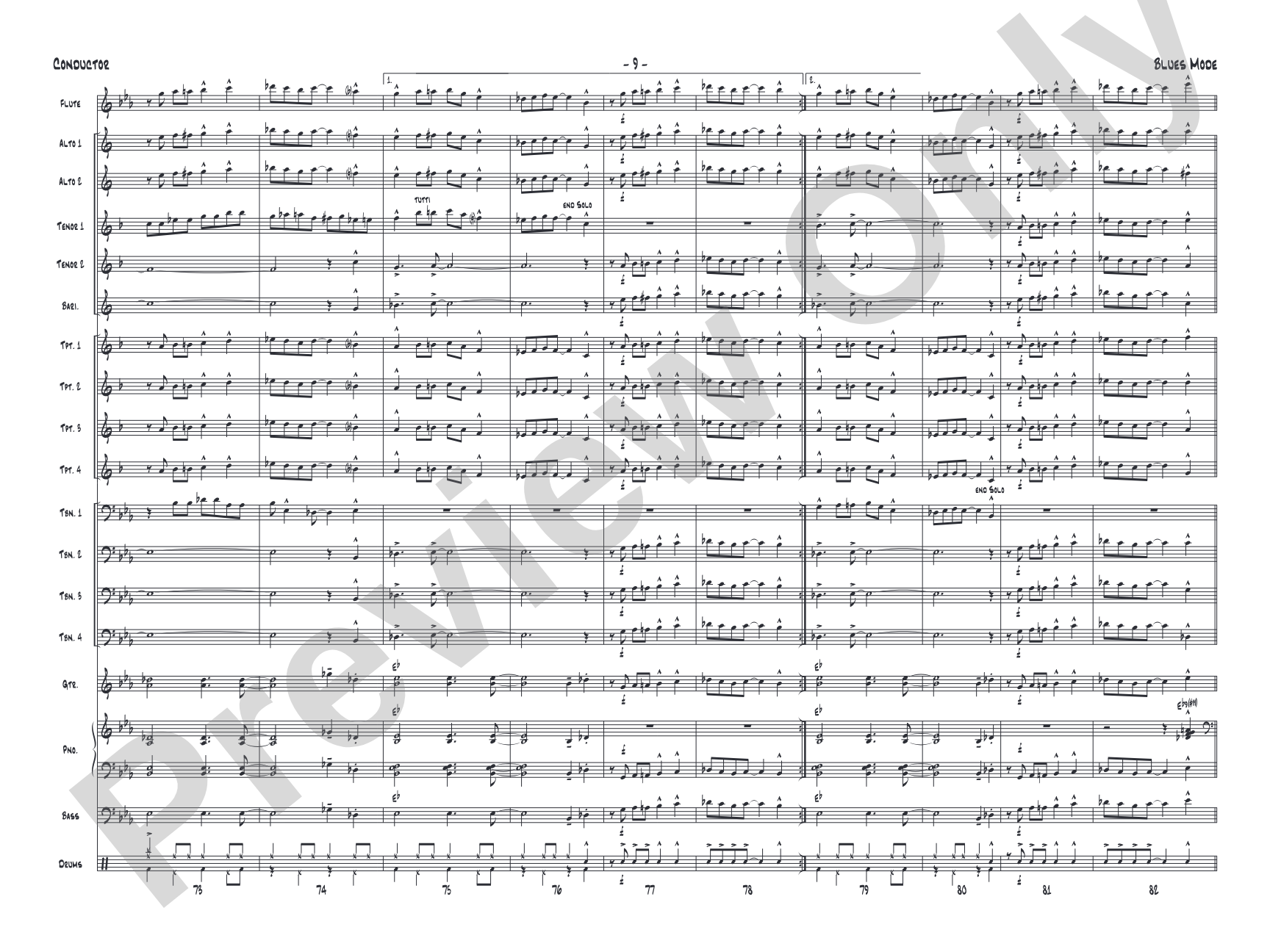
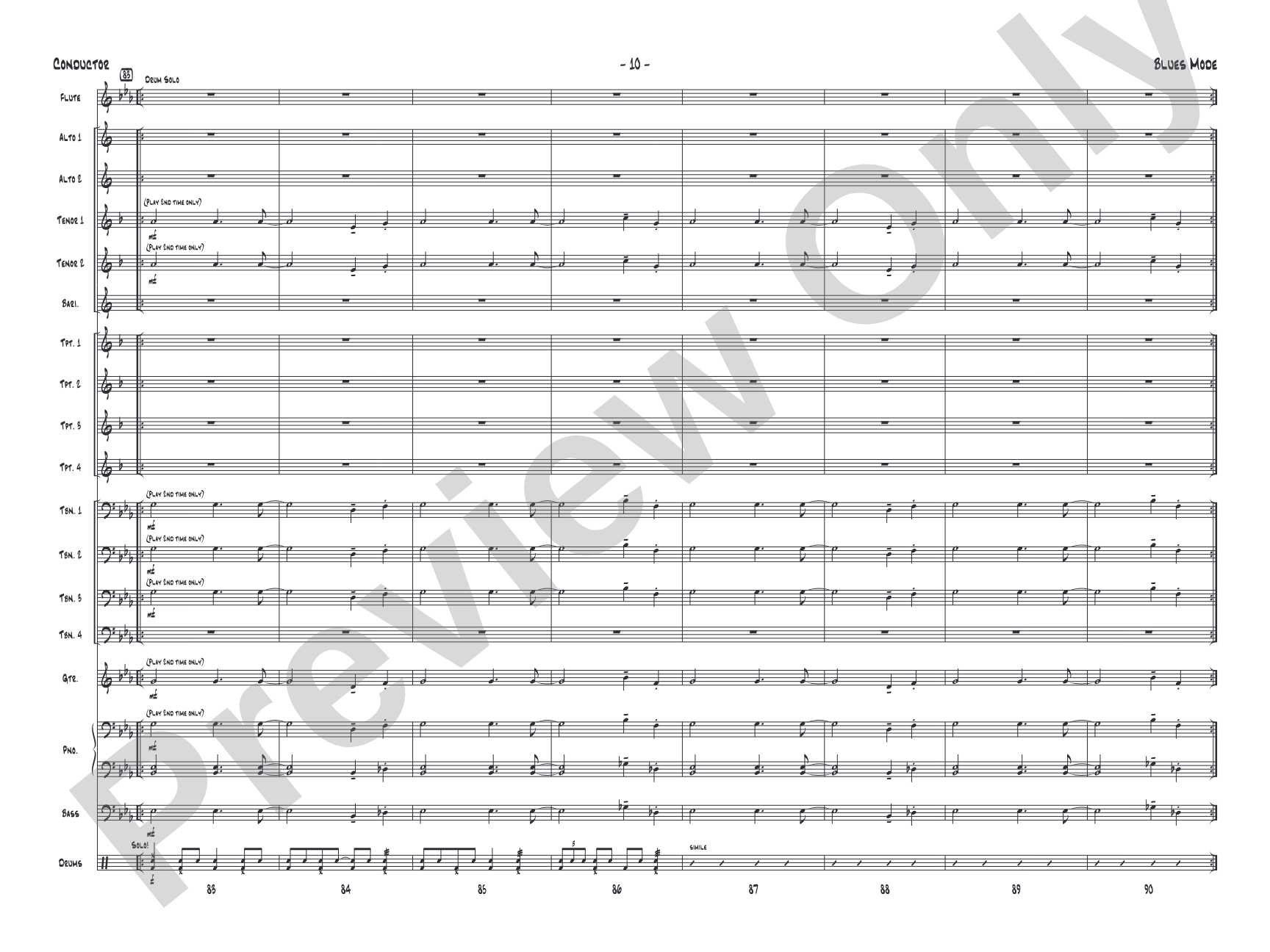
This medium swing chart from a very creative writer approaches the blues with a 24-bar blues form that really makes it easy to hear and feel the blues chord progression. Features include written solos for tenor sax and trombone, backgrounds behind the soloists, a clever interlude section, and the lead trumpet part range to written F top line. A traditional yet hip-sounding swing chart! This title is available in MakeMusic Cloud.


Don't just read it, hear it, play along with it, and watch your students grow with it. In MakeMusic Cloud, Blues Mode: Jazz Ensemble Conductor Score & Parts comes alive with professional accompaniment, adjustable tempo, and built-in practice tools that turn solo practice into real progress.
Open in the Player
Jump straight in and assign it today.
Start Your Free Trial
Open this title and explore the full library in minutes.
Sample Audio
1
Audio File
--:--
0:00
0:00
Sample Video
No sample videos found.
Additional Details
Series:
Young Jazz Ensemble
Publisher:
Alfred Music
Page Count:
73
SKU:
00-PK-0006924
More about this title
About the Composer: Rich Sigler

Rich Sigler brings decades of professional jazz experience to his composing and arranging work. As the music director for the USAF Airmen of Note, he leads one of the nation's premier jazz ensembles while maintaining an active career as a trumpeter, educator, and producer. His credits span collaborations with legendary musicians including Phil Woods, Nicholas Payton, the Brecker Brothers, and Clark Terry.
Beyond his performing and conducting roles, Sigler designed the Jazz Font for Finale, a tool now standard in music notation software. His compositional voice combines accessibility with sophistication, evident in recordings ranging from the Airmen of Note's A Cool Yule and Compositions to the Alan Baylock Jazz Orchestra's Eastern Standard Time.
Why we love this
Sigler knows exactly what a Grade 2 jazz ensemble needs to sound legitimate without getting lost in technical complexity. The 24-bar blues form gives students a clear harmonic anchor, while the written solos for tenor sax and trombone eliminate improvisation anxiety and let players focus on phrasing, timbre, and swing feel. You get a chart that sounds genuinely hip in performance.
What to expect
The chart swings with an accessible, inviting groove that lets the blues form speak for itself. Written solos and clever interlude passages keep the arrangement fresh, while the swing style and harmonic clarity make this feel like a genuine jazz ensemble performance rather than a simplified exercise.
Who it's for
Grade 2 jazz ensembles looking for a blues chart that teaches real swing vocabulary without overwhelming younger players. This works equally well for contest preparation and concert programming, as it demonstrates musical maturity while remaining within reach of developing musicians.
How to get the most out of it
- Shape the tenor sax and trombone solos with dynamic contrast and purposeful phrasing rather than playing them mechanically. These lines reward attention to articulation and breath placement.
- Let the rhythm section drive the swing feel; lock the piano or guitar voicings with the bass and drums so the soloists have a solid harmonic foundation to play off.
- Use the interlude section to reset energy and dynamics before returning to the form. This structural moment gives the ensemble a chance to breathe and refocus.
- Balance the background figures behind the soloists so they support rather than overshadow the featured lines. Clear but restrained voices make the soloist stand out.
How to use it
Program this early in the year to build ensemble confidence with a recognizable, approachable style, or hold it for a jazz-focused concert alongside more traditional swing standards. It also works well as a contest selection, since judges appreciate charts that demonstrate compositional craft at an appropriate difficulty level.
Skills your students will build
- Swing feel and articulation in a blues idiom
- Reading and executing written jazz solos with musicality
- Understanding 12-bar blues harmonic progression
- Listening and responding to background figures while maintaining ensemble cohesion
- Balancing solo and accompaniment textures in small-group contexts