
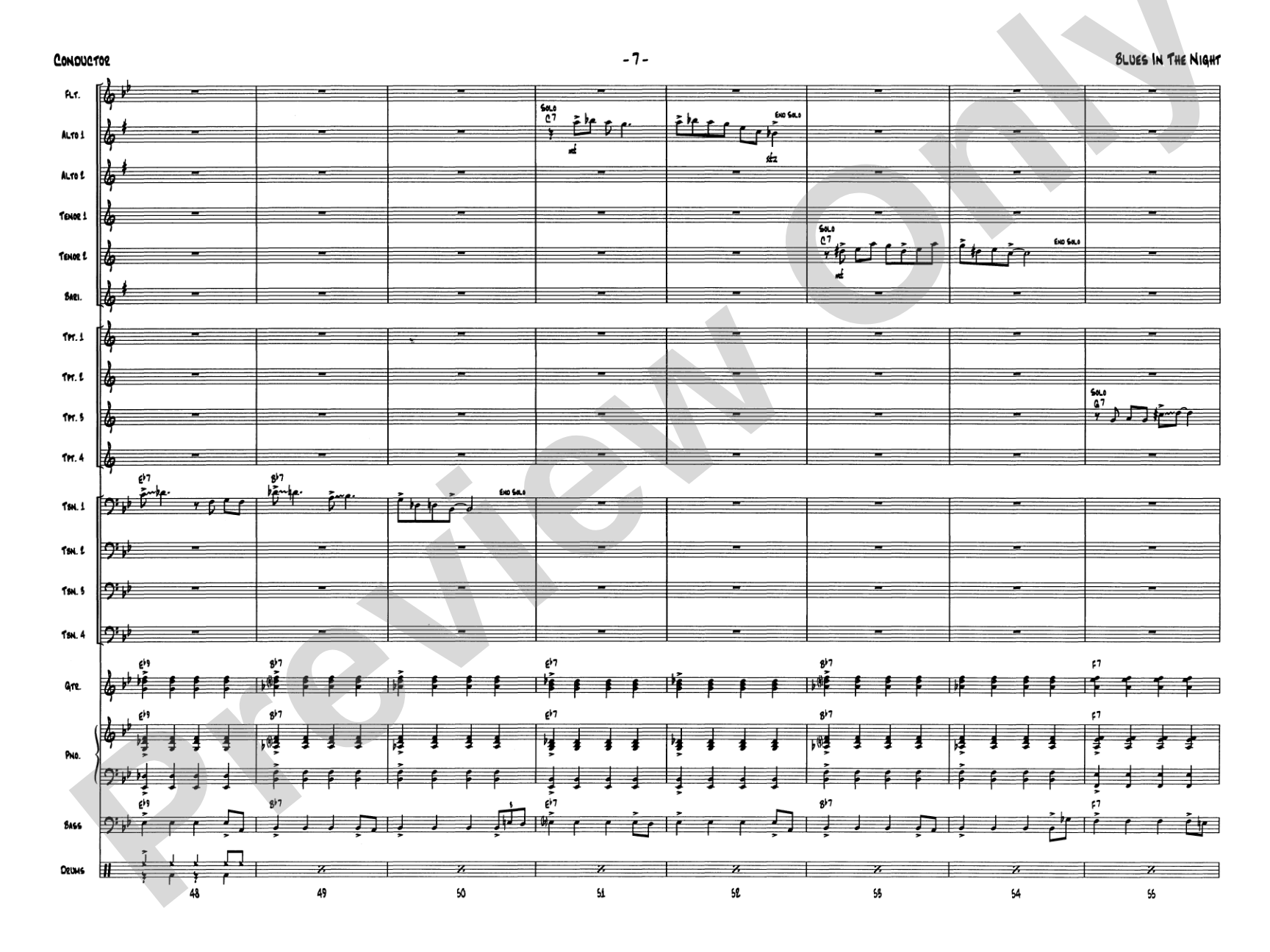
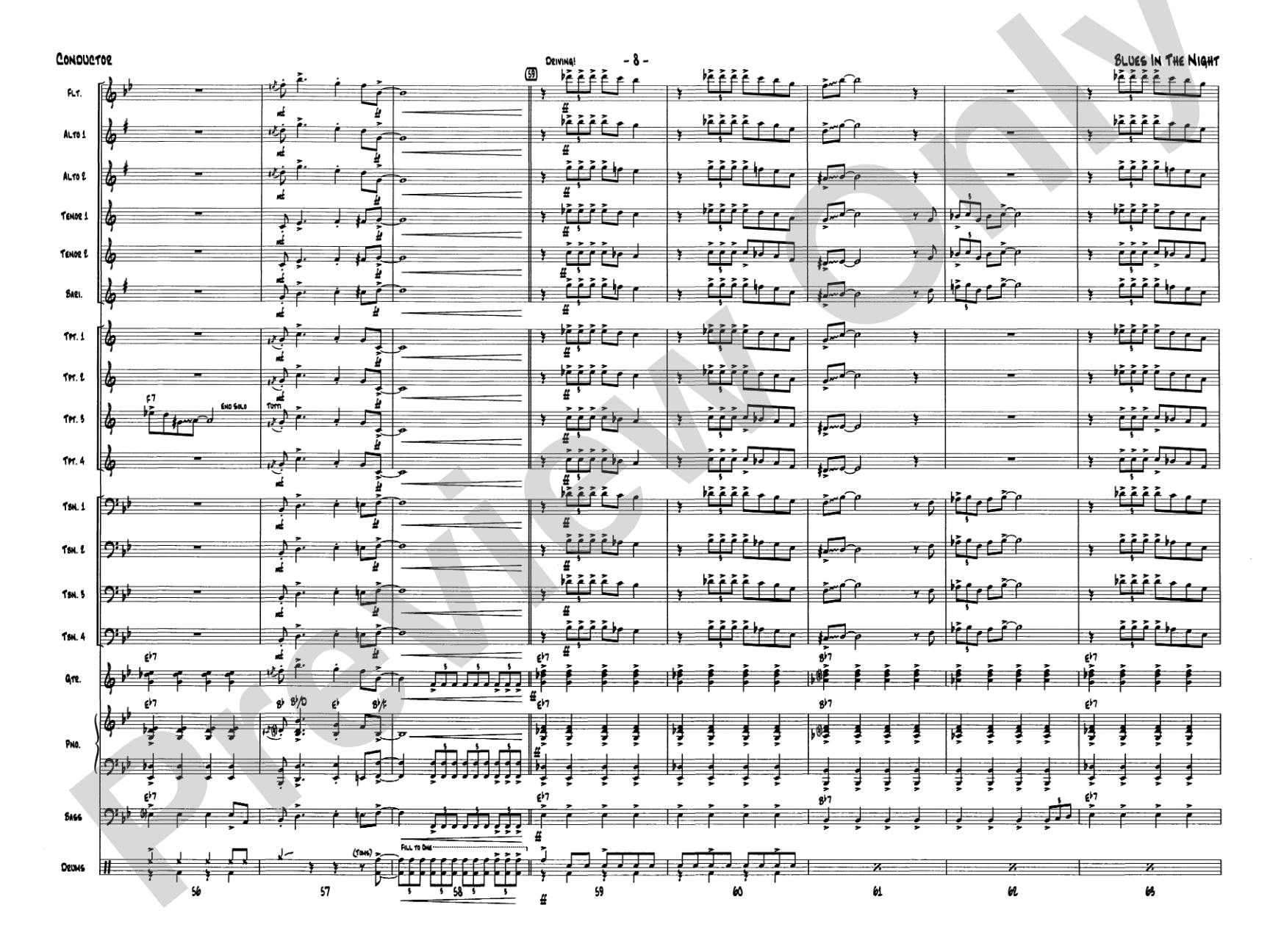
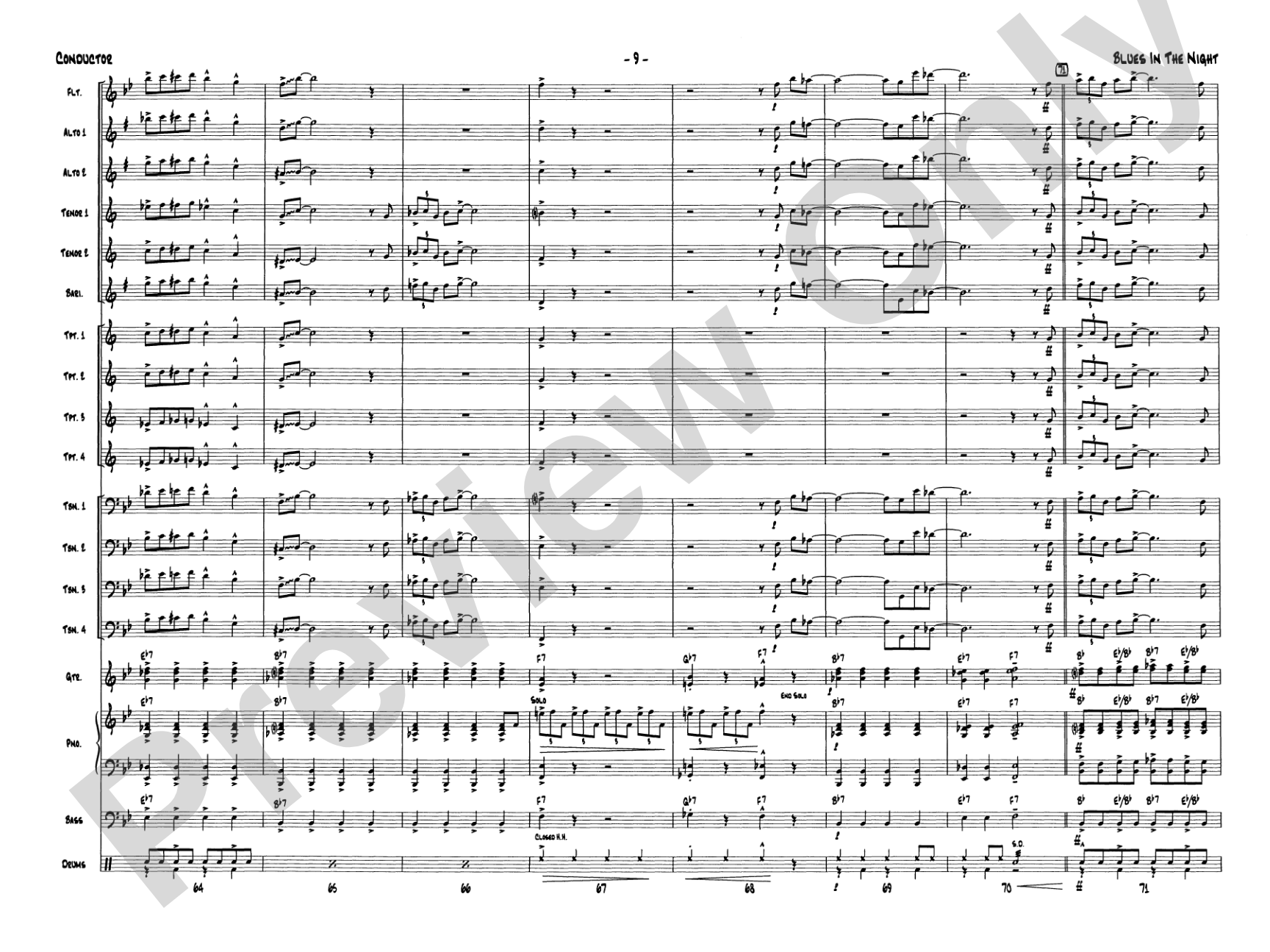
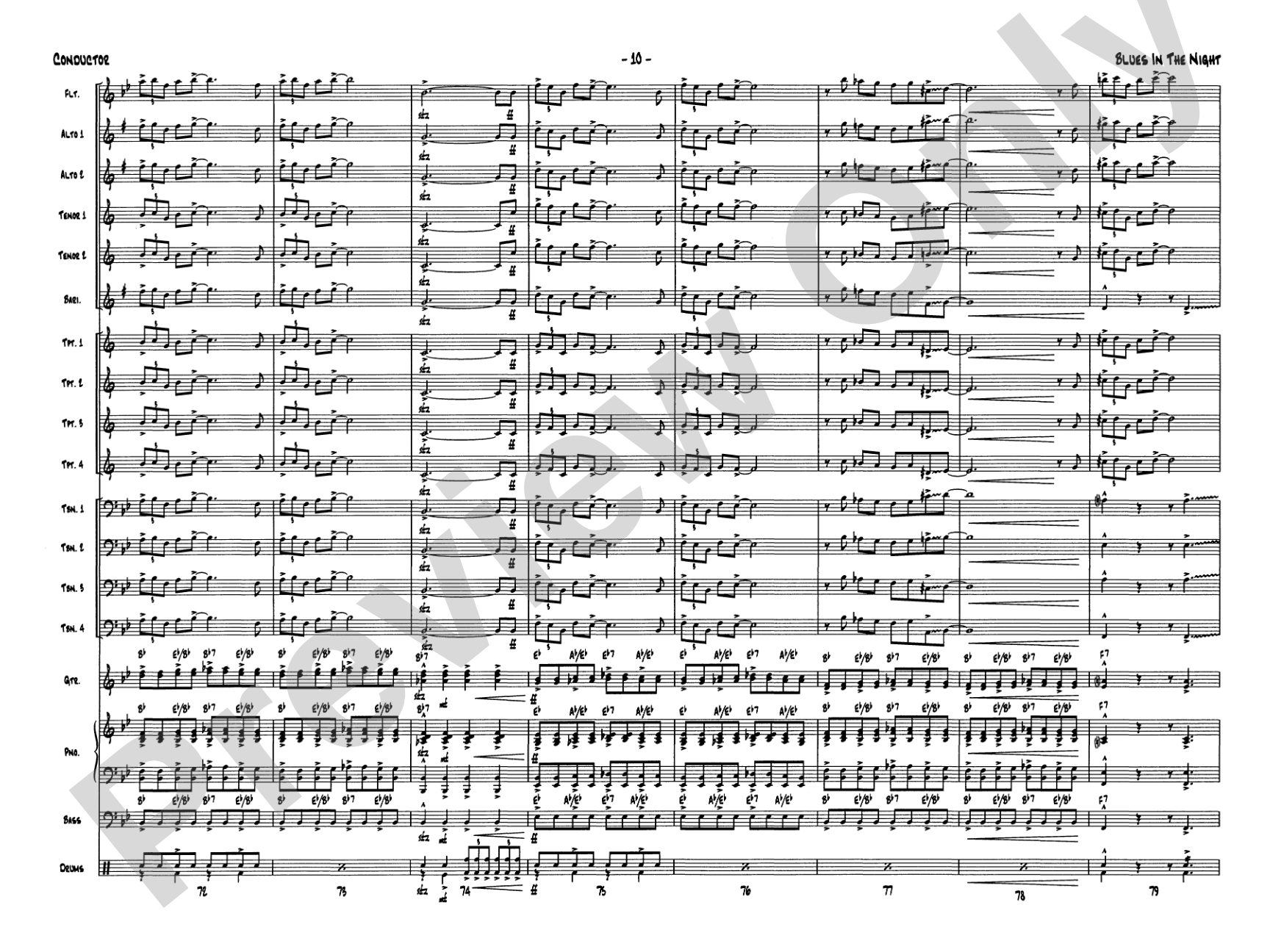
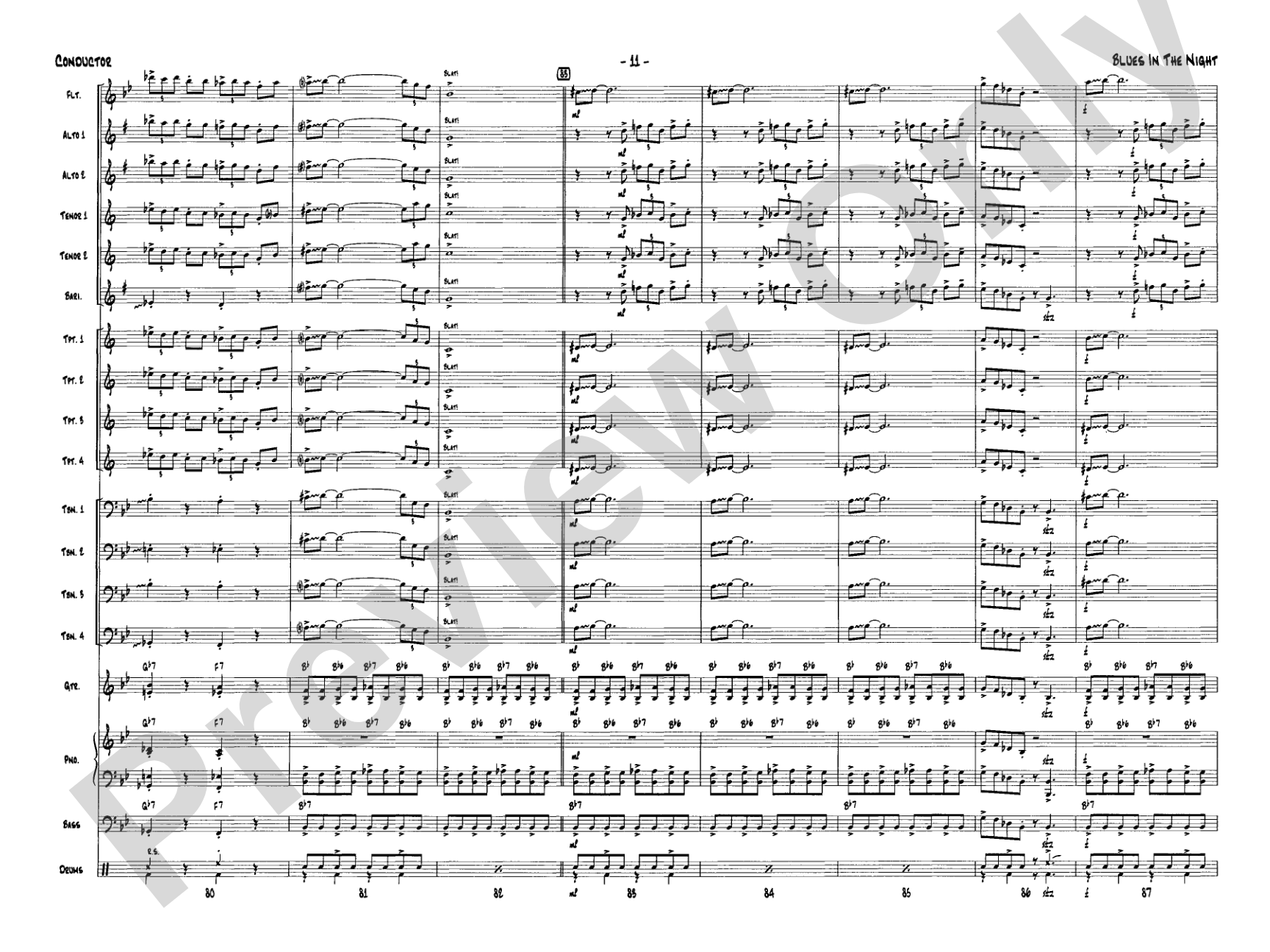
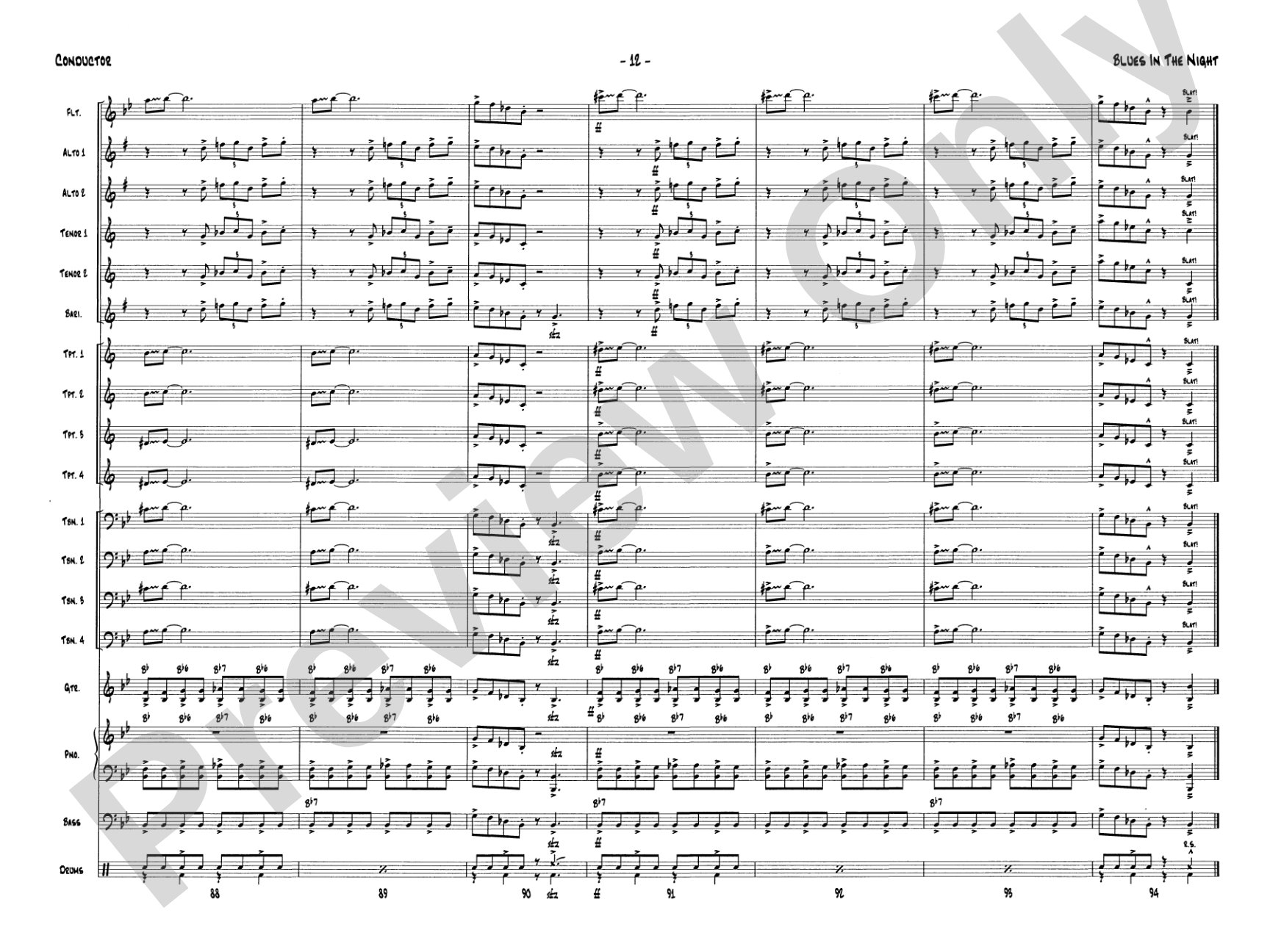



Blues in the Night: Jazz Ensemble Conductor Score & Parts
Words by Johnny Mercer, music by Harold Arlen / arr. Lisa DeSpain
Grade: 2 (Medium Easy)
Item: 00-PK-0002531

$48.00
One moment…
Description
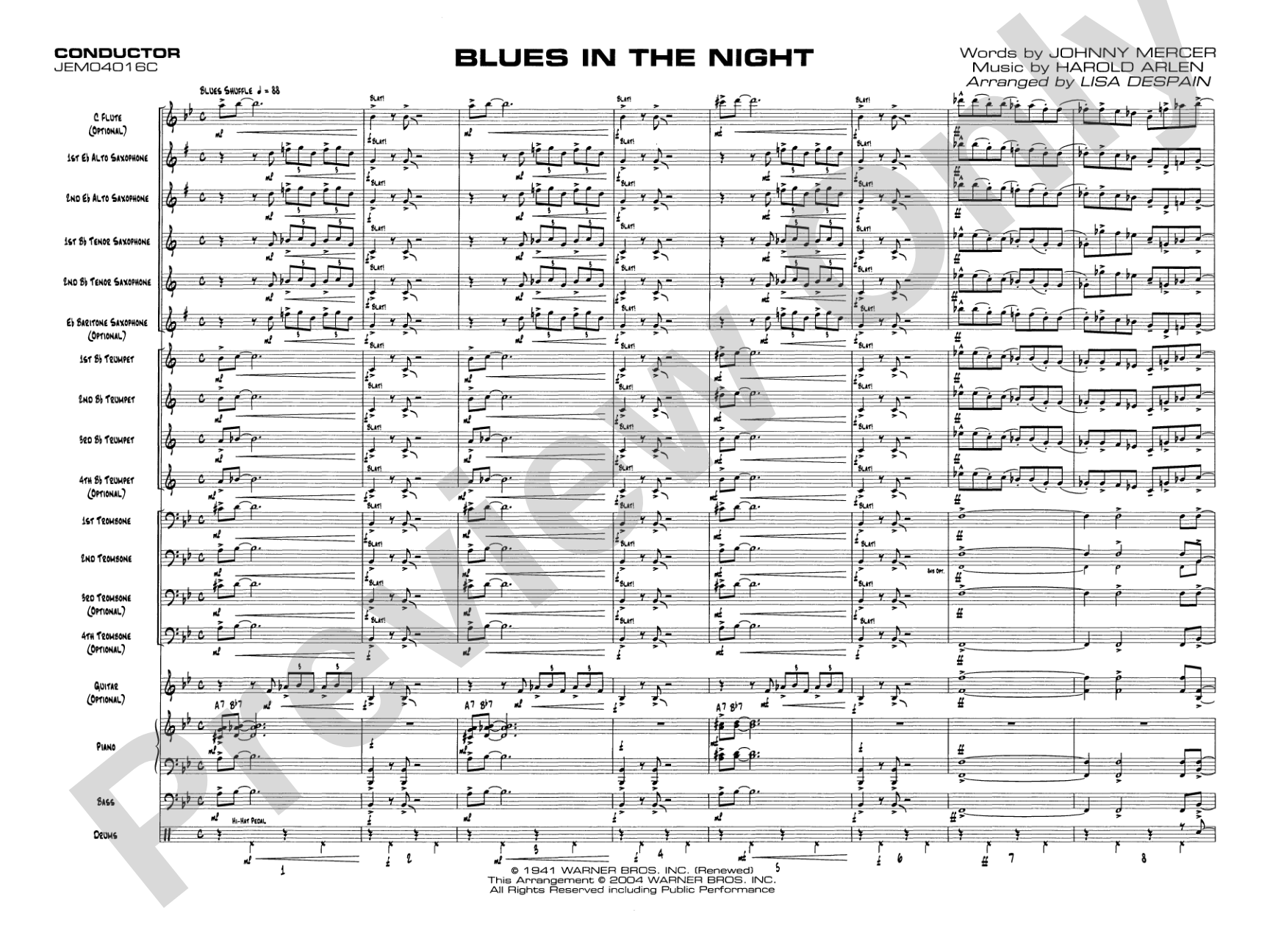
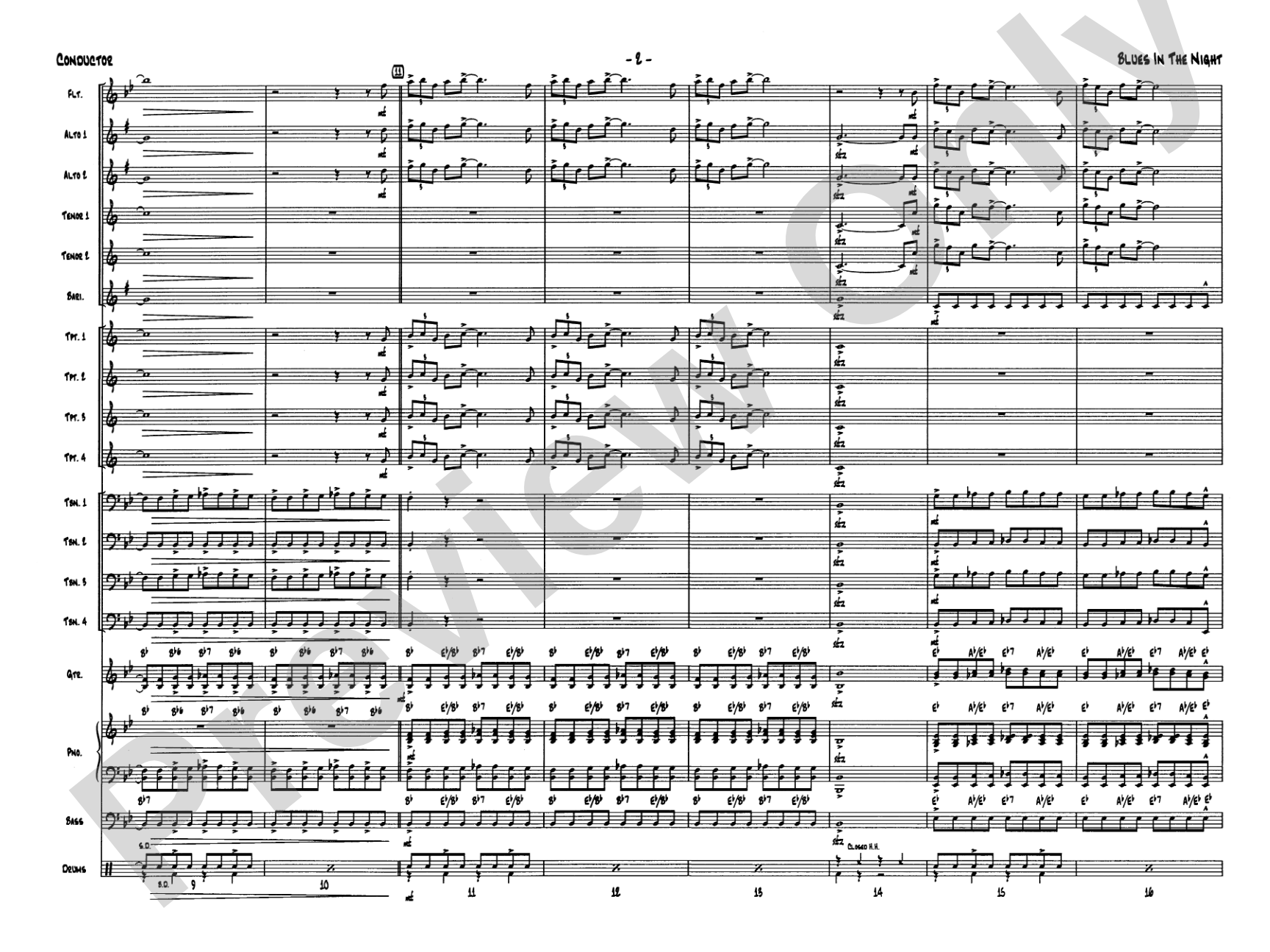
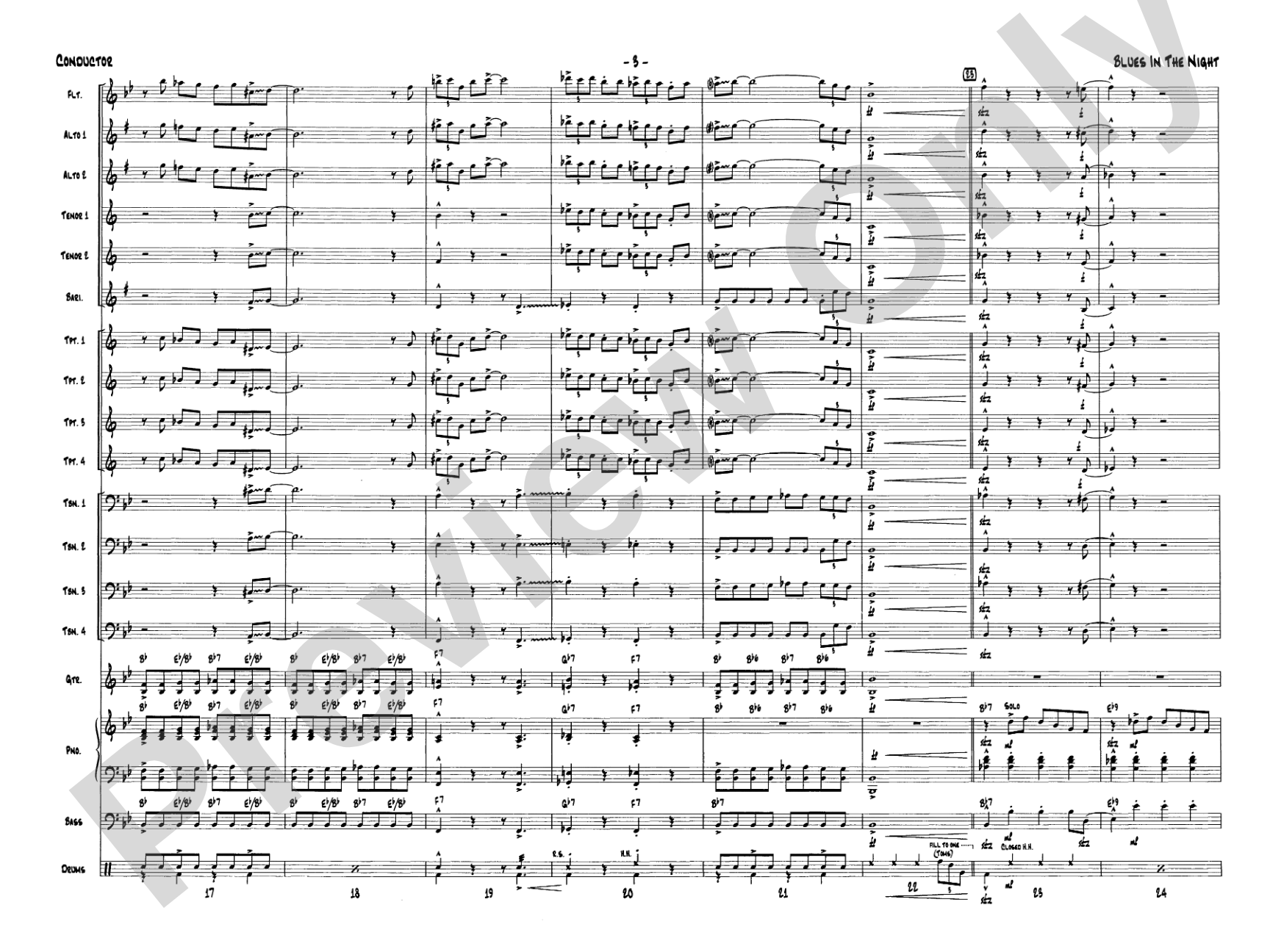
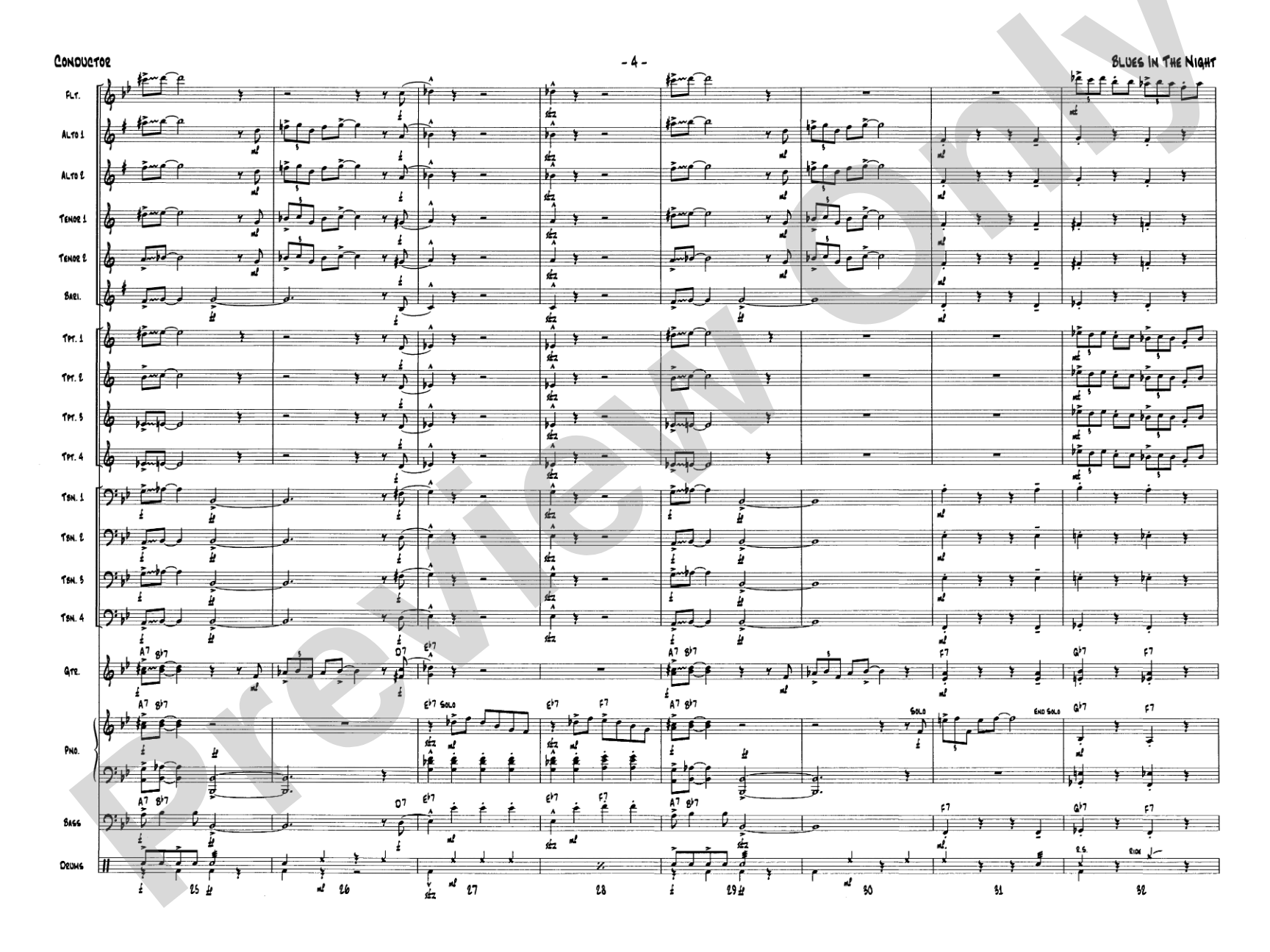
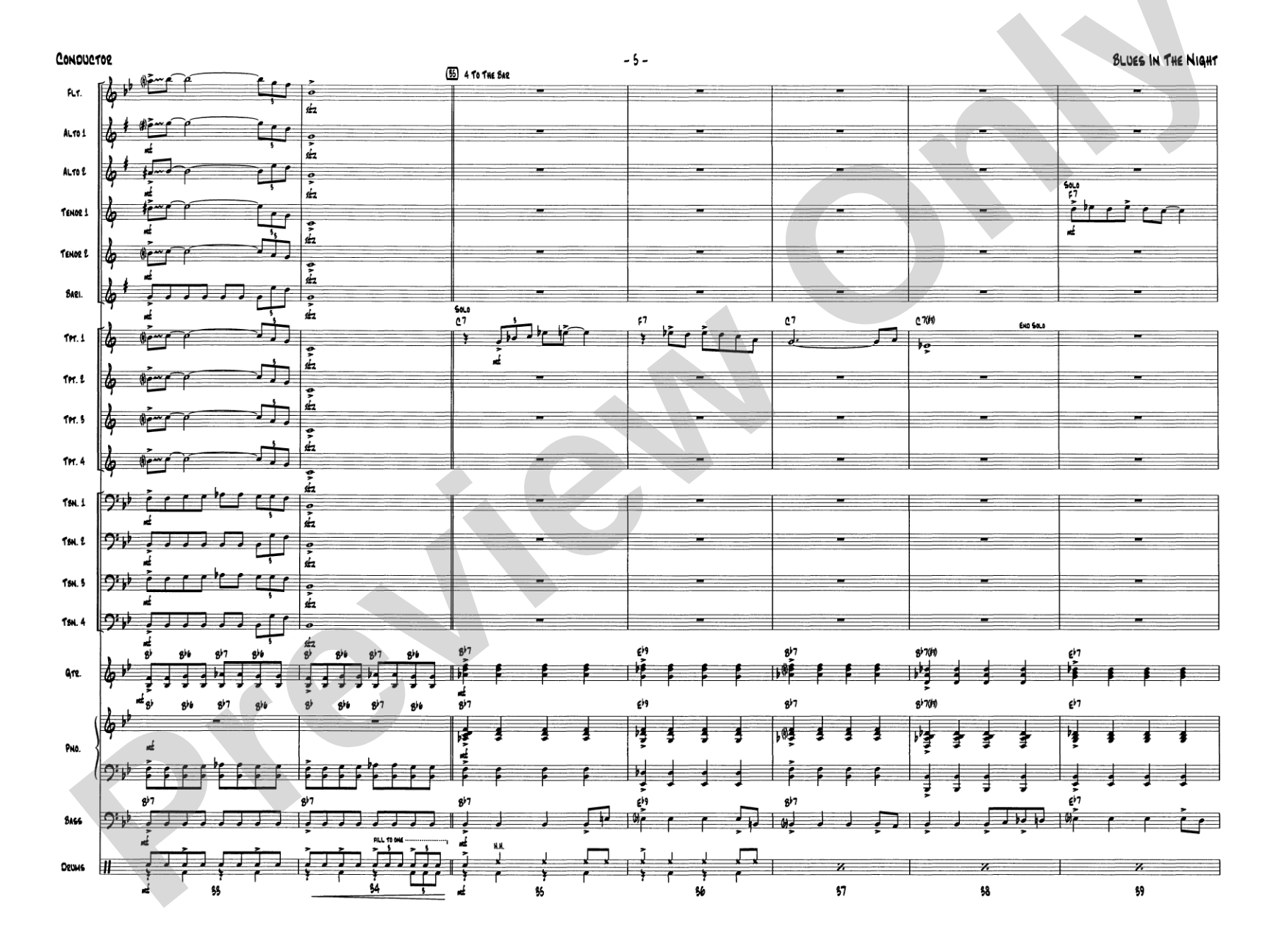
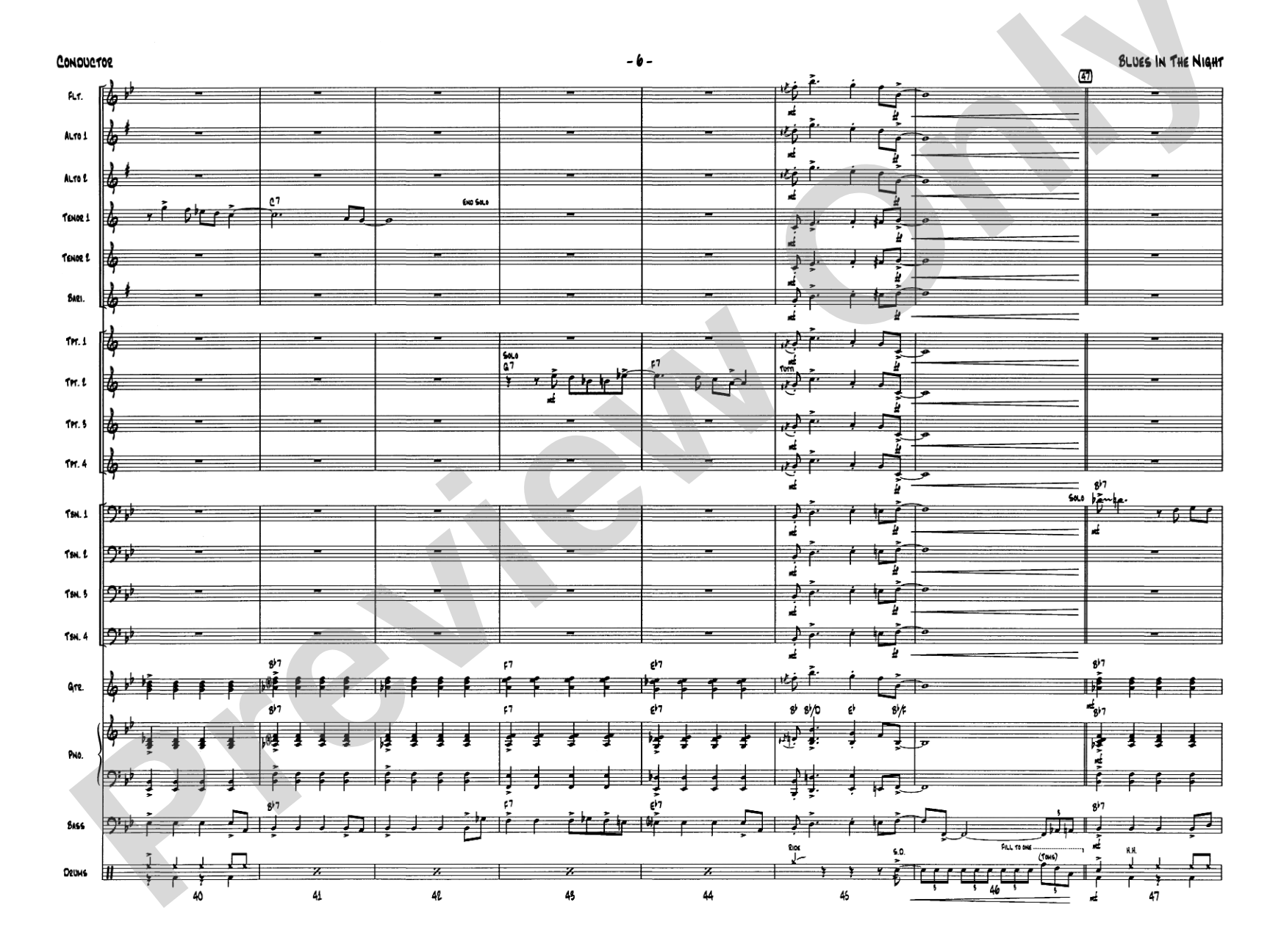
This is the perfect blues shuffle honky-tonk chart. Brilliant composer/arranger Lisa DeSpain has done an outstanding job with this great tune. Your young players will learn the blues shuffle style quickly and the band will dig this fun-to-play chart. Written or ad-lib solos are for trumpet 1 and 3, alto 1, tenors 1 and 2, and trombone 1. The rhythm parts groove throughout, and the ranges are modest. (4:27)


Don't just read it, hear it, play along with it, and watch your students grow with it. In MakeMusic Cloud, Blues in the Night: Jazz Ensemble Conductor Score & Parts comes alive with professional accompaniment, adjustable tempo, and built-in practice tools that turn solo practice into real progress.
Open in the Player
Jump straight in and assign it today.
Start Your Free Trial
Open this title and explore the full library in minutes.
Sample Audio
1
Audio File
--:--
0:00
0:00
Sample Video
No sample videos found.
Additional Details
Series:
Young Jazz Ensemble
Publisher:
Alfred Music
Page Count:
106
SKU:
00-PK-0002531
More about this title
About the Composer: Johnny Mercer
Johnny Mercer (1909-1976) was one of America's most prolific songwriters, crafting lyrics for over 1,000 songs across stage, film, and radio. His gift for conversational, witty, and deeply human lyrics made him a natural collaborator with composers like Harold Arlen, Henry Mancini, and Jerome Kern. Mercer's songs remain standards in jazz and popular music education because they balance accessibility with sophistication, offering young musicians memorable melodies and lyrics rooted in authentic American vernacular.
Harold Arlen (1905-1986) composed some of the 20th century's most enduring melodies, from "Over the Rainbow" to jazz-inflected blues and swing standards. His gift for writing singable, rhythmically inventive lines made him a favorite among jazz educators and performers. Arlen's work demonstrates how classical training and jazz sensibility can coexist, making his music particularly valuable for students learning to bridge multiple musical languages.
Why we love this
DeSpain's arrangement respects the original tune's swagger while making it immediately playable for a young ensemble. The blues shuffle sits naturally under the fingers and horns, so students absorb the idiom through playing rather than overthinking it. The solo opportunities are distributed across multiple voices, letting different section leaders shine without demanding virtuosity.
What to expect
Smoky and relaxed, with the kind of honky-tonk character that invites audiences to lean in and listen. The rhythm section drives a steady, confident groove while soloists have room to stretch and find their voice within the form. It's blues without pretension, fun without losing musical substance.
Who it's for
Jazz ensembles at the high school or middle school level looking for a genuine blues vehicle that doesn't require advanced soloists. Young players gain real experience with jazz comping, shuffle feels, and blues phrasing while staying in a modest range. Directors seeking a crowd-pleasing chart that teaches authentic style without complexity.
How to get the most out of it
- Lock the ride cymbal and bass guitar into a steady, unfussy swing feel. The groove depends on rhythmic pocket, not flash.
- Keep the trumpet and trombone solos relaxed and bluesy rather than overly technical. Encourage players to listen to classic recordings and find their own phrasing.
- Balance the ensemble hits crisply but let the rhythm section carry the weight of the sound. Young rhythm sections often rush when they're afraid of dragging.
- Work the blues vocabulary gradually. Spend rehearsals just on the shuffle rhythm and blues scale before layering in section writing and solos.
How to use it
Program this early in your contest season or at a winter concert where you want to showcase ensemble joy and musicianship over technical fireworks. It pairs well with bebop standards or post-bop charts, establishing the blues foundation that all jazz students should know. The 4:27 duration and modest range make it accessible for younger ensembles or those with developing soloists.
Skills your students will build
- Blues shuffle rhythm and the swing eighth-note feel
- Improvisation within a 12-bar blues form
- Reading and executing written chord changes and ensemble hits
- Listening and responding to other sections in a groove-based arrangement
- Phrasing and dynamics in a blues/jazz context