
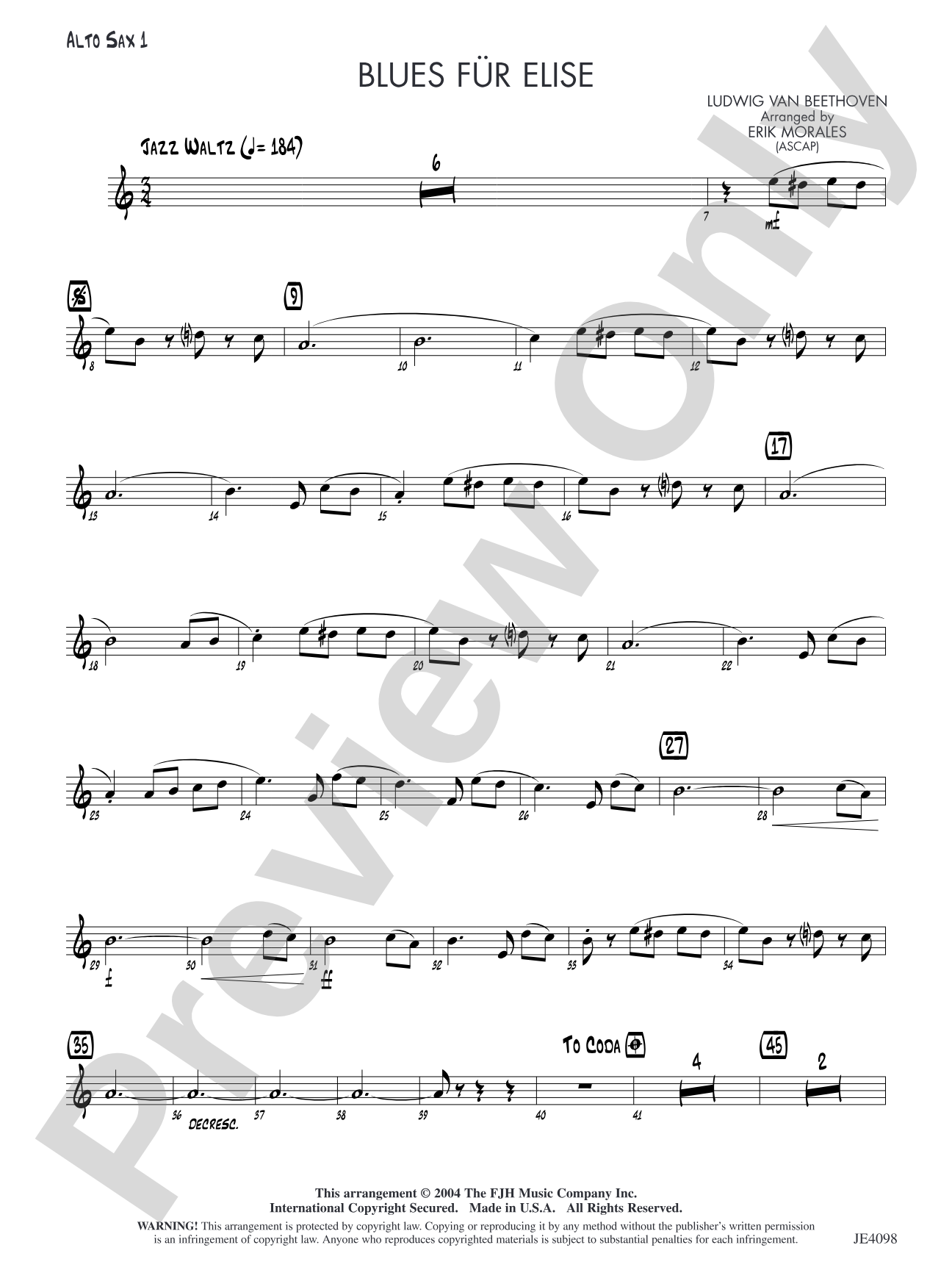

Blues für Elise: Alto Sax 1
By Ludwig van Beethoven / arr. Erik Morales
Grade: 3.5
Item: 98-PC-DJE4098_AX1
$7.00
Pickup currently not available
Description
This clever chart is unlike anything out there and really grooves! Based on Beethoven's ever-popular Für Elise, this jazz waltz is based on a C minor blues progression with a shout chorus in 4/4. Optional vibraphone is included to give a little color to the typical jazz instrumentation. Don't be one of the few that miss out on this one - once you hear it, you'll be hooked.


Blues für Elise: Alto Sax 1 isn't in MakeMusic Cloud just yet...but it could be. Let us know you'd like to see it, and you'll help shape what comes next. In the meantime, start a free trial and dive into thousands of interactive titles your students can play along with today.
Request This Title
Tell us you want it.
Start Your Free Trial
Explore everything that's ready to play right now.
Sample Audio
1
Audio File
--:--
0:00
0:00
Sample Video
No sample videos found.
Additional Details
Series:
FJH Intermediate Jazz Ensemble
Publisher:
The FJH Music Company, Inc.
SKU:
98-PC-DJE4098_AX1
More about this title
About the Composer: Ludwig van Beethoven
Ludwig van Beethoven (1770-1827) fundamentally reshaped Western music by expanding the emotional and structural possibilities of classical forms. His nine symphonies, 32 piano sonatas, and string quartets remain cornerstones of the repertoire, studied and performed worldwide. For music educators, Beethoven's work offers endless opportunities to explore how a single musical idea can drive an entire composition, how harmonic tension creates drama, and how a composer's voice grows more individual and daring over time.
Beyond his canonical masterworks, Beethoven's melodies have proven remarkably durable and adaptable. Pieces like Für Elise transcend their original context, inviting reinterpretation across genres and ensembles. This particular chart honors that legacy by transplanting one of his most recognizable themes into the language of jazz, demonstrating how a timeless melody can thrive in an entirely new musical environment.
Why we love this
This arrangement captures something genuinely refreshing: it takes one of the most familiar classical melodies ever written and grounds it in an authentic jazz waltz with blues harmony, complete with a full-voiced shout chorus that shifts the energy entirely. The addition of optional vibraphone shows Erik Morales thinking beyond standard jazz instrumentation, giving conductors real choices about how to color the ensemble sound. Audiences recognize the theme immediately, but what unfolds is playful, swinging, and completely their own.
What to expect
A moment of recognition meets a swinging groove. The opening establishes the elegant restraint of the original, but the blues progression and rhythm section immediately signal that something playful is afoot. When the shout chorus breaks open in 4/4, the energy lifts noticeably, and the piece becomes a conversation between classical reverence and jazz irreverence. It's warm, clever, and never condescending.
Who it's for
Jazz ensemble conductors seeking repertoire that balances accessibility with genuine musicianship and audiences who light up at recognizable material. Intermediate ensembles at the high school or early college level will find the Grade 3.5 difficulty appropriate for developing soloists while remaining ensemble-friendly. This works equally well for concert programming, school assembly appearances, or community engagement contexts where a familiar melody opens ears to jazz language.
How to get the most out of it
- Lock the rhythm section into the blues pocket early. The waltz time signature (3/4) can pull players toward straight quarter-note territory; emphasize the swing feel and space between the beat so the blues progression doesn't flatten.
- Balance the shout chorus carefully. The shift to 4/4 needs clarity from the section leaders so the ensemble commits to the rhythmic pivot without losing groove.
- Use the optional vibraphone strategically. If you have the personnel, layer it in during key moments (head-out, solos, returns) rather than throughout; restraint will make it more effective.
- Let the familiar melody breathe. Conductors often rush through recognizable material, but the elegance of this arrangement lives in allowing singers and soloists space to phrase the theme freshly, even as the rhythm section keeps the blues pocket grounded.
How to use it
Program this as a mood-shifting centerpiece in a concert that otherwise leans classical or concert jazz; it signals your ensemble's versatility and keeps audiences engaged across different styles. The recognizable melody also makes it an ideal gateway piece for community concerts or school assemblies where you're introducing audiences to jazz ensemble music.
Skills your students will build
- Playing swing rhythms in waltz time (3/4)
- Transitioning between meters (3/4 to 4/4) smoothly
- Blues progression understanding and comping
- Phrasing jazz melody with classical foundation
- Listening to and blending with optional instruments (vibraphone)