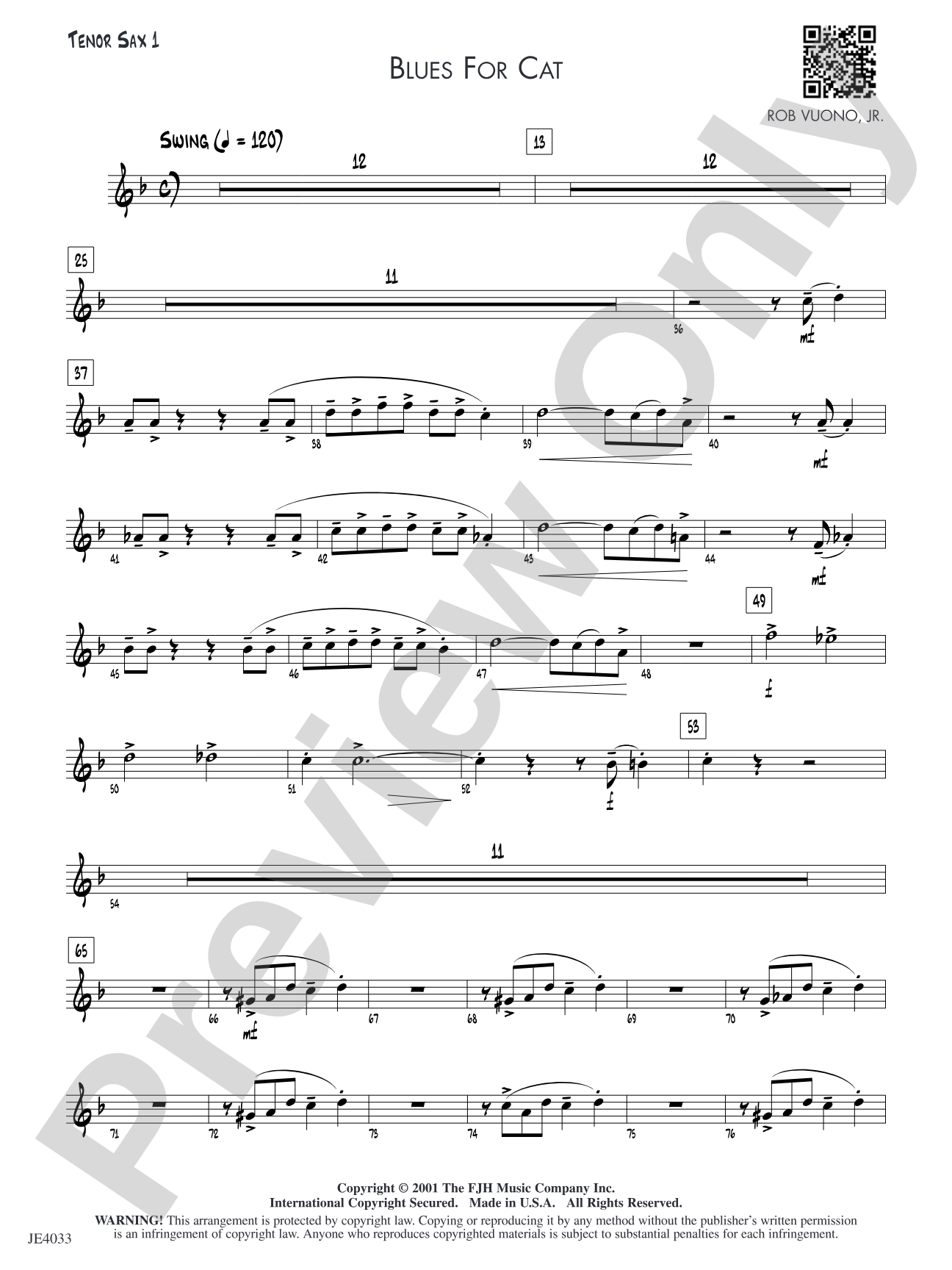
Your students can sound like the great Count Basie Band in a short amount of rehearsal time with this very easy swinger. Range demands are low with the lead trumpet going only to a 3rd space C and lead bone to a Db. The chart is scored to work for three saxes and four brass. Check out the performance notes for exact instrumentation.
Discover MakeMusic Cloud: thousands of interactive titles your students can play along with today.
Rob Vuono Jr. brings deep experience in jazz education and ensemble writing to the FJH catalog. His arrangements prioritize accessibility without sacrificing authentic jazz language, making classic big band sounds achievable for developing musicians.
Why we love this
Vuono understands what beginning jazz ensembles actually need: an arrangement that captures the swagger of a classic blues without requiring advanced technical facility or range. The instrumentation flexibility and conservative voicing mean you can field this with your lineup, not the other way around.
What to expect
Relaxed and grooving. The blues feel is authentic without being demanding; students sound like they know what they're doing from the first read-through.
Who it's for
Beginning jazz ensemble directors working with middle school or early high school students who need immediate success. This arrangement also works for studio combos looking for a chart that every student can execute with confidence.
How to get the most out of it
Lock the rhythm section first. Nail the blues form and swing feel before adding the horns; everything else follows from solid time.
Bring out the melody in the lead trumpet and trombone parts. These are your story; the rest supports them.
Shape dynamics across the ensemble from section to section rather than trying to balance individual voices. A softer sax section behind the trumpet solo reads cleaner than excessive doubling.
Let the students hear a Count Basie recording before rehearsals begin. That bounce and restraint matters more than technical perfection.
How to use it
Open a jazz concert with this piece to establish energy and confidence, or place it early in a rehearsal sequence when introducing blues form to younger players. The short learning curve makes it ideal for mid-year additions to a growing jazz program.
Skills your students will build
Blues form and harmonic awareness
Swing eighth-note feel and ensemble groove
Lead voice vs. supporting voice textures
Basic jazz articulation and phrasing
Reading jazz chord charts and ensemble scores
You May Also Like
Scan to Complete Your Purchase
Use your phone's camera to scan the code below
You'll log in on your phone and the order will be added to your account