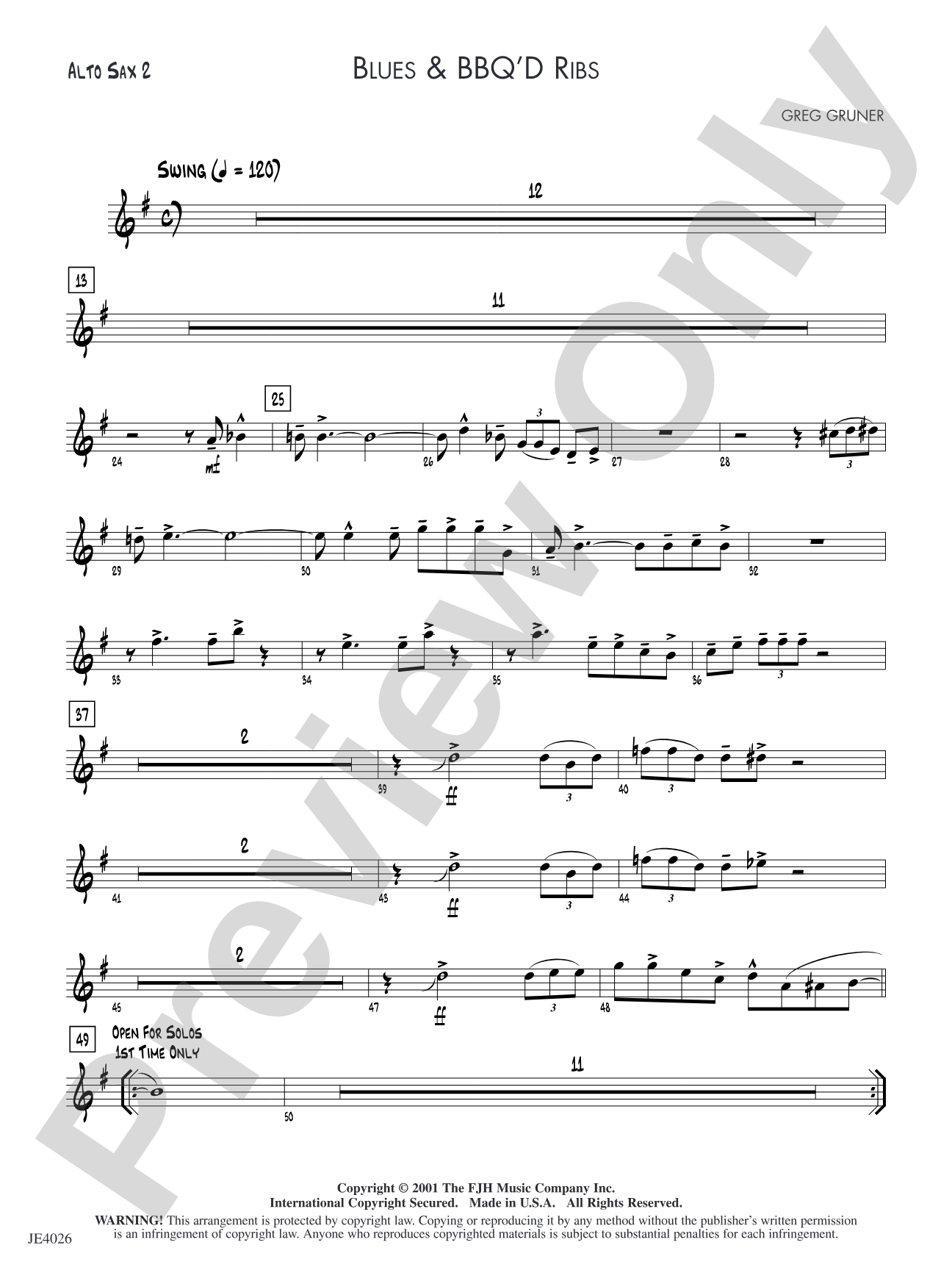
Featuring a Basie-style piano part that's written out on the opening chorus, this blues settles into a very nice groove with the saxes featured much of the time. None of the parts are overly demanding and the ranges are very comfortable. An excellent blues recipe!
Discover MakeMusic Cloud: thousands of interactive titles your students can play along with today.
Gruner understands what makes a blues arrangement work for intermediate ensembles: clear sectional writing that doesn't demand heroic range or technique, but plenty of character. The written-out Basie-style piano voicings on the opening chorus give your rhythm section a genuine jazz foundation to build from, and the sax-focused sections let those players shine without leaving the rest of the band waiting around.
What to expect
Classic 12-bar blues with that late-night, fingers-snapping groove that Basie made famous. The rhythm section locks into a steady pocket while the saxes take turns stretching out, creating the feeling of a jam session where everyone knows their lane and nobody's in a hurry.
Who it's for
Jazz ensemble directors teaching at the Grade 3 level who want authentic blues language without asking students to navigate awkward ranges or complex rhythmic figures. This works equally well for a rehearsal-room fixture or a concert spot where you need something that sounds legitimate without overextending your young players.
How to get the most out of it
Nail the piano voicings in the opening chorus. These written figures are your harmonic anchor, so lock them in early and use them as the reference point for how the whole groove should feel.
Keep the swing easy and relaxed through the middle sections. This blues settles into a groove, so resist the urge to push the tempo; let the saxes breathe and let the rhythm section pocket it.
Balance your saxes against the full ensemble. Since they're featured much of the time, make sure they can sing out without the ensemble underneath muddying their lines.
How to use it
Program this as a concert opener or a palate-cleanser between more formally composed pieces. It also sits perfectly into a jazz history unit where you're teaching the blues tradition, giving students a chance to experience how the same harmonic structure can anchor real ensemble collaboration.
Skills your students will build
Reading and executing swing eighth-note feel
Understanding 12-bar blues form and harmonic movement
Balancing ensemble blend while supporting featured sections
Interpreting written jazz voicings (rhythm section)
Playing within an appropriate pitch range for Grade 3 jazz literature
You May Also Like
Scan to Complete Your Purchase
Use your phone's camera to scan the code below
You'll log in on your phone and the order will be added to your account