
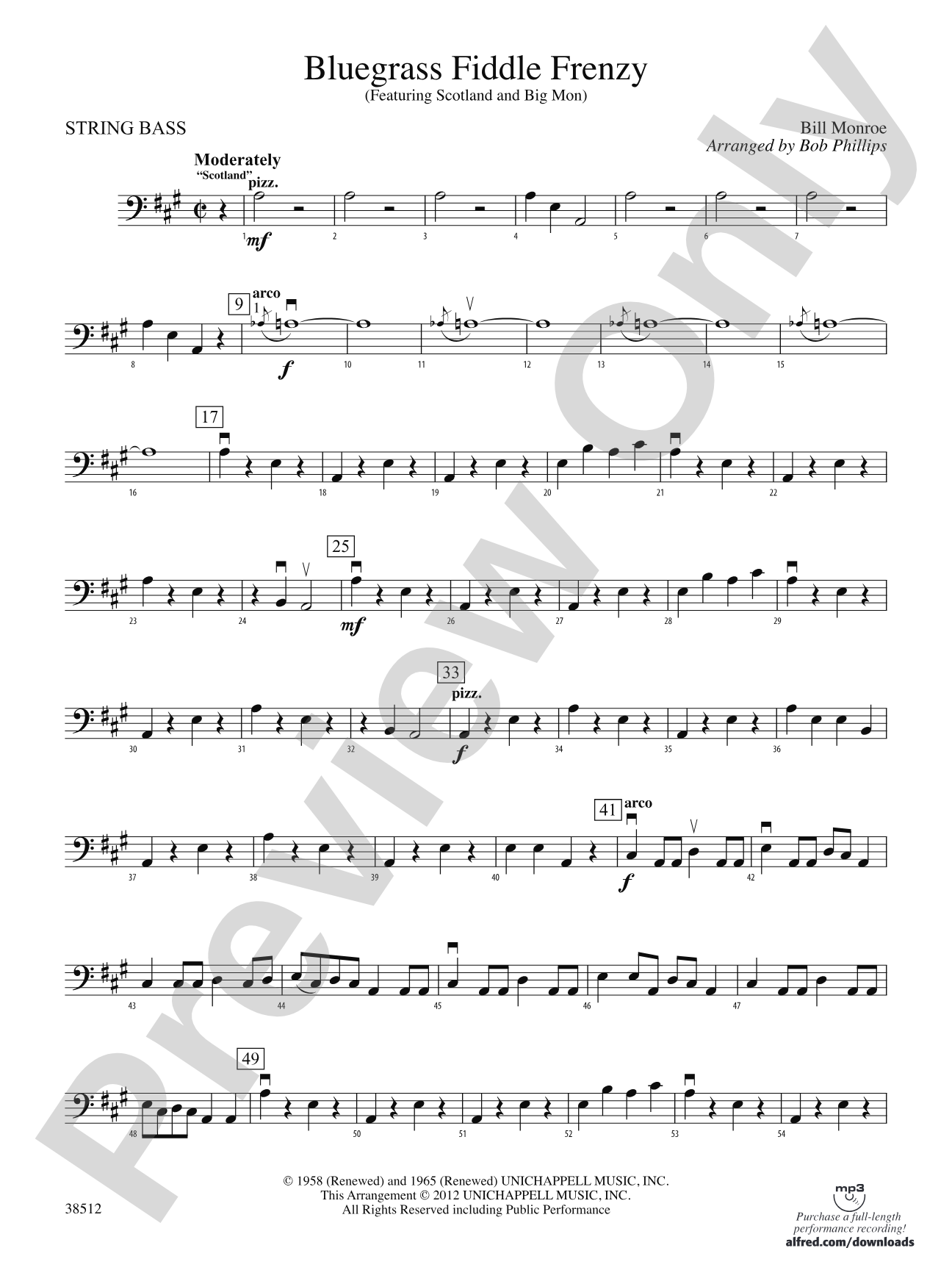

Bluegrass Fiddle Frenzy: String Bass
Featuring: Scotland / Big Mon
By Bill Monroe / arr. Bob Phillips
Grade: 3
Item: 00-PC-0015811_SB
$5.99
Pickup currently not available
Description
In celebration of Bill Monroe's 100th birthday, perform this high energy, true blue arrangement of "Scotland" and "Big Mon," two of Monroe's standards. "Scotland" evokes memories of the Scottish roots of Appalachian music, leading into the technical wizardry of the tune named for the "Father of Bluegrass" himself. This title is available in MakeMusic Cloud.


Don't just read it, hear it, play along with it, and watch your students grow with it. In MakeMusic Cloud, Bluegrass Fiddle Frenzy: String Bass comes alive with professional accompaniment, adjustable tempo, and built-in practice tools that turn solo practice into real progress.
Open in the Player
Jump straight in and assign it today.
Start Your Free Trial
Open this title and explore the full library in minutes.
Sample Audio
1
Audio File
--:--
0:00
0:00
Sample Video
No sample videos found.
Additional Details
Series:
Highland/Etling String Alternatives
Publisher:
Alfred Music
Page Count:
124
SKU:
00-PC-0015811_SB
More about this title
About the Composer: Bill Monroe
Bill Monroe (1911-1996) created bluegrass music as we know it. A mandolin virtuoso and bandleader, Monroe refined a sound that blended country, blues, and folk traditions into something entirely new. His influence on American roots music cannot be overstated; generations of musicians have learned from his compositions, arrangements, and the precise, high-energy performance style he pioneered with the Blue Grass Boys.
Monroe's compositions and standards form the backbone of bluegrass repertoire. Tunes like "Scotland" and "Big Mon" showcase his gift for melody and his deep connection to Appalachian musical heritage. His work remains central to string music education and performance, offering students authentic access to a uniquely American musical tradition.
Why we love this
Bob Phillips has captured the spirit and technical demands of bluegrass in an arrangement that works for young string players without sacrificing authenticity or energy. The pairing of "Scotland" with "Big Mon" creates a natural arc from reflective melody to virtuosic display, giving your orchestra something genuinely exciting to sink their teeth into. This arrangement honors Monroe's legacy while making bluegrass accessible to school orchestras.
What to expect
The energy shifts from the thoughtful, melody-driven character of "Scotland" to the fleet-fingered excitement of "Big Mon." There's a driving momentum underneath both tunes, rooted in the bluegrass idiom but shaped for young orchestra voices. The music sparkles with the technical brilliance Monroe himself brought to every performance.
Who it's for
String orchestra directors seeking repertoire that introduces students to bluegrass traditions and American roots music. This Grade 3 arrangement suits young orchestras ready for folk material with rhythmic complexity and stylistic nuance. Players who have mastered basic technique benefit from the challenge of authentic folk phrasing and fiddle-influenced figures.
How to get the most out of it
- Let the rhythm section anchor the tempo with crisp, deliberate articulation; bluegrass demands rhythmic precision that younger players often associate with classical music but must learn to apply here with a slightly different character.
- Encourage the melody sections to phrase with a slight lilt rather than straight rhythm, especially during the "Big Mon" section; listening to Monroe recordings will help players hear the subtle swing that makes bluegrass feel alive.
- Balance the fiddle-style passages (likely the first violin parts) so they sing out without drowning ensemble voices; these are the virtuosic moments that should catch the ear.
- Work the ensemble to match articulation style across sections; bluegrass relies on consistent attacks and releases to achieve that characteristic bright, snappy sound.
How to use it
Use this as a centerpiece for a folk or American music concert, or place it alongside classical arrangements to show students the breadth of string literature. The high energy makes it an excellent closer for a section of lighter, more accessible repertoire, or a standout moment in a longer pops concert. Pairing it with other bluegrass or Americana arrangements creates a cohesive thematic program.
Skills your students will build
- Playing with swing and lilt in folk idioms
- Balancing melodic lines in fiddle-style passages
- Rhythmic precision in bluegrass and folk contexts
- Phrasing within a specific musical tradition
- Ensemble cohesion in high-energy passages with rapid note values
- Understanding of Appalachian and American roots music history