
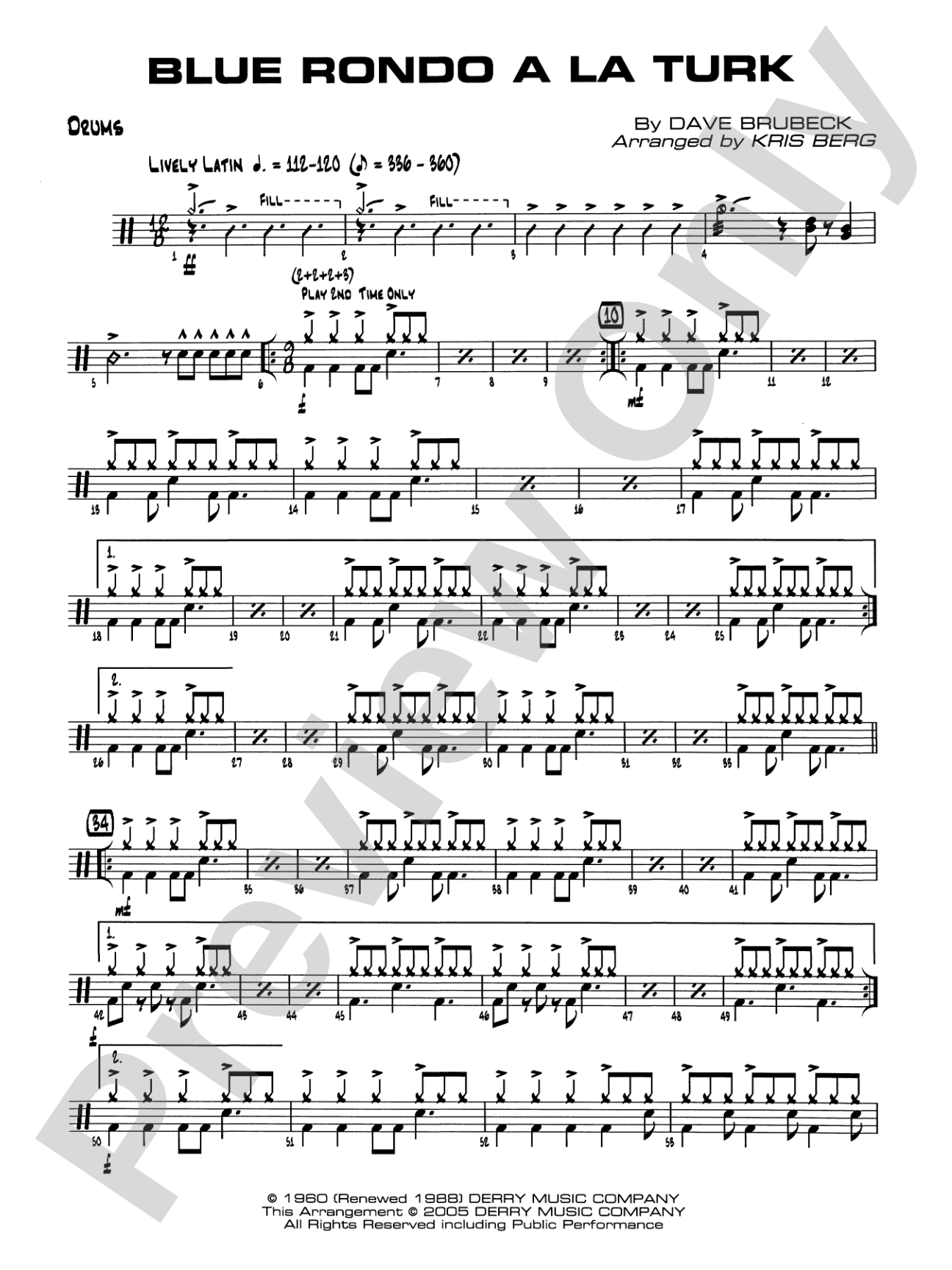

Blue Rondo a la Turk: Drums
By Dave Brubeck / arr. Kris Berg
Grade: 4.5 (Medium Advanced / Difficult)
Item: 00-PC-0014736_D
$3.00
Pickup currently not available
Description
A show-stopping tour de force! Dave Brubeck's fabulous tune from his classic quartet album Time Out. Arranger Kris Berg worked hard on this chart to capture the essence of Brubeck. The meter changes from 9/8 to 12/8 Afro-Cuban groove with the Brubeck rhythm patterns. Solo space for alto 1, trumpet 2 and drums. Lead trumpet goes up to high C. This is an exceptional chart for concert or festival! (5:03)


Don't just read it, hear it, play along with it, and watch your students grow with it. In MakeMusic Cloud, Blue Rondo a la Turk: Drums comes alive with professional accompaniment, adjustable tempo, and built-in practice tools that turn solo practice into real progress.
Open in the Player
Jump straight in and assign it today.
Start Your Free Trial
Open this title and explore the full library in minutes.
Sample Audio
1
Audio File
--:--
0:00
0:00
Sample Video
Additional Details
Series:
Premier Jazz Series
Publisher:
Alfred Music
Page Count:
74
SKU:
00-PC-0014736_D
More about this title
About the Composer: Dave Brubeck
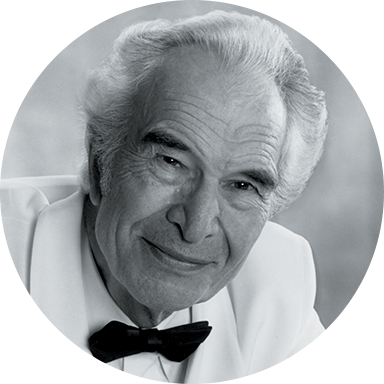
Dave Brubeck stands as one of jazz's most significant figures, equally accomplished as an improviser and a composer of substantial works. Beyond his legendary albums and the iconic "Take Five," Brubeck wrote choral pieces, orchestral works, chamber music, ballet suites, and large-scale compositions for chorus and orchestra, many of them fully notated. His studies with Darius Milhaud after World War II shaped his approach to blending jazz language with classical forms, a synthesis that defined his artistic voice.
Brubeck's influence extended far beyond music. He actively broke racial barriers in mid-twentieth-century America and received numerous honors, including the Presidential Medal of the Arts, a Grammy Lifetime Achievement Award, and induction into the American Classical Music Hall of Fame. His sacred works, including To Hope! and oratorios recorded by the London Symphony Orchestra, have been performed internationally. Time Out, the album from which "Blue Rondo a la Turk" comes, became the first jazz album to sell over a million copies.
Why we love this
Kris Berg's arrangement captures the compelling rhythmic heart of Brubeck's original without sacrificing the melodic brilliance that made this tune unforgettable. The meter shifts from 9/8 to 12/8 stay true to Brubeck's conception while remaining accessible to a working jazz ensemble, and the solo opportunities give your soloists room to shine. This chart delivers concert and festival impact in one package.
What to expect
The piece opens with intricate, almost mathematical precision in its 9/8 framework, building the kind of intellectual rigor Brubeck was famous for. Once it pivots into the 12/8 Afro-Cuban section, the energy becomes grooving and dance-like, with space for individual voices to breathe and improvise.
Who it's for
Jazz ensembles working at the advanced intermediate level or higher will find this chart rewarding. Directors preparing for festival or concert programming benefit from a piece that combines jazz authenticity with audience recognition.
How to get the most out of it
- Lock the ensemble into the 9/8 meter before attempting the meter change. The underlying pulse must feel effortless; practice the opening in half-time feel if needed to nail the Brubeck rhythm patterns.
- Assign your strongest alto 1 and trumpet 2 players to the solo sections. These aren't ornamental; they drive the energy forward, so encourage them to voice the changes fully.
- Watch for the transition into the 12/8 Afro-Cuban groove. Mark the groove's feel in rehearsal separately from the opening section, then practice the bridge as one continuous statement.
- Balance the lead trumpet's high C passages with the section underneath. The note itself is not the challenge; clarity of articulation and support from harmony are what make these moments sing.
How to use it
This works beautifully as a centerpiece in a jazz concert, especially paired with other standards or contemporary works that highlight different aspects of ensemble playing. It also holds its own at a festival, where its combination of rhythmic sophistication and melodic accessibility tends to leave strong impressions with adjudicators.
Skills your students will build
- Reading and performing in 9/8 and 12/8 meters
- Executing Afro-Cuban groove rhythms and articulation
- Improvisation over jazz changes within an ensemble context
- Balancing melodic clarity with complex harmonic accompaniment
- Transitioning between contrasting metric and rhythmic sections