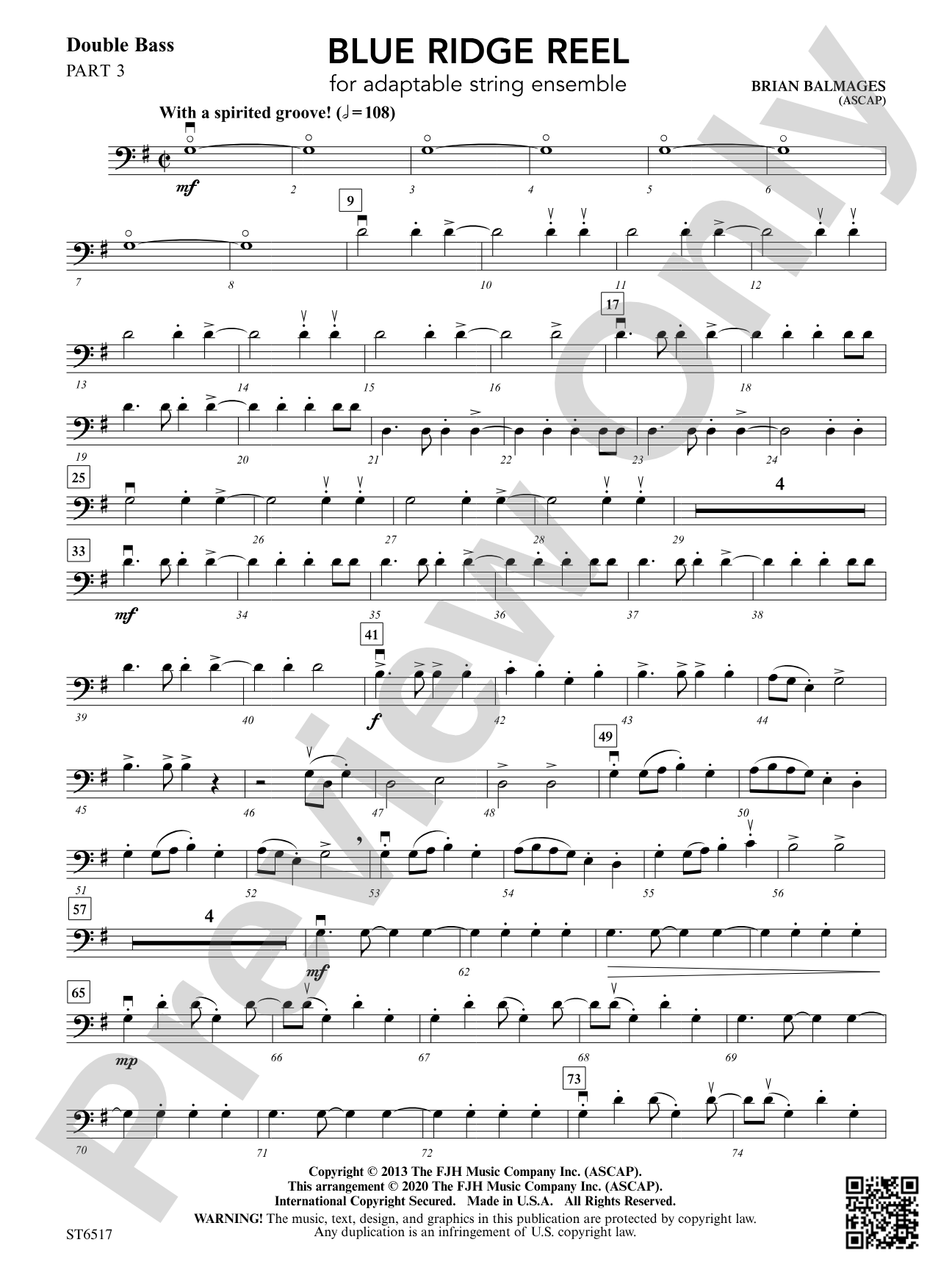
Blue Ridge Reel: Part 3 Double Bass
By Brian Balmages
Grade: 3
Item: 98-PC-DST6517_PART3_SB
Pickup currently not available
Description
Don't just read it, hear it, play along with it, and watch your students grow with it. In MakeMusic Cloud, Blue Ridge Reel: Part 3 Double Bass comes alive with professional accompaniment, adjustable tempo, and built-in practice tools that turn solo practice into real progress.
Jump straight in and assign it today.
Open this title and explore the full library in minutes.
Sample Audio
Sample Video
Additional Details
More about this title
About the Composer: Brian Balmages

Brian Balmages has established himself as a composer and conductor commanding equal fluency across orchestral, band, and chamber idioms. His works have been championed by ensembles at every level, from professional orchestras performing at Carnegie Hall and the Kennedy Center to school groups, and he has received commissions and recognitions including the A. Austin Harding Award, the 2020 NBA William D. Revelli Composition Contest for Love and Light, and membership in the American Bandmasters Association.
Beyond the concert hall, Balmages has contributed to significant national moments: his music was performed at the 2013 Presidential Inaugural Prayer Service attended by President Obama and Vice President Biden, and he was commissioned by the University of Miami to compose for the inauguration of its sixth president. As Director of MakeMusic Publications and Digital Education for Alfred and MakeMusic, he continues to shape music education through composition and administration. He maintains an active guest conducting calendar with all-state ensembles, university orchestras, and professional groups worldwide.
Why we love this
Balmages reimagines a beloved band work through the lens of string writing, giving orchestras access to fresh repertoire without sacrificing the infectious energy that made the original popular. The flexible instrumentation means you can perform this with exactly the players you have, whether that's a full string section or a smaller chamber group. A Grade 3 work that feels spirited and contemporary rather than dutiful makes room for genuine enthusiasm in rehearsal.
What to expect
Blue Ridge Reel pulses with the rhythmic vitality and melodic warmth of bluegrass tradition. String writing captures the brightness and snap of fiddle music, with driving accompaniment patterns that propel the piece forward at every turn, creating an effect that feels both approachable and genuinely exciting for young players.
Who it's for
String orchestras at the intermediate level seeking high-energy contest or festival repertoire that breaks from the typical classical mold. Directors working with ensembles that have variable instrumentation will appreciate the flexibility, and students who respond better to contemporary and folk-inspired material than traditional string literature will find real engagement here.
How to get the most out of it
- Anchor the rhythmic drive with a steady pulse in the lower strings; the bluegrass idiom depends on precise subdivision and forward motion, so lock in with your bass and cello section before worrying about ornamental details in the upper voices.
- Highlight the characteristic fiddle-like articulations in the violin parts through crisp bow attacks and light, bouncing strokes rather than smooth legato; this stylistic clarity distinguishes the bluegrass vocabulary from standard orchestra writing.
- Balance the ensemble so that melodic passages remain audible despite the rhythmic activity in supporting voices; Grade 3 groups often over-weight their accompaniment, which clouds the tune.
- Use the flexible instrumentation to your advantage in rehearsal by isolating sections that need attention; remove accompanists temporarily and let melody players work alone, then layer back in for context.
How to use it
Program this as a contrasting opener or closer on a concert featuring more traditional string repertoire; its contemporary energy and accessible idiom appeal to student performers and audiences alike. It works equally well in festival or contest settings where judges value musical engagement and stylistic authenticity over technical showiness.
Skills your students will build
- Playing fiddle-style articulations and bow techniques idiomatic to bluegrass
- Maintaining rhythmic precision and forward pulse in driving accompaniment patterns
- Balancing melody and accompaniment in folk-inspired arrangements
- Reading flexible instrumentation scores and adapting parts to available players
- Interpreting contemporary string writing that draws on non-classical traditions