
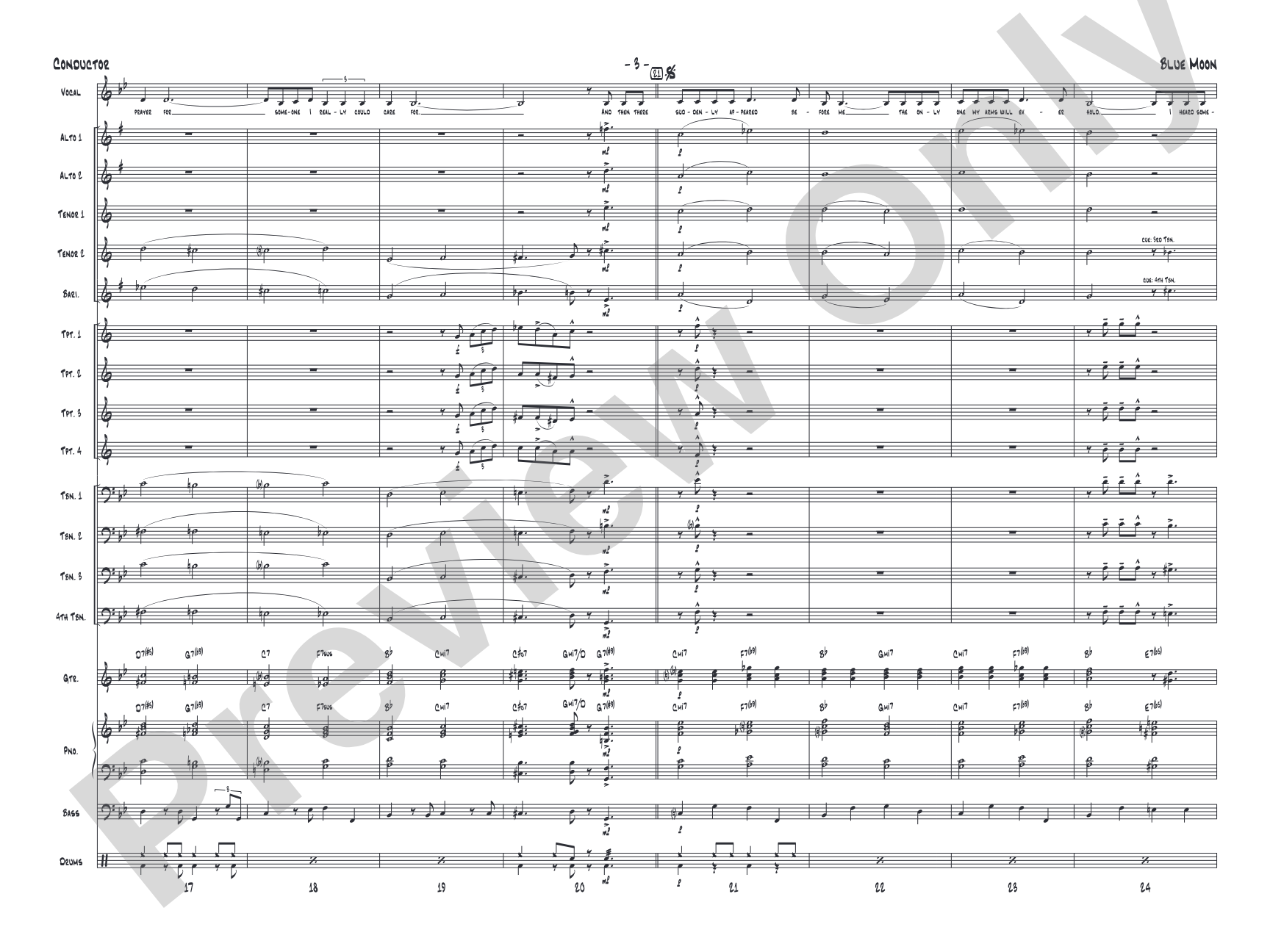
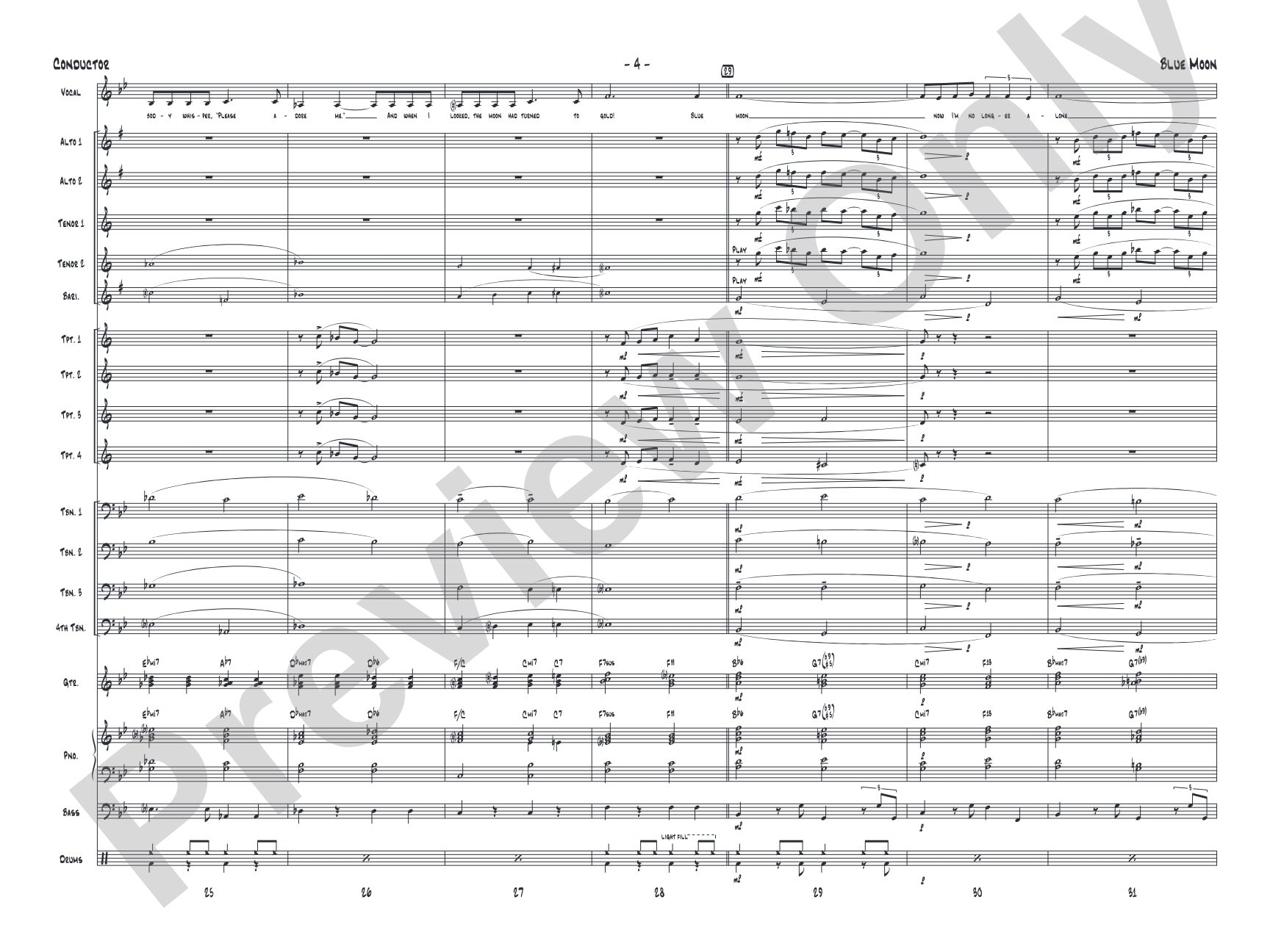
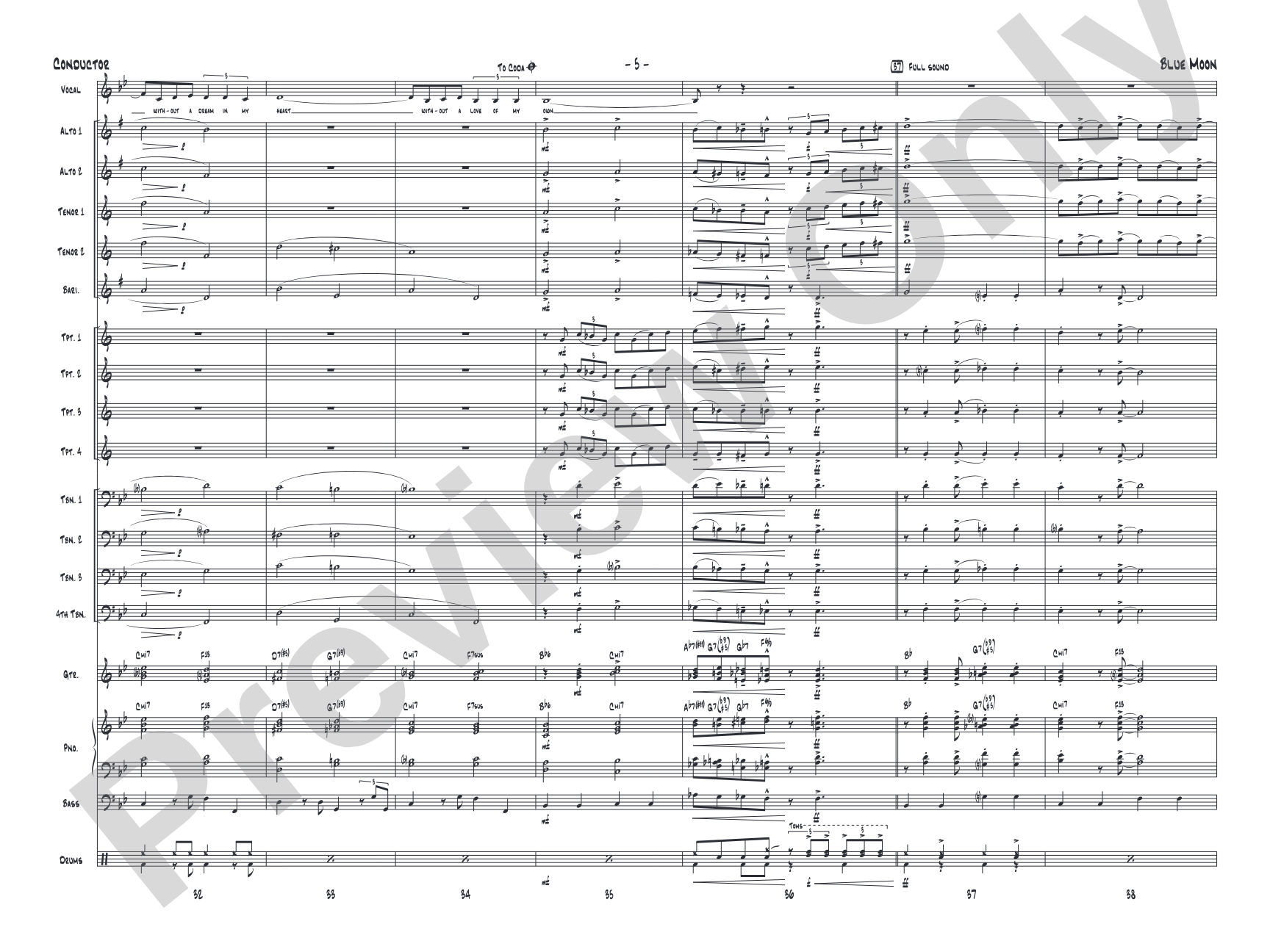
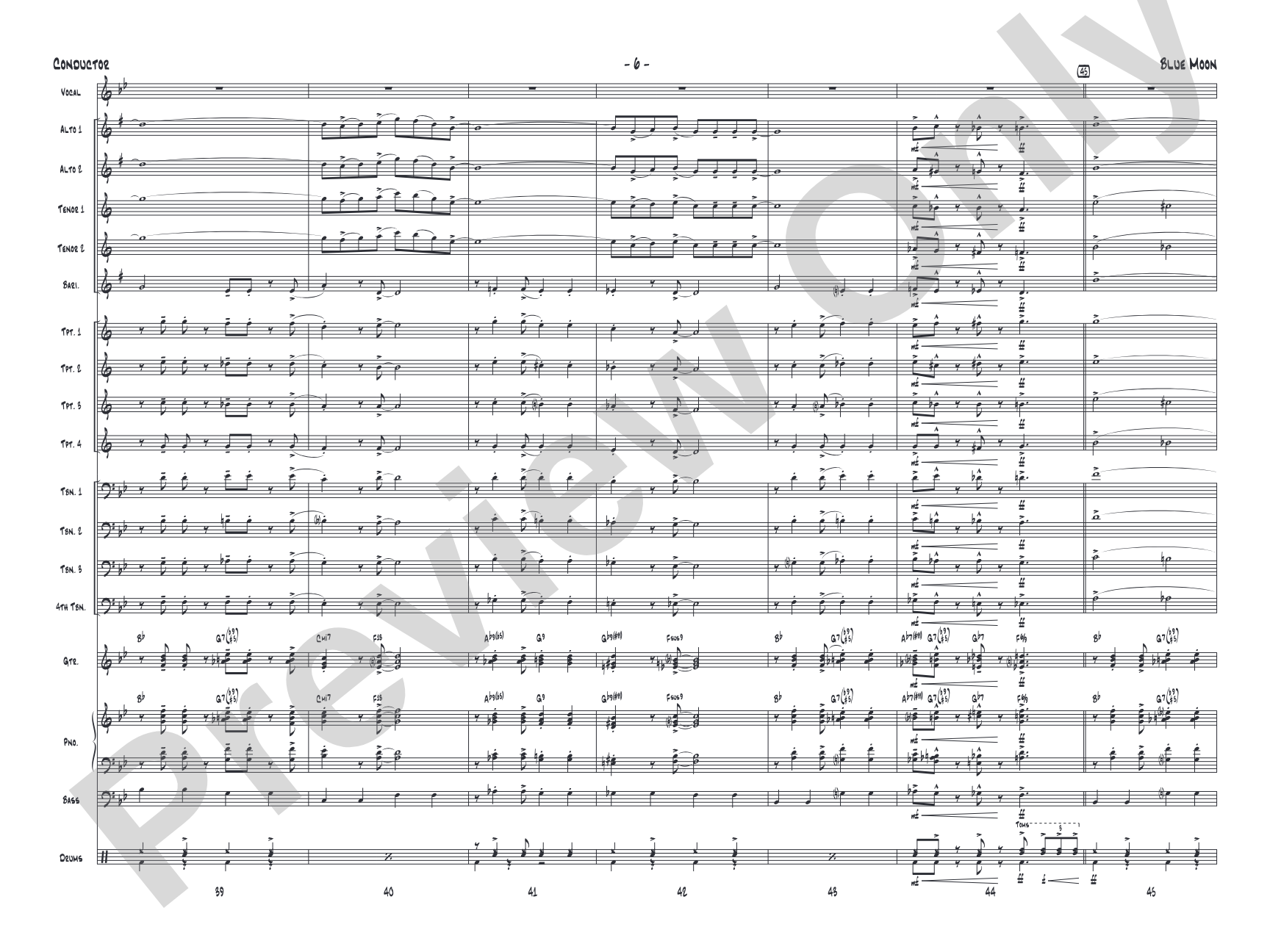
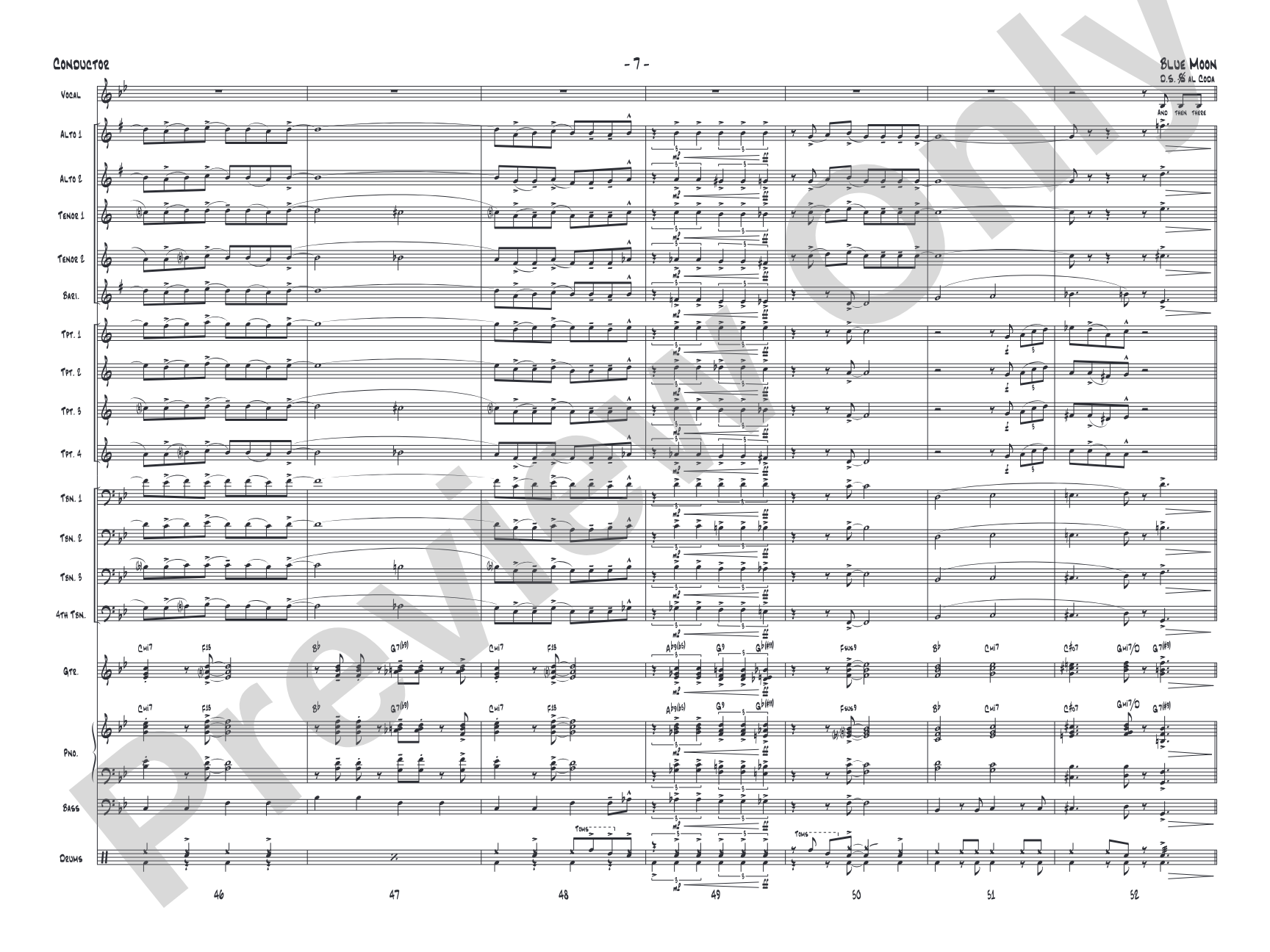
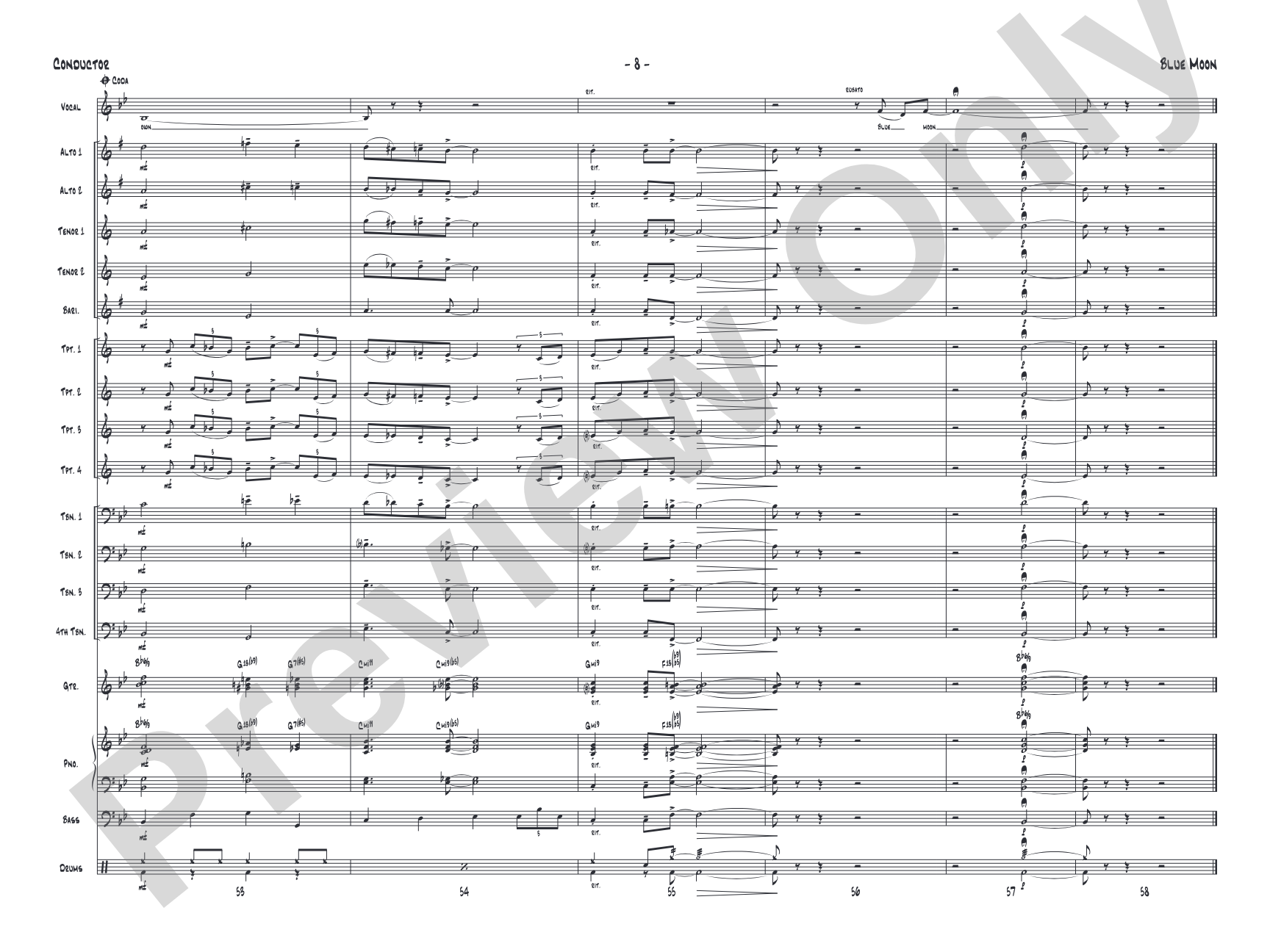

Blue Moon: Score
Lyrics by Lorenz Hart, music by Richard Rogers / arr. Victor López
Grade: 2 (Medium Easy)
Item: 00-PR-0005485
$10.00
Pickup currently not available
Description
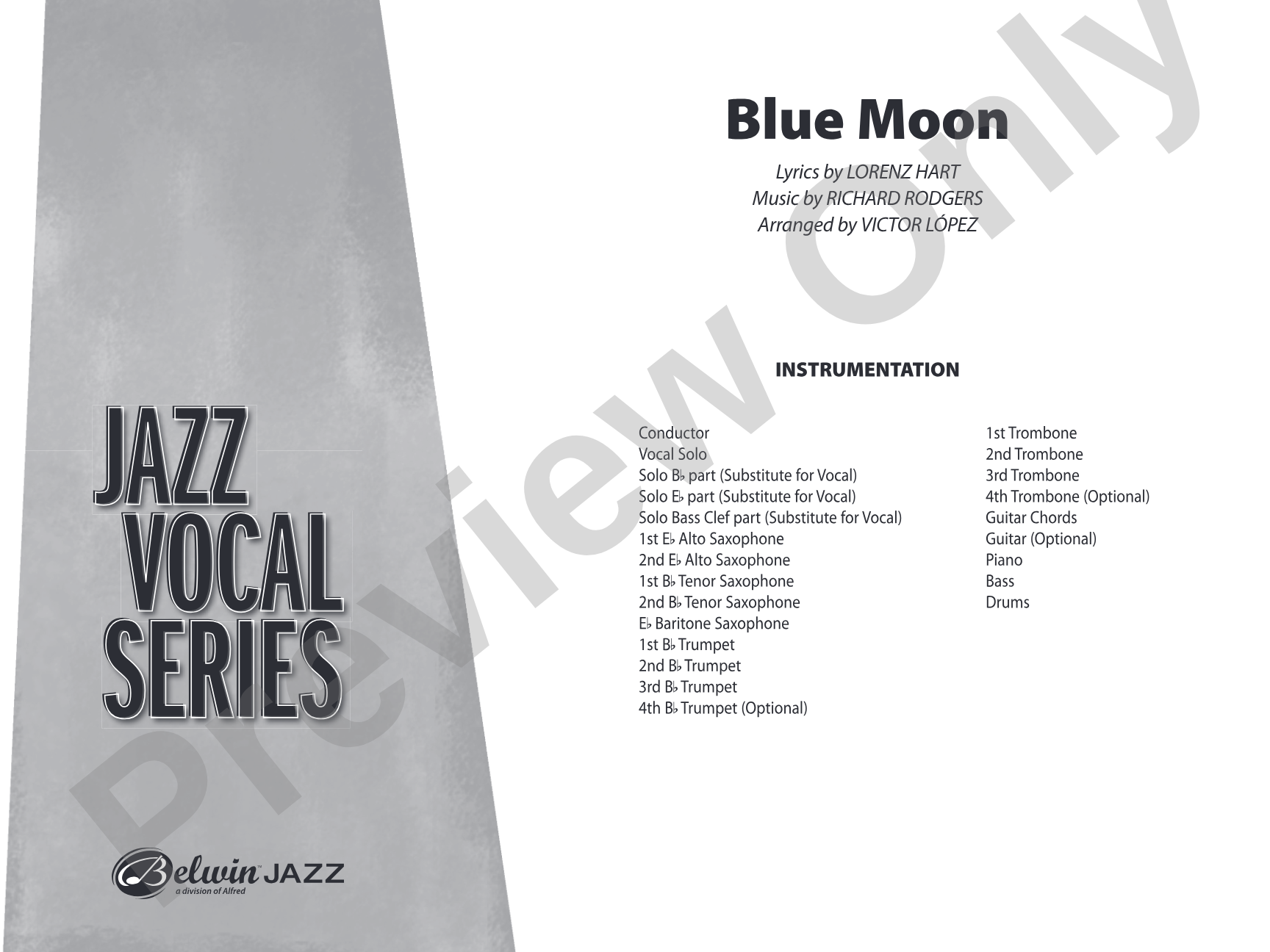
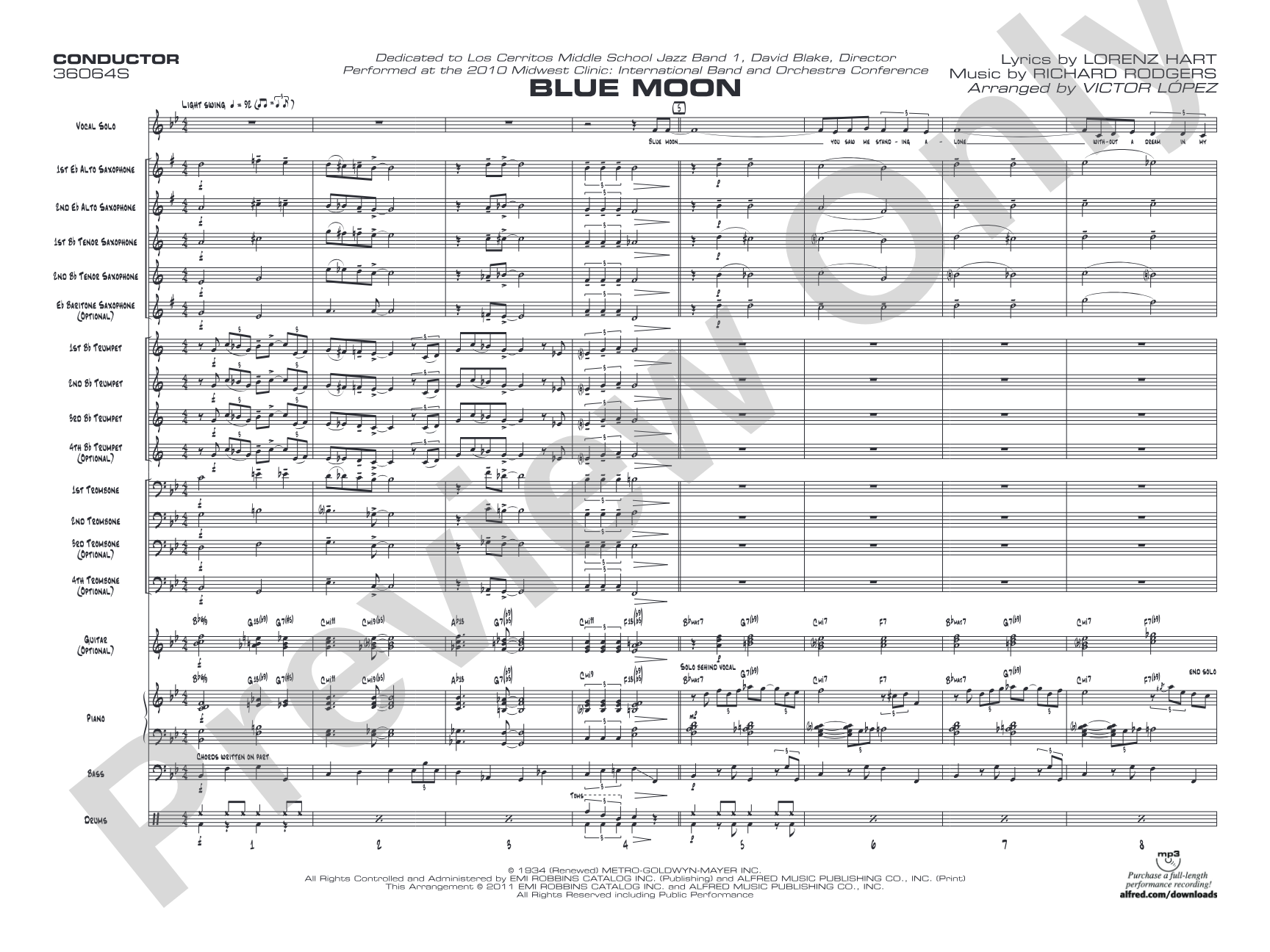
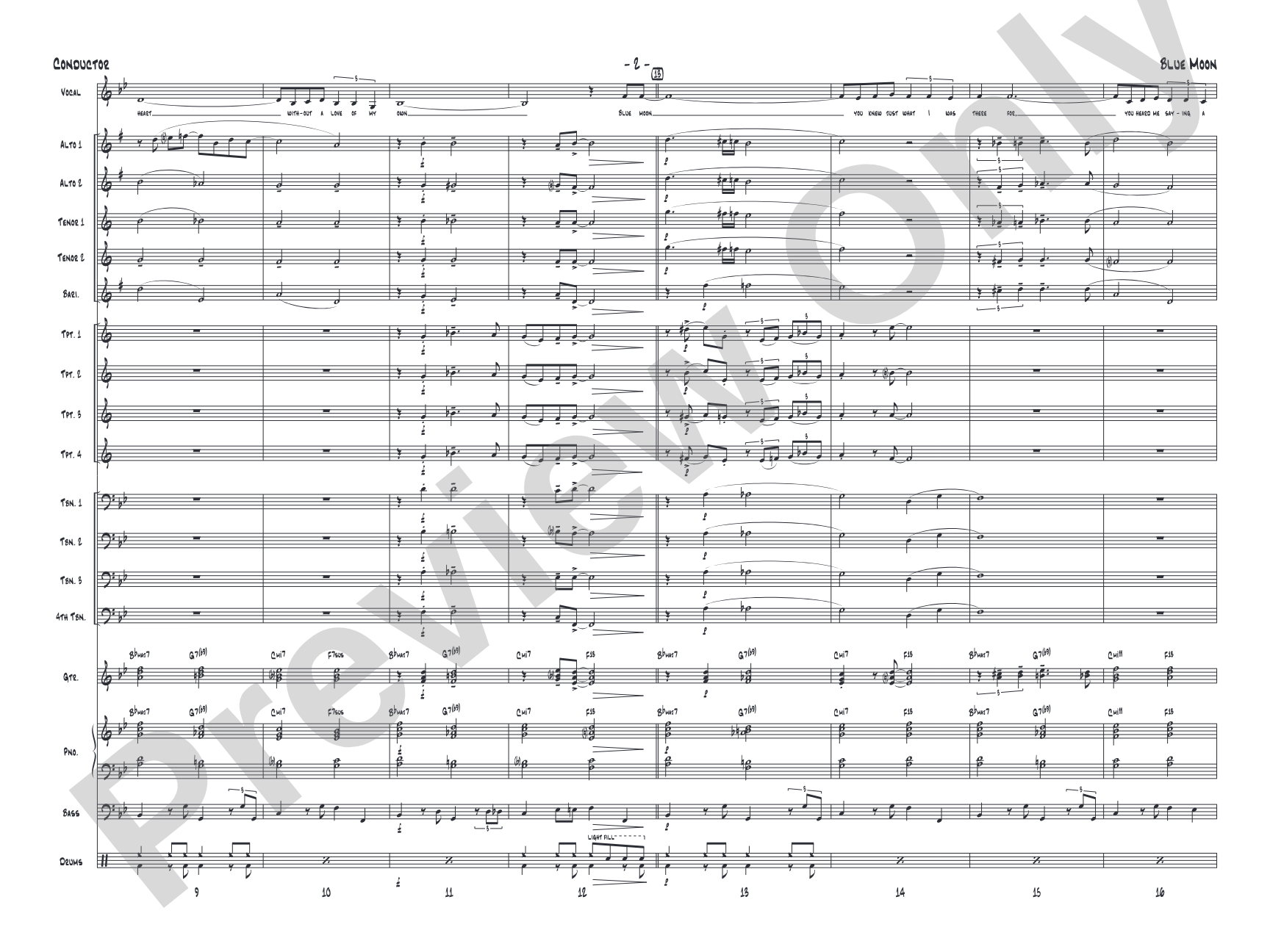
Featuring the full ensemble, this swing chart rehearses without a hitch. The vocal range is from G below the staff to second line G, treble clef. Scored for 5 saxes, 8 brass, and 4 rhythm, plus optional substitute parts for the vocal for B-flat, E-flat and trombone.


Don't just read it, hear it, play along with it, and watch your students grow with it. In MakeMusic Cloud, Blue Moon: Score comes alive with professional accompaniment, adjustable tempo, and built-in practice tools that turn solo practice into real progress.
Open in the Player
Jump straight in and assign it today.
Start Your Free Trial
Open this title and explore the full library in minutes.
Sample Audio
1
Audio File
--:--
0:00
0:00
Sample Video
Additional Details
Series:
Jazz Vocal Series
Publisher:
Alfred Music
Page Count:
86
SKU:
00-PR-0005485
More about this title
About the Composer: Richard Rogers
Richard Rodgers (1902-1979) created some of the most enduring melodies in American musical theater, collaborating with lyricist Oscar Hammerstein II on classics like The Sound of Music, South Pacific, and The King and I. His gift for writing singable, memorable lines that work equally well in Broadway theaters and jazz clubs made him a favorite among arrangers and performers across genres.
For music educators, Rodgers' catalog offers an exceptional resource: songs with strong melodic bones, clear harmonic structures, and universal appeal. Jazz arrangers have returned to his standards again and again because the melodies are robust enough to support improvisation and reharmonization without losing their essential character.
Why we love this
Victor López's arrangement captures all the swing and sophistication of the original without overwhelming a medium-easy ensemble. The optional substitute parts for vocal line (B-flat, E-flat, and trombone) mean you can program this even when your vocalist is unavailable, turning a solo feature into an ensemble moment. This is the kind of charting that lets everyone in the band feel the groove while the music stays concert-ready.
What to expect
Smooth and romantic without being saccharine. The melody drifts through the ensemble like a conversation between the singer and the band, with lush harmony underneath that feels both sophisticated and easy to listen to. There's room for the vocalist to breathe and for the rhythm section to establish a relaxed but unmistakable groove.
Who it's for
Jazz ensemble directors seeking a straightforward vocal feature that doesn't require virtuoso soloists or a large pit. Singers comfortable in the treble clef range who want to experience the classic swing repertoire with real ensemble support. Festivals and concerts where you want a accessible, engaging vocal solo that still commands respect.
How to get the most out of it
- Balance the vocal line so it sits naturally above the ensemble; the rhythm section should lock in first, then let the saxes and brass support the melody without covering the singer.
- Use the optional instrumental substitute parts for sectional rehearsals or as a backup plan, but resist programming them as alternatives in the same performance—commit to one version and let the band own it.
- Establish the swing feel early in rehearsal by isolating the rhythm section (piano, bass, drums, guitar) until the pocket is solid; the whole ensemble will align once that foundation is set.
- Pay attention to ensemble blend in the sax section and brass voicings, especially during the tighter chord passages—clarity matters more in a medium-easy chart than volume does.
How to use it
Program this mid-set to shift energy toward a more relaxed, lyrical moment after a high-tempo opener. It pairs well in a jazz concert program that balances big ensemble hits with smaller-scale features, and the medium-easy difficulty makes it a confident choice for early-season festival entries.
Skills your students will build
- Playing through-composed swing accompaniment figures with consistent rhythmic pocket
- Balancing ensemble voicings to support a featured soloist without drowning out the melody
- Understanding jazz harmony and chord-tone soloing within a standard form
- Coordinating rhythm section (piano, bass, drums, guitar) for clean, cohesive groove
- Reading and executing dynamics and articulation across a full score without a conductor