Blue Moon Of Kentucky Sheet Music Preview

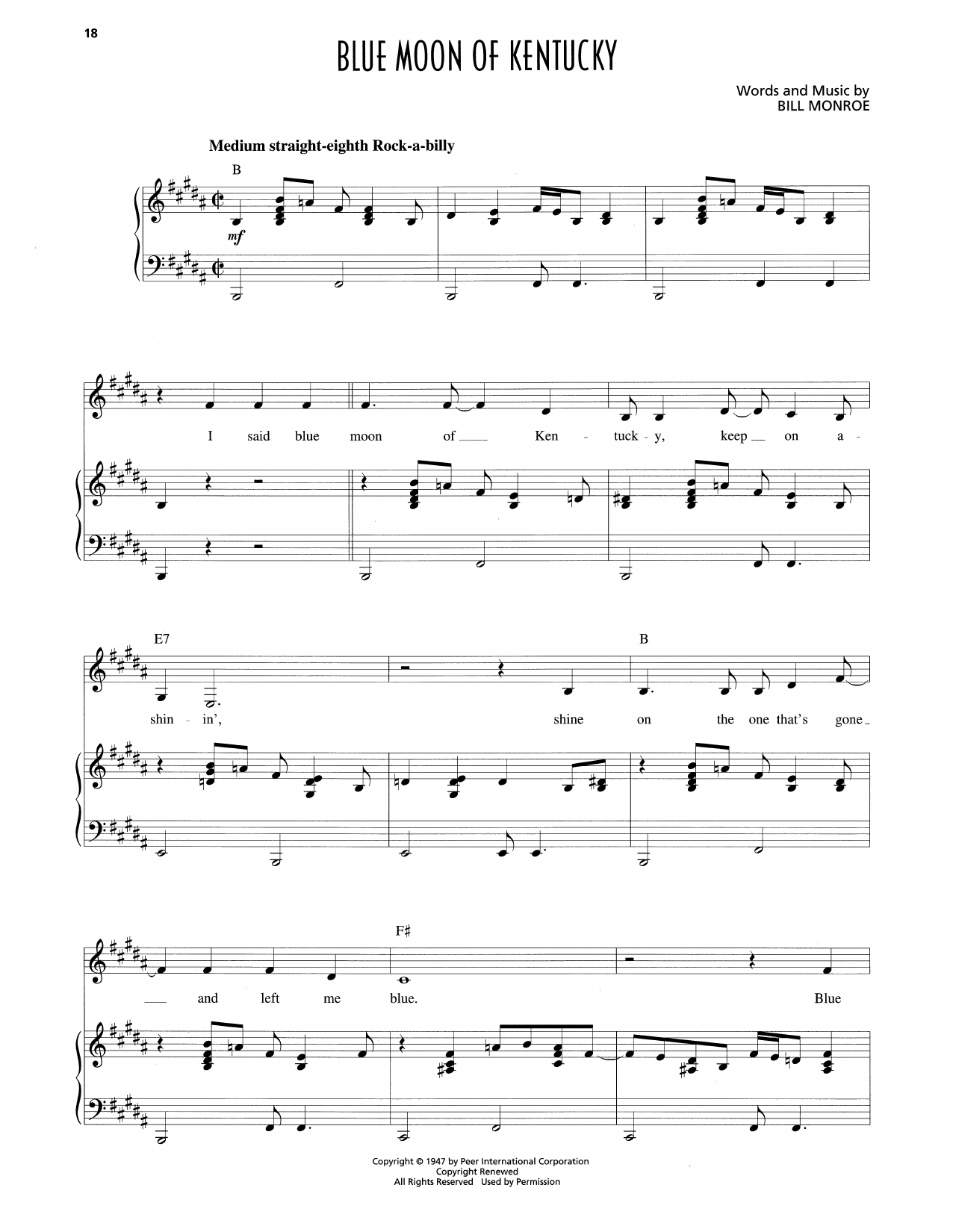
Blue Moon Of Kentucky: Piano Vocal

As performed by Patsy Cline

Item: 35-DS01812871

Digital Download
$5.99
Description

Blue Moon Of Kentucky: Piano Vocal isn't in MakeMusic Cloud just yet...but it could be. Let us know you'd like to see it, and you'll help shape what comes next. In the meantime, start a free trial and dive into thousands of interactive titles your students can play along with today.

Sample Audio
No sample audio found.
Sample Video
Additional Details
Publisher: Hal Leonard
Page Count: 5
SKU: 35-DS01812871

More about this title

About the Artist: Patsy Cline

Patsy Cline (1932–1963) became one of country music's most influential vocalists by refusing to stay in a single lane. Her ability to inhabit a song with genuine emotion and technical control made her a crossover phenomenon, equally at home on the Country charts, pop radio, and the Grand Ole Opry stage. She died tragically in a plane crash at age 31, but her recorded legacy continues to define what it means to sing with vulnerability and precision.

For music educators, Cline remains a masterclass in vocal storytelling. Her phrasing choices, her willingness to place a word slightly behind the beat for emotional weight, and her clear diction set a standard that transcends genre. Students who study her recordings learn that technique serves emotion, not the other way around.

Why we love this

Patsy Cline's vocal approach sits at the intersection of jazz-inflected phrasing and country authenticity, which makes this arrangement a rich vehicle for teaching expressive singing. The piano part doesn't overshadow the voice; instead, it creates space for the vocalist to shape the melody and explore rubato without losing the song's essential character. Singers at multiple levels find something to discover here, whether it's learning to land a lyric or understanding how a ballad breathes.

What to expect

A quiet moment under stars. The melody unfolds with an ache that never tips into self-pity; instead, it sits in the space between longing and acceptance. Patsy Cline's original recording has a quality of inevitability, as if the song knew exactly how it needed to be sung all along. This arrangement preserves that sense of rightness.

Who it's for

Vocalists building a country or pop repertoire, pianists seeking arrangements that honor the song's original character while remaining playable at the intermediate level, and teachers looking for material that demonstrates how a simple, honest melody can carry profound emotional weight.

How to get the most out of it

  • Let the piano establish the harmonic world first. The introduction sets the emotional tone, so resist the urge to come in early or rush through the vocalist's entrance.
  • Shape the melody by listening to how Cline's recorded version places certain words slightly behind or ahead of the beat. That flexibility is the song's heart.
  • Balance the vocal line's prominence without straining. This ballad lives in intimacy, not power; the pianist should support rather than compete.
  • Pay attention to the song's architectural moments. Know where the verse ends and the chorus begins, and use a fractional breath or pause to clarify that structure for the listener.

How to use it

Pair this with other American standards or Americana pieces in a recital focused on storytelling and vocal legacy. It also serves as a bridge between genres in a concert that moves between pop, country, and jazz. The five-page length makes it substantial enough to anchor a program section without dominating the entire set.

Skills your students will build

  • Expressive phrasing and deliberate placement of lyrics ahead of or behind the beat
  • Balancing vocal projection with intimate delivery in a ballad context
  • Interpreting notation to honor both the composer's intent and the original recording's artistic choices
  • Collaborative listening between voice and piano accompaniment
  • Understanding the structure and harmonic journey of a country/pop ballad

You May Also Like