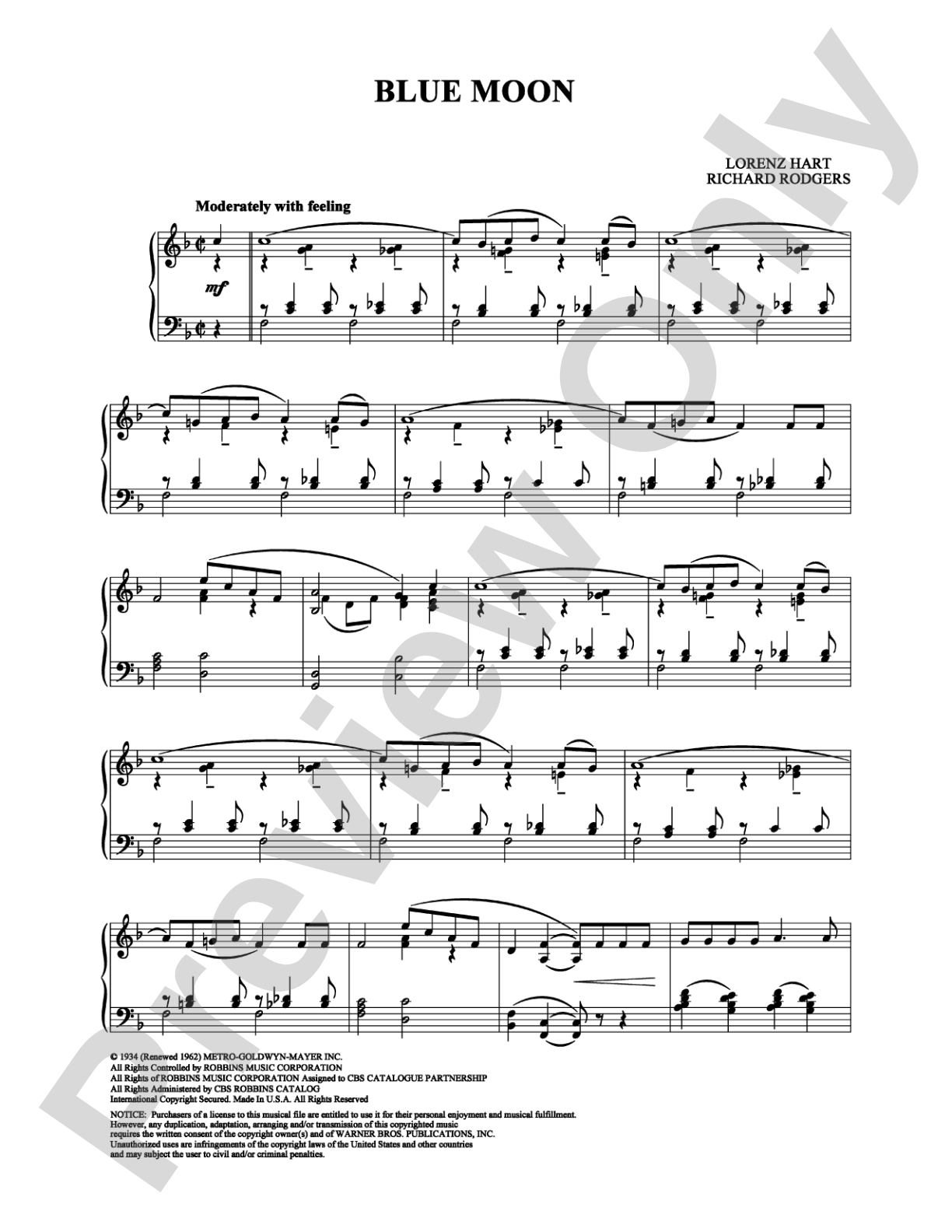
Blue Moon: Piano Digital Sheet Music

Blue Moon: Piano Digital Sheet Music

Richard Rodgers, George Shearing

Item: 00-PS-0000668

Digital Download
$3.99
Description

Blue Moon: Piano Digital Sheet Music isn't in MakeMusic Cloud just yet...but it could be. Let us know you'd like to see it, and you'll help shape what comes next. In the meantime, start a free trial and dive into thousands of interactive titles your students can play along with today.

Sample Audio
No sample audio found.
Sample Video
Additional Details
SKU: 00-PS-0000668

More about this title

About the Artist: George Shearing

George Shearing (1919-2011) was a British jazz pianist and composer whose sophisticated harmonies and cool, articulate touch shaped the sound of modern jazz piano. Blind from birth, he developed an extraordinary ear and went on to lead one of the most successful jazz groups of the 1950s, earning multiple Grammy Awards and becoming a fixture on American radio and television. His approach to standards emphasized elegant voicings and precise ensemble interplay, qualities that remain central to how jazz pianists interpret the Great American Songbook today.

Why we love this

Shearing's interpretation of this classic standard exemplifies the clarity and harmonic intelligence that made him a tastemaker in jazz. The piece offers pianists a masterclass in how to navigate a beloved melody with sophistication while maintaining its emotional core, making it equally valuable for study and performance.

What to expect

Nocturnal and wistful, with the kind of sophisticated restraint that suggests depth rather than display. Shearing's touch brings out the bittersweet quality in the melody while his harmonies add subtle complexity, creating an arrangement that feels both timeless and distinctly his own.

Who it's for

Jazz pianists working to expand their approach to standards, whether preparing for a recital, studying how great artists reharmonize familiar melodies, or developing their own interpretive voice. Teachers of intermediate to advanced jazz piano students will find this a rich reference for demonstrating professional-level musicianship on a beloved tune.

How to get the most out of it

  • Pay close attention to Shearing's chord voicings and voice leading. His approach to harmonization often differs from lead-sheet realizations, and those choices reveal his pedagogical philosophy about how standards should breathe.
  • Balance the melody against the harmonic movement. Shearing never overshadows the tune, but he never lets it sit passively either; every note of accompaniment serves a purpose.
  • Work with rubato in the slower sections. Jazz interpretation of standards requires flexibility that a strict tempo cannot provide; let the phrasing dictate the rhythm rather than the reverse.

How to use it

Feature this as a jazz standard in a recital or concert showcasing different interpretations of the American Songbook, or use it as a study model when teaching advanced students how master pianists approach reharmonization and arrangement. It works particularly well in programming that bridges traditional jazz repertoire with contemporary performance.

Skills your students will build

  • Jazz reharmonization and voice leading
  • Interpreting and executing sophisticated chord voicings on piano
  • Balancing melody and accompaniment in a standard
  • Flexible rubato and rhythmic phrasing in jazz context
  • Understanding how arrangement choices affect emotional content

You May Also Like