
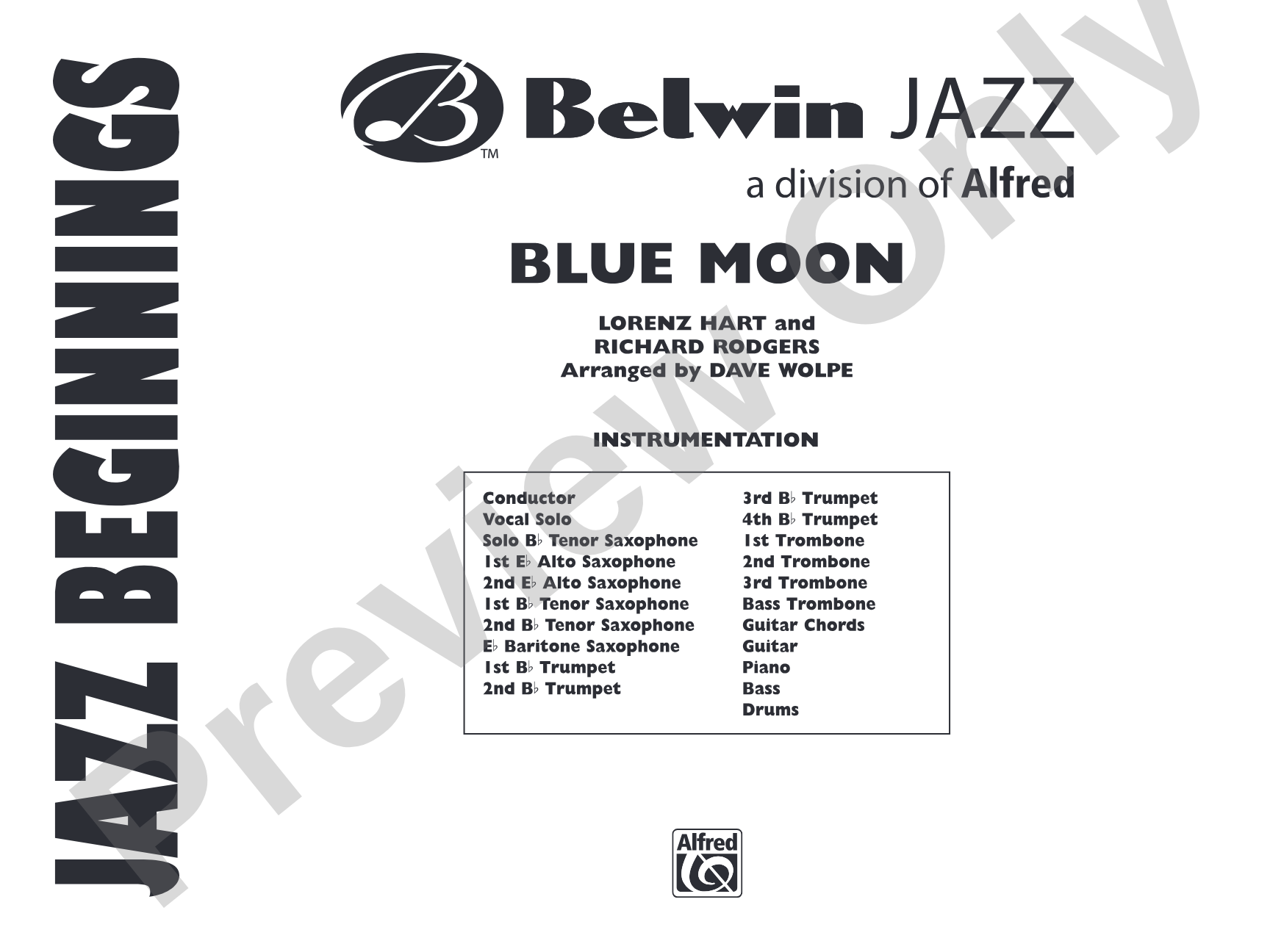
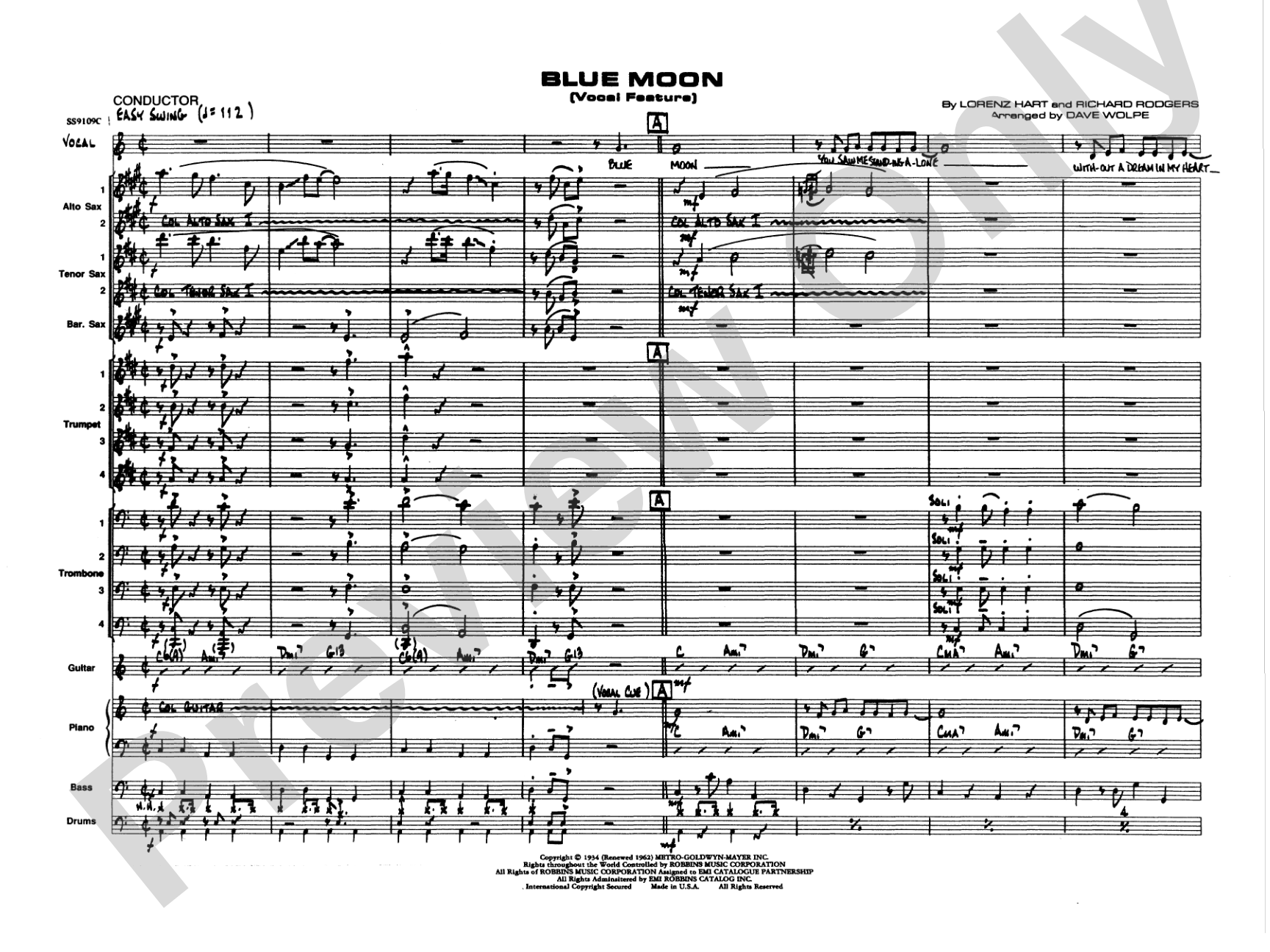
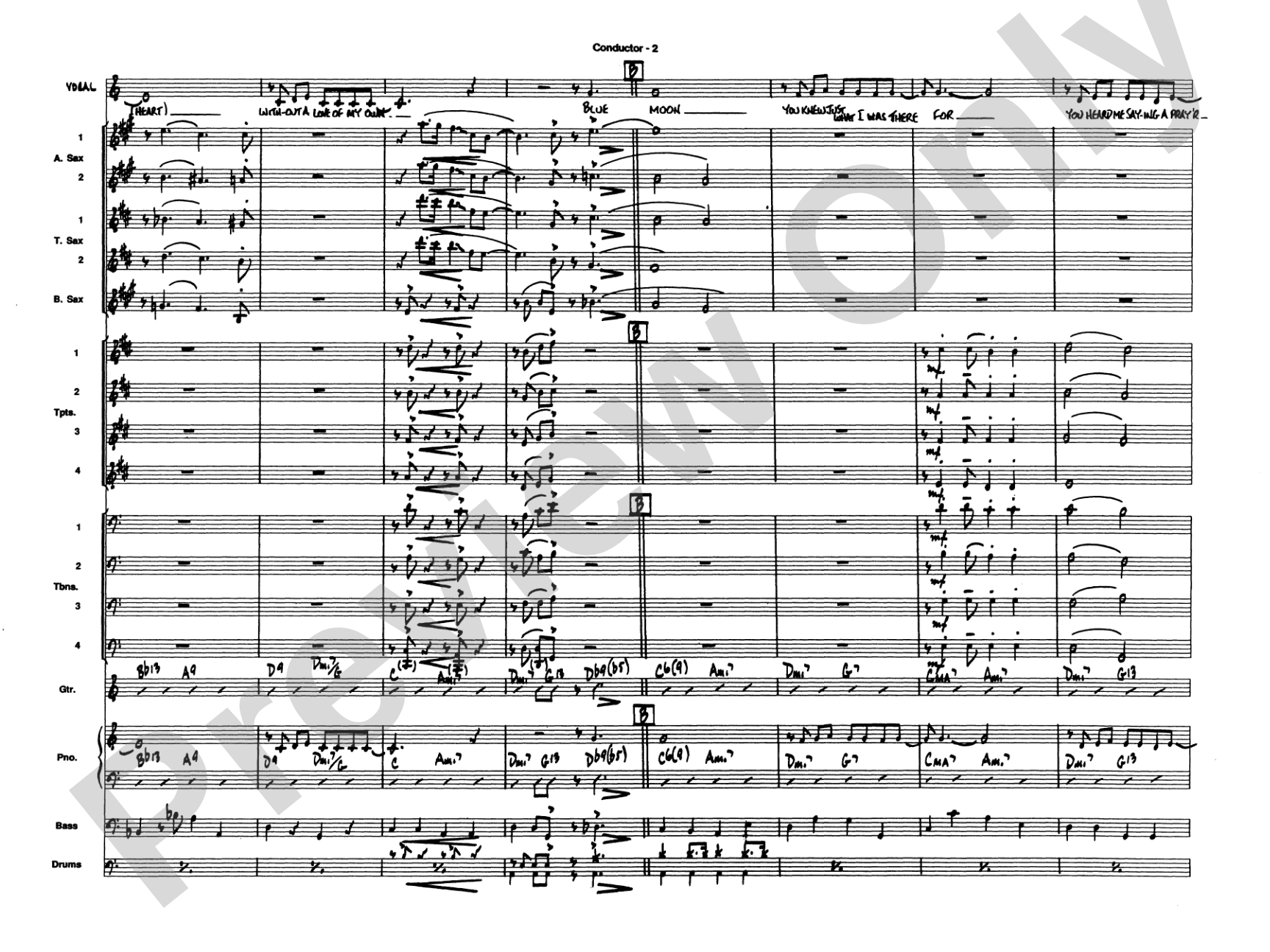
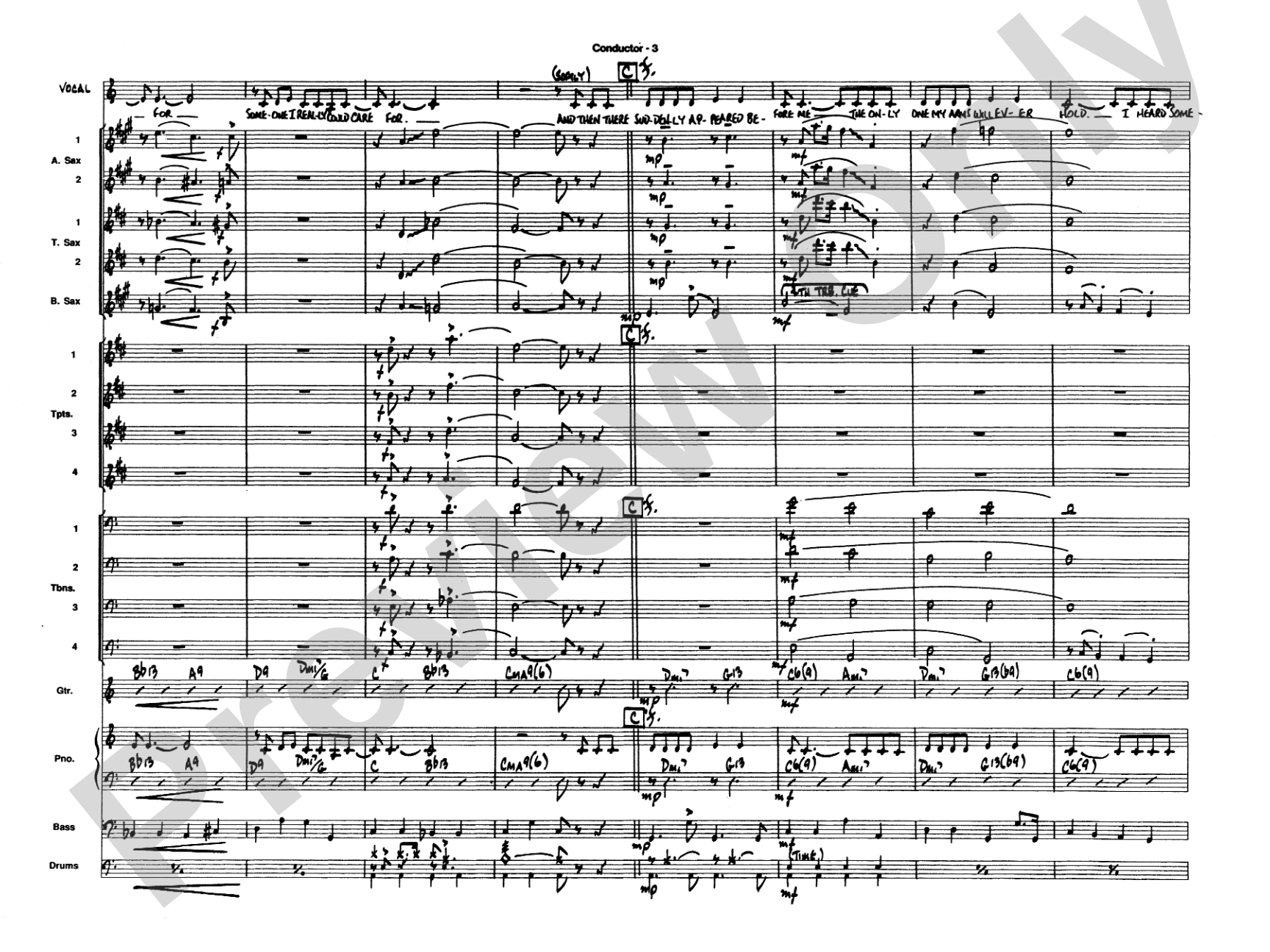
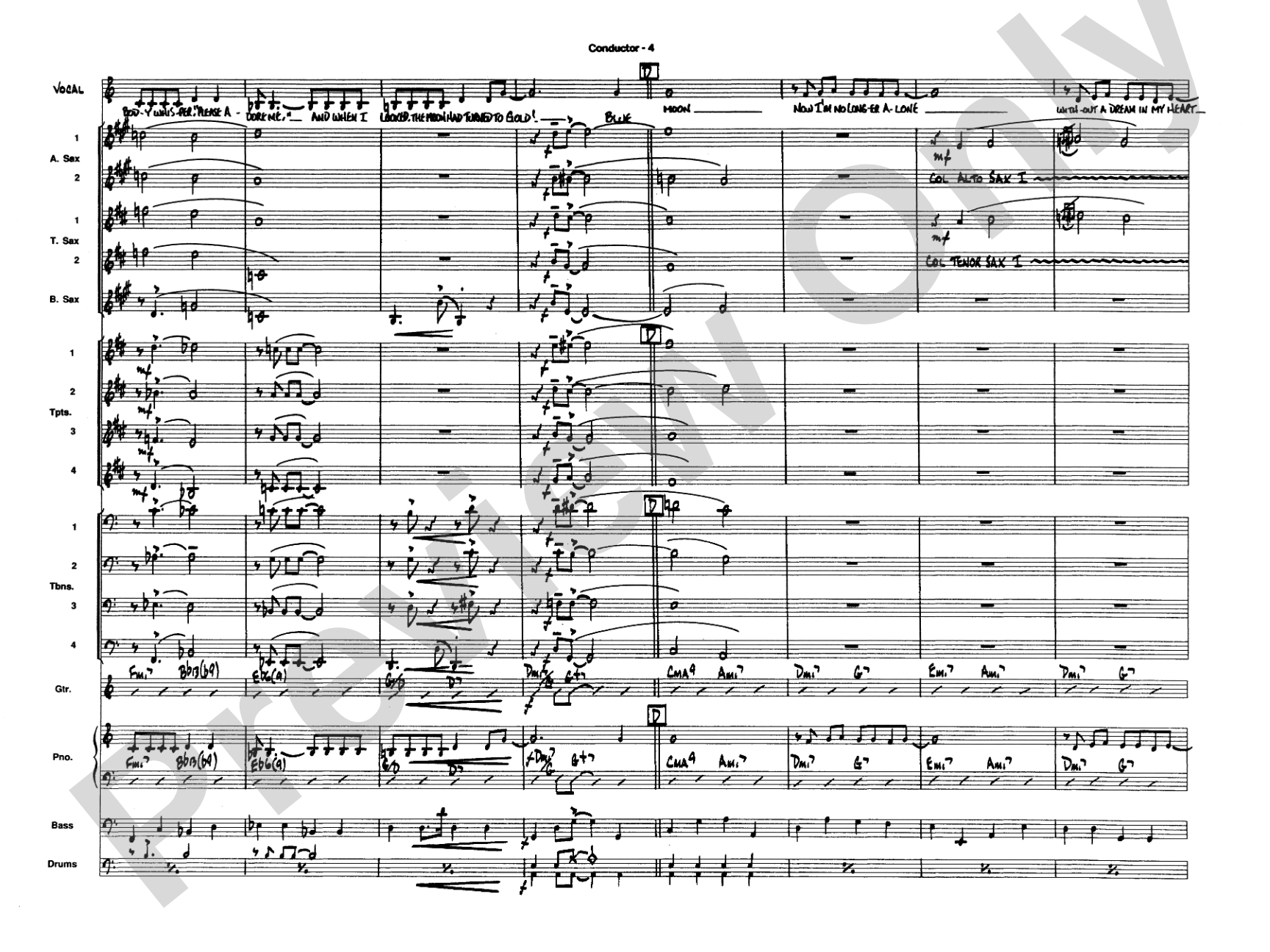
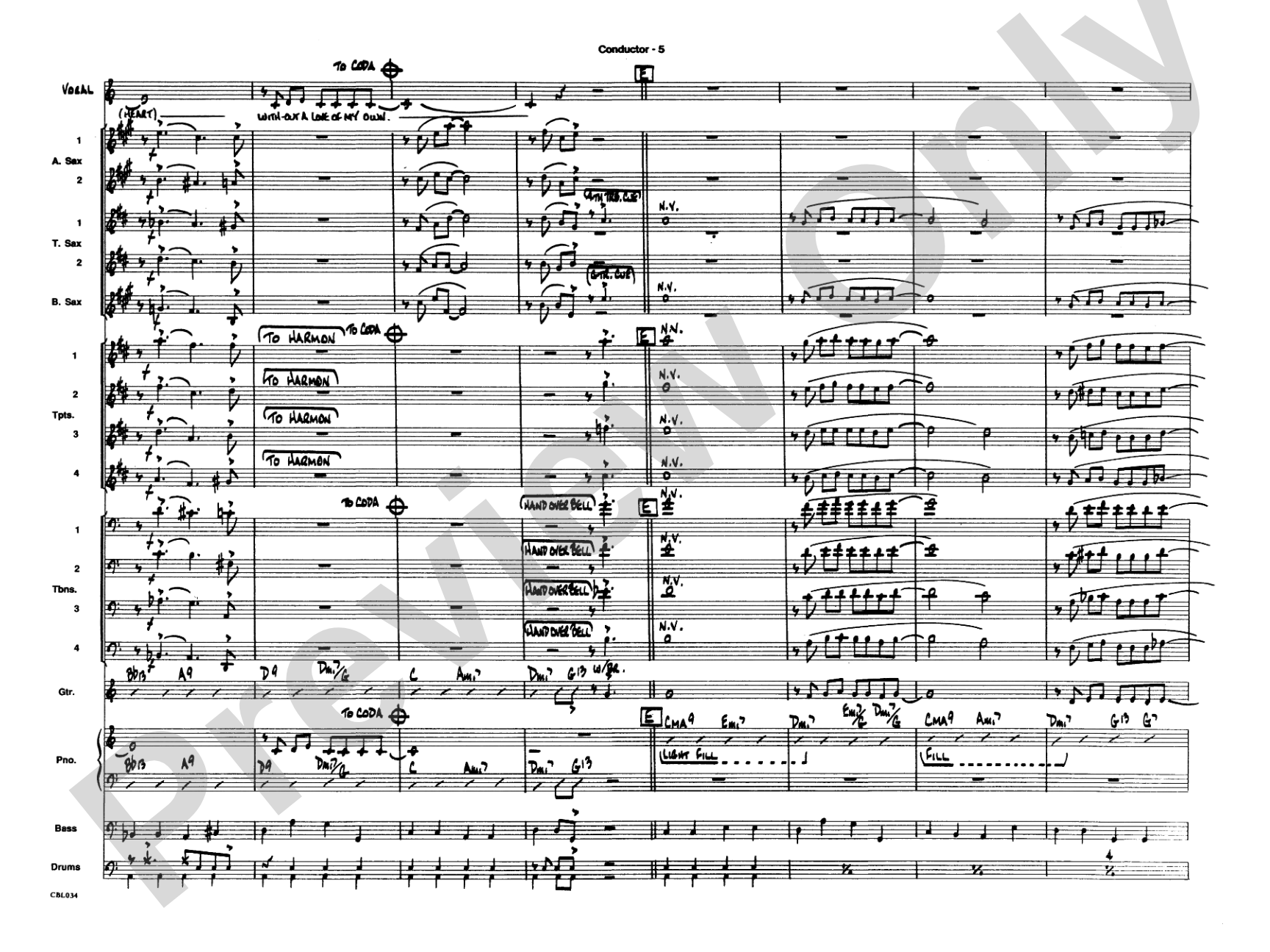
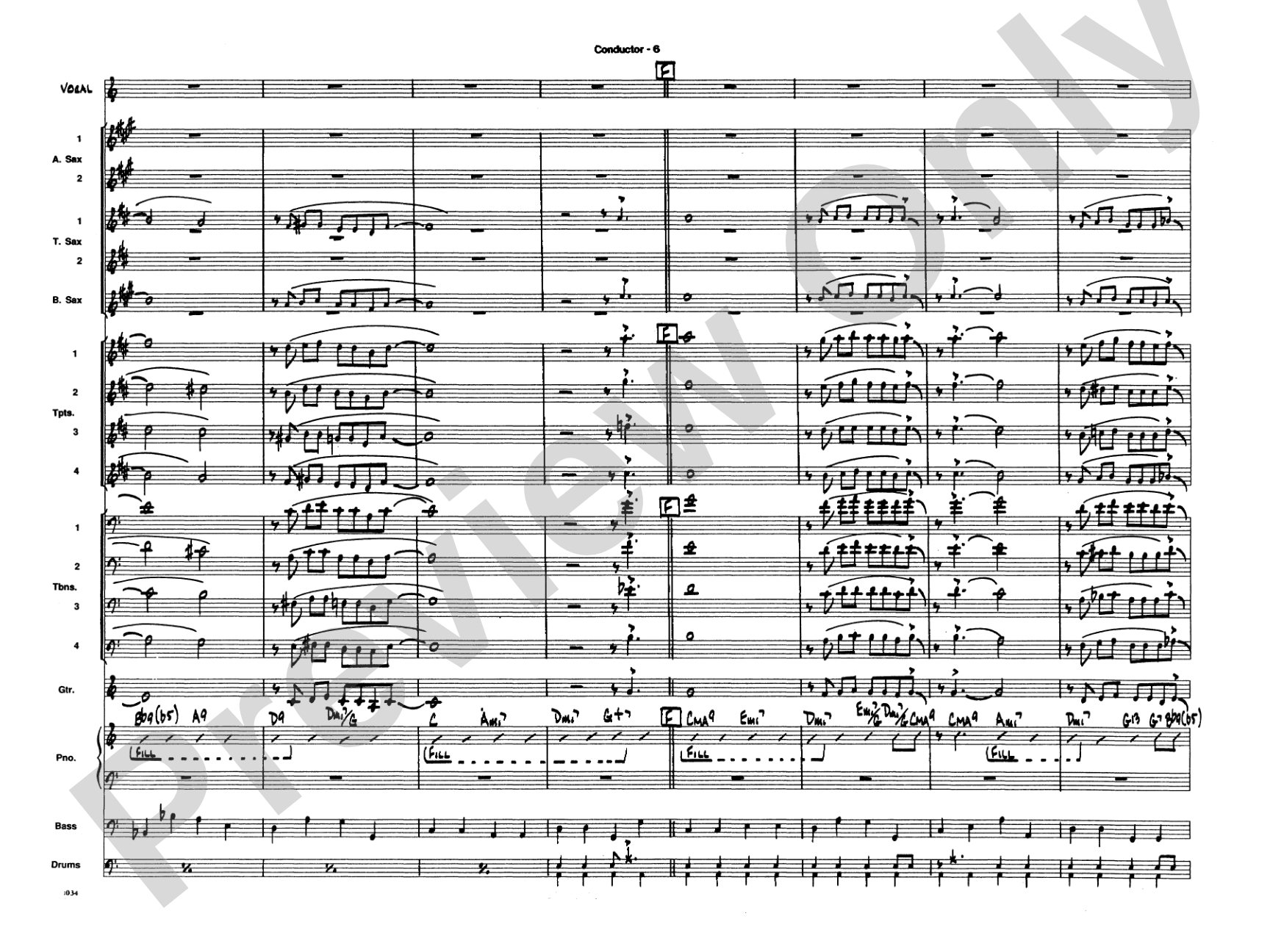
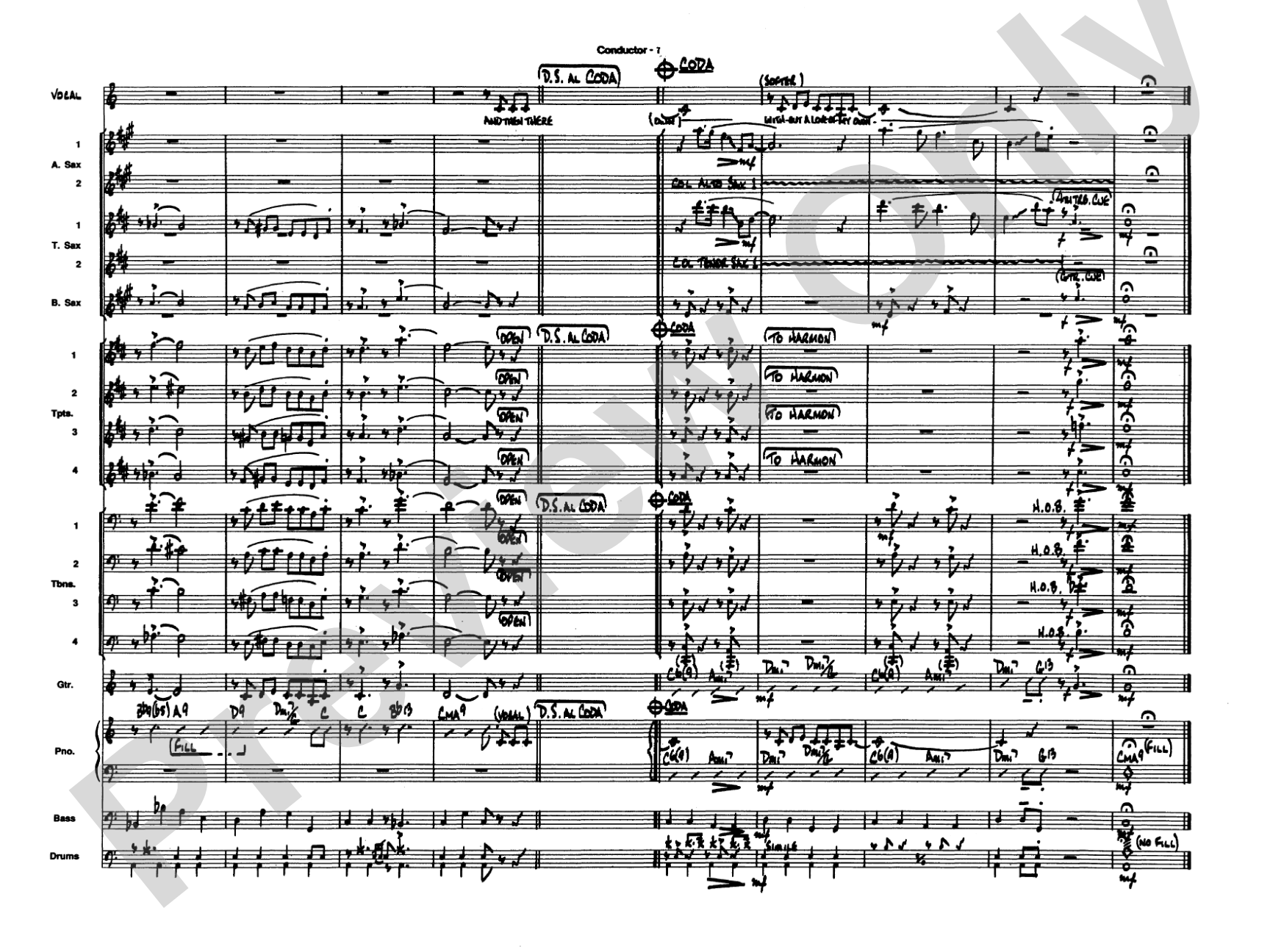

Blue Moon: Vocal Solo with Jazz Ensemble Conductor Score & Parts
Vocal Feature - Key of C
Music by Richard Rodgers, lyrics by Lorenz Hart / arr. Dave Wolpe
Grade: 3 (Medium)
Item: 00-PK-0002639

$54.00
Pickup currently not available
Buy Extra Parts (Digital PDF Download)
| Product | Price | Quantity |
|---|---|---|
| Blue Moon: Score | $9.00 | |
| Blue Moon: Vocal Solo | $5.99 | |
| Blue Moon: Solo Tenor Saxophone | $5.99 | |
| Blue Moon: E-flat Alto Saxophone | $5.99 | |
| Blue Moon: 2nd E-flat Alto Saxophone | $5.99 | |
| Blue Moon: B-flat Tenor Saxophone | $5.99 | |
| Blue Moon: 2nd B-flat Tenor Saxophone | $5.99 | |
| Blue Moon: E-flat Baritone Saxophone | $5.99 | |
| Blue Moon: 1st B-flat Trumpet | $5.99 | |
| Blue Moon: 2nd B-flat Trumpet | $5.99 | |
| Blue Moon: 3rd B-flat Trumpet | $5.99 | |
| Blue Moon: 4th B-flat Trumpet | $5.99 | |
| Blue Moon: 1st Trombone | $5.99 | |
| Blue Moon: 2nd Trombone | $5.99 | |
| Blue Moon: 3rd Trombone | $5.99 | |
| Blue Moon: 4th Trombone | $5.99 | |
| Blue Moon: Guitar Chords | $5.99 | |
| Blue Moon: Guitar | $5.99 | |
| Blue Moon: Piano Accompaniment | $5.99 | |
| Blue Moon: String Bass | $5.99 | |
| Blue Moon: Drums | $5.99 |
Parts Added to Cart!
Description
One of the most famous of all standards in an easy arrangement for both vocalist and big band. The vocalist has the spotlight, but the band gets a chance to sparkle, too. Key of C.


Don't just read it, hear it, play along with it, and watch your students grow with it. In MakeMusic Cloud, Blue Moon: Vocal Solo with Jazz Ensemble Conductor Score & Parts comes alive with professional accompaniment, adjustable tempo, and built-in practice tools that turn solo practice into real progress.
Open in the Player
Jump straight in and assign it today.
Start Your Free Trial
Open this title and explore the full library in minutes.
Sample Audio
No sample audio found.
Sample Video
No sample videos found.
Additional Details
Series:
Jazz Vocal Series
Publisher:
Alfred Music
Page Count:
84
SKU:
00-PK-0002639
More about this title
About the Composer: Richard Rodgers
Richard Rodgers (1902-1979) shaped American musical theater across five decades, collaborating with lyricist Lorenz Hart in the 1920s and 1930s before his legendary partnership with Oscar Hammerstein II from 1943 onward. His gift for memorable melodies and sophisticated harmonic language made standards like "Blue Moon," "My Funny Valentine," and "Some Enchanted Evening" central to the American songbook.
Rodgers composed across Broadway, Hollywood, and television, earning him a Pulitzer Prize, two Academy Awards, and countless Grammy nominations. His works remain staples of jazz repertoire precisely because their harmonic richness and balanced phrases reward both vocalists and ensemble players.
Why we love this
This arrangement hits a rare sweet spot: the vocalist gets a genuinely rewarding solo feature over a standard that everyone recognizes, while your ensemble parts stay engaging without overwhelming a Grade 3 group. Dave Wolpe's orchestration lets the band support rather than compete, which means rehearsals focus on blend and listening instead of survival mode.
What to expect
"Blue Moon" floats on a dreamy, romantic swing groove. The tune unfolds with ballad grace, then opens up into brighter, more energetic passages where the ensemble can stretch. There's an intimacy in the vocal part paired against the warmth of a big band sound.
Who it's for
This works best for jazz ensembles with a vocalist on the roster—high school jazz bands, community college groups, or adult community bands that feature singers. It's also perfect for jazz singers studying with an ensemble accompanist, since the parts are fully notated and the conductor score keeps everyone locked together.
How to get the most out of it
- Establish the swing feel in sectional rehearsals before the vocalist joins full band. The rhythm section (piano, bass, drums) sets the pocket; have them lock the groove first.
- Balance the vocal line so the ensemble supports without drowning it out. A good rule: if you can't hear the vocalist's lyrics clearly from the back row, the band is playing too loud.
- Mark the form clearly in the parts so the vocalist and band stay together. Call out section letters at rehearsals until the ensemble knows the tune cold.
- Work dynamics as a full group at least once before performance. Grade 3 ensembles often need explicit guidance on when to pull back and when to swell alongside the voice.
How to use it
Slot this into a jazz concert's second half when audiences are settled and ready to enjoy a vocalist. It also works well in a mixed-genre concert pairing where you want to show both your ensemble's versatility and a student singer's artistry. This piece reads well even for audiences unfamiliar with jazz.
Skills your students will build
- Balancing ensemble texture to support rather than overpower a solo voice
- Playing with swing feel and jazz articulation across a full big band
- Reading jazz chord changes and playing over standards harmonic language
- Ensemble listening and adjusting dynamics in response to a singer's phrasing
- Tuning and blend in a large ensemble playing at varying dynamic levels