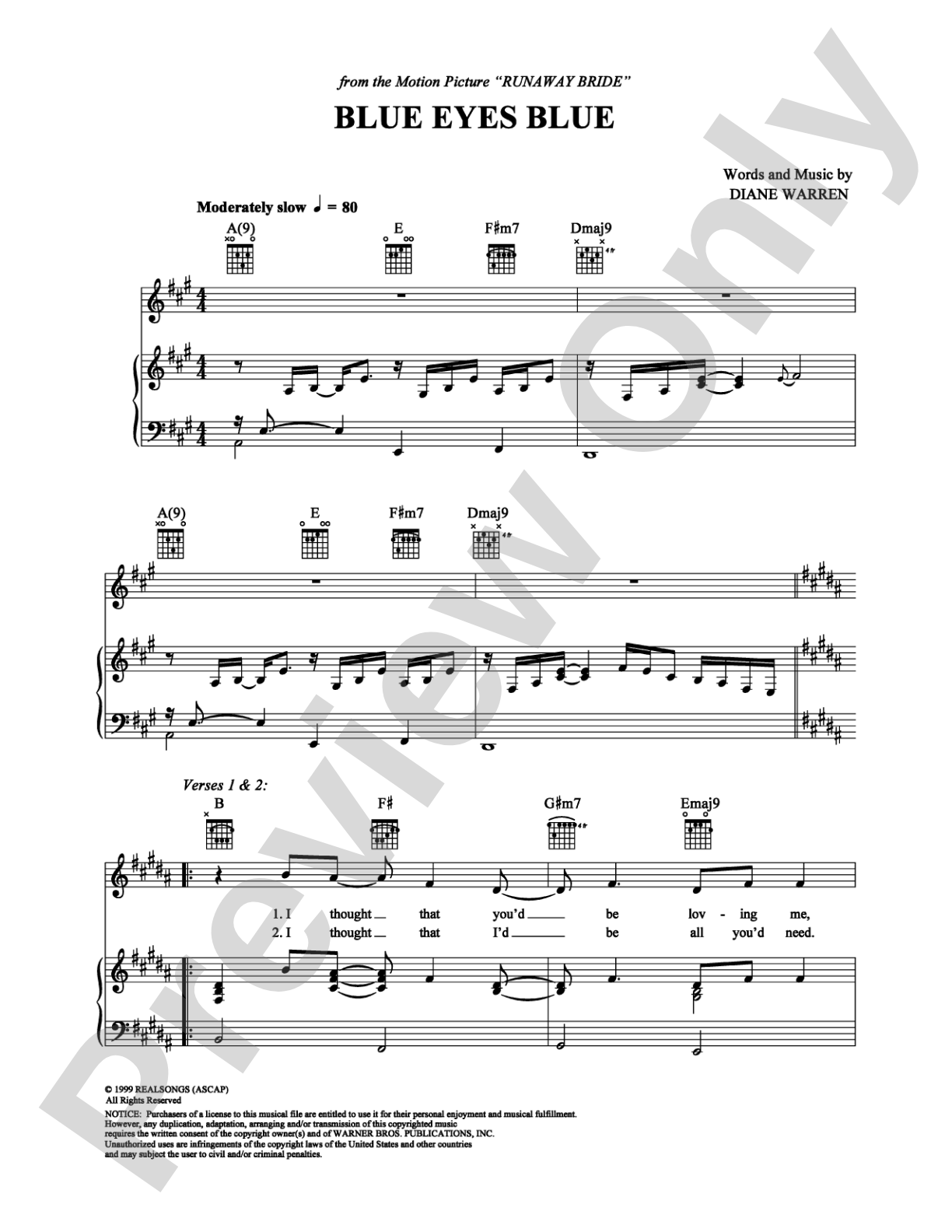
Blue Eyes Blue: Piano/Vocal/Chords Digital Sheet Music

Blue Eyes Blue: Piano/Vocal/Chords Digital Sheet Music

Diane Warren, Eric Clapton

Item: 00-PS-0001638

Digital Download
$3.99
Description

Blue Eyes Blue: Piano/Vocal/Chords Digital Sheet Music isn't in MakeMusic Cloud just yet...but it could be. Let us know you'd like to see it, and you'll help shape what comes next. In the meantime, start a free trial and dive into thousands of interactive titles your students can play along with today.

Sample Audio
No sample audio found.
Sample Video
Additional Details
SKU: 00-PS-0001638

More about this title

About the Artist: Eric Clapton

Eric Clapton is a British guitarist and singer-songwriter whose influence on rock and popular music spans five decades. His work ranges from blues-rock to pop balladry, and his songs appear frequently in voice studios, church services, and recital programs where accessible contemporary repertoire is needed.

Why we love this

This song sits in a sweet spot for singers developing interpretation skills with contemporary material. The melody is singable without requiring extreme range, and the chord progression rewards thoughtful harmonic accompaniment from pianists of intermediate ability.

What to expect

The piece carries a reflective, intimate quality that suits both solo recital settings and collaborative performance contexts. Clapton's melodic approach is conversational and emotionally direct, inviting singers to focus on storytelling rather than technical display.

Who it's for

Singers preparing repertoire for auditions, recitals, or classroom performance who connect with contemporary pop-rock material. Pianists accompanying vocalists will find this accessible at the intermediate level, with straightforward harmonic structures that allow focus on sensitive accompaniment.

How to get the most out of it

  • Establish the tempo early in rehearsal; the piece breathes more naturally when the pianist leads rather than rushes.
  • Balance the vocal line so lyrics remain clear over the harmonic foundation; avoid doubling the melody too thickly in the piano part.
  • Listen for the moments where the accompaniment simplifies; these rests create space for the vocalist to connect emotionally with the lyric.

How to use it

Include this on a recital where you are programming a mix of classical and contemporary repertoire; it provides stylistic contrast and appeals to audiences unfamiliar with classical song. It also works well in musical theater or popular music courses where students study how contemporary songwriting differs from art song tradition.

Skills your students will build

  • Reading piano/vocal/chord scores
  • Balancing melody and accompaniment
  • Interpreting contemporary popular song
  • Sight-reading chord symbols and managing harmonic awareness as a vocalist

You May Also Like