
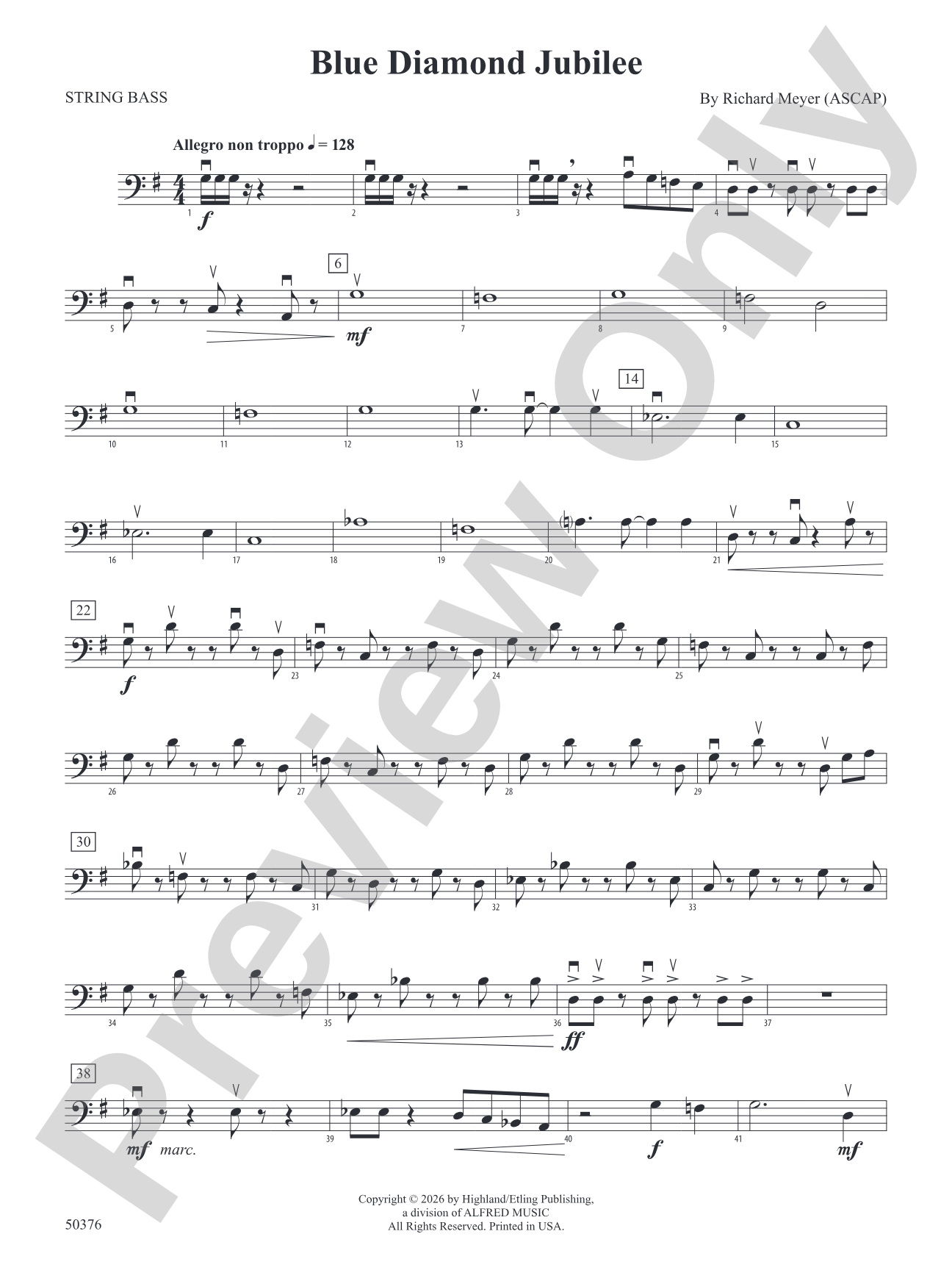

Blue Diamond Jubilee: String Bass
By Richard Meyer
Grade: 3
Item: 00-PC-0019835_SB
$3.00
Pickup currently not available
Description
This concert overture is full of teaching opportunities and challenges for all of your students and is the perfect opener or closer for any occasion. Written in ABA form (fast-slow-fast), it is filled with memorable melodies, sumptuous harmonies, and mature orchestrations that give every section a chance to shine.
The opening energetic "A" section features a playful ostinato figure constantly chugging along in support of an expansive, lyrical melody played above it. A gladiator-inspired theme makes a brief appearance as a nod to the commissioning high school's Trojan mascot. The "B" section, in slow 6/8, introduces a graceful minor-keyed theme that is derived from the opening notes of the initial main theme. After the second "A" section, a regal coda, marked "Maestoso," ends the piece with a beautifully sonorous treatment of the slow minor theme now played in a major key.


The opening energetic "A" section features a playful ostinato figure constantly chugging along in support of an expansive, lyrical melody played above it. A gladiator-inspired theme makes a brief appearance as a nod to the commissioning high school's Trojan mascot. The "B" section, in slow 6/8, introduces a graceful minor-keyed theme that is derived from the opening notes of the initial main theme. After the second "A" section, a regal coda, marked "Maestoso," ends the piece with a beautifully sonorous treatment of the slow minor theme now played in a major key.
Don't just read it, hear it, play along with it, and watch your students grow with it. In MakeMusic Cloud, Blue Diamond Jubilee: String Bass comes alive with professional accompaniment, adjustable tempo, and built-in practice tools that turn solo practice into real progress.
Open in the Player
Jump straight in and assign it today.
Start Your Free Trial
Open this title and explore the full library in minutes.
Sample Audio
1
Audio File
--:--
0:00
0:00
Sample Video
Additional Details
Series:
Highland String Orchestra
Publisher:
Alfred Music
SKU:
00-PC-0019835_SB
More about this title
About the Composer: Richard Meyer

Richard Meyer spent 35 years teaching string students across elementary, middle, and high school levels in California public schools. At Oak Avenue Intermediate School in Temple City, he built the orchestra program from 29 students to 200 over 22 years while also directing the city's elementary string program. He led the Pasadena Youth Symphony Orchestra for 16 years, taking students to perform in New York, Washington D.C., Vienna, Australia, and Canada.
Beyond the classroom, Meyer has established himself as a nationally recognized composer with over 190 published works and arrangements. He served 16 years as string editor for Alfred Publishing and co-authored the String Explorer Series and Sight-read It for Strings. In 2009, he created the "Giving Bach" program at his school, an initiative that has gained national recognition for using interactive concerts to reach special needs and inner-city students throughout Southern California. Meyer remains active as a guest conductor and clinician, having presented at the A.S.T.A. National Conference, the Texas Orchestra Directors' Association Conference, and string workshops at Ohio State University.
Why we love this
Meyer writes for string orchestras with the insight of someone who has spent decades in the rehearsal room. Every section gets meaningful material here: the chugging ostinato keeps rhythm sections engaged, the Trojan theme adds local flavor without gimmickry, and the slow section's major-key transformation of a minor theme provides a satisfying emotional arc. A concert opener or closer that works equally well in contest or community settings.
What to expect
Bright and propulsive at the start, then introspective and graceful in the middle, before returning with renewed energy and closing in stately majesty. The piece feels substantial without demanding virtuosity, offering the satisfaction of playing well-crafted orchestral writing that respects each section's voice.
Who it's for
Grade 3 string orchestras ready to tackle mature sonorities and form structure. This score challenges students to maintain independence within sections while following clear ABA architecture, making it ideal for orchestras developing beyond basic technique into ensemble musicality.
How to get the most out of it
- Shape the opening ostinato with crisp articulation and consistent dynamic support; this figure is the foundation for the lyrical melody above it, so lock it in early in rehearsals.
- Highlight the Trojan theme's character through color and confidence. This brief moment deserves clear projection even though it's not the main attraction.
- Balance the slow "B" section carefully in 6/8; the minor-keyed theme is delicate, and too much vibrato from upper strings can blur the harmonic progression.
- Build the coda's "Maestoso" section deliberately. The transformation of the slow theme into major gives you a chance to demonstrate the orchestra's warmth and ensemble maturity.
How to use it
Program this as a concert opener to set an energetic tone, or as a closing number where the regal coda leaves audiences satisfied. Its contest-ready polish makes it a natural fit for festival programs, and the piece works beautifully in a concert pairing with more intimate chamber works as bookends to demonstrate range.
Skills your students will build
- Reading and performing music in ABA form structure
- Maintaining rhythmic independence (ostinato accompaniment patterns with contrasting melodic lines)
- Transitioning between contrasting tempos and time signatures (3/4 fast section to 6/8 slow section)
- Balancing melody and accompaniment roles within sections
- Performing with mature dynamic control across extended phrases
- Executing articulation changes to support character shifts (energetic to graceful to majestic)