Blue Danube Waltz (Op. 314 excerpt) Sheet Music Preview

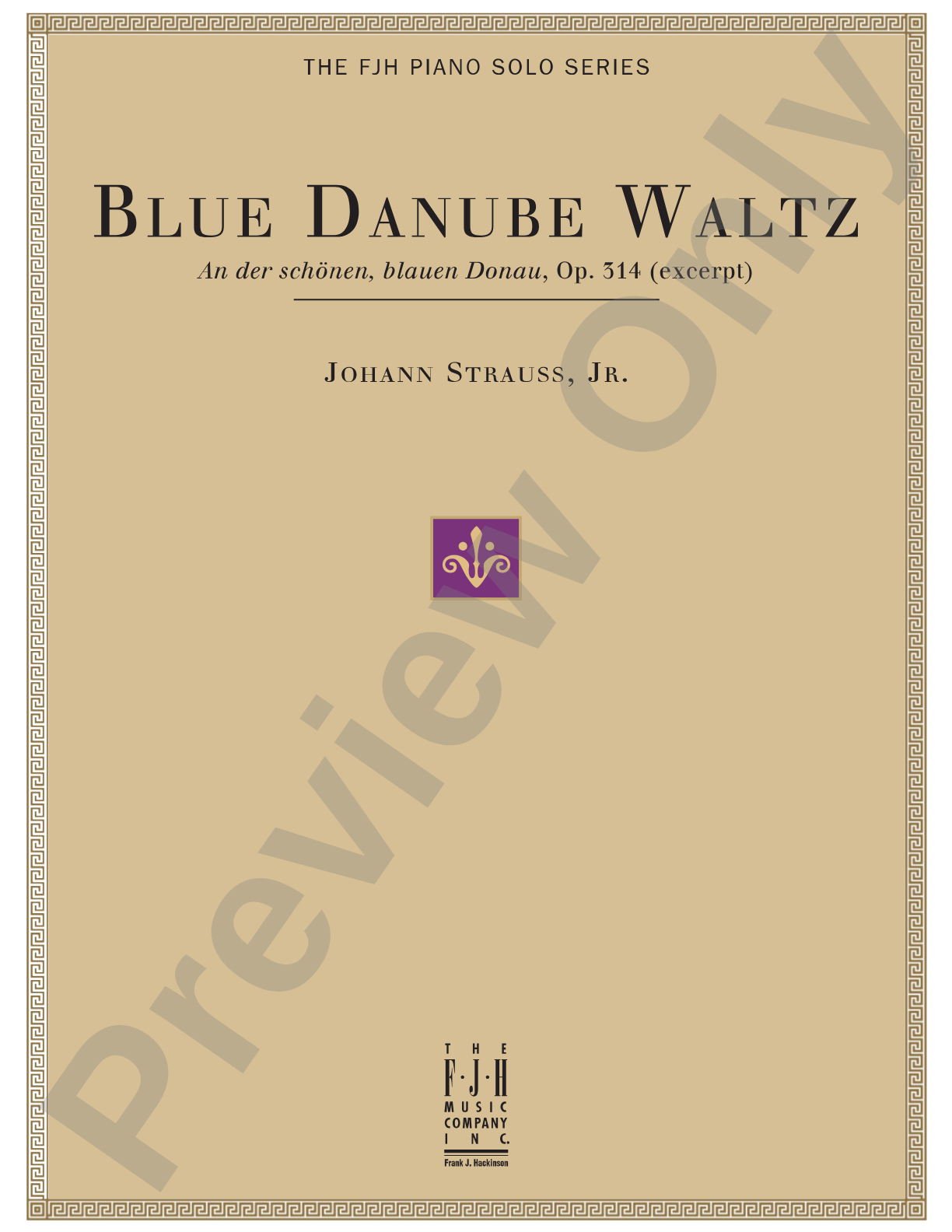
Blue Danube Waltz (Op. 314 excerpt): Piano

By Johann Strauss / arr. Edwin McLean

Item: 98-DPS1003

Digital Download
$2.50
Description
This wonderful arrangement of Strauss’ world-famous Blue Danube Waltz is a perfect choice for students, teachers, and performers. This solo is artfully choreographed to provide an ideal selection for recitals and supplemental study.

Blue Danube Waltz (Op. 314 excerpt): Piano isn't in MakeMusic Cloud just yet...but it could be. Let us know you'd like to see it, and you'll help shape what comes next. In the meantime, start a free trial and dive into thousands of interactive titles your students can play along with today.

Sample Audio
No sample audio found.
Sample Video
Additional Details
Series: The FJH Piano Solo Series
Publisher: The FJH Music Company, Inc.
SKU: 98-DPS1003

More about this title

About the Composer: Johann Strauss

Johann Strauss II (1825-1899) earned his reputation as the "Waltz King" by composing over 150 waltzes that defined the Romantic era's dance music and concert repertoire. His melodies are instantly recognizable and enduringly popular, making his works staples in music education and professional performance across multiple instruments and ensembles.

Beyond waltzes, Strauss composed polkas, quadrilles, and operettas that showcased his gift for lyrical melody and sophisticated orchestration. His influence on both concert music and popular culture remains unmatched, and his compositions continue to engage students of all levels in the study of Romantic-era form, phrasing, and harmonic language.

Why we love this

The Blue Danube Waltz carries such immediate charm that students connect with it at first sight, yet this excerpt arrangement by Edwin McLean preserves the piece's essential character while respecting the technical realities of intermediate piano playing. Programming a recognizable masterwork alongside contemporary repertoire or other arrangements signals to audiences and students alike that great melodies deserve serious study at every level.

What to expect

A graceful journey down the river: the piece unfolds with unhurried elegance, propelled by the gentle sway of waltz accompaniment beneath a soaring, songlike melody. The excerpt captures the Danube's dreamy character, inviting the pianist to play with warmth and clarity while the rhythm dances without rushing.

Who it's for

This arrangement suits intermediate pianists preparing for recitals or those seeking meaningful supplemental repertoire that reinforces Romantic-era phrasing and waltz rhythm without overwhelming technical demands. Teachers value it as a bridge between beginner transcriptions and the full orchestral score, offering students a genuine connection to one of music's most beloved melodies.

How to get the most out of it

  • Maintain the lilting three-beat pulse throughout without letting it slip into a march; the elegance of the waltz lies in the buoyancy of the accompaniment pattern, not a heavy downbeat.
  • Shape the melody line with subtle dynamic peaks that follow the arc of each phrase rather than playing it mechanically note to note.
  • Balance rubato against the need for rhythmic clarity; gentle tempo flexibility works when the accompaniment remains steady and supportive underneath.
  • Listen closely to the recording accompaniment if using one, and find moments where your rubato breathes with the orchestral texture rather than fighting against it.

How to use it

Position this waltz on a recital where it can breathe alongside contrasting styles (a Baroque prelude, a contemporary miniature, or a flashy character piece) to show the student's range and interpretive maturity. Its immediate appeal also makes it suitable for informal school performances, open rehearsals, or student showcases where engaging the audience matters as much as demonstrating technical growth.

Skills your students will build

  • Waltz rhythm and three-beat phrasing characteristic of Romantic concert dance
  • Legato melody playing against rhythmic accompaniment patterns
  • Pedal control for resonant, dancing accompaniment without muddiness
  • Phrase shaping and subtle dynamic variation within a single melodic line
  • Tempo stability with tasteful rubato that serves the music rather than disrupts it

You May Also Like