Blue Danube Waltz Sheet Music Preview

Blue Danube Waltz: Piano

By Johann Strauss / arr. W.T. Skye Garcia

Item: 98-DE1045

Digital Download
$10.50
Description
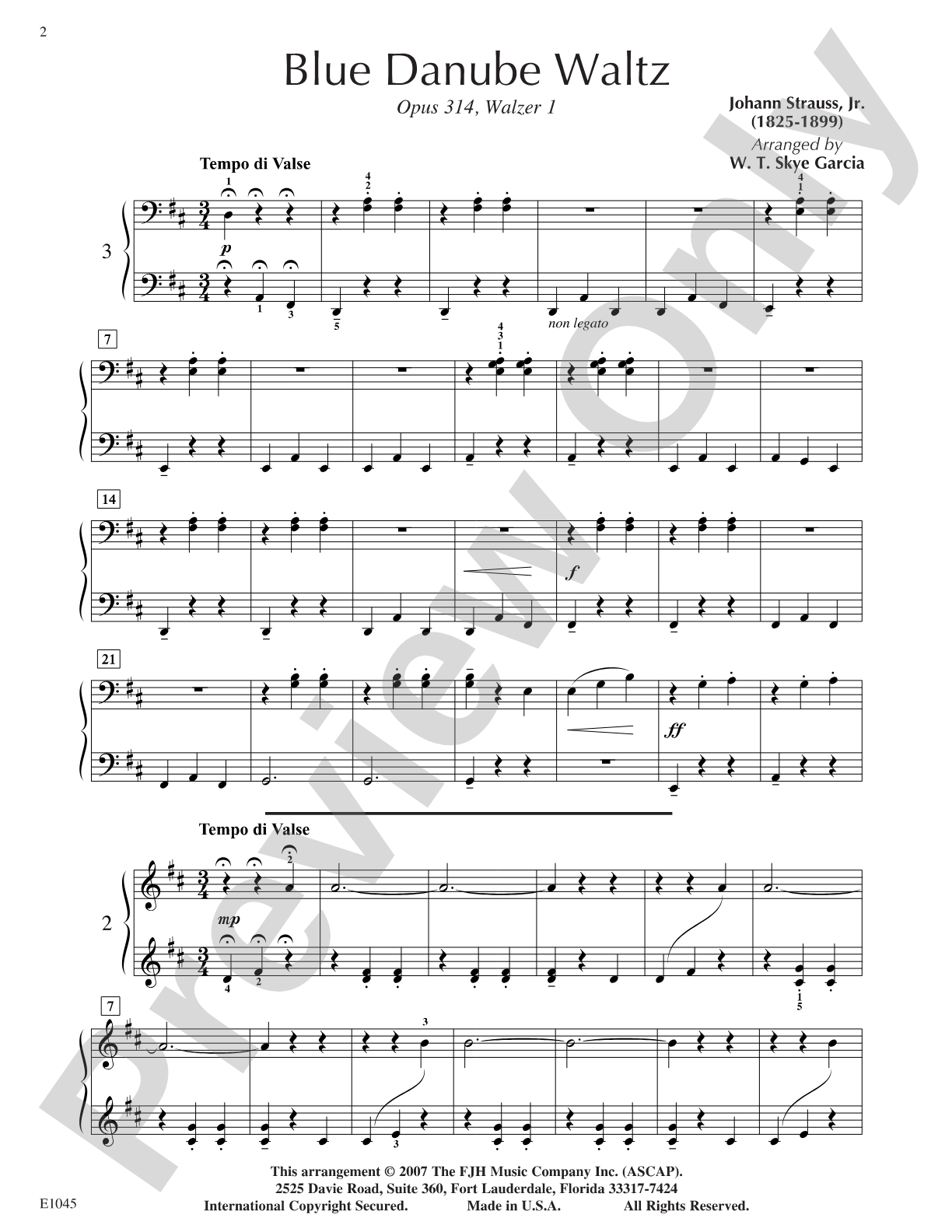
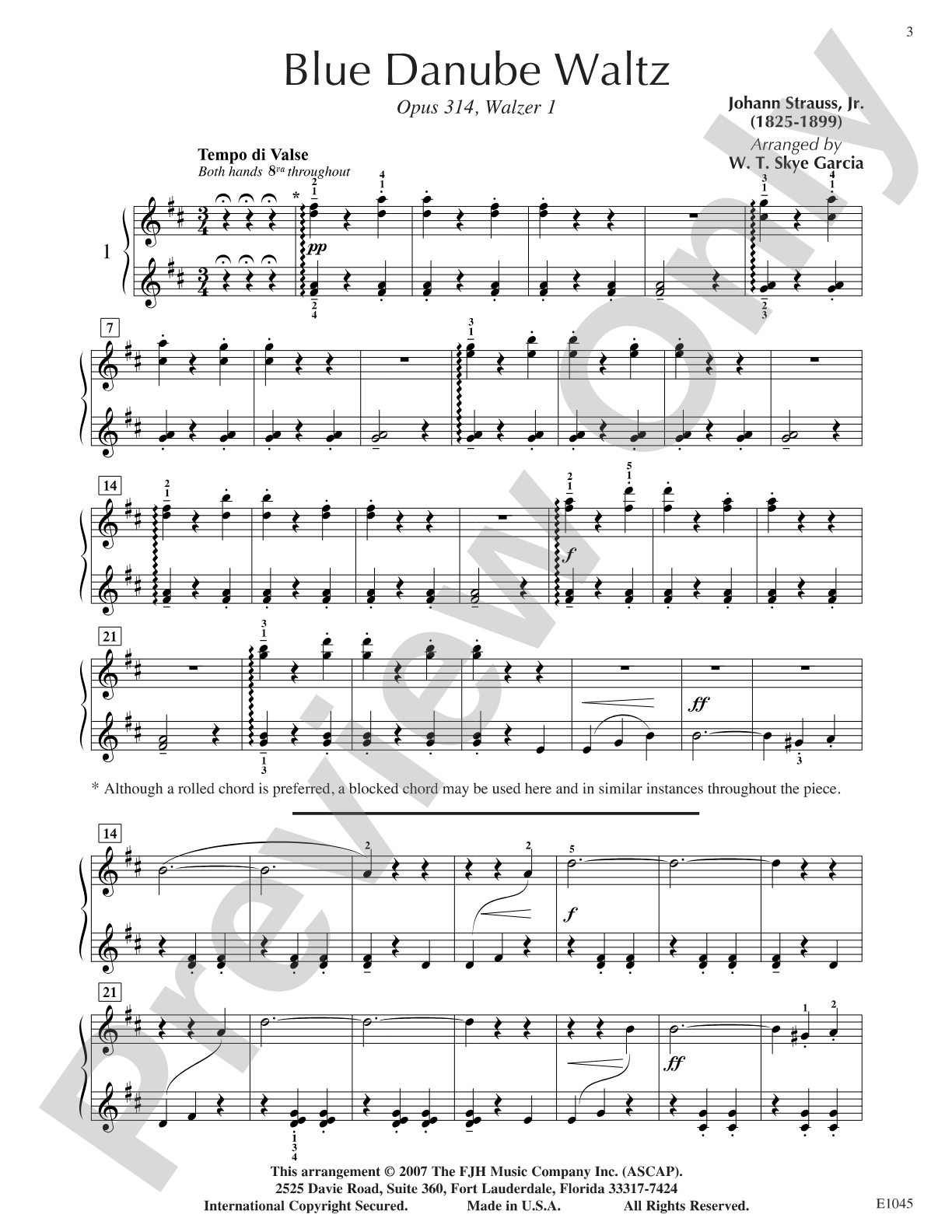
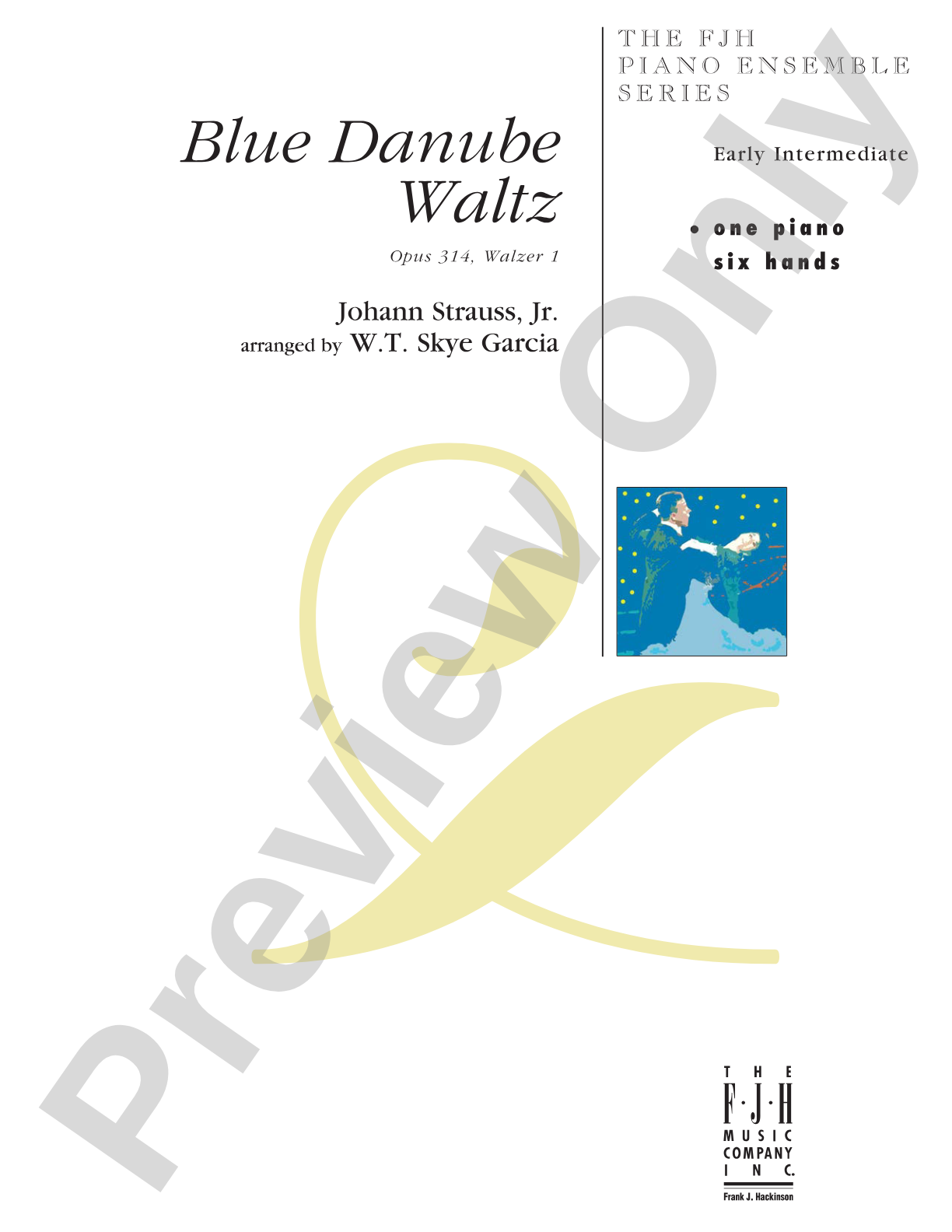
This unique arrangement of the Blue Danube Waltz for one piano, six hands is definitely an innovative approach to this renowned classic. Students will thoroughly enjoy performing this ensemble with other pianists. Arranged for three parts, this rendition produces a full, warm sound that brings this famous waltz to life.

Blue Danube Waltz: Piano isn't in MakeMusic Cloud just yet...but it could be. Let us know you'd like to see it, and you'll help shape what comes next. In the meantime, start a free trial and dive into thousands of interactive titles your students can play along with today.

Sample Audio
No sample audio found.
Sample Video
Additional Details
Series: The FJH Piano Ensemble Series
Publisher: The FJH Music Company, Inc.
SKU: 98-DE1045

More about this title

About the Composer: Johann Strauss

Johann Strauss (1825-1899) was an Austrian composer who became known as the "Waltz King" for his prolific output of dance music and orchestral works. His compositions defined the Viennese waltz tradition and remain central to classical music repertoire. The Blue Danube, composed in 1867, stands as one of the most recognizable melodies in music history and has served as a model for countless arrangements across instruments and ensembles.

Why we love this

Strauss's most famous work gains fresh life in this three-person arrangement, allowing intermediate pianists to experience ensemble playing without requiring a full orchestra or complex coordination. The six-hand texture creates genuine fullness while remaining accessible to students still developing their technical facility. This is the kind of piece that builds confidence and joy in collaborative musicmaking.

What to expect

The familiar elegance of the Blue Danube emerges naturally from the three-voice texture, creating a warm, ballroom quality that feels polished without being overly formal. Each pianist contributes to a unified sound that captures the grace and charm of Strauss's original conception. There's genuine pleasure in how the parts weave together to produce something that sounds richer than what any one person could play alone.

Who it's for

This arrangement works well for intermediate pianists who are ready for ensemble experience but may not yet feel secure in advanced solo repertoire. It's equally suited for early intermediate students who benefit from playing with stronger musicians, as the supporting parts provide structure while the melody shines clearly. Music teachers and studio instructors will appreciate a piece that brings multiple students together for a meaningful, recognizable performance.

How to get the most out of it

  • Balance the melodic material across the three parts rather than letting one pianist dominate; rotate leadership through phrases so each player listens actively to the others.
  • Establish a steady, elegant waltz pulse from the start; use the opening measures to lock in tempo before the main theme enters.
  • Pay attention to dynamic shaping within the three-hand texture; subtle crescendos and diminuendos in the supporting parts will enhance the melody without muddying it.
  • Practice independently first, then rehearse with your ensemble partners at a slow tempo to build confidence with part independence before bringing up the tempo.

How to use it

Program this as a charming interlude between heavier works on a student recital or school concert, where it signals musicianship and collaborative spirit. It also serves as a rewarding capstone to a unit on 19th-century salon music or as an end-of-year celebration piece that acknowledges ensemble work in a piano studio. The piece's universally known melody makes it an accessible choice for informal performances and open house events.

Skills your students will build

  • Listening and balancing within an ensemble texture
  • Maintaining rhythmic independence while supporting other parts
  • Shaping phrasing and dynamics collaboratively with partners
  • Reading and executing three-part score coordination
  • Building confidence in intermediate-level ensemble performance

You May Also Like