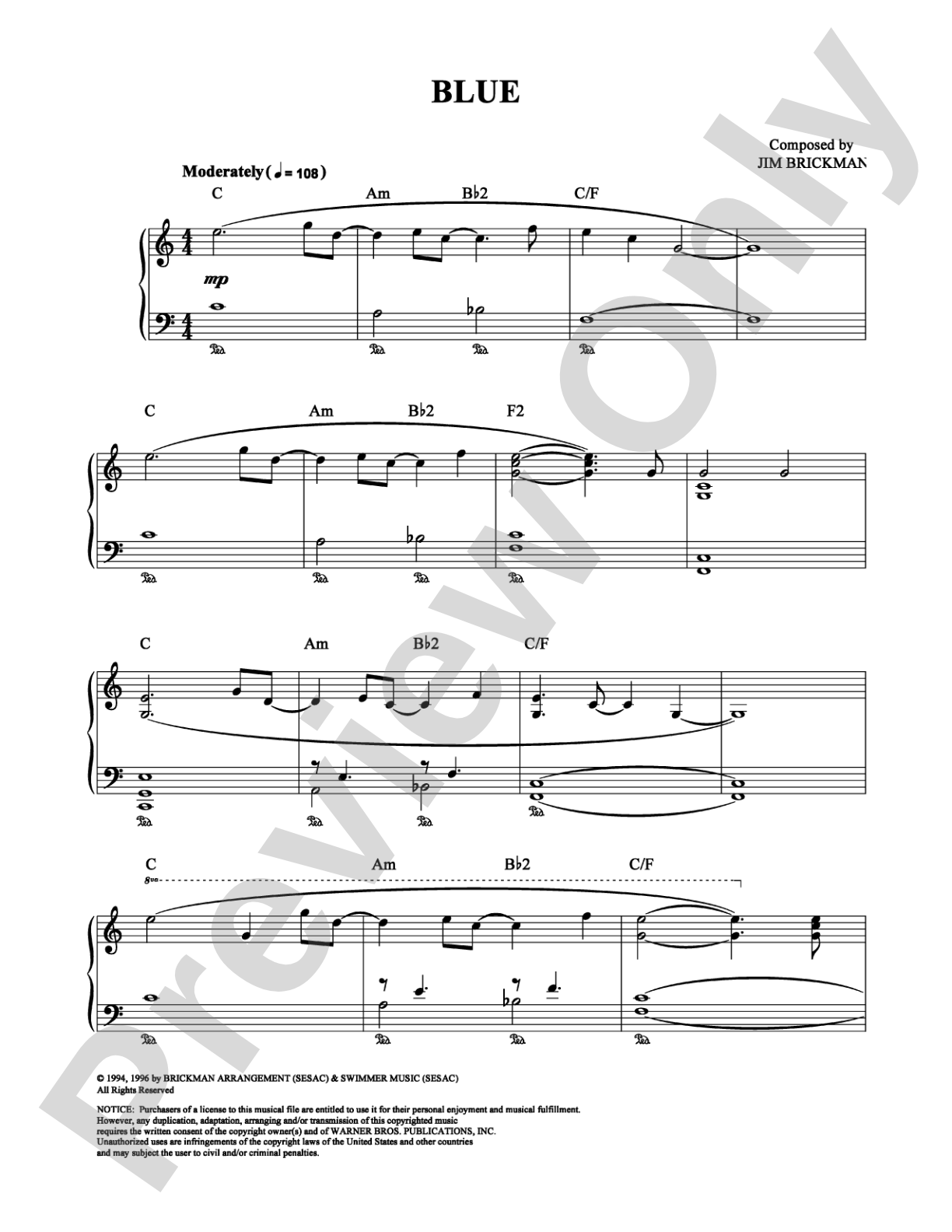
Blue: Piano Digital Sheet Music

Blue: Piano Digital Sheet Music

Jim Brickman

Item: 00-PS-0006200

Digital Download
$3.99
Description

Blue: Piano Digital Sheet Music isn't in MakeMusic Cloud just yet...but it could be. Let us know you'd like to see it, and you'll help shape what comes next. In the meantime, start a free trial and dive into thousands of interactive titles your students can play along with today.

Sample Audio
No sample audio found.
Sample Video
Additional Details
SKU: 00-PS-0006200

More about this title

About the Artist: Jim Brickman

Jim Brickman

Jim Brickman stands among the most commercially successful solo pianists in contemporary music, with a catalog that has consistently topped charts and touched millions of listeners. His approach to composition centers on emotional clarity and accessibility; each piece emerges from a deliberately crafted musical language designed to accompany life's significant moments rather than overshadow them.

Brickman's influence on instrumental music extends beyond sales figures. He has demonstrated that solo piano can command mainstream attention and concert venues typically reserved for pop and rock acts, fundamentally shifting how the industry perceives the commercial viability of acoustic instrumental music. His philosophy remains rooted in the belief that music serves as a direct conduit between composer and listener, requiring no intermediary text or performance style to convey its intention.

Why we love this

Blue exemplifies Brickman's gift for writing memorable, emotionally resonant melodies that sit naturally under the hands without requiring virtuosic technique to communicate effectively. The piece demonstrates why his work appeals to both casual listeners and serious pianists: it balances harmonic sophistication with melodic simplicity, allowing performers to focus on tone production and interpretive nuance rather than technical display. Programming this alongside classical standards or other contemporary composers creates a bridge that helps audiences recognize instrumental music as a vital part of their own listening habits.

What to expect

Blue unfolds with understated elegance, its harmonic language suggesting reflection and quiet introspection without ever reaching toward sentimentality. The piece invites a spacious, unhurried approach, rewarding attention to the subtle interplay between melody and accompaniment rather than surface-level virtuosity.

Who it's for

This piece appeals to pianists seeking contemporary repertoire that sits comfortably between popular and classical idioms. Adult students, community pianists, and advanced high school performers will find Blue accessible for recitals or personal enjoyment while still offering room for artistic interpretation.

How to get the most out of it

  • Shape the melody with consistent, singing tone quality throughout; Brickman's writing rewards pianists who prioritize voice leading and phrase direction over mechanical accuracy.
  • Allow rubato to emerge naturally from the harmonic progression rather than imposing rhythmic flexibility on every measure; restraint in tempo variation often yields greater emotional impact.
  • Explore the dynamic range between sections to highlight structural shifts without sudden jarring changes; gentle gradation typically serves the piece's contemplative character better than dramatic contrast.

How to use it

Consider Blue in contexts where contemporary instrumental music connects with audiences seeking respite from more structurally complex or demanding repertoire. A recital pairing it with Minimalist works, art songs arranged for solo piano, or other singer-songwriter-influenced instrumental pieces creates a coherent aesthetic program that appeals to listeners who might not typically attend classical concerts.

Skills your students will build

  • Melodic phrasing and breath-like musical shaping in contemporary idiom
  • Pedal control to enhance resonance without blurring harmonic clarity
  • Voicing decisions that balance melody prominence with harmonic interest
  • Interpretive restraint and nuance as alternatives to technical display

You May Also Like