
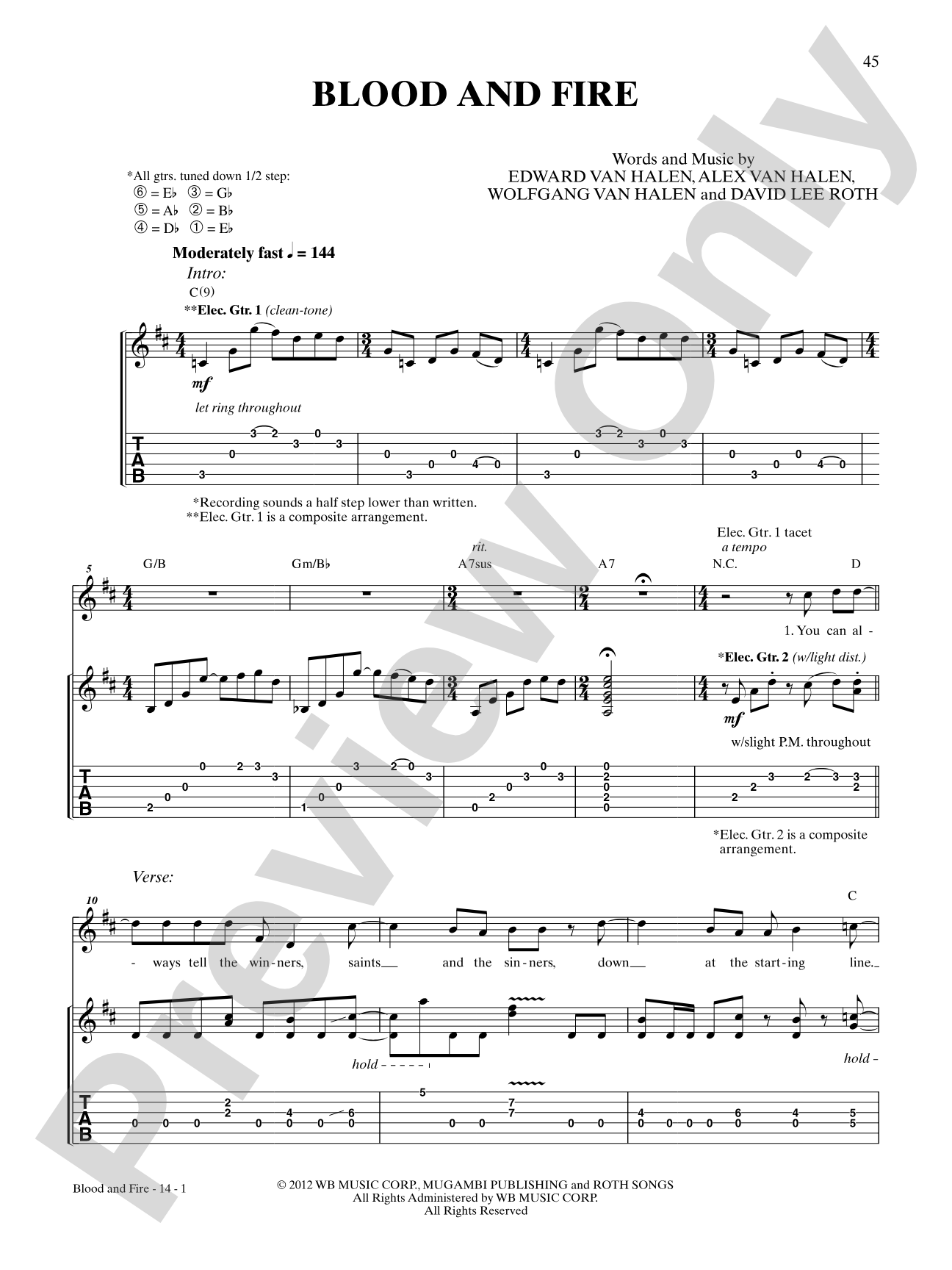
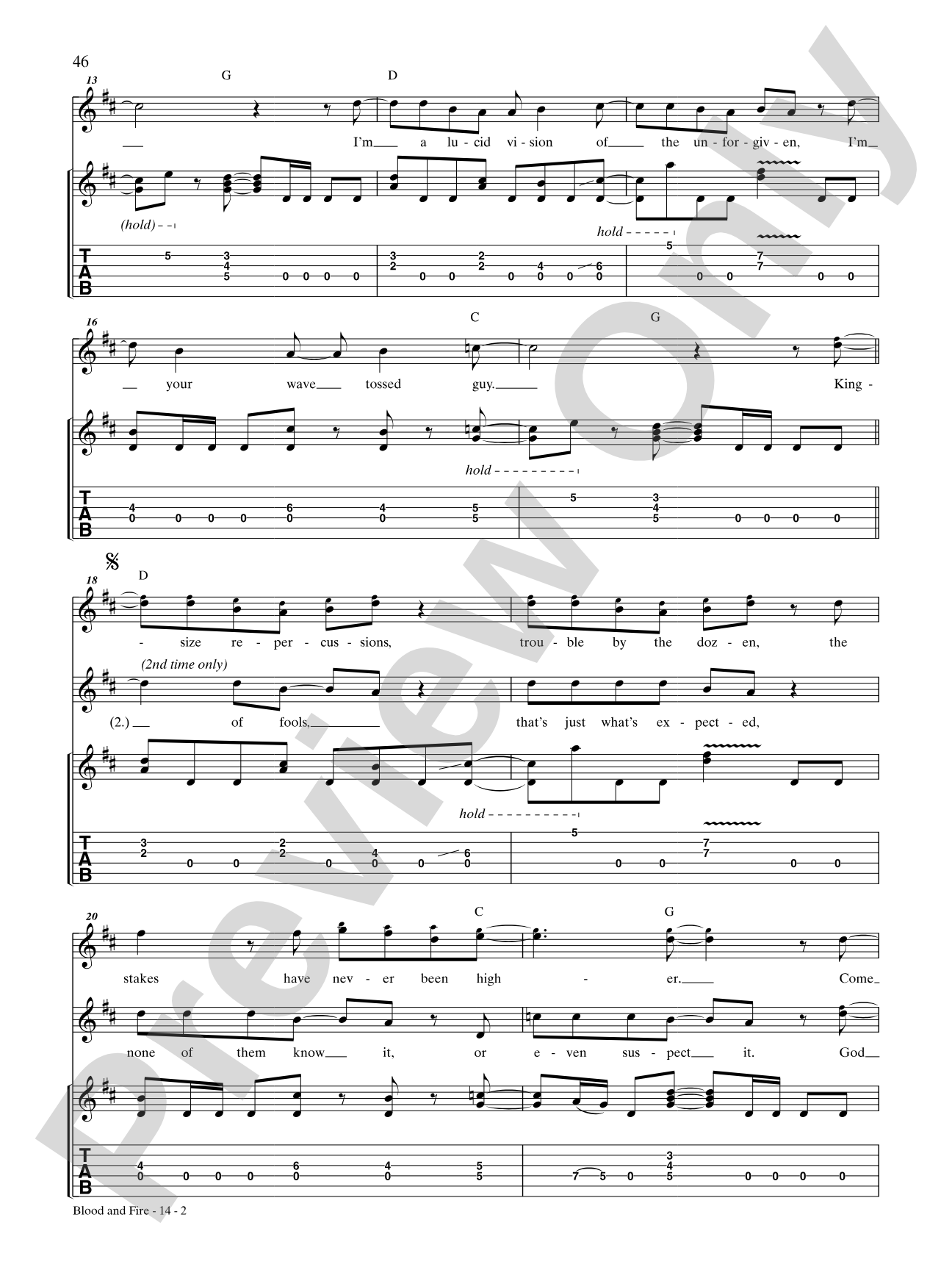
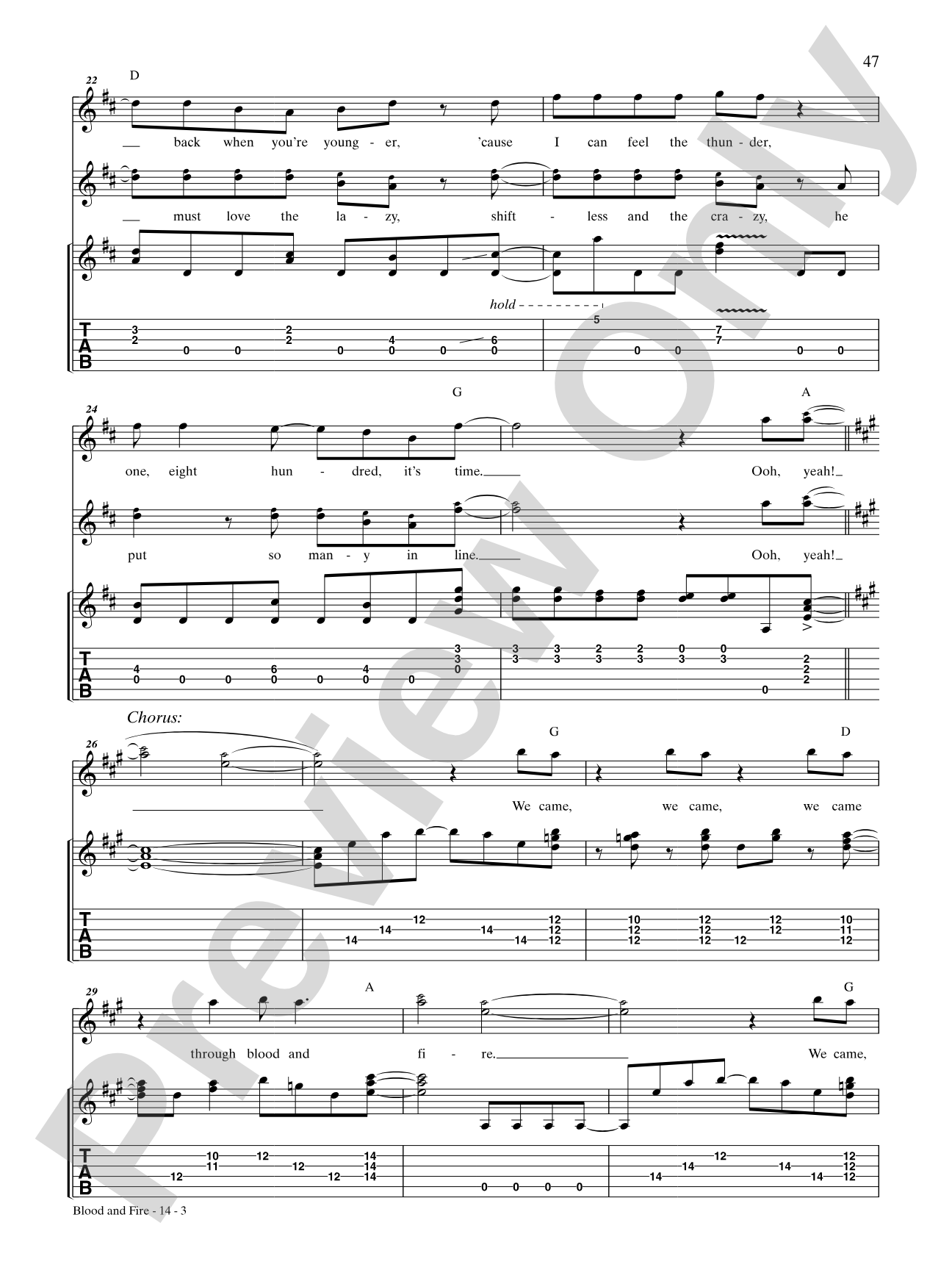

Blood and Fire: Authentic Guitar TAB
Van Halen
Item: 00-PS-0013575
$9.99
One moment…
Related Items
She's the Woman: Authentic Guitar TAB |
$9.99
|
View | |
You and Your Blues: Authentic Guitar TAB |
$9.99
|
View | |
China Town: Authentic Guitar TAB |
$9.99
|
View | |
Bullethead: Authentic Guitar TAB |
$5.99
|
View | |
As Is: Authentic Guitar TAB |
$9.99
|
View | |
HoneyBabySweetieDoll: Authentic Guitar TAB |
$9.99
|
View | |
The Trouble With Never: Authentic Guitar TAB |
$9.99
|
View | |
Outta Space: Authentic Guitar TAB |
$5.99
|
View | |
Stay Frosty: Authentic Guitar TAB |
$9.99
|
View | |
Big River: Authentic Guitar TAB |
$9.99
|
View | |
Beats Workin': Authentic Guitar TAB |
$5.99
|
View |
Description
The album that Van Halen fans have waited almost 30 years for is here and the boys did not disappoint. This is a full-on return to the unabashed rock god glory of Eddie's supernatural guitar and David Lee Roth's impeccable front man persona. Rob Sheffield of Rolling Stone magazine says, "As for Diamond Dave, the gods only made one of him, because they couldn't take the competition." This book includes complete note-for-note guitar TAB transcriptions of every song on the album. Titles: Tattoo * She's the Woman * You and Your Blues * China Town * Blood and Fire * Bullethead * As Is * Honeybabysweetiedoll * The Trouble with Never * Outta Space * Stay Frosty * Big River * Beats Workin'.


Blood and Fire: Authentic Guitar TAB isn't in MakeMusic Cloud just yet...but it could be. Let us know you'd like to see it, and you'll help shape what comes next. In the meantime, start a free trial and dive into thousands of interactive titles your students can play along with today.
Request This Title
Tell us you want it.
Start Your Free Trial
Explore everything that's ready to play right now.
Sample Audio
No sample audio found.
Sample Video
No sample videos found.
Additional Details
Publisher:
Alfred Music
Page Count:
146
SKU:
00-PS-0013575
More about this title
About the Composer: Edward Van Halen
Edward Van Halen transformed electric guitar in the 1970s and 1980s by introducing two-handed tapping, harmonic distortion, and rhythmic innovation that redefined what the instrument could do. His work with Van Halen, first as a songwriter and virtuoso alongside his brother Alex, established him as one of rock's most influential and technically demanding guitarists. His approach to composition balanced accessibility with complexity, creating songs that connected with mainstream audiences while showcasing instrumental sophistication that challenged players for decades.
Why we love this
This collection captures the full scope of what makes Van Halen's compositional voice distinctive: economical riff writing, dynamic arrangement sensibility, and guitar parts that demand serious technical commitment. For guitarists who want to understand how modern rock harmony, effects integration, and solo pacing actually work in a professional context, these transcriptions offer direct access to the thinking behind some of rock's most effective songs. The TAB format keeps the focus on execution and interpretation rather than theory alone.
What to expect
Raw, inventive, and uncompromising rock that swings between explosive energy and calculated restraint. The guitar writing balances muscle and precision, demanding both physical stamina and careful listening to nail the tone and articulation that make these songs distinctive. There's a conversational quality to many of these parts, as if the guitar is as much a lead voice as a rhythm anchor.
Who it's for
Intermediate to advanced guitarists who want to decode the technical and compositional decisions behind Van Halen's catalogue, including students studying rock composition, performance, and arrangement. Players working on finger strength, picking accuracy, and the integration of distortion and modulation effects will find direct application. This is also valuable for guitarists preparing transcription-based learning or building repertoire that challenges their current technical level.
How to get the most out of it
- Study the rhythmic displacement in the riff sections before worrying about speed; Van Halen's grooves land with precision that makes them feel heavier than the tempo suggests.
- Pay close attention to how effects (particularly distortion tone and modulation) shape each part's character; the TAB shows what to play, but listening repeatedly reveals how production choices guide phrasing.
- Build the faster passages gradually by practicing small chunks at strict tempo and expanding your range once the muscle memory locks in; rushing these is the most common mistake.
- Notice the relationship between lead and rhythm guitar parts across songs; understanding how they interact teaches arrangement thinking that transfers to your own writing.
How to use it
These transcriptions work well as independent study material for advanced guitarists in a studio setting or as part of a rock music history curriculum where students examine how specific technical innovations shaped song composition. For ensemble contexts, select individual songs as potential showcases or as ear-training examples when teaching arrangement principles to student composers. Assigning specific pieces helps guitarists develop the technical vocabulary needed to engage with contemporary rock standards.
Skills your students will build
- Reading guitar TAB and translating it to fretboard visualization
- Two-hand tapping and extended distortion techniques
- Rhythmic accuracy in syncopated riff-based patterns
- Tone shaping using effects and picking dynamics
- Harmonic language in rock songwriting (dominant chords, borrowed harmonies)
- Phrasing and dynamics in lead guitar solo construction