
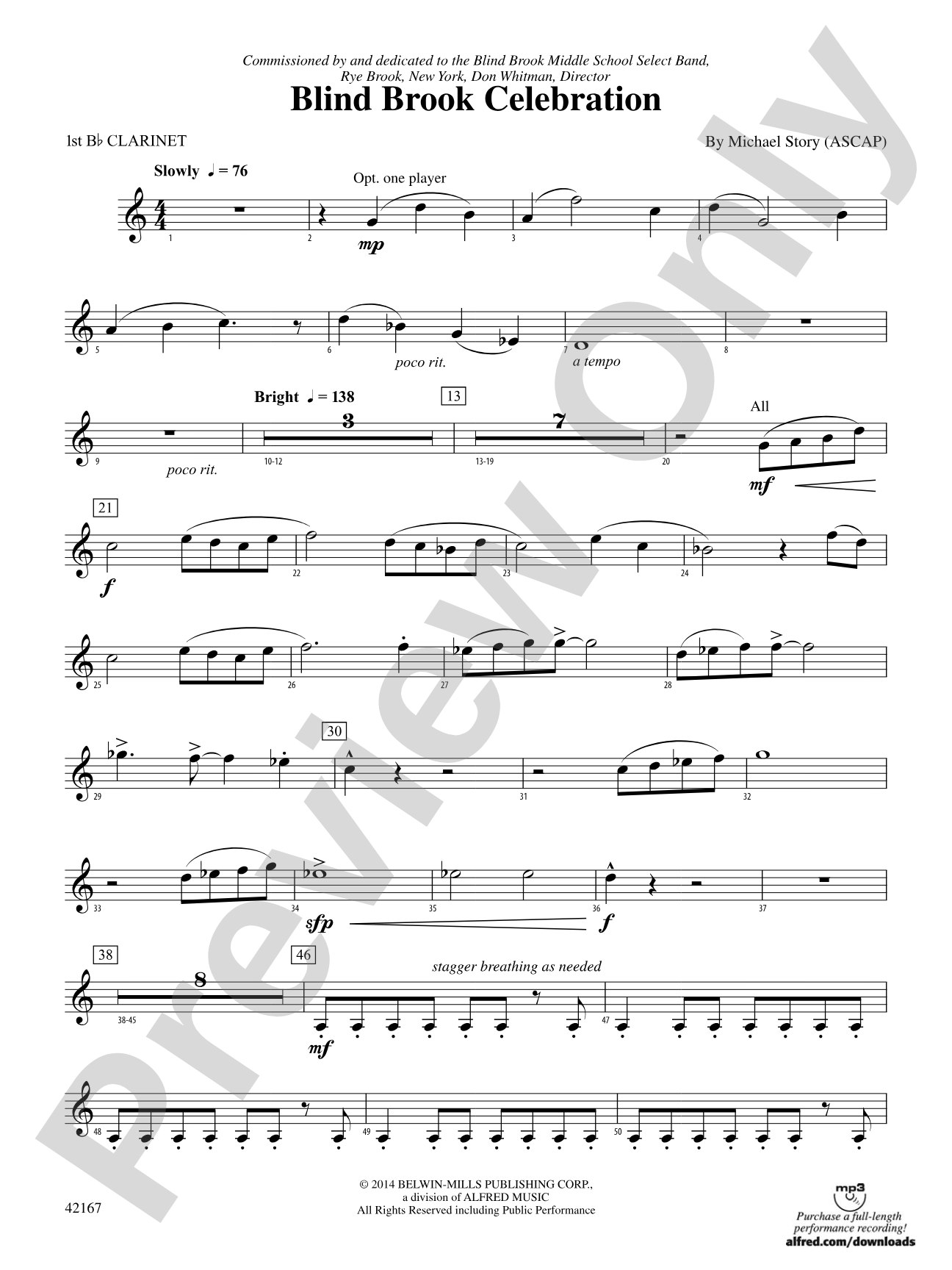

Blind Brook Celebration: 1st B-flat Clarinet
By Michael Story
Grade: 2 (Easy)
Item: 00-PC-0017524_C1
$3.00
Pickup currently not available
Description
Inspired by the bedroom community to New York City, this vibrant overture musically reflects the juxtaposition of the tranquility of nature in this quiet suburb with the busyness of modern-day life in the city. Set in ABCA form, the composition opens with a trickling melodic line depicting the beginning of the brook itself building to the energetic main theme. Musically exploring that dichotomy, the work unifies to a chorale section and builds to a frenzied conclusion. Highly recommended for concerts and contest alike! (3:00)


Don't just read it, hear it, play along with it, and watch your students grow with it. In MakeMusic Cloud, Blind Brook Celebration: 1st B-flat Clarinet comes alive with professional accompaniment, adjustable tempo, and built-in practice tools that turn solo practice into real progress.
Open in the Player
Jump straight in and assign it today.
Start Your Free Trial
Open this title and explore the full library in minutes.
Sample Audio
1
Audio File
--:--
0:00
0:00
Sample Video
No sample videos found.
Additional Details
Series:
Belwin Young Band
Publisher:
Alfred Music
Page Count:
252
SKU:
00-PC-0017524_C1
More about this title
About the Composer: Michael Story
Michael Story is a prolific composer and arranger for concert band whose catalog has become essential to secondary school and university programs. His works span multiple grade levels and are known for their musical substance, clear orchestration, and accessibility; he has earned widespread adoption among directors seeking material that challenges students without overwhelming them.
Story's compositional voice balances contemporary idioms with traditional formal structures, allowing young musicians to engage with meaningful repertoire while building fundamental ensemble skills. His band music appears regularly on festival programs and contest lists across North America.
Why we love this
Story captures genuine programmatic content within a grade 2 framework, resisting the urge to oversimplify the musical narrative. The ABCA structure provides clear signposts for student musicians while the contrasting sections (trickling opener, energetic theme, lyrical chorale, frenzied finale) give every section of the band material worth playing and remembering.
What to expect
The piece moves through distinct emotional and textural landscapes: from serene and impressionistic beginnings to vibrant, propulsive energy, then inward to moment of repose, before climaxing in controlled excitement. You hear the suburb and the city in conversation, neither overpowering the other.
Who it's for
This score and parts set is designed for grade 2 concert bands and beginning high school ensembles seeking musically coherent material suitable for both concert and festival contexts. Conductors will find it an excellent choice for groups ready to explore programmatic music while maintaining technical accessibility.
How to get the most out of it
- The opening melodic line benefits from careful voicing and dynamic control; isolate the principal voices in rehearsal to establish the trickling effect before adding supporting harmonies.
- Balance the energetic main theme across woodwinds and brass so neither overwhelms; the theme's character depends on clarity of line rather than volume.
- Shape the chorale section with sustained breath and phrase continuity, allowing the ensemble to hear how this reflective material represents the 'tranquility' half of the piece's concept.
- Build the frenzied conclusion gradually through rehearsal; resist the temptation to rush; lock the rhythmic foundation with bass line and percussion before layering the upper sections.
How to use it
Program this overture as an opening work on a concert featuring a range of styles; its clear narrative arc and moderate length (3:00) make it ideal for setting context before moving to contrasting repertoire. It also serves well as a confident contest selection for groups seeking to demonstrate musical maturity and ensemble balance at the grade 2 level.
Skills your students will build
- Balancing sustained melodic lines with harmonic support
- Navigating tempo changes and dynamic contrasts within ABCA form
- Ensemble coordination across multiple contrasting sections
- Interpreting programmatic intent through phrasing and articulation
- Managing rhythmic precision in both lyrical and energetic material