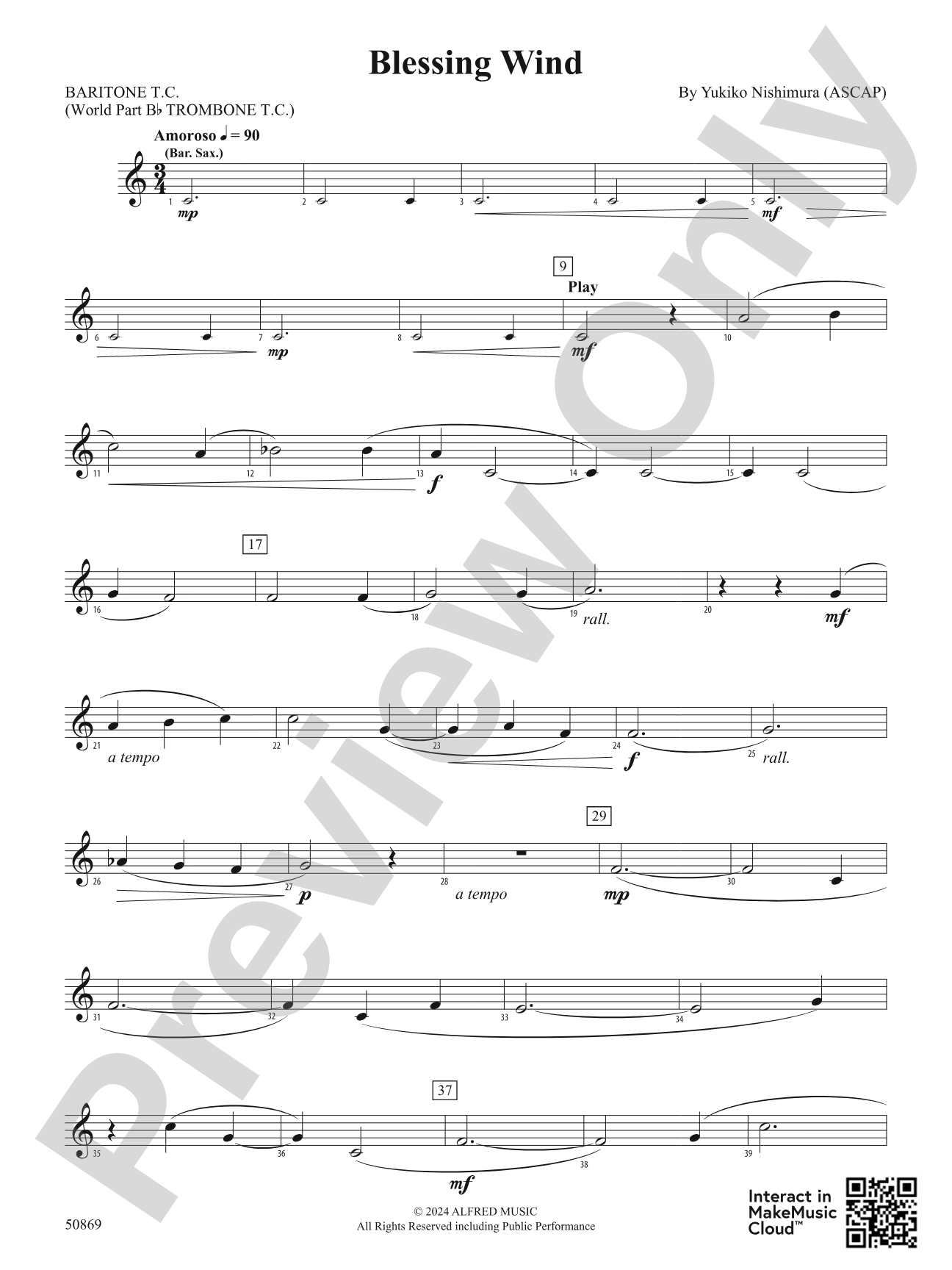
Blessing Wind: Baritone T.C. Sheet Music Preview

Blessing Wind: Baritone T.C.

By Yukiko Nishimura

Grade: 2

Item: 00-PC-0019291_BTC1

Digital Download
$3.00
Description
This stunningly beautiful lyrical work provides a peaceful moment in our complex and complicated lives. With gorgeous melodic lines and perfect harmonic progressions, your students will fall in love with Blessing Wind. There are many teachable moments, and it is the perfect level for young band. Everyone struggles with burdens from time to time. We need hope in our complicated lives. This piece provides a peaceful moment, calming the storm that sometimes surrounds you while sharing in the beauty of music. May you grow to be the person you hope to be, following your true spirit. (2:50)

Don't just read it, hear it, play along with it, and watch your students grow with it. In MakeMusic Cloud, Blessing Wind: Baritone T.C. comes alive with professional accompaniment, adjustable tempo, and built-in practice tools that turn solo practice into real progress.

Sample Audio
0:00
0:00
Sample Video
Additional Details
Series: Developing Band Series
Publisher: Alfred Music
SKU: 00-PC-0019291_BTC1

More about this title

About the Composer: Yukiko Nishimura

Yukiko Nishimura

Yukiko Nishimura studied composition at Tokyo University of the Arts before pursuing advanced training with Alfred Reed at the University of Miami and Richard Danielpour at Manhattan School of Music. Her work has earned recognition at international composition competitions and the Aoyama Award, and she has received commissions across multiple genres including band music, chamber works, and theatrical scores.

Beyond composition, Nishimura maintains an active career as a pianist and arranger. Her recent works have been nominated for the Hollywood Music in Media Award, and her piano compositions have been performed at Carnegie Hall. She continues to draw on her diverse musical background, which includes study with conductors, composers, and pianists across Japan and the United States.

Why we love this

Nishimura has crafted a piece that respects the capabilities of young musicians while offering genuine artistic substance. The melodic writing is singable and memorable, the harmonic language is accessible yet sophisticated, and the emotional arc feels earned rather than imposed. For a Grade 2 ensemble, this strikes the rare balance of being musically rewarding for both students and listeners.

What to expect

Blessing Wind unfolds with genuine serenity. The melodic lines float above warm harmonic support, creating the impression of stillness and contemplation. There is no urgency here, only the quiet confidence that sometimes the most powerful musical moments are the ones that ask us to simply listen and breathe.

Who it's for

This piece is designed for young concert bands at the Grade 2 level who are developing their ability to balance technical clarity with lyrical musicianship. It works equally well for ensembles seeking a calming, reflective moment in concert programming or for groups looking to explore what authentic composition sounds like at their level.

How to get the most out of it

  • Shape the lyrical lines with long-phrase breathing. Encourage players to think horizontally through the melody rather than vertically on individual notes, which will unify the ensemble's interpretation.
  • Pay attention to balance when the melody passes between sections. This piece thrives when the line remains prominent and seamless, regardless of which voices carry it.
  • Allow space for the harmonic progressions to breathe. Resist the urge to rush; the beauty of the work depends on the listener's ability to absorb the underlying harmonic movement.
  • Mark dynamic changes clearly in rehearsal. Students should understand that subtle shifts in volume serve the emotional narrative, not just technical marking exercises.

How to use it

Consider placing this piece as a centerpiece moment in a concert, perhaps after higher-energy works to reset the audience's attention. It also functions beautifully as a processional or closing piece, leaving listeners with a sense of calm reflection rather than excitement. The three-minute duration makes it an ideal anchor for a thematic program about resilience, hope, or the role of music in finding peace.

Skills your students will build

  • Sustaining long melodic lines across phrase boundaries
  • Balancing dynamic control in lyrical passages
  • Following harmonic progression by ear
  • Maintaining ensemble blend when melody moves between sections
  • Interpreting expressive intent without over-playing

You May Also Like