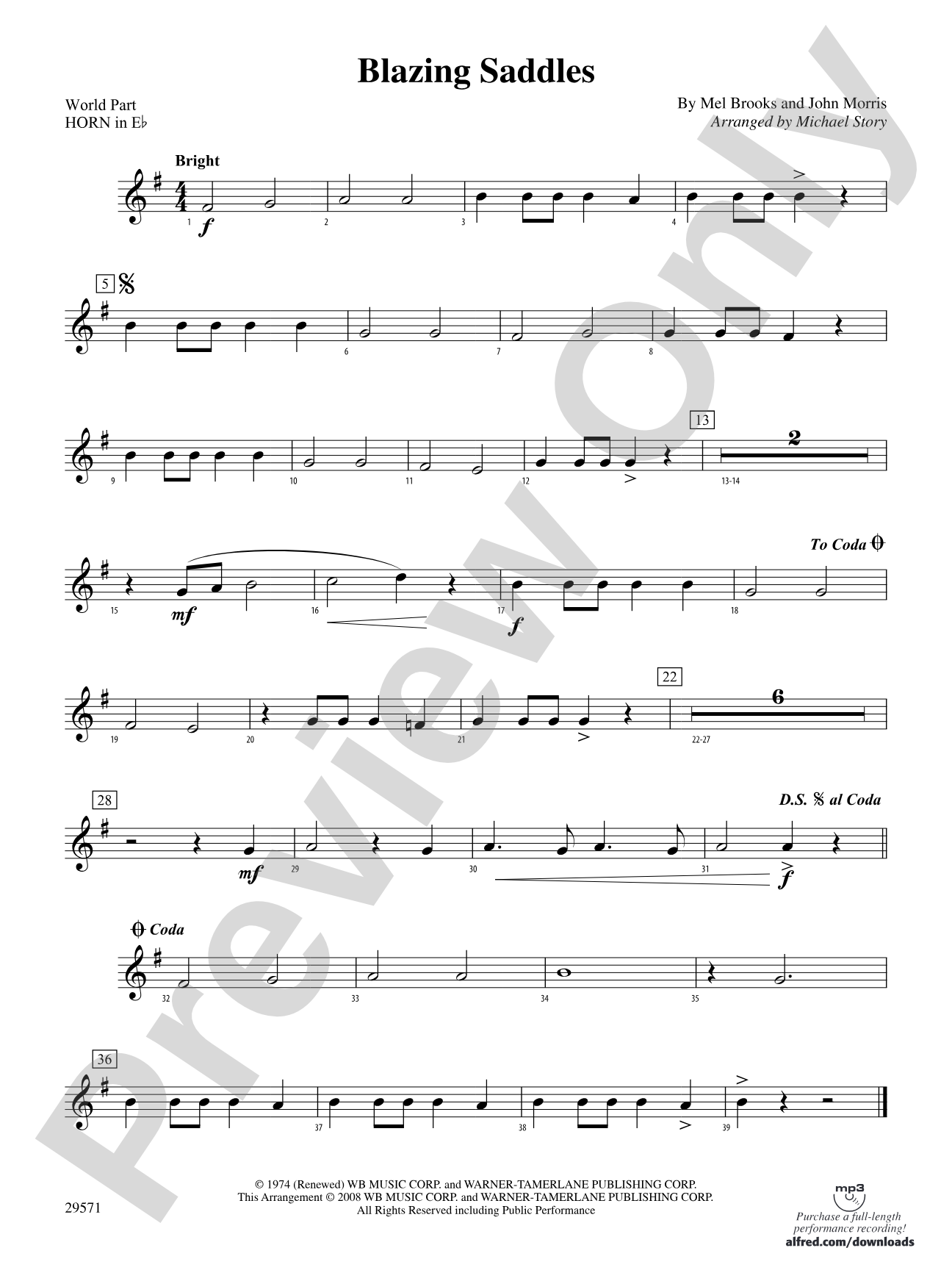
Blazing Saddles: (wp) 1st Horn in E-flat Sheet Music Preview

Blazing Saddles: (wp) 1st Horn in E-flat

Arr. Michael Story

Grade: 1 (Very Easy)

Item: 00-PC-0001470_wpEH1

Digital Download
$3.00
Description
Giddyup! Michael Story has scored Mel Brooks and John Morris' energy-charged Blazing Saddles at the beginning level. You'll hear the sounds, smell the smells and envision the sights of the old west. The theme from this comical film will be just the boost for your concert! (1:49)

Don't just read it, hear it, play along with it, and watch your students grow with it. In MakeMusic Cloud, Blazing Saddles: (wp) 1st Horn in E-flat comes alive with professional accompaniment, adjustable tempo, and built-in practice tools that turn solo practice into real progress.

Sample Audio
0:00
0:00
Sample Video
Additional Details
Series: Pop Beginning Band
Publisher: Alfred Music
Page Count: 134
SKU: 00-PC-0001470_wpEH1

More about this title

About the Arranger: Michael Story

Michael Story is a prolific composer and arranger whose work spans educational wind band, orchestral, and choral literature. His arrangements for beginning and intermediate bands have become staples in music programs nationwide, known for their accessibility without sacrificing musical integrity or stylistic authenticity.

Story's gift lies in scaling down well-known material in ways that preserve the character and excitement of the original while keeping technical demands within reach of developing musicians. His pop and film arrangements have introduced countless students to sophisticated compositional techniques through music they recognize and enjoy.

Why we love this

This arrangement captures the anarchic fun of the film score without requiring advanced technical facility from your band. Story's voicing keeps the theme front and center while distributing the playful Western orchestration across the ensemble so every section has something engaging to play. At Grade 1, it's genuinely rewarding to perform, not just a simplified run-through.

What to expect

Dusty trails and comedic mishaps meet marching bands. You'll hear tumbleweed-rolling orchestration, plodding bass figures, and the unmistakable Western theme woven through in a way that feels both authentic to the film and tailored for young musicians. It's light-hearted and propulsive, with enough instrumental character to feel like a real arrangement rather than a scaled-down novelty.

Who it's for

This is ideal for Grade 1 bands looking to program something with immediate recognition and entertainment value. It works equally well as a concert closer that sends the audience out smiling or as a morale booster mid-rehearsal when you need everyone engaged and having fun.

How to get the most out of it

  • Keep the tempo driving and energetic throughout. The 1:49 duration demands that you maintain forward momentum without dragging; this isn't a piece that benefits from rubato or indulgent phrasing.
  • Balance the melodic line so the Western theme cuts through clearly, especially when it passes between different sections. Mark your parts to ensure no one accidentally doubles the main tune.
  • Articulate the staccato figures crisply. They're essential to the comedic character, so avoid letting them become too smooth or legato in the middle registers.
  • Let the percussion shine in the accompaniment figures. This is where much of the film's playful personality lives, so make sure drums and mallets aren't buried beneath the winds.

How to use it

Schedule this early in your concert where you want to establish energy and goodwill with your audience. It pairs well alongside other pop or film-based arrangements from the Pop Beginning Band series, and it's strong enough to anchor a lighter-themed program section without feeling like a throwaway novelty. Consider programming it when you have concert performers of mixed confidence levels; the Grade 1 technical demands mean everyone can contribute meaningfully.

Skills your students will build

  • Articulation control (staccato vs. legato) in comic contexts
  • Sectional independence while maintaining ensemble blend
  • Rhythmic precision in syncopated figures
  • Stylistic awareness through film score arrangement
  • Dynamic contrast and phrasing in accessible repertoire

You May Also Like