
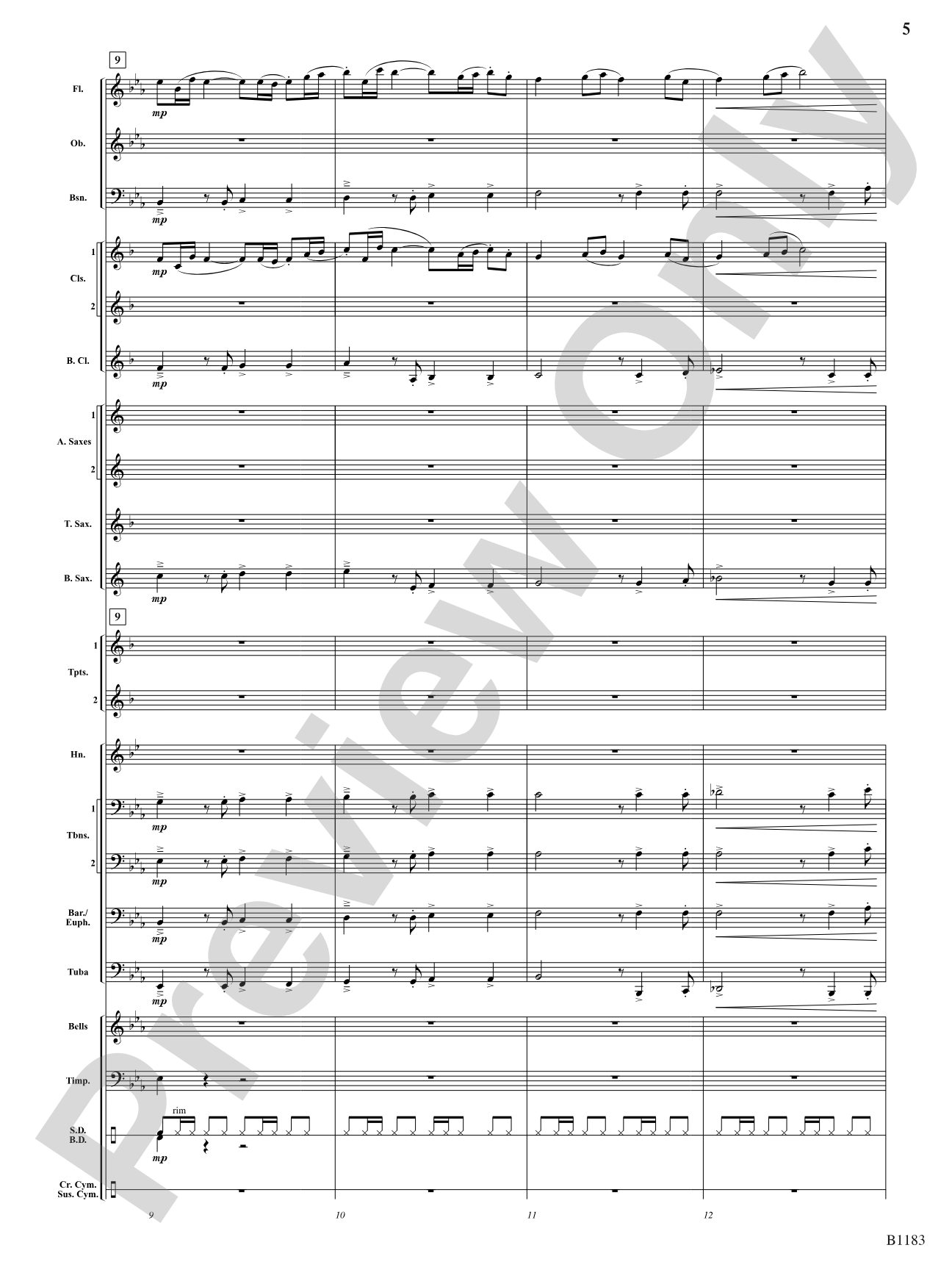
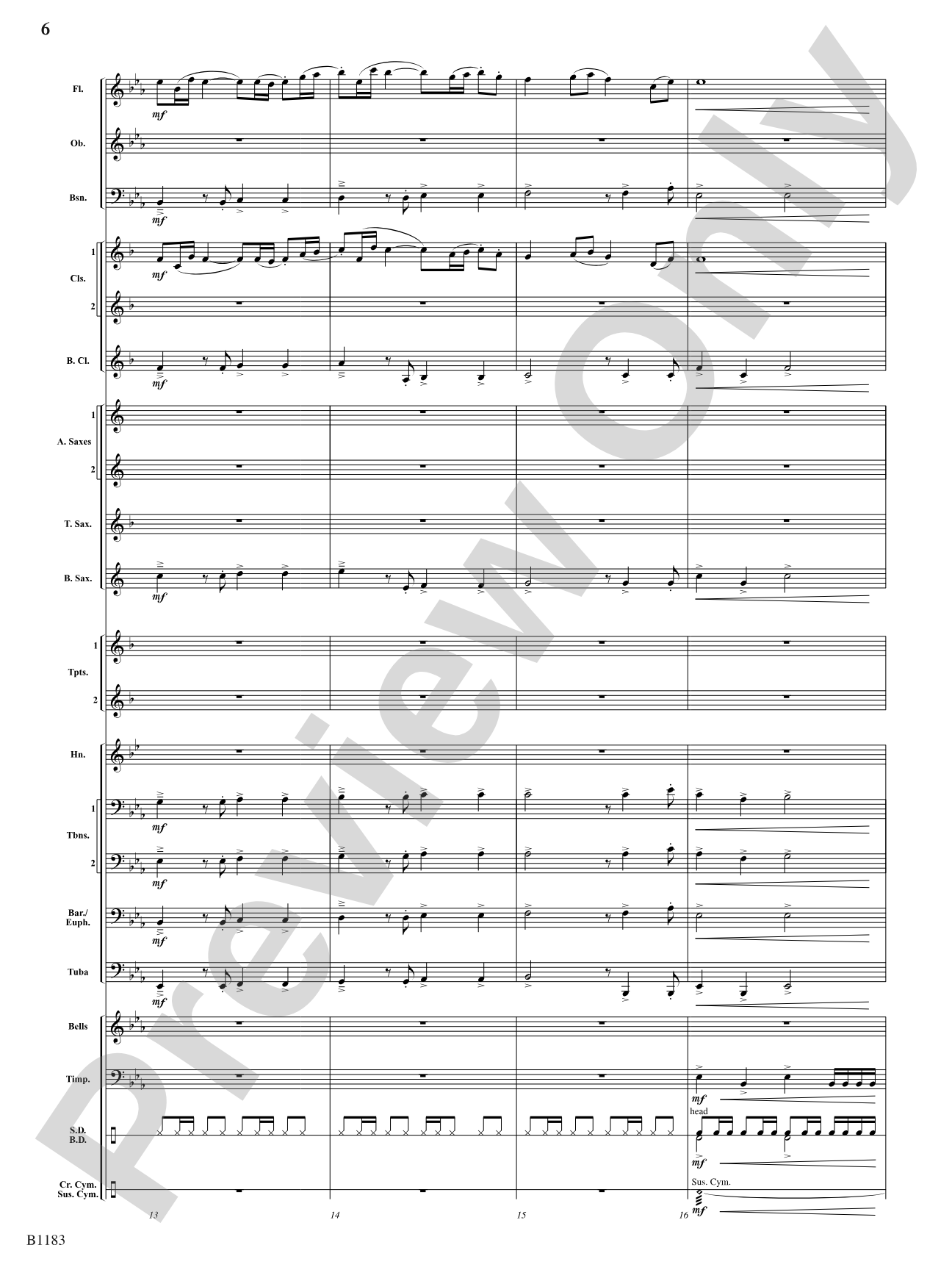
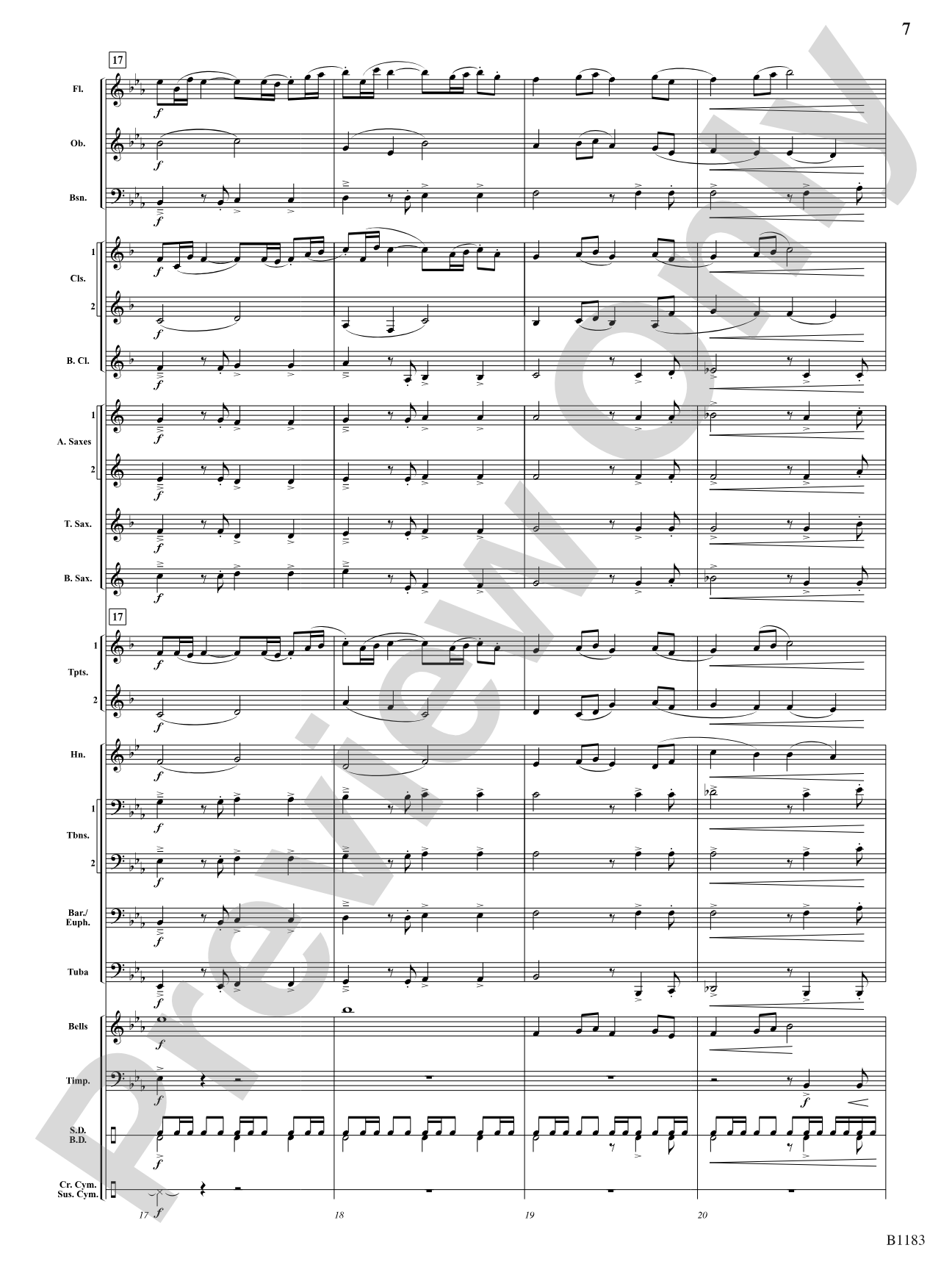
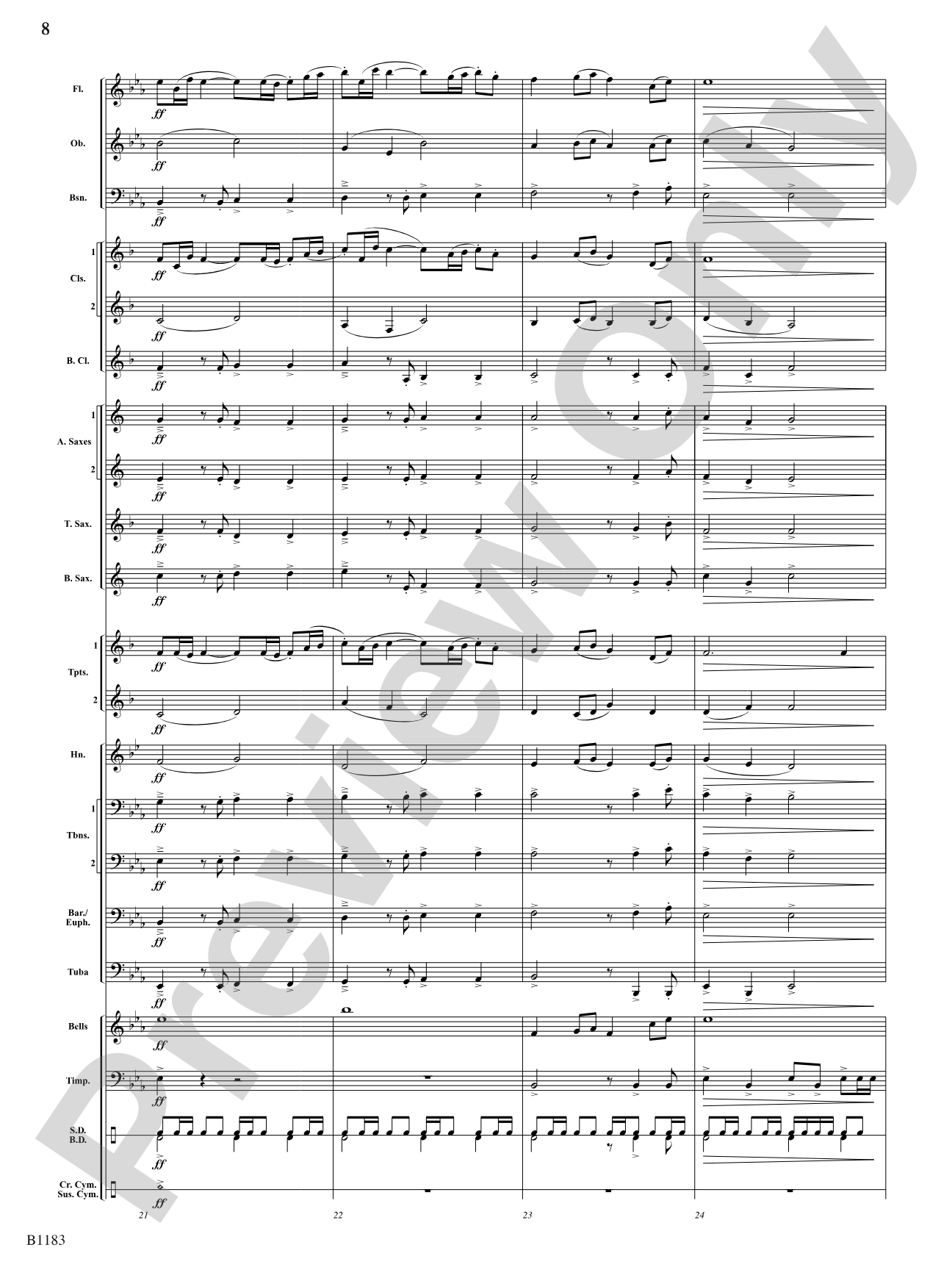
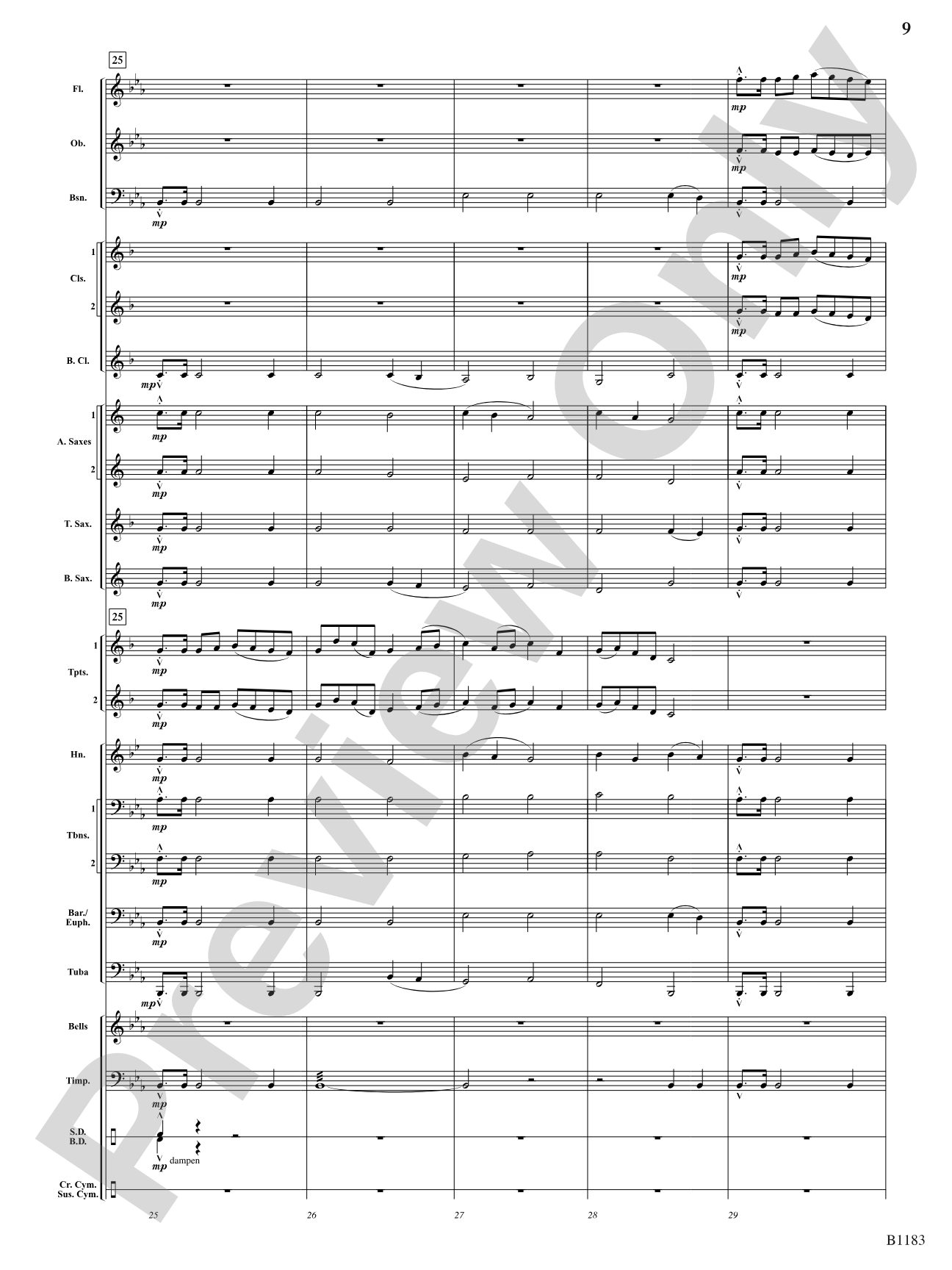
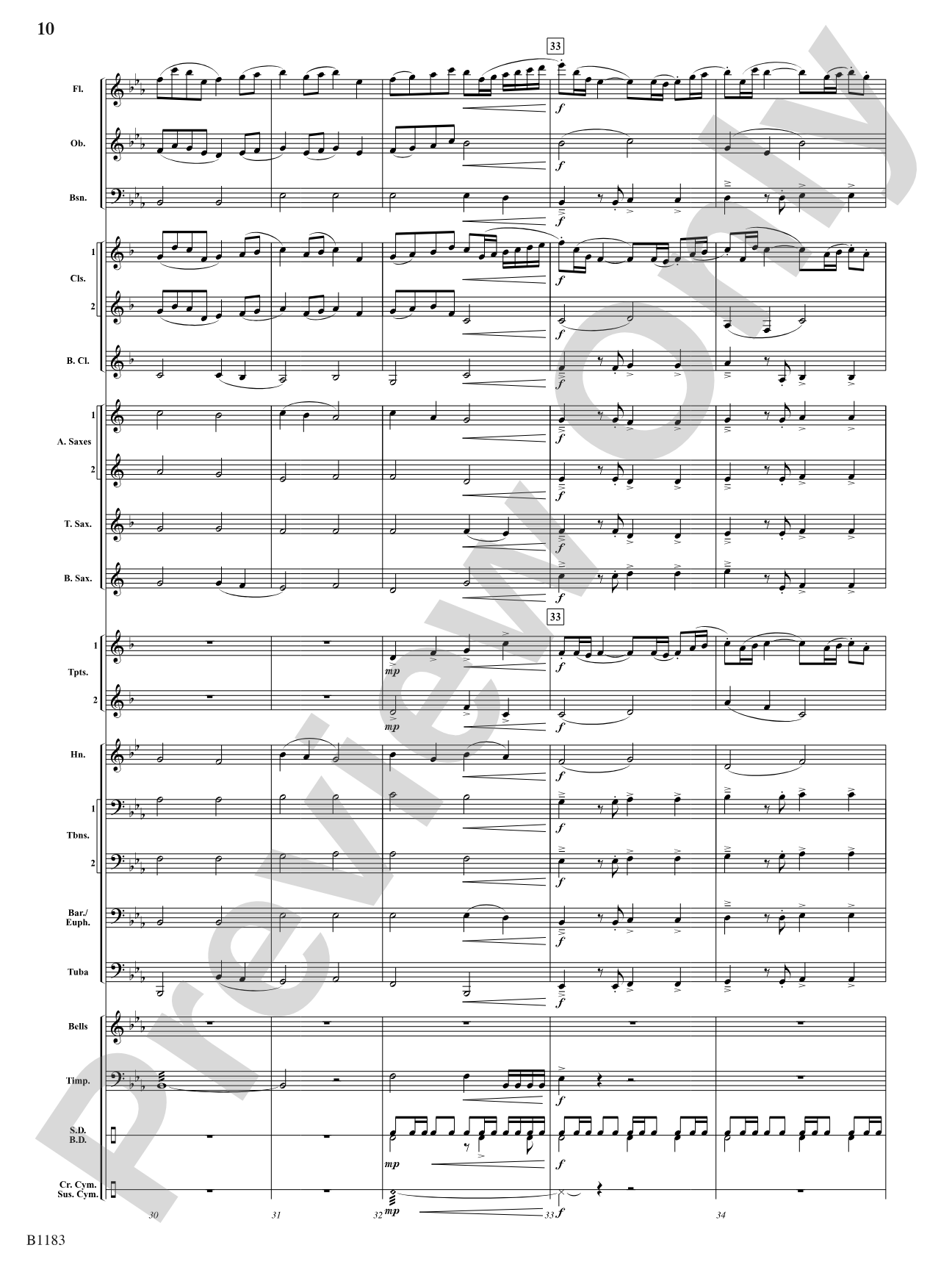
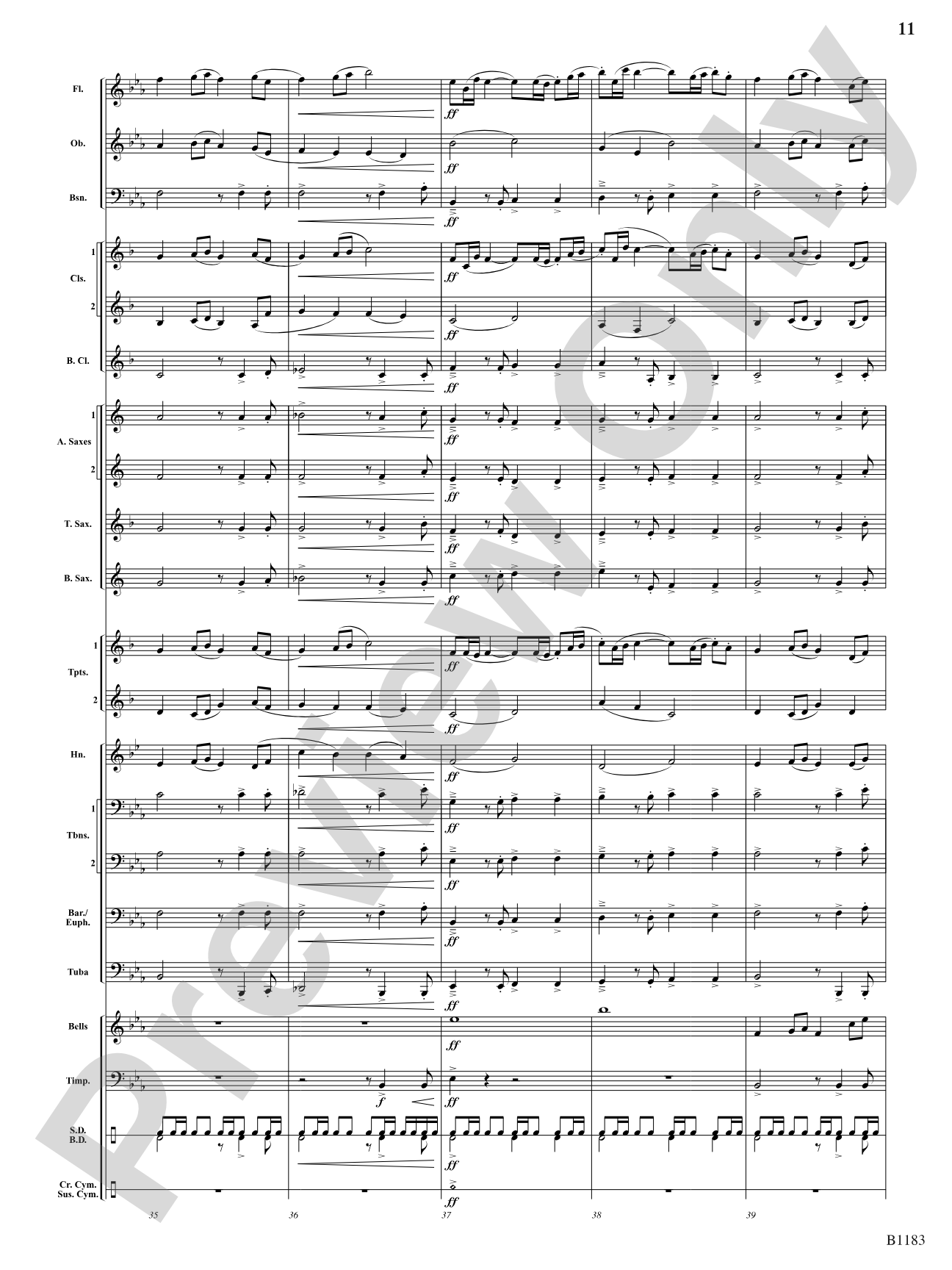
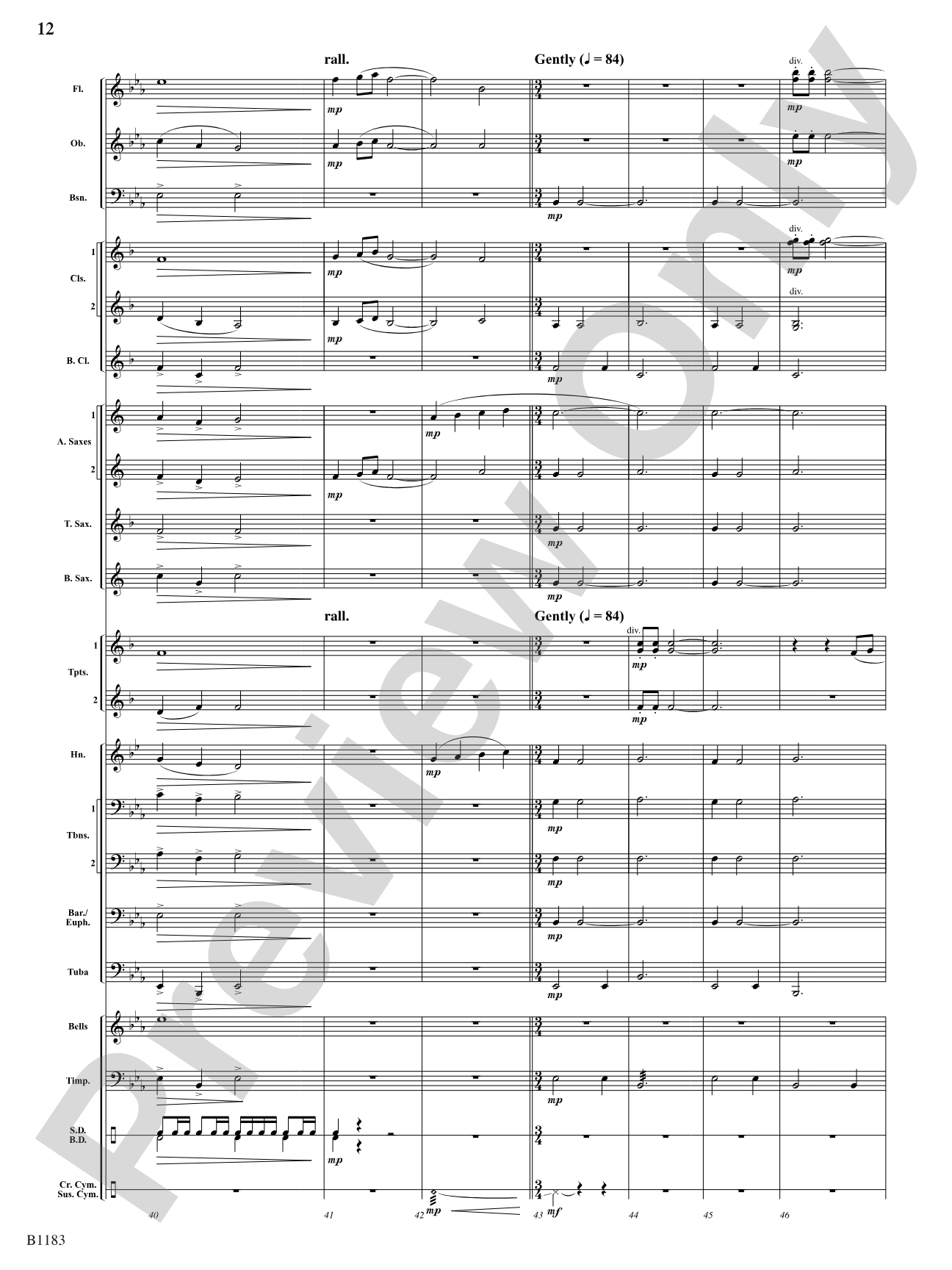
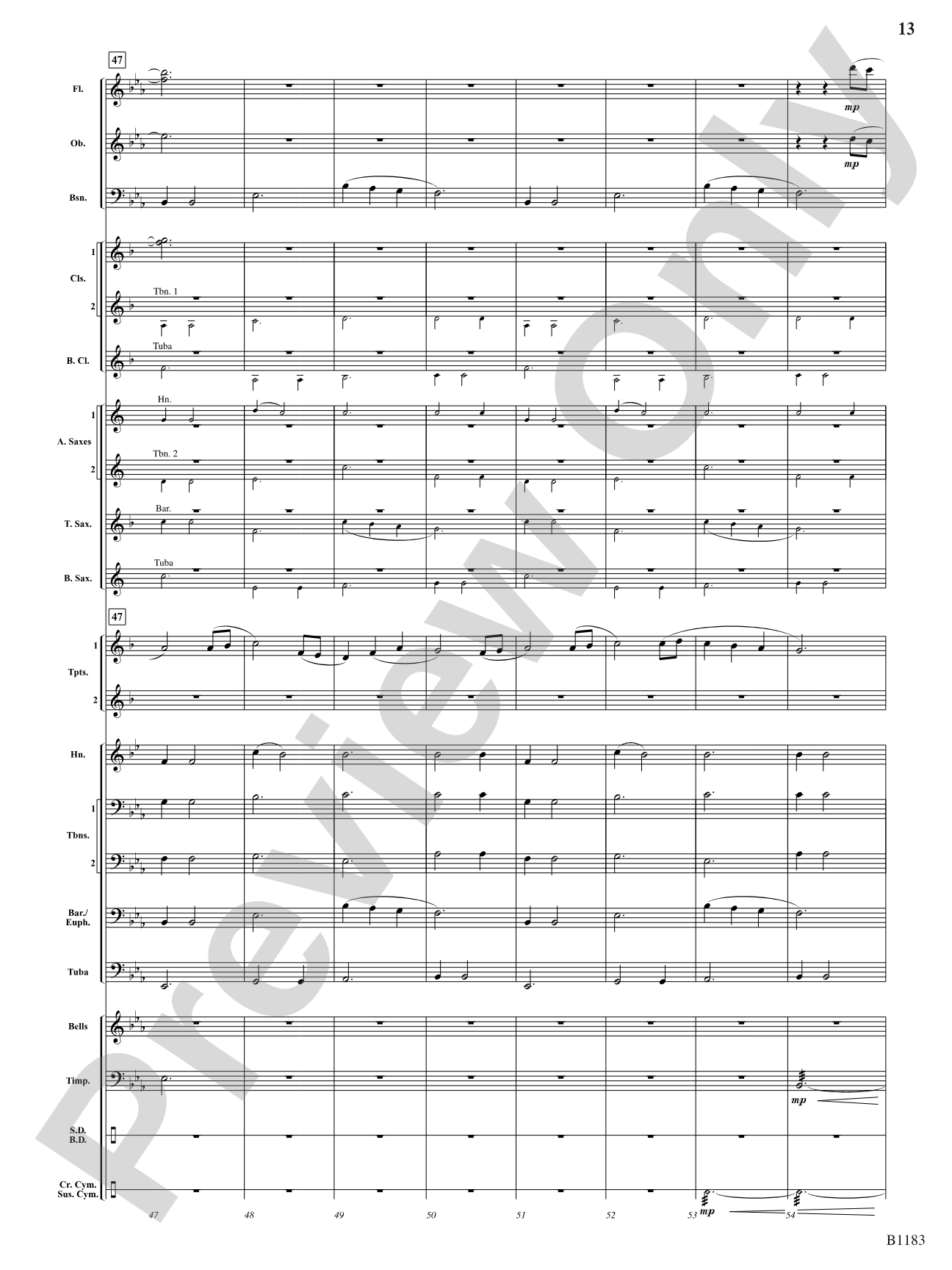
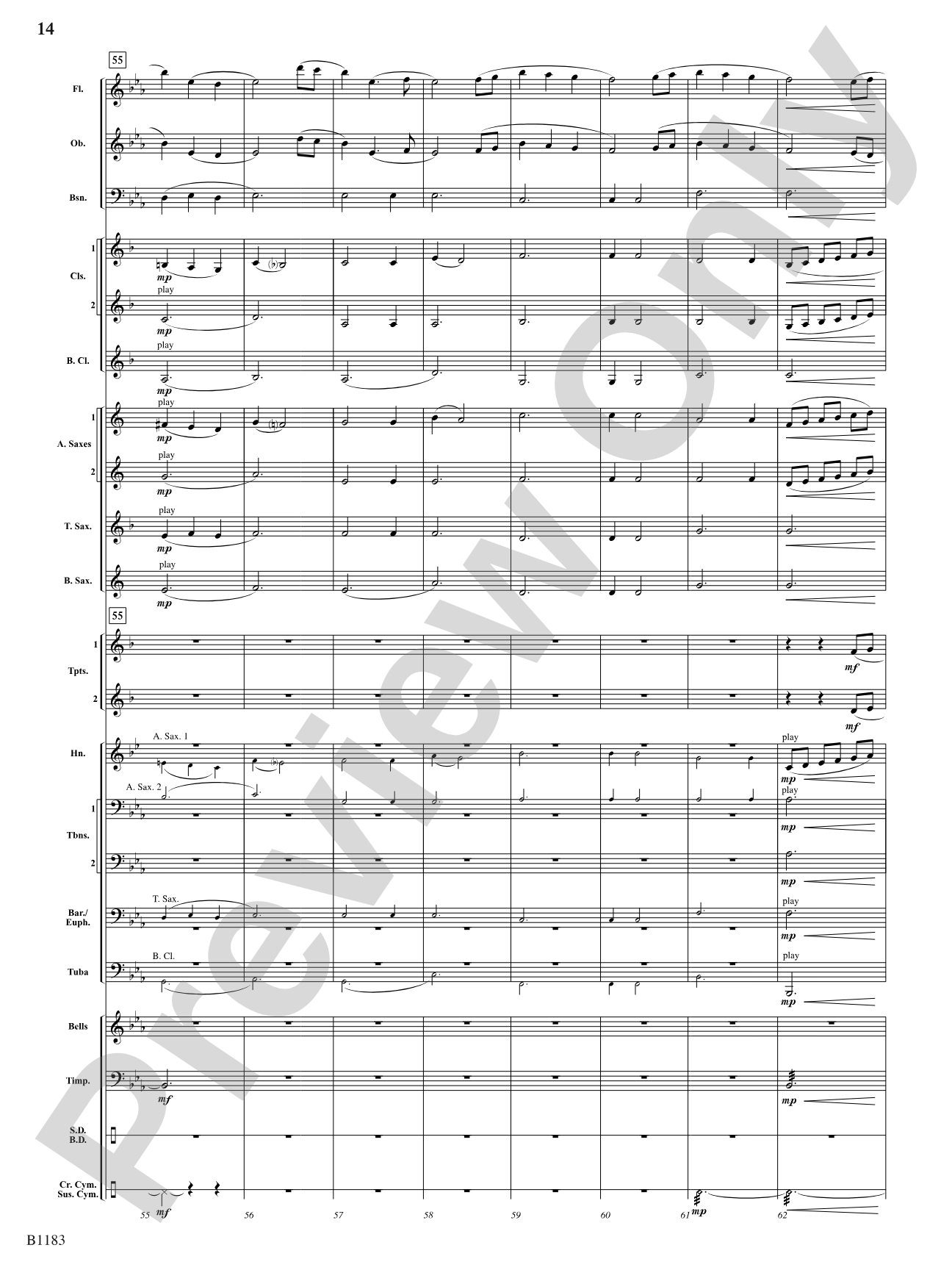
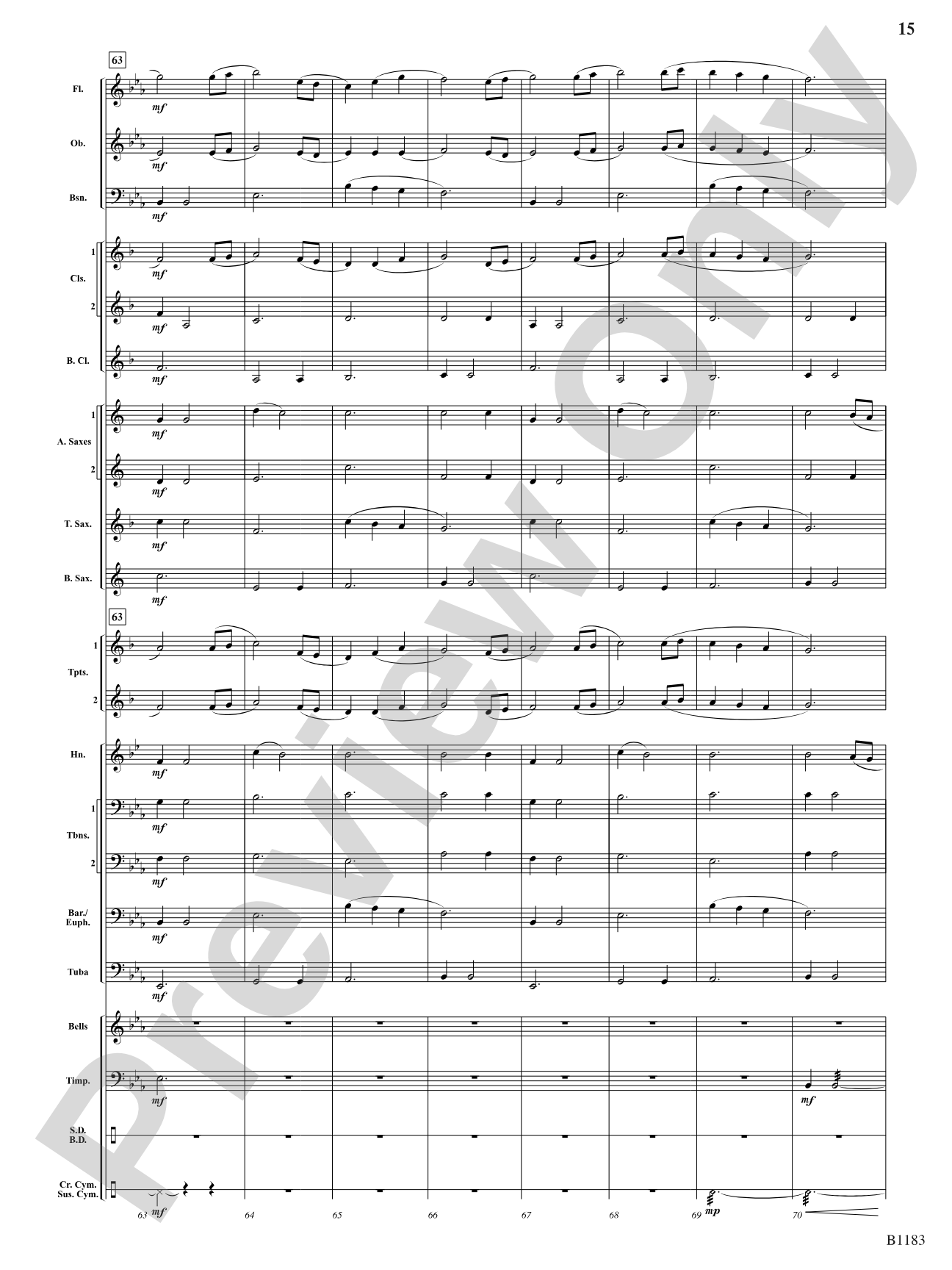
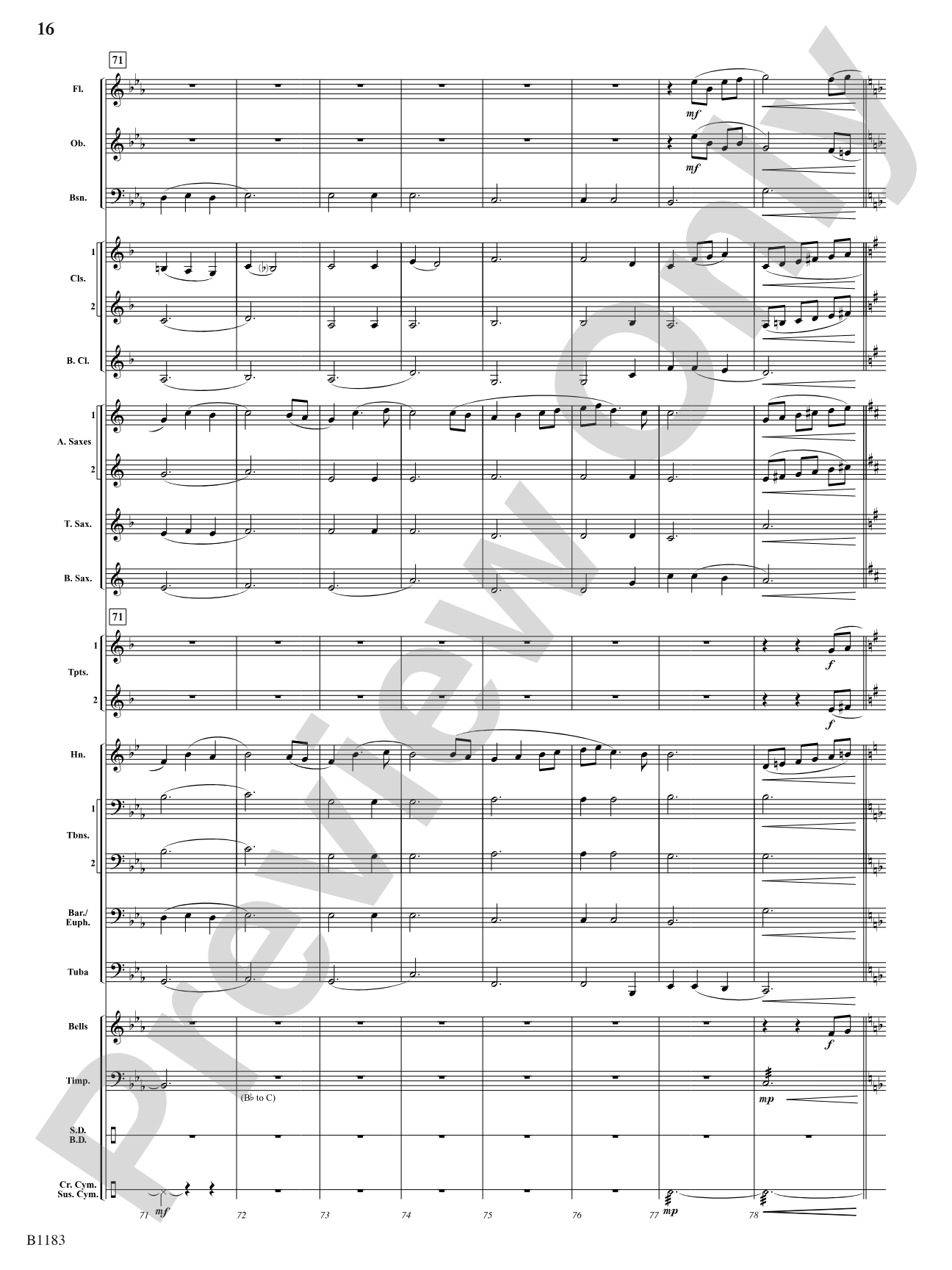
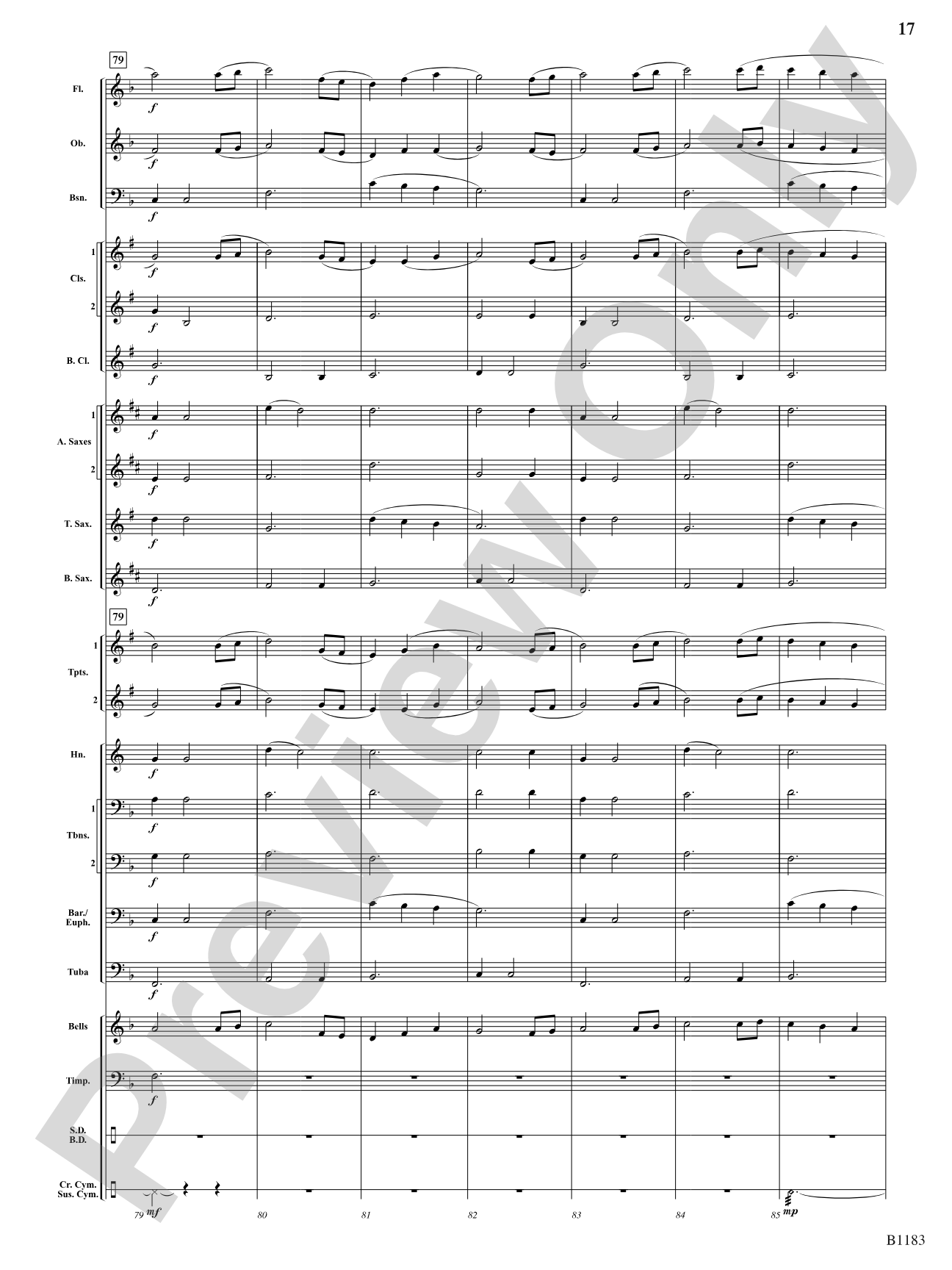
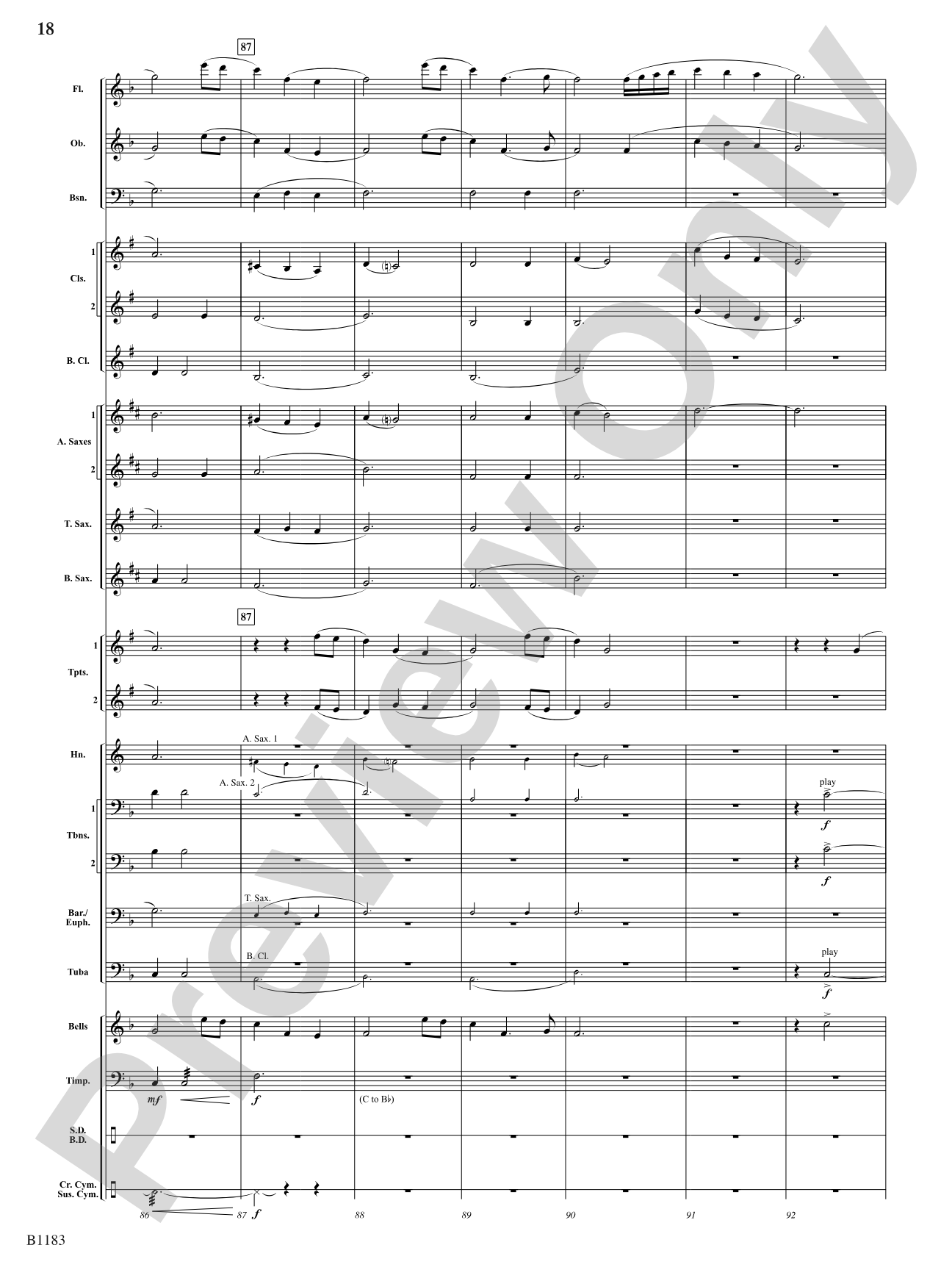
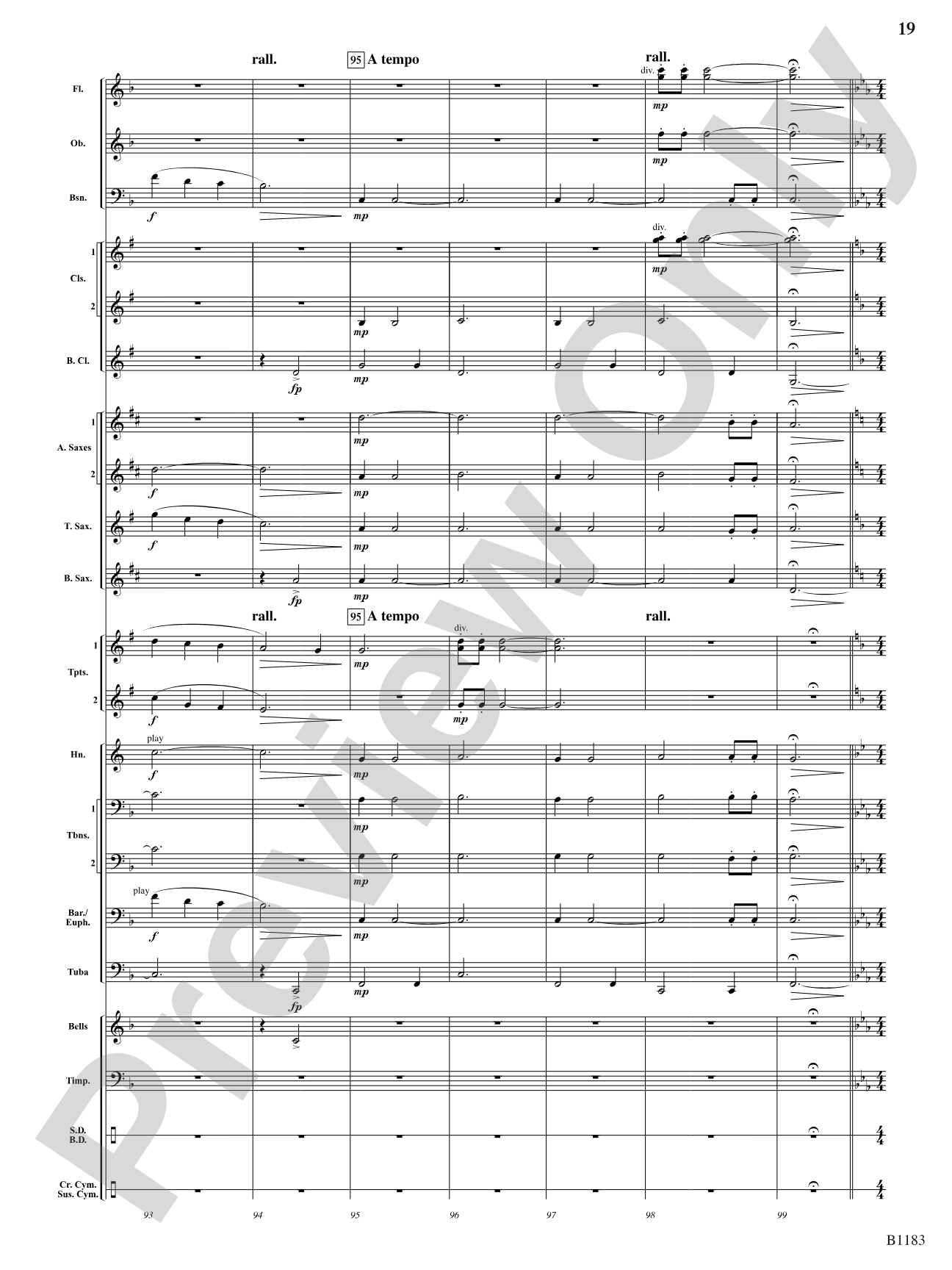
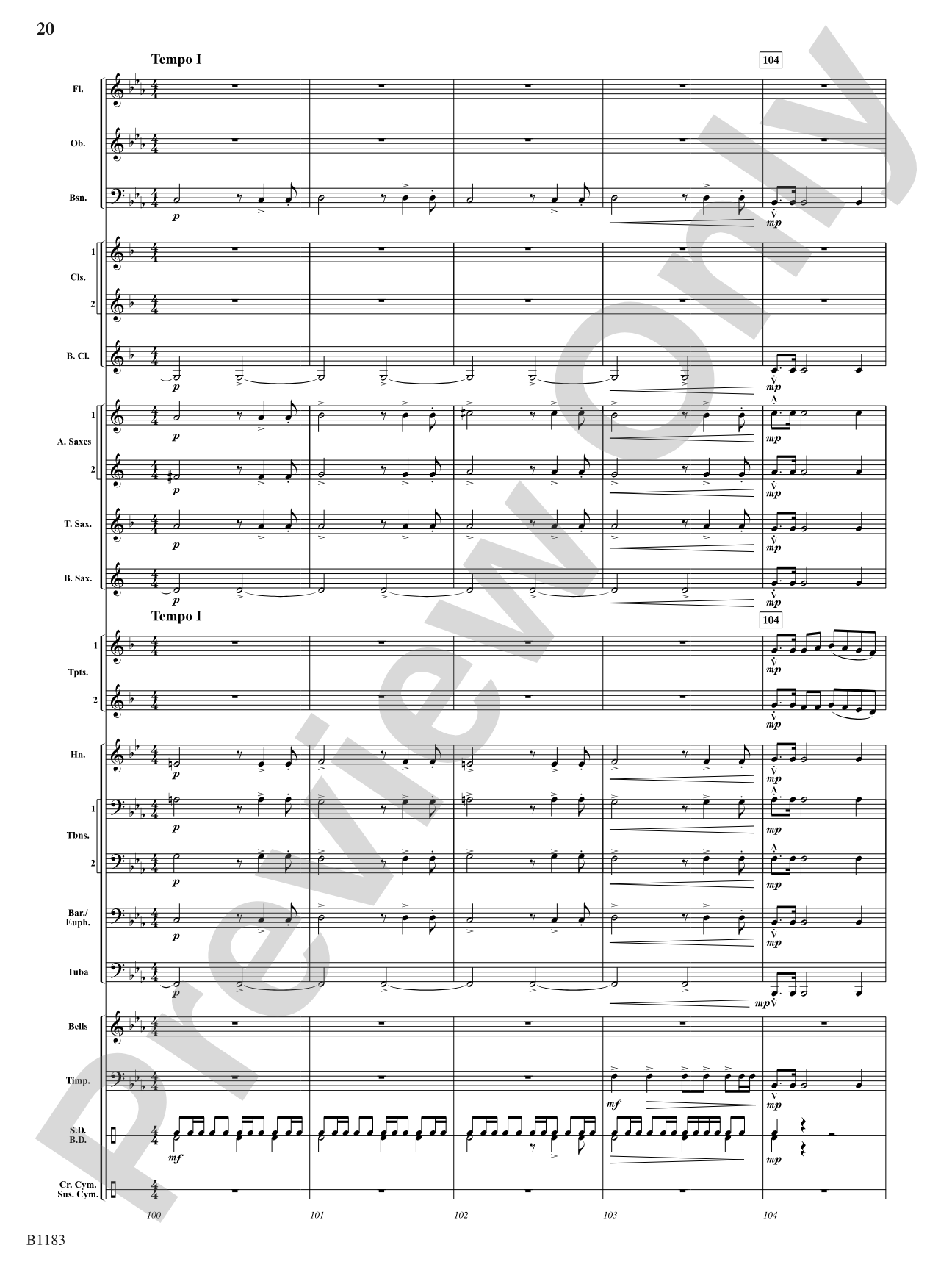
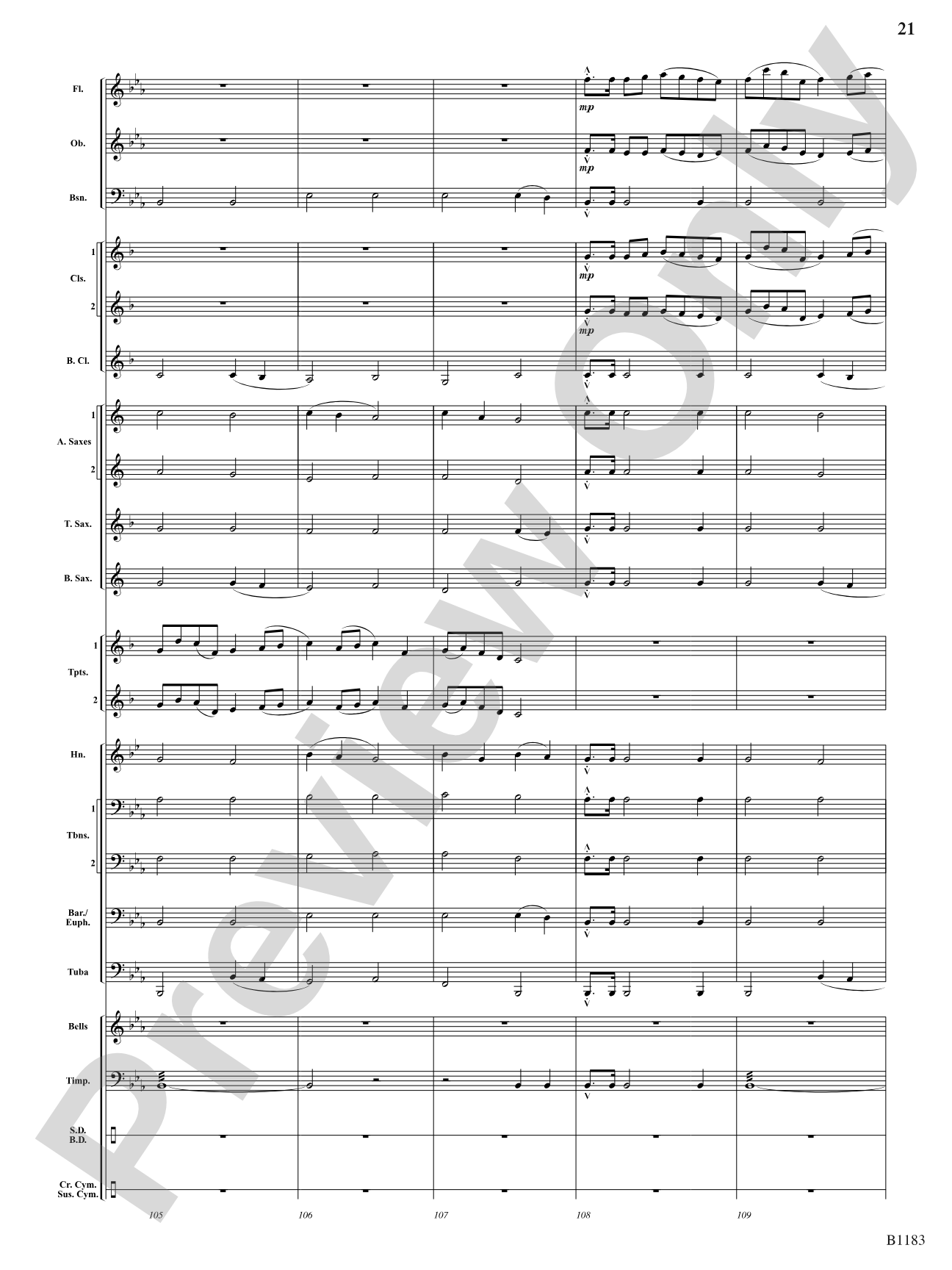
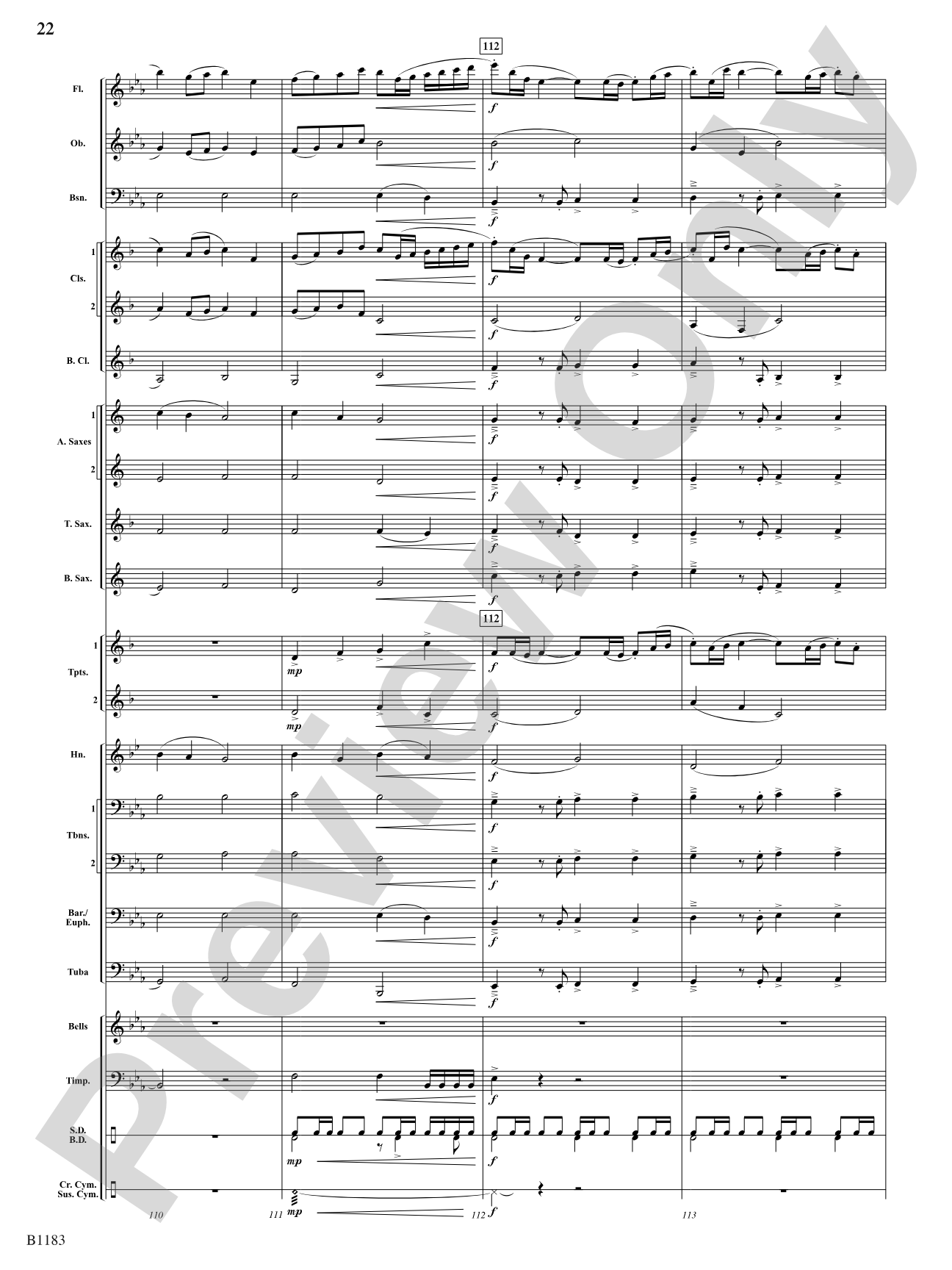
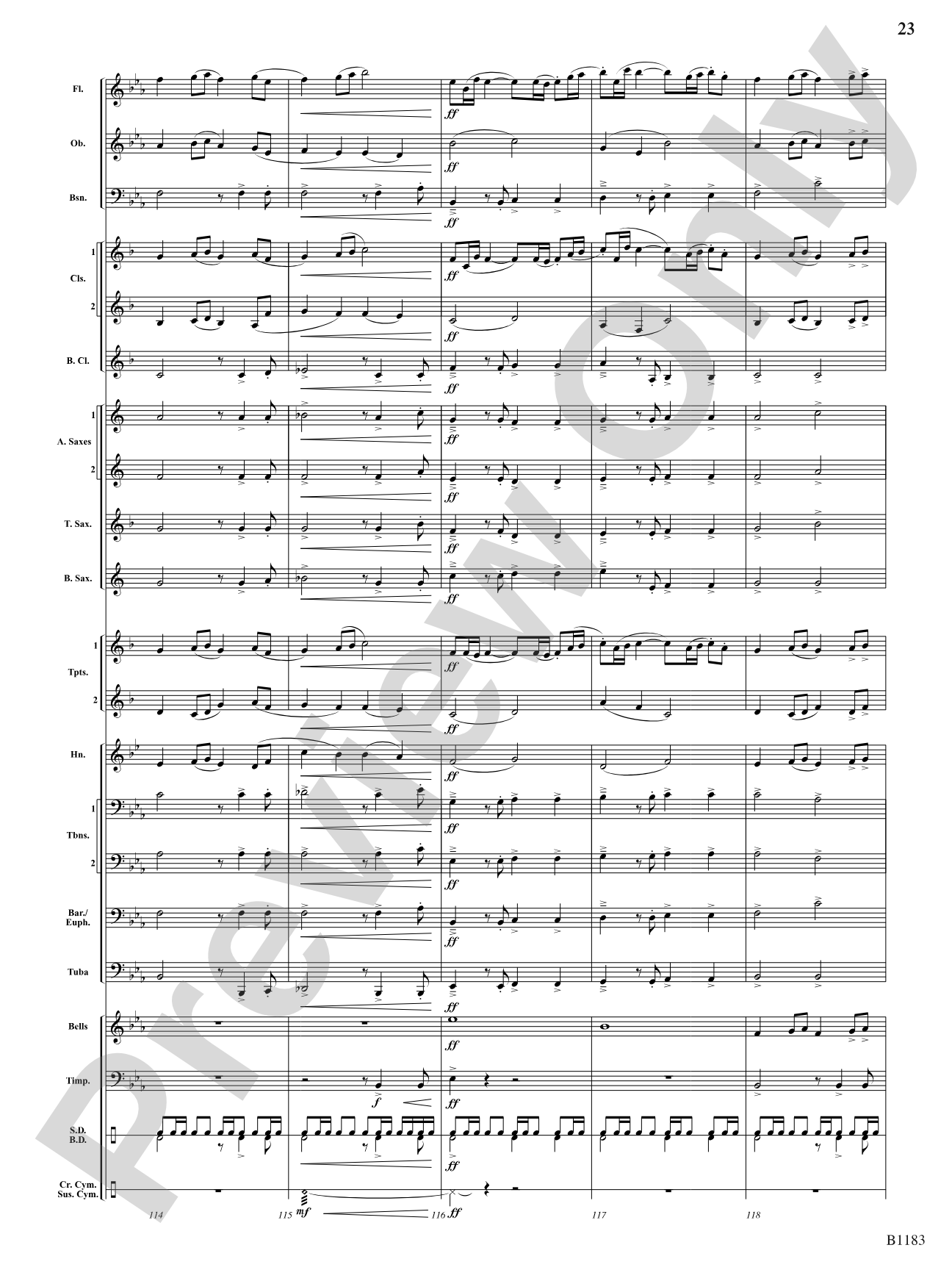
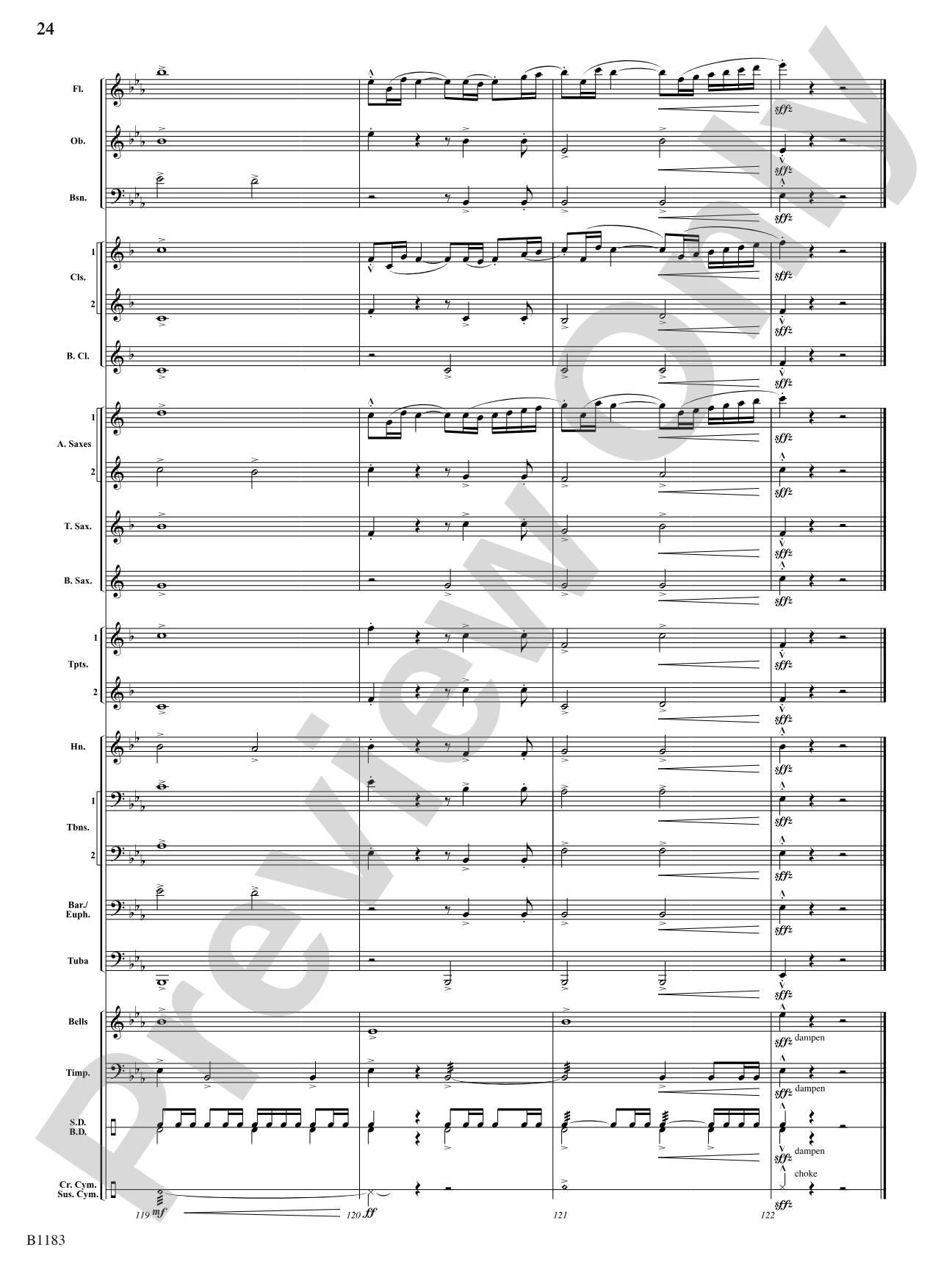

Blaze of Glory: Concert Band Conductor Score & Parts
By Robert Sheldon
Grade: 2.5
Item: 98-DB1183
$55.00
Pickup currently not available
Buy Extra Parts (Digital PDF Download)
| Product | Price | Quantity |
|---|---|---|
| Blaze of Glory: Score | $6.00 | |
| Blaze of Glory: Flute | $7.00 | |
| Blaze of Glory: Oboe | $7.00 | |
| Blaze of Glory: Bassoon | $7.00 | |
| Blaze of Glory: B-flat Clarinet 1 | $7.00 | |
| Blaze of Glory: B-flat Clarinet 2 | $7.00 | |
| Blaze of Glory: B-flat Bass Clarinet | $7.00 | |
| Blaze of Glory: E-flat Alto Saxophone 1 | $7.00 | |
| Blaze of Glory: E-flat Alto Saxophone 2 | $7.00 | |
| Blaze of Glory: B-flat Tenor Saxophone | $7.00 | |
| Blaze of Glory: E-flat Baritone Saxophone | $7.00 | |
| Blaze of Glory: B-flat Trumpet 1 | $7.00 | |
| Blaze of Glory: B-flat Trumpet 2 | $7.00 | |
| Blaze of Glory: F Horn | $7.00 | |
| Blaze of Glory: Trombone 1 | $7.00 | |
| Blaze of Glory: Trombone 2 | $7.00 | |
| Blaze of Glory: Baritone/Euphonium | $7.00 | |
| Blaze of Glory: Baritone T.C. | $7.00 | |
| Blaze of Glory: Tuba | $7.00 | |
| Blaze of Glory: Bells | $7.00 | |
| Blaze of Glory: Timpani | $7.00 | |
| Blaze of Glory: Snare Drum/Bass Drum | $7.00 | |
| Blaze of Glory: Crash Cymbals/Suspended Cymbal | $7.00 |
Parts Added to Cart!
Description
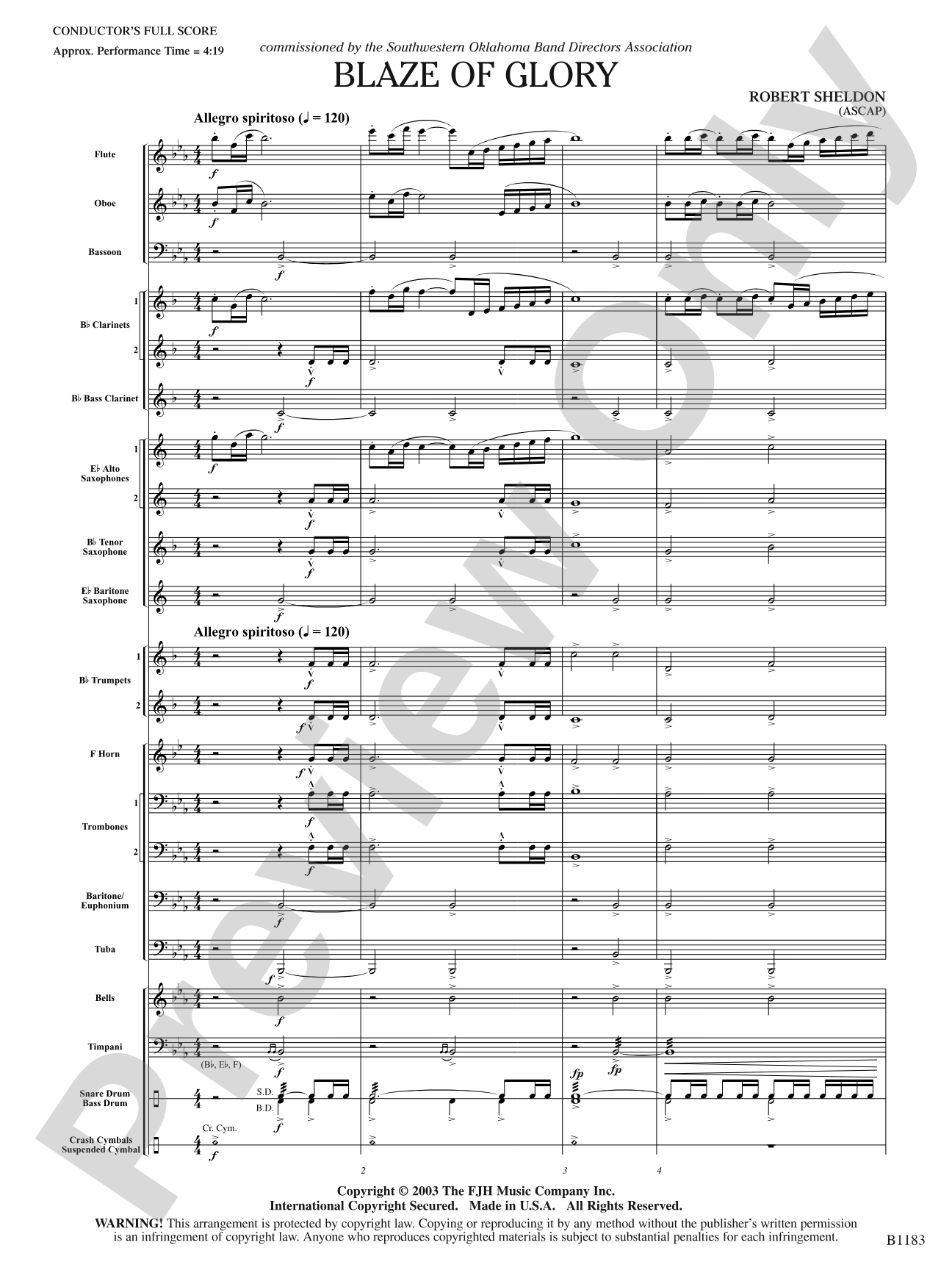
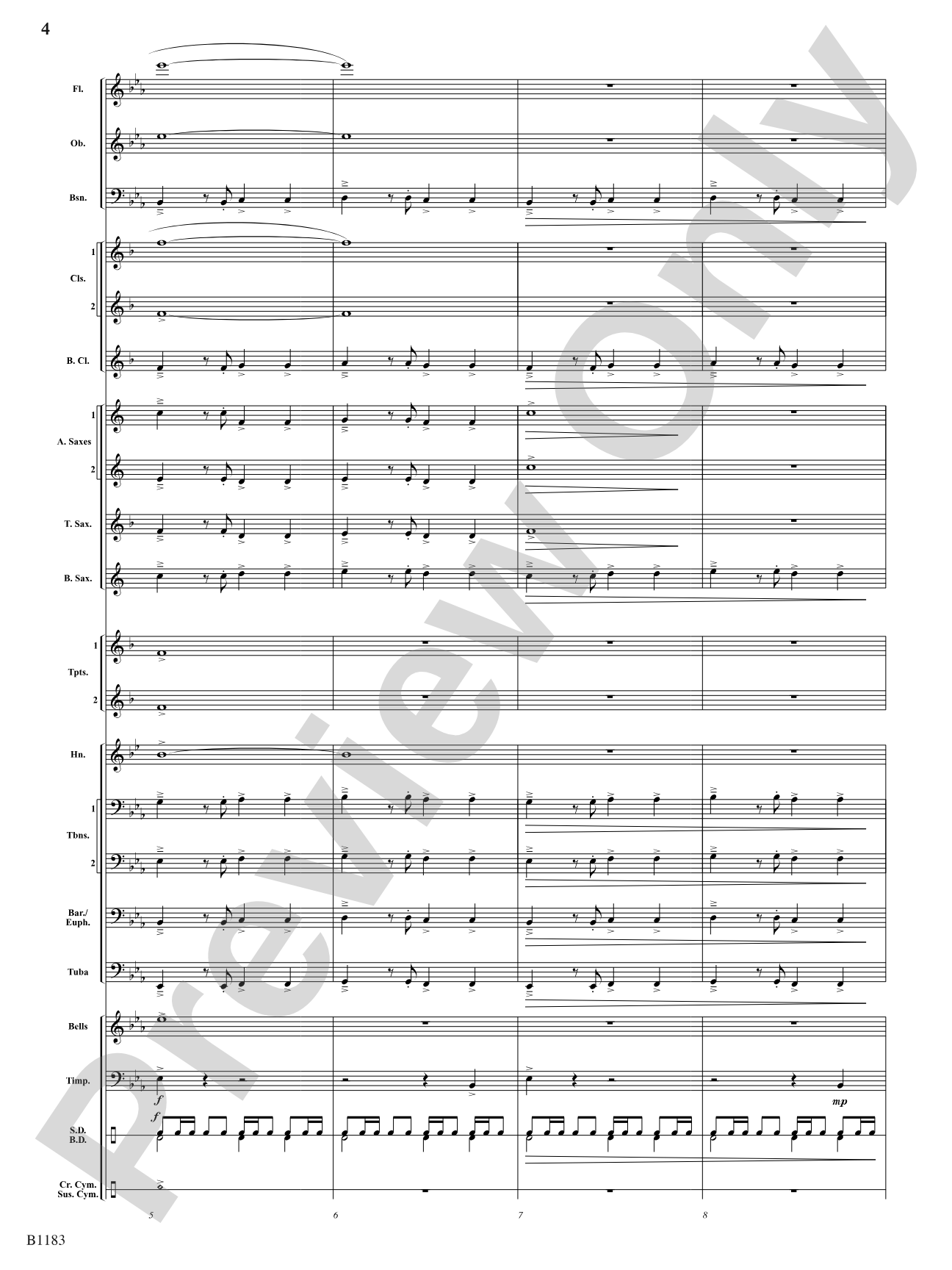
This outstanding overture begins with a declamatory statement in the woodwinds. The heroic melody subsides to a softer section which still retains the energy of the piece. A beautiful lyrical section places emphasis on musicality with plenty of opportunities for rubato. The return of the opening theme brings the work to a triumphant conclusion. Very characteristic of Robert Sheldon's exceptional writing for young bands.


Blaze of Glory: Concert Band Conductor Score & Parts isn't in MakeMusic Cloud just yet...but it could be. Let us know you'd like to see it, and you'll help shape what comes next. In the meantime, start a free trial and dive into thousands of interactive titles your students can play along with today.
Request This Title
Tell us you want it.
Start Your Free Trial
Explore everything that's ready to play right now.
Sample Audio
1
Audio File
--:--
0:00
0:00
Sample Video
No sample videos found.
Additional Details
Series:
FJH Young Band
Publisher:
The FJH Music Company, Inc.
SKU:
98-DB1183
More about this title
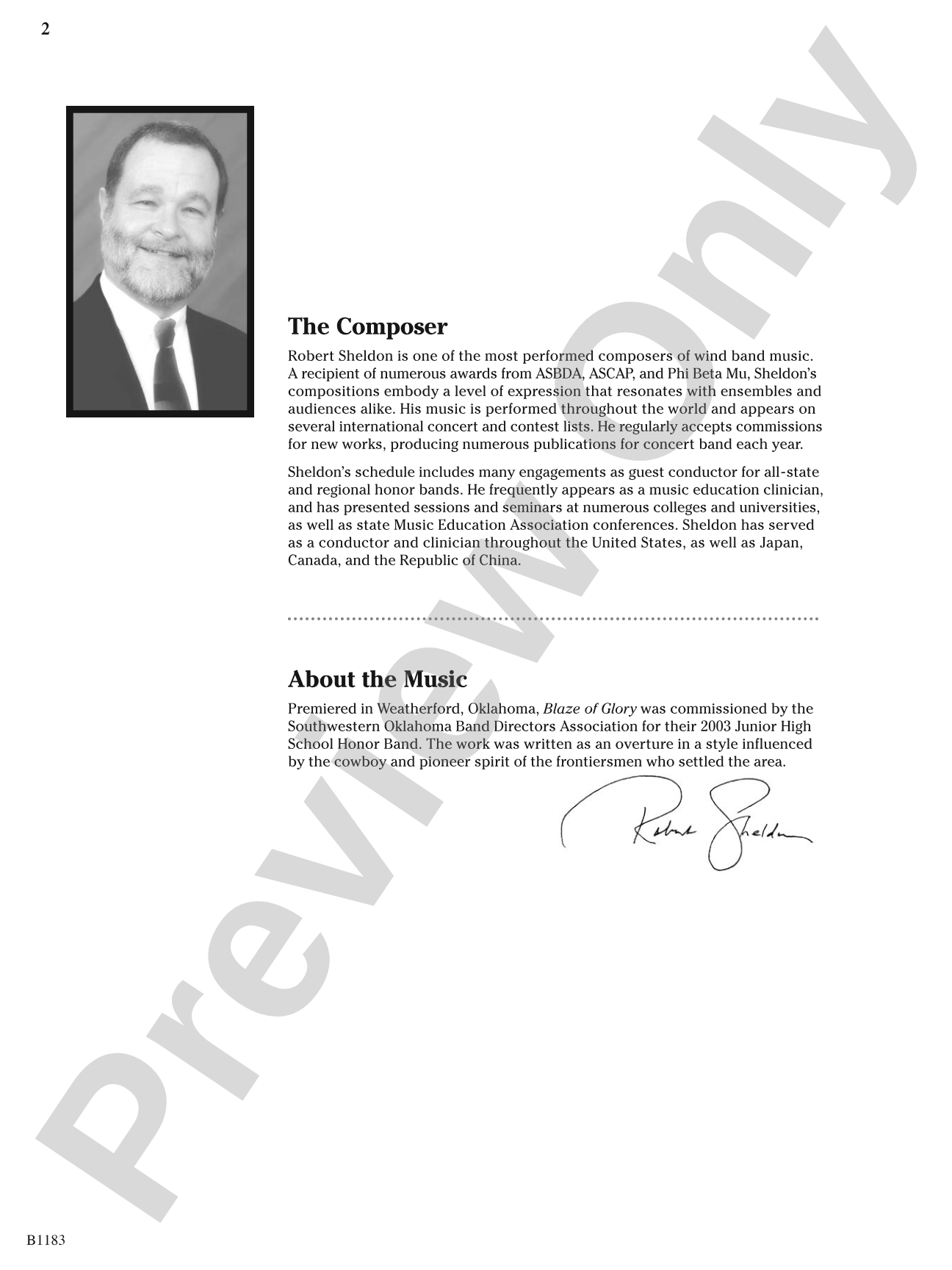
About the Composer: Robert Sheldon

Robert Sheldon stands among the most widely performed composers writing for wind bands today. His works appear regularly on state and national contest lists, performed by ensembles across the globe and in prestigious venues including Carnegie Hall, the Kennedy Center, and the Sydney Opera House. Beyond composing, Sheldon serves as lead author of Sound Innovations for Concert Band and maintains an active schedule as guest conductor for All-State and Regional Honor Bands.
His contributions to music education have earned recognition from the American School Band Director's Association, Phi Beta Mu, and ASCAP. Sheldon conducts clinics and presentations at universities and state music education conferences throughout North America, Europe, Asia, and Australia. In 2020, VanderCook College of Music honored him with a doctorate for his sustained impact on the field.
Why we love this
Sheldon's ability to craft accessible yet musically substantial overtures makes this piece a dependable choice for groups seeking contest material with real pedagogical weight. The architecture itself teaches: a declarative opening gives way to introspection, then builds back to affirmation. Young players hear how tension and release work, and audiences leave remembering a melody.
What to expect
A declaration followed by reflection. The opening carries civic weight, almost ceremonial, before softening into something intimate and searching. When the heroic theme returns, it arrives not as bombast but as earned resolution, leaving listeners satisfied.
Who it's for
Grade 2.5 bands with developing musicianship who need a contest piece that sounds polished without requiring advanced technical demands. This works equally well for ensembles prioritizing musical expression over virtuosity.
How to get the most out of it
- Shape the opening woodwind statement with clear articulation and voicing; this declaratory gesture sets the entire work's character, so lock the balance between sections before moving on.
- Allow genuine flexibility during the lyrical section. When the score asks for musicality, trust your students to respond to slight tempo shifts and phrase breathing without losing ensemble integrity.
- Build the final return deliberately. Resist the urge to rush into the triumphant conclusion. The payoff lands harder when you've established patience through the middle section.
How to use it
Pair this on a contest program with a lyrical work and a march for balanced variety, or feature it as an opener for a concert when you want to establish energy from the first notes. Its moderate length and clear arc make it ideal for festival use where time slots are tight.
Skills your students will build
- Balancing multiple woodwind voices in dense chords
- Sustaining dynamic control through long legato passages
- Responding to rubato while maintaining ensemble cohesion
- Phrasing and shaping a melody across registers and sections
- Building intensity through texture rather than volume alone