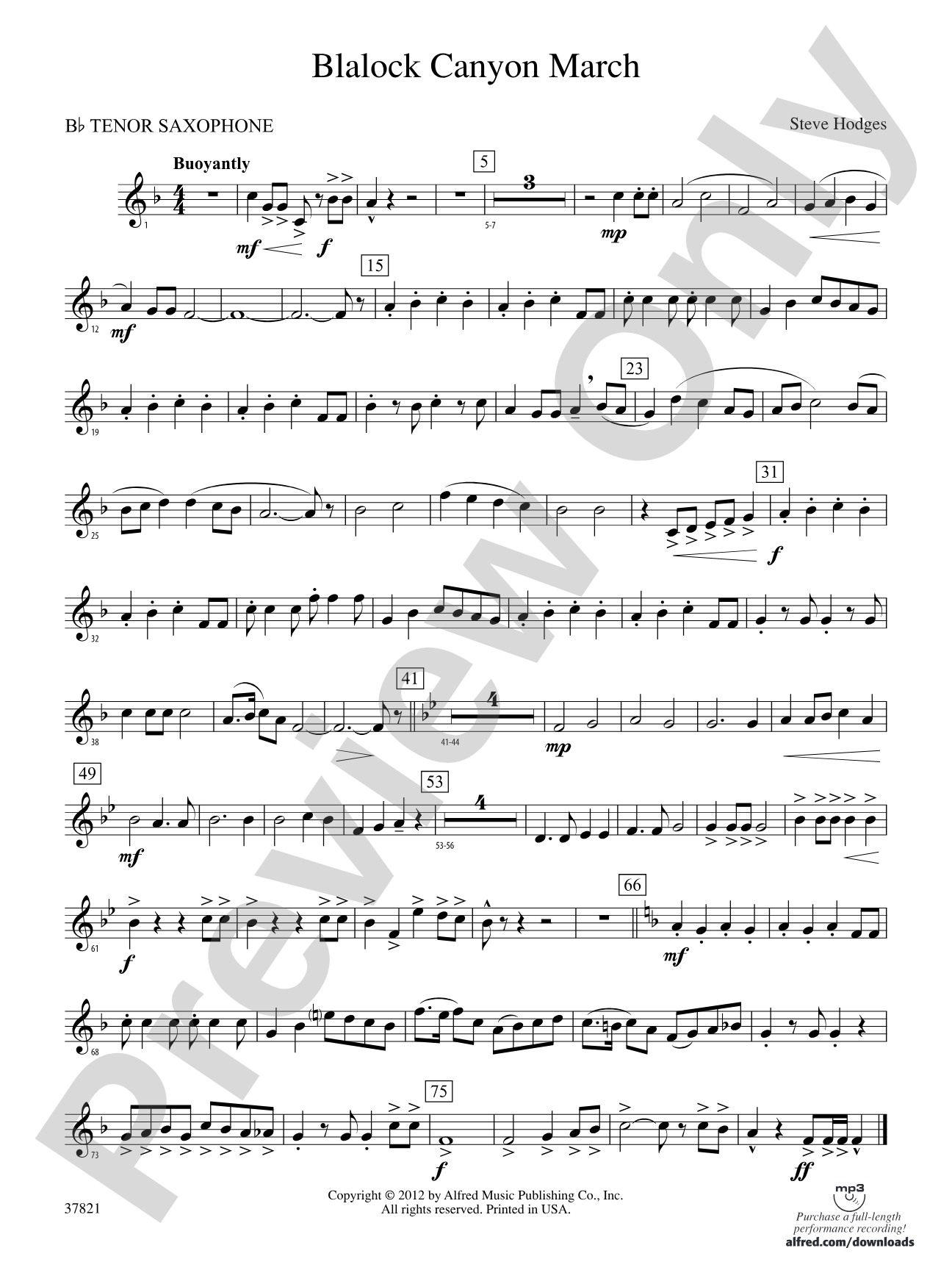
Blalock Canyon March: B-flat Tenor Saxophone Sheet Music Preview

Blalock Canyon March: B-flat Tenor Saxophone

By Steve Hodges

Grade: 2 (Medium Easy)

Item: 00-PC-0015351_TX1

Digital Download
$3.00
Description
Located in the high desert along the Columbia River, Blalock Canyon was one of the stops chronicled by Lewis and Clark in 1806. This march depicts the sense of discovery and the spirit of adventure reminiscent of their expedition. A perfect opening or closing selection for a concert or festival! (2:35)

Don't just read it, hear it, play along with it, and watch your students grow with it. In MakeMusic Cloud, Blalock Canyon March: B-flat Tenor Saxophone comes alive with professional accompaniment, adjustable tempo, and built-in practice tools that turn solo practice into real progress.

Sample Audio
0:00
0:00
Sample Video
Additional Details
Series: Young Symphonic
Publisher: Alfred Music
Page Count: 134
SKU: 00-PC-0015351_TX1

More about this title

About the Composer: Steve Hodges

Steve Hodges

Steve Hodges holds degrees from Western Oregon University (Bachelor of Science) and Central Washington University (Master of Music Education). Over four decades in public school music education, he directed concert bands, choirs, and chamber ensembles across all ability levels before retiring from full-time teaching.

Since 1986, Hodges has composed more than 120 concert band works published by Alfred Music, along with choral arrangements for Staff Music and Shawnee Press. His compositions have been performed internationally at festivals and state conventions, commissioned by honor bands and schools from Virginia to British Columbia. His music has also been featured on TBS and ESPN programming. A member of ASCAP, Hodges now resides in The Dalles, Oregon, where he remains active in community music and watches his grandchildren perform his pieces in their school bands.

Why we love this

Hodges captures the historical and geographical essence of the Lewis and Clark expedition without relying on heavy orchestration or complex writing. Grade 2 bands get to play music with genuine narrative weight, and the march form itself gives students a satisfying structure to execute. You'll want this in your festival rotation because it works equally well as a program opener (building momentum) or closer (sending audiences out with a sense of accomplishment).

What to expect

The music evokes open landscape and purposeful forward motion, carrying the spirit of exploration without grand fanfare. It strikes a balance between gentle reflection on discovery and the driving energy of a journey, making it feel both contemplative and assured.

Who it's for

Grade 2 concert bands looking for well-crafted patriotic repertoire that doesn't condescend to younger or developing ensembles. Directors planning festival programs or concert sets where a march serves both structural and thematic purpose will find this a reliable choice.

How to get the most out of it

  • Shape the melodic phrases with a gentle swell to avoid sounding mechanical; even a Grade 2 march benefits from conductors thinking in larger musical gestures rather than note-to-note.
  • Balance the inner voices so the harmonic progression supports rather than overwhelms the main theme; lighter scoring at this level means every section contributes to clarity.
  • Lock the march tempo early in rehearsal and stay consistent; students will gain confidence when the pulse feels inevitable rather than pushed.

How to use it

Open a fall festival concert with this to set a tone of American heritage and musical confidence, or place it as the final selection to send audiences home with an uplifting sense of closure. It pairs naturally with other patriotic or historical concert band selections in a thematic program centered on American exploration or westward expansion.

Skills your students will build

  • Shaping phrase contours within a march form
  • Balancing melodic and harmonic voices in concert band texture
  • Executing consistent march tempo under different dynamic conditions
  • Reading and performing Grade 2 concert band parts with stylistic awareness

You May Also Like