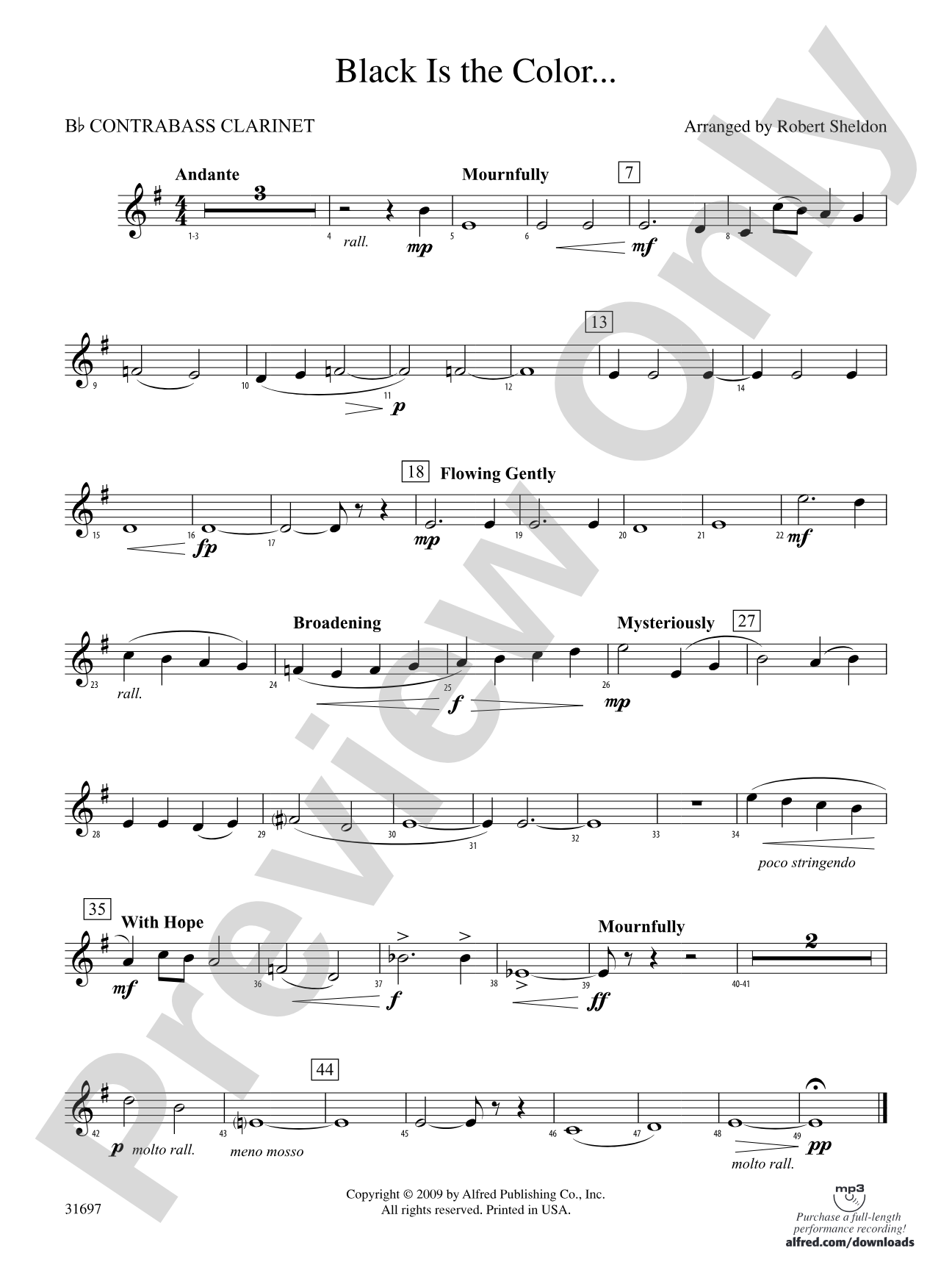
Black Is the Color...: (wp) B-flat Contrabass Clarinet Sheet Music Preview

Black Is the Color...: (wp) B-flat Contrabass Clarinet

By Robert Sheldon

Grade: 1.5 (Easy)

Item: 00-PC-0001797_wpBCBC

Digital Download
$3.00
Description
Black Is the Color (of My True Love's Hair) is a traditional folk song first known in the Appalachian Mountains region of United States in 1915, but most probably originated from Scotland. It is about a girl who is waiting for her lover to return from sea. This title is available in MakeMusic Cloud.

Don't just read it, hear it, play along with it, and watch your students grow with it. In MakeMusic Cloud, Black Is the Color...: (wp) B-flat Contrabass Clarinet comes alive with professional accompaniment, adjustable tempo, and built-in practice tools that turn solo practice into real progress.

Sample Audio
0:00
0:00
Sample Video
Additional Details
Series: Challenger Band Series
Publisher: Alfred Music
Page Count: 120
SKU: 00-PC-0001797_wpBCBC

More about this title

About the Arranger: Robert Sheldon

Robert Sheldon

Robert Sheldon's catalog of wind band works has become foundational repertoire in concert band programs across the country. His compositions and arrangements consistently appear on festival and contest lists, and his music reaches ensembles worldwide from Australia to Japan to Europe. Sheldon's influence extends into the classroom through his authorship of Sound Innovations for Concert Band, a comprehensive pedagogical resource he continues to develop and refine.

Beyond composition, Sheldon maintains an active presence as a clinician and guest conductor, appearing regularly at all-state bands, regional honor ensembles, and university music education conferences. His work has been performed in major concert halls including Carnegie Hall, Boston Symphony Hall, and the Kennedy Center. In recognition of his sustained contributions to wind band music, VanderCook College of Music awarded him an honorary doctorate in 2020.

Why we love this

Sheldon's treatment of this Appalachian ballad respects its emotional weight while keeping it genuinely accessible for a young band. The orchestration reveals the melody's beauty without overwhelming an ensemble at this level, and the piece sits comfortably in the range and technical abilities of Grade 1.5 players, making it an excellent choice for building confidence and expressive awareness early in the season.

What to expect

The arrangement unfolds with quiet melancholy and quiet hope. The melody has the quality of a voice carrying an old story across time, supported by gentle harmonic movement and restrained accompaniment that creates intimacy rather than grand drama.

Who it's for

Concert band directors looking for a genuine folk song arrangement that sits at the entry level without sacrificing musicality. This piece works equally well for a first-year band building foundational skills or a mature ensemble seeking programming that emphasizes expressive, lyrical playing.

How to get the most out of it

  • Shape the melody with a natural, singing legato; the band should think of this as a vocal ballad, not an instrumental showpiece, so avoid heavy-handed articulation even in the supporting voices.
  • Balance the texture carefully so the melody voice sits above the accompaniment without requiring the rest of the band to play so softly that ensemble unity suffers.
  • Allow time in rehearsal for players to understand the story and emotional context of the piece; knowing that this folk song speaks of longing and loss will inform how they shape phrases and sustain long tones.

How to use it

Program this early in the concert to settle the audience's attention and establish an emotional tone. Its brevity and accessibility make it ideal for a solo concert or as a bridge between more technical works, and its folk origins provide natural programming partners with other American or British traditional songs.

Skills your students will build

  • Sustaining long tones with consistent tone quality and dynamic control
  • Playing legato with clear articulation and phrasing in a slow tempo
  • Balancing melody and accompaniment to support a primary voice
  • Interpreting expressive, lyrical material at a slow tempo
  • Understanding historical context and storytelling as part of musical interpretation

You May Also Like