
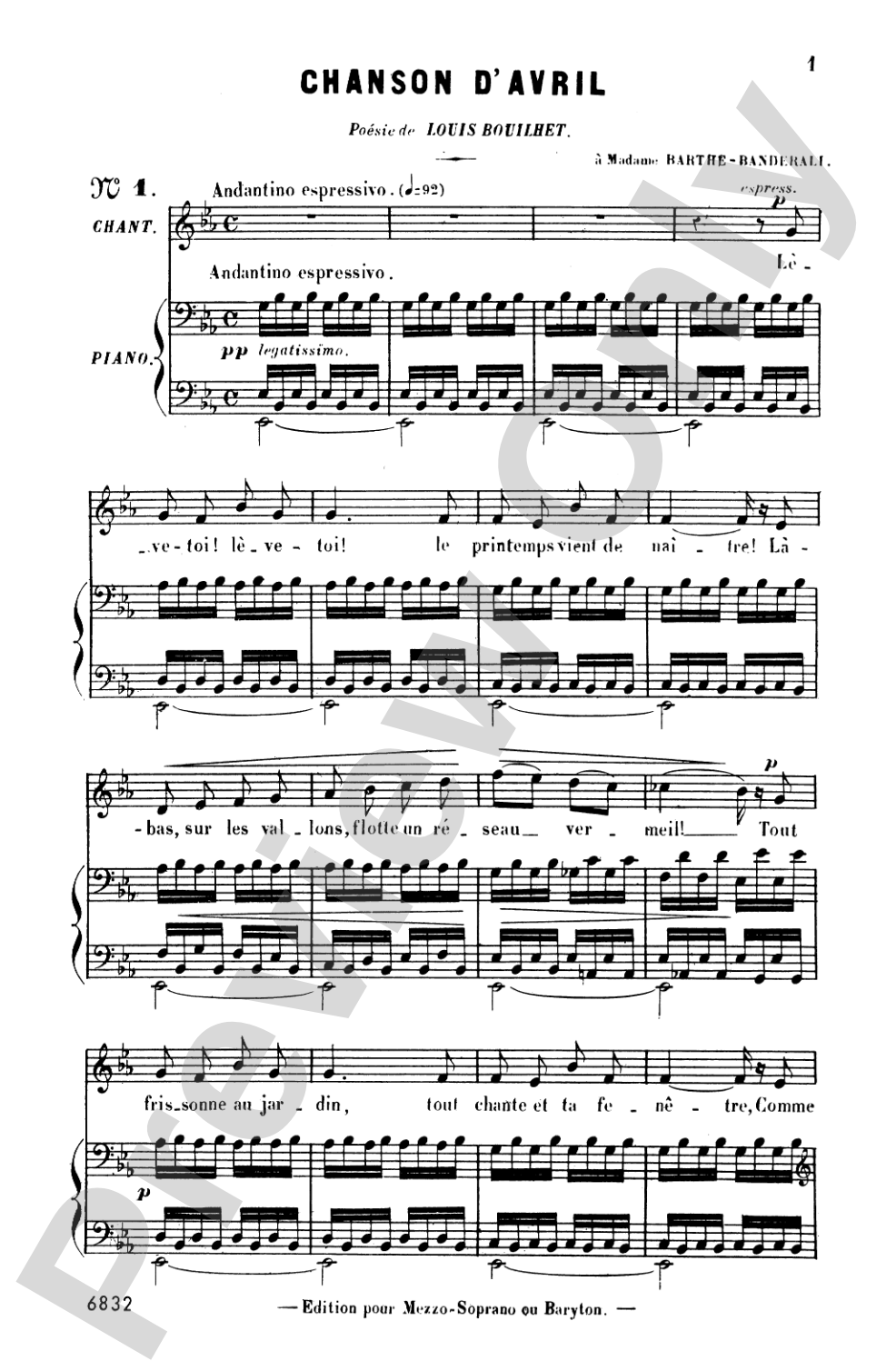
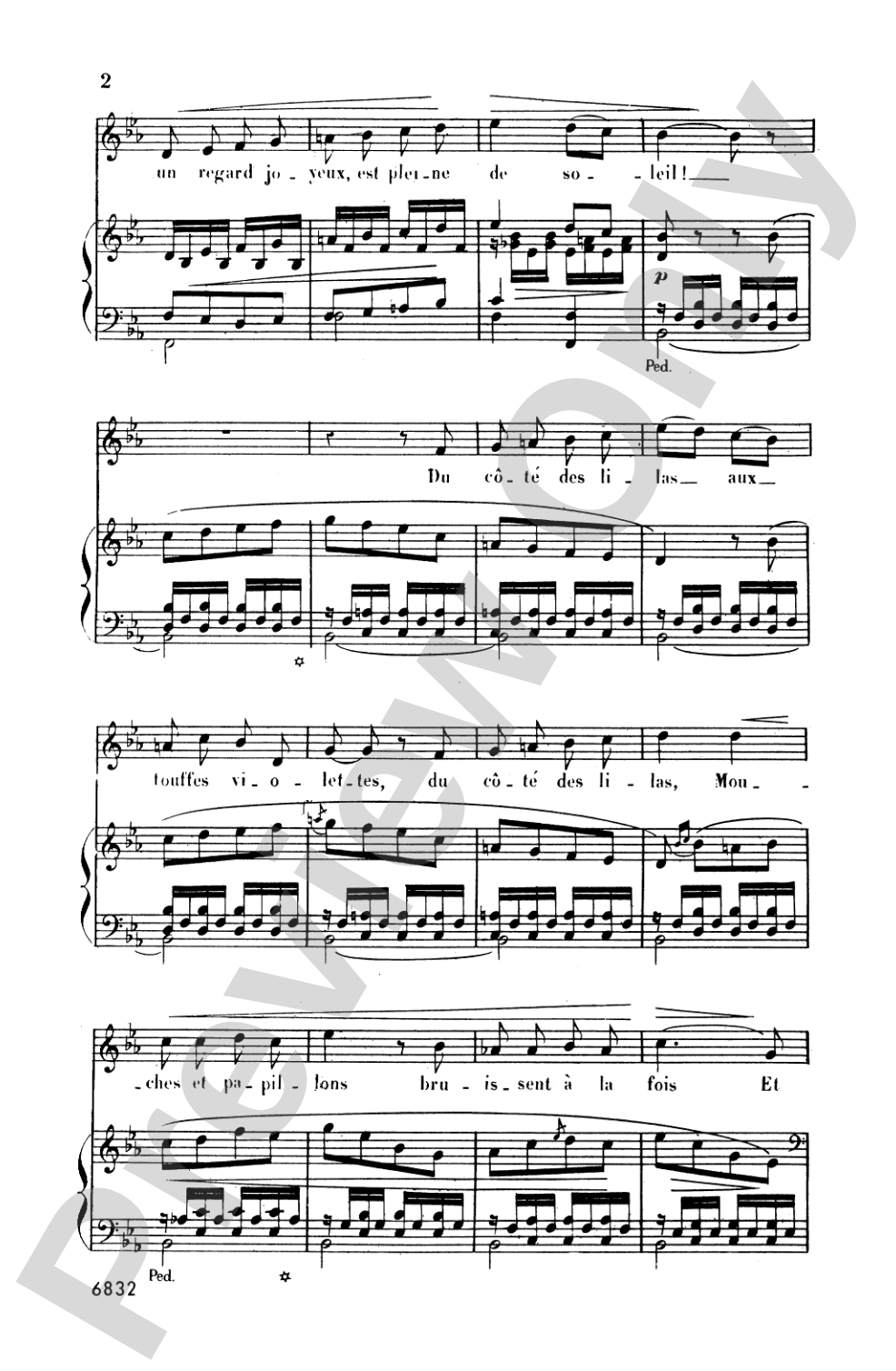
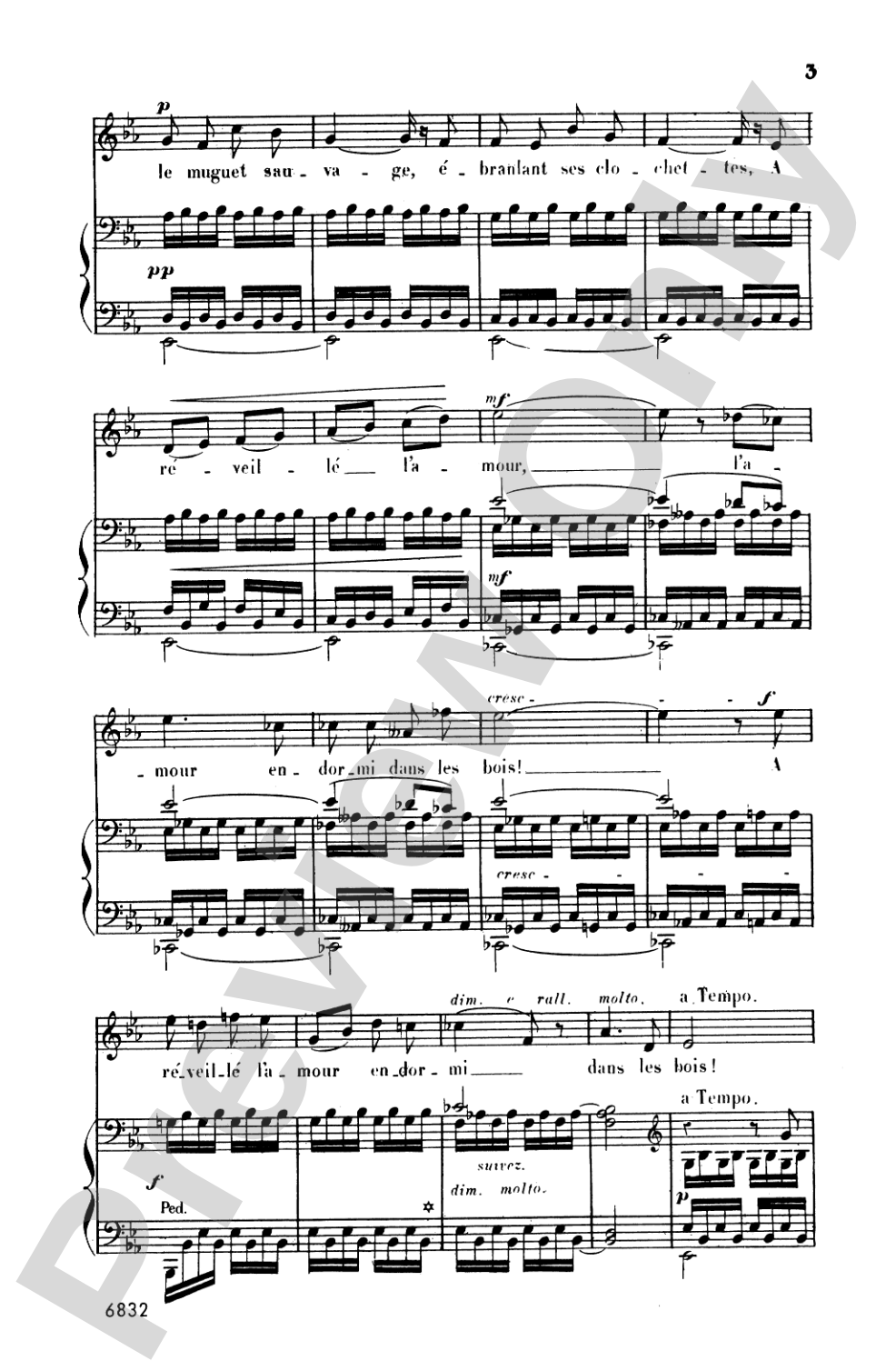
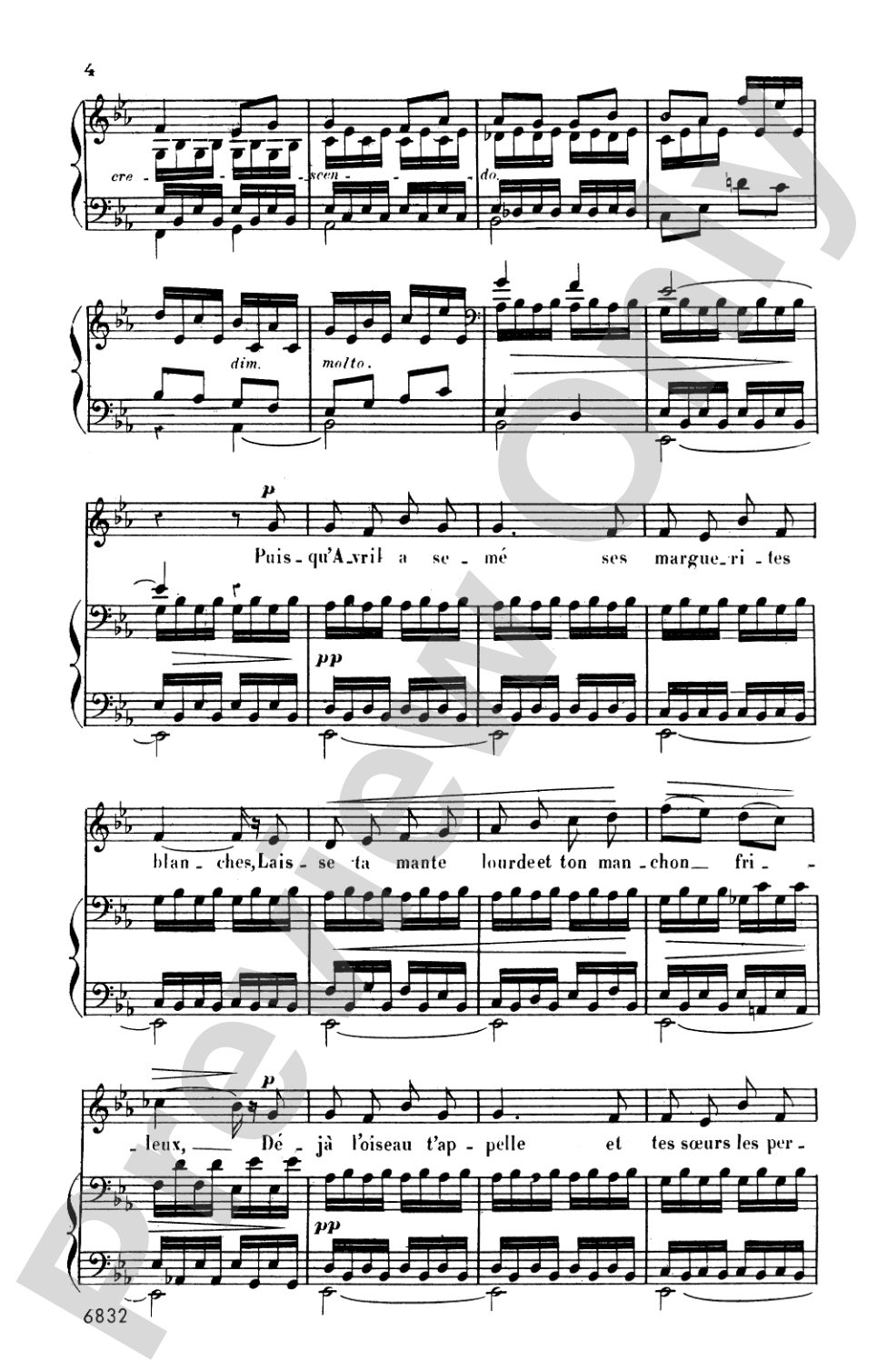

Bizet: Twenty Melodies-- Mezzo-Soprano or Baritone (French): Vocal Book
For Mezzo-Soprano or Baritone Voice with French Text
By Georges Bizet
Item: 00-PK-0003652

$17.99
Pickup currently not available
Buy Extra Parts (Digital PDF Download)
Parts Added to Cart!
Related Items
Twenty Melodies: Vocal Book |
$17.95
|
View |
Description
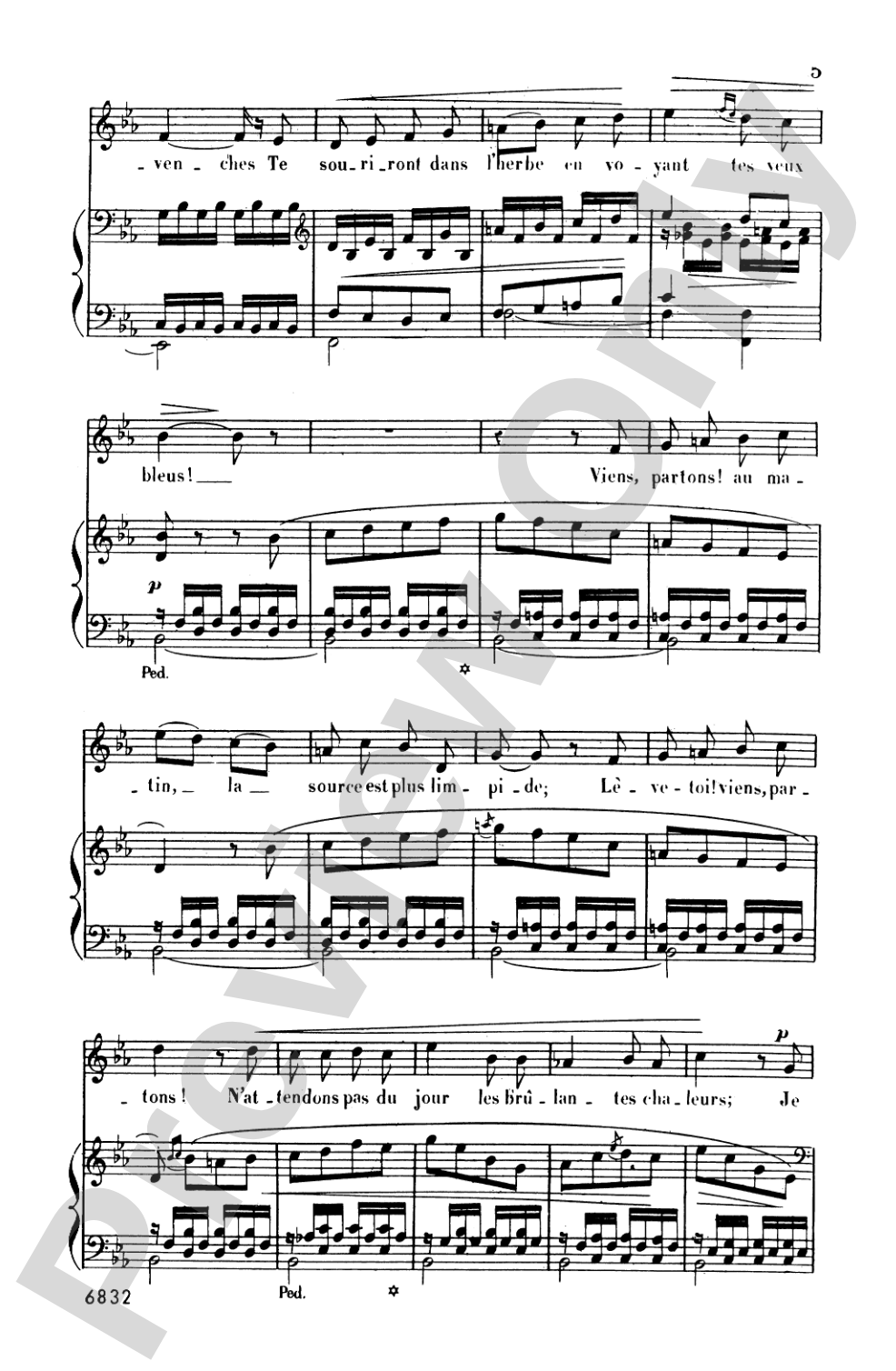
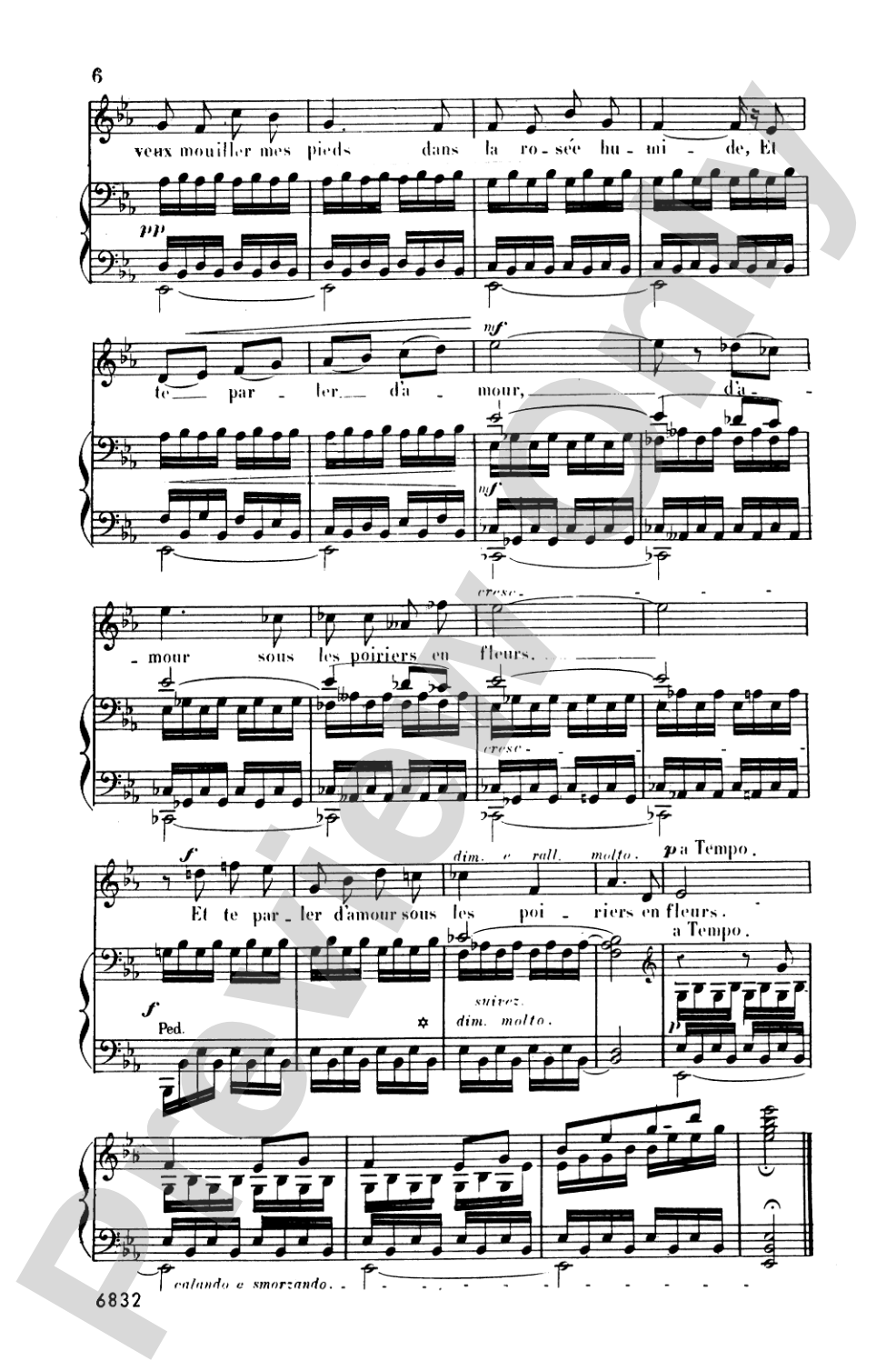
Contains twenty of Bizet's best-known songs in French text. Is also available for Soprano or Tenor (Item #K06831).


Don't just read it, hear it, play along with it, and watch your students grow with it. In MakeMusic Cloud, Bizet: Twenty Melodies-- Mezzo-Soprano or Baritone (French): Vocal Book comes alive with professional accompaniment, adjustable tempo, and built-in practice tools that turn solo practice into real progress.
Open in the Player
Jump straight in and assign it today.
Start Your Free Trial
Open this title and explore the full library in minutes.
Sample Audio
No sample audio found.
Sample Video
No sample videos found.
Additional Details
Series:
Kalmus Edition
Publisher:
Alfred Music
Page Count:
136
SKU:
00-PK-0003652
More about this title
About the Composer: Georges Bizet
Georges Bizet (1838–1875) was a French composer whose gift for melody and dramatic expression shaped Romantic opera and vocal music. Though he lived only 36 years, he created works of lasting impact, most famously Carmen, which revolutionized operatic storytelling. His songs reveal the same lyrical gift that made his operas so compelling: direct, singable lines that convey emotion without artifice.
Bizet's vocal writing across his career demonstrates an understanding of the human voice that transcends the opera house. His melodies sit naturally on the voice, his harmonies support rather than obscure the text, and his sense of phrasing makes each song feel inevitable. These twenty pieces showcase the breadth of his vocal output, from intimate romances to dramatic character songs.
Why we love this
This collection offers mezzo-sopranos and baritones direct access to Bizet's melodic genius without the commitment of an opera score. The French texts are central to Bizet's artistry, and singers encounter the language and cultural context in which these songs were created. Twenty songs provides enough variety to program recitals, audition selections, or teaching repertoire that spans character, style, and technical demand.
What to expect
Bizet's melodies unfold with the inevitability of speech shaped by music. The songs carry the warmth and directness of the Romantic era without excessive sentimentality; they invite singers into genuine emotional expression. Each piece feels like a conversation or confession, supported by piano writing that enriches without overwhelming the voice.
Who it's for
Mezzo-sopranos and baritones preparing auditions, recitals, or vocal repertoire classes will find essential French Romantic songs in this collection. Singers at the intermediate to advanced level benefit most, as the texts demand accurate French and the vocal lines reward both technical control and interpretive depth.
How to get the most out of it
- Attend to the French diction with the same care you'd bring to an operatic role. Bizet's melodies are shaped by the language; clear text articulation reveals the composer's harmonic and rhythmic intentions.
- Balance the natural singing voice with the dramatic character each song requires. Bizet does not demand artificial production, but he does expect commitment to character and emotional truth.
- Work closely with an accompanist who understands Romantic-era piano writing. The accompaniments are far from neutral and often carry thematic material; ensemble listening is essential.
- Explore the range of mood across the collection. Programming five songs requires a plan that accounts for contrasts in tempo, dynamic level, and emotional weight.
How to use it
Build a recital grouping of three to five Bizet songs alongside other French vocal literature from the same era, or use individual selections as audition material that demonstrates lyrical control and character work. In a vocal repertoire course, these songs introduce students to Bizet's compositional approach outside the opera theater and show how melody serves language and meaning.
Skills your students will build
- French diction and language-aware phrasing
- Romantic-era vocal technique and interpretive style
- Character delineation and emotional commitment within song form
- Piano-vocal ensemble listening and communication
- Melodic line integrity and breath management in longer phrases