
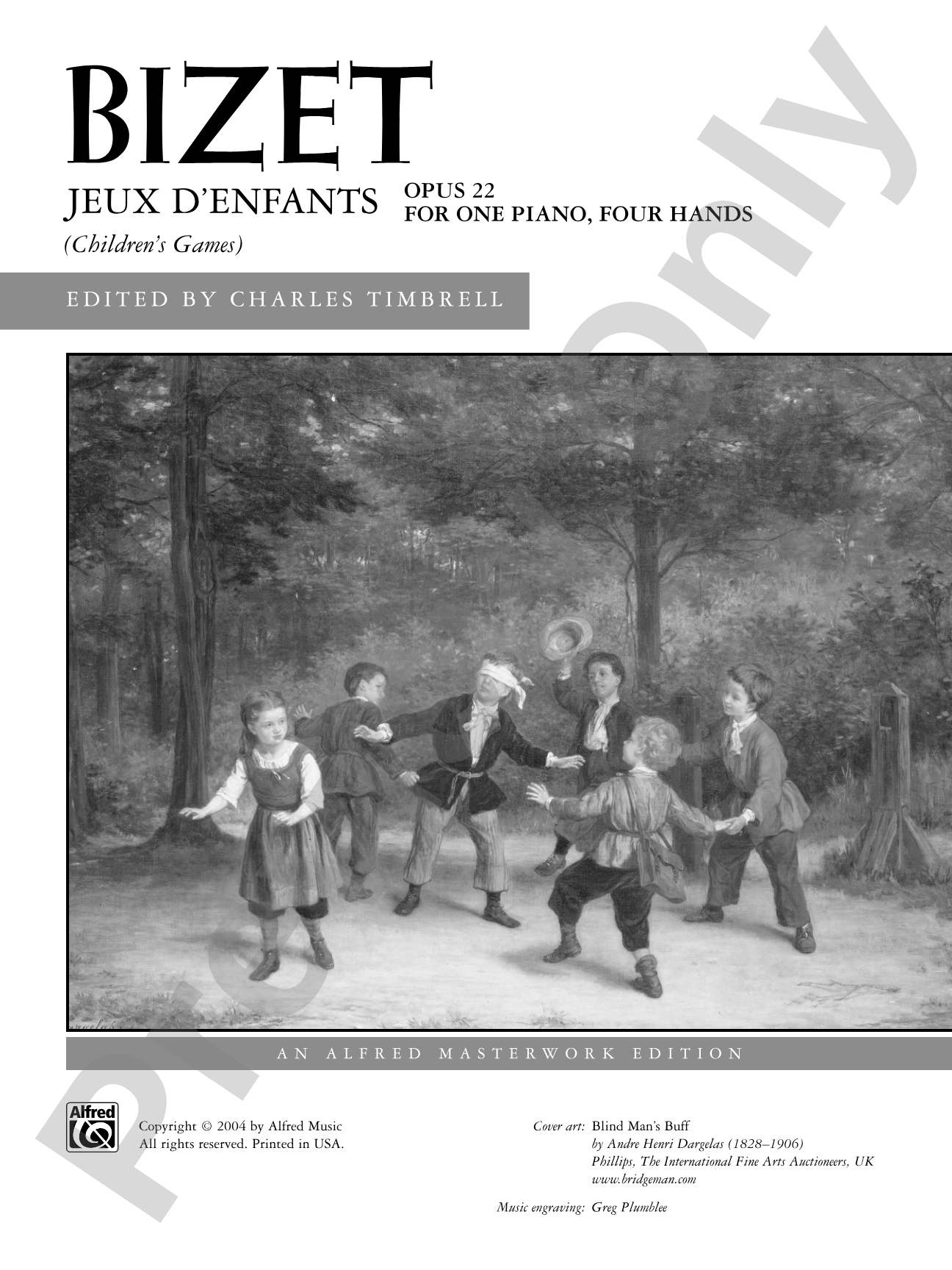

Bizet: Jeux d'enfants, Opus 22 - Piano Duet (1 Piano, 4 Hands): Piano Duets & Four Hands
By Georges Bizet / ed. Charles Timbrell
Level: Early Advanced
Item: 00-PB-0000631

$11.99
Pickup currently not available
Related Items
Bizet: Jeux d'enfants, Opus 22: Piano Duet (1 Piano, 4 Hands) Book |
$11.99
|
View |
Description
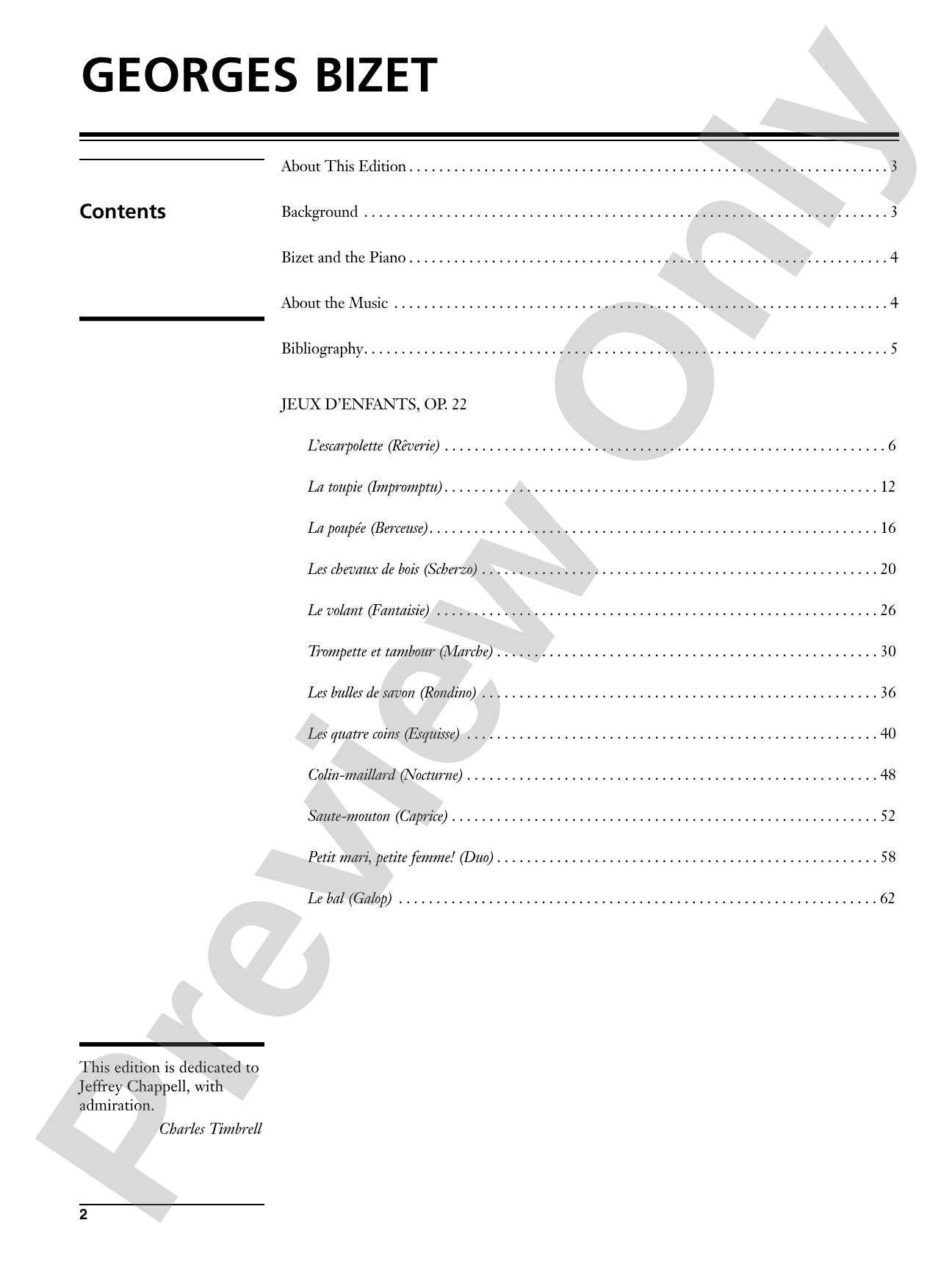
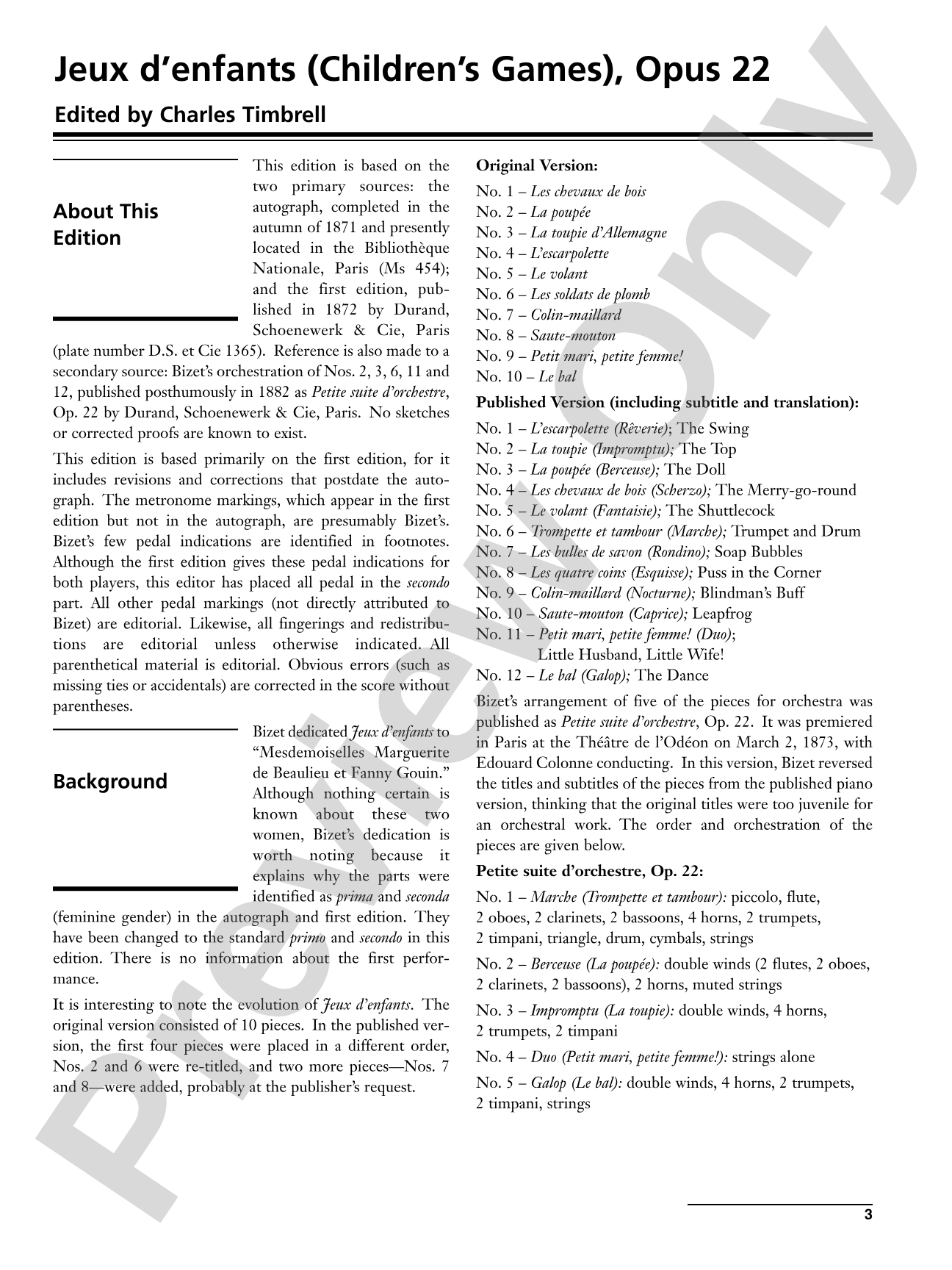
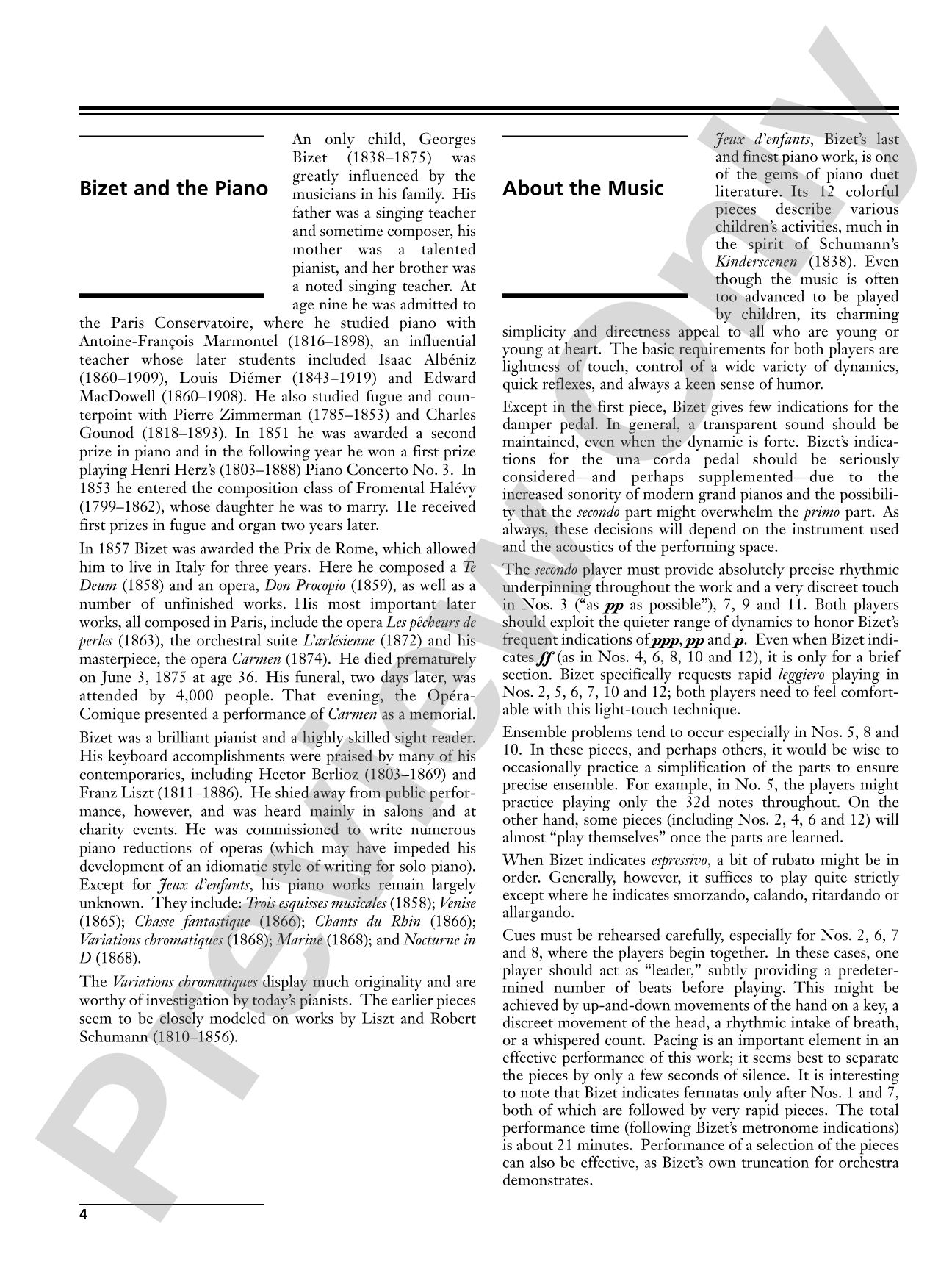
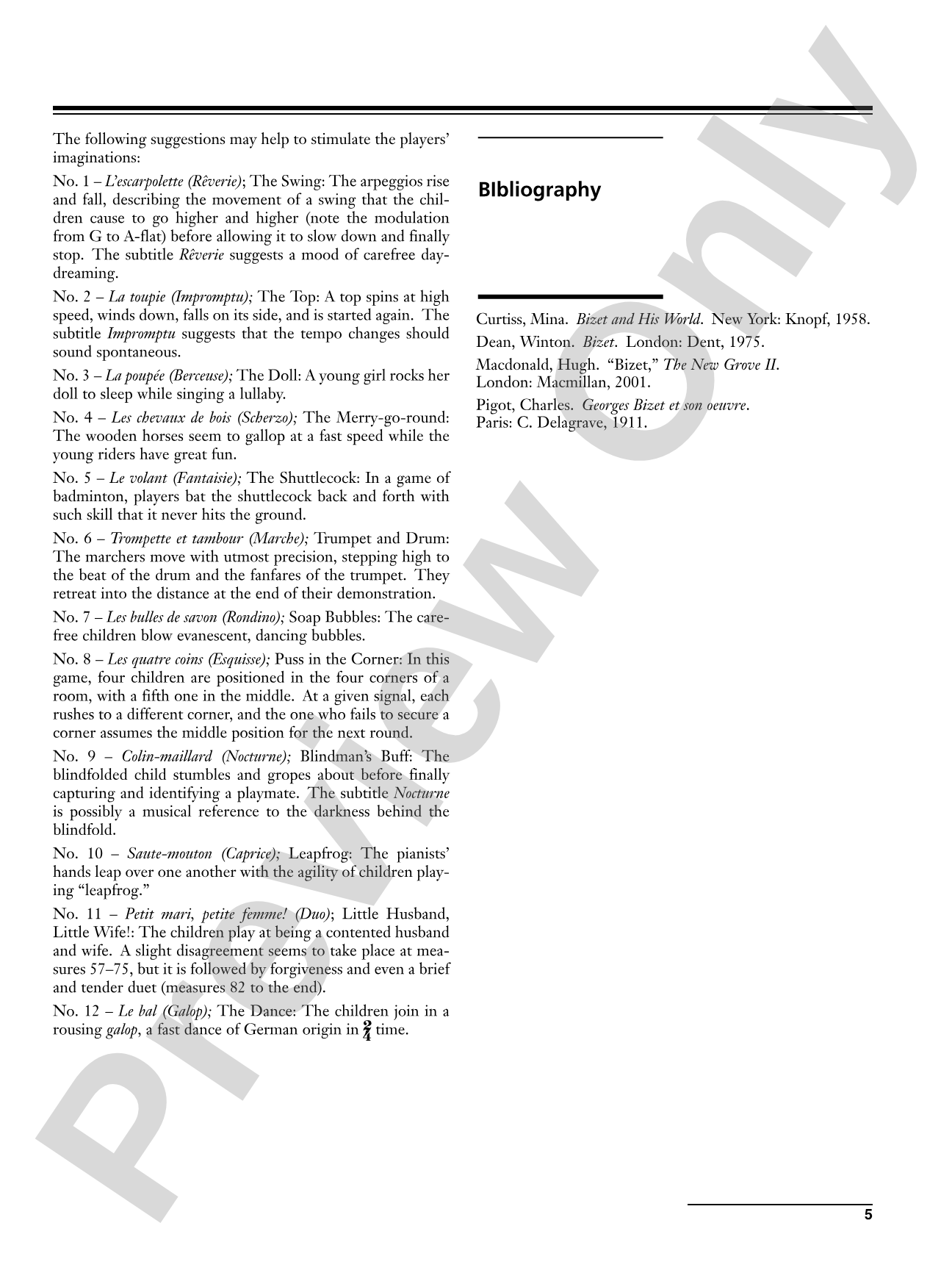
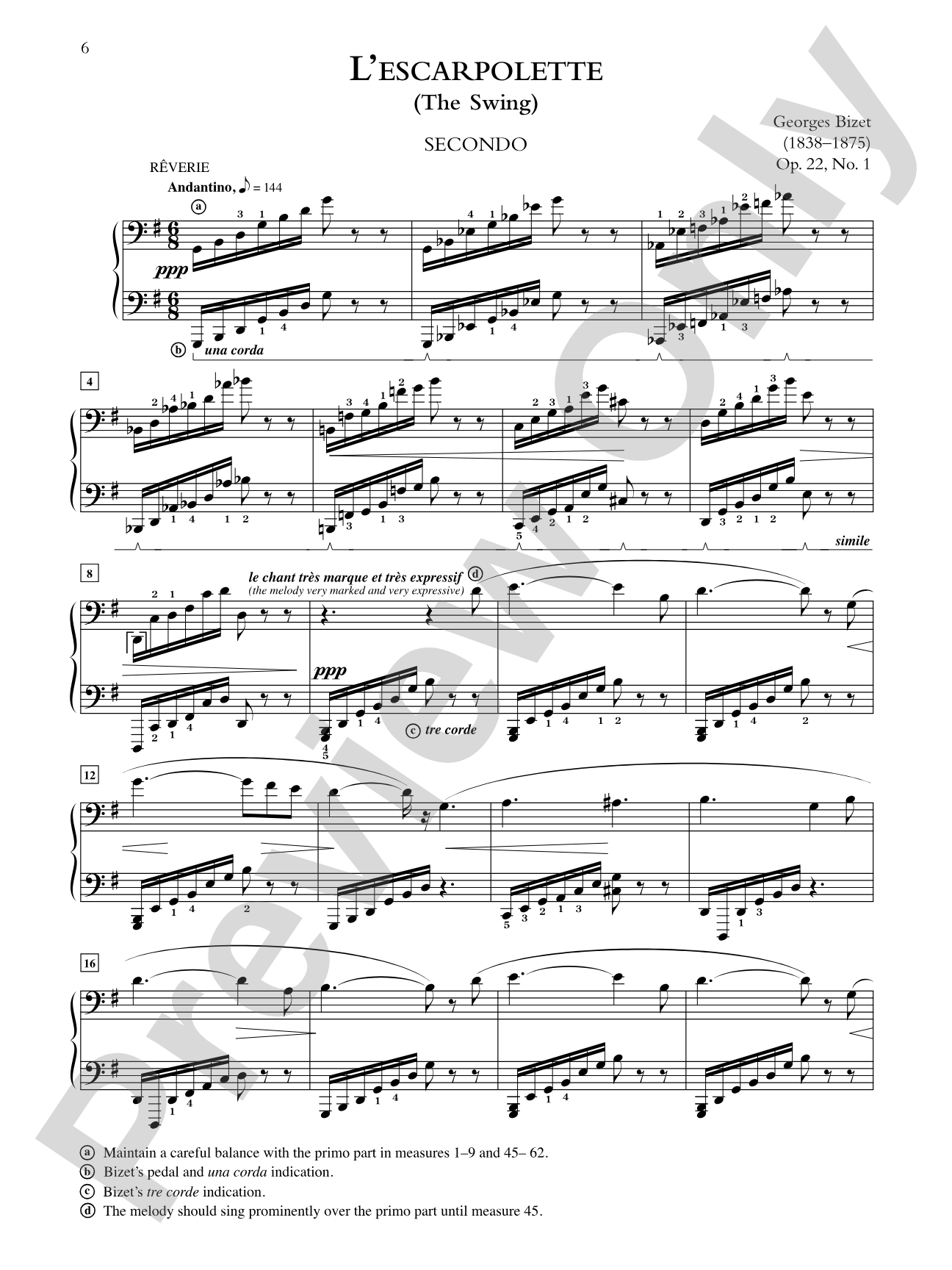
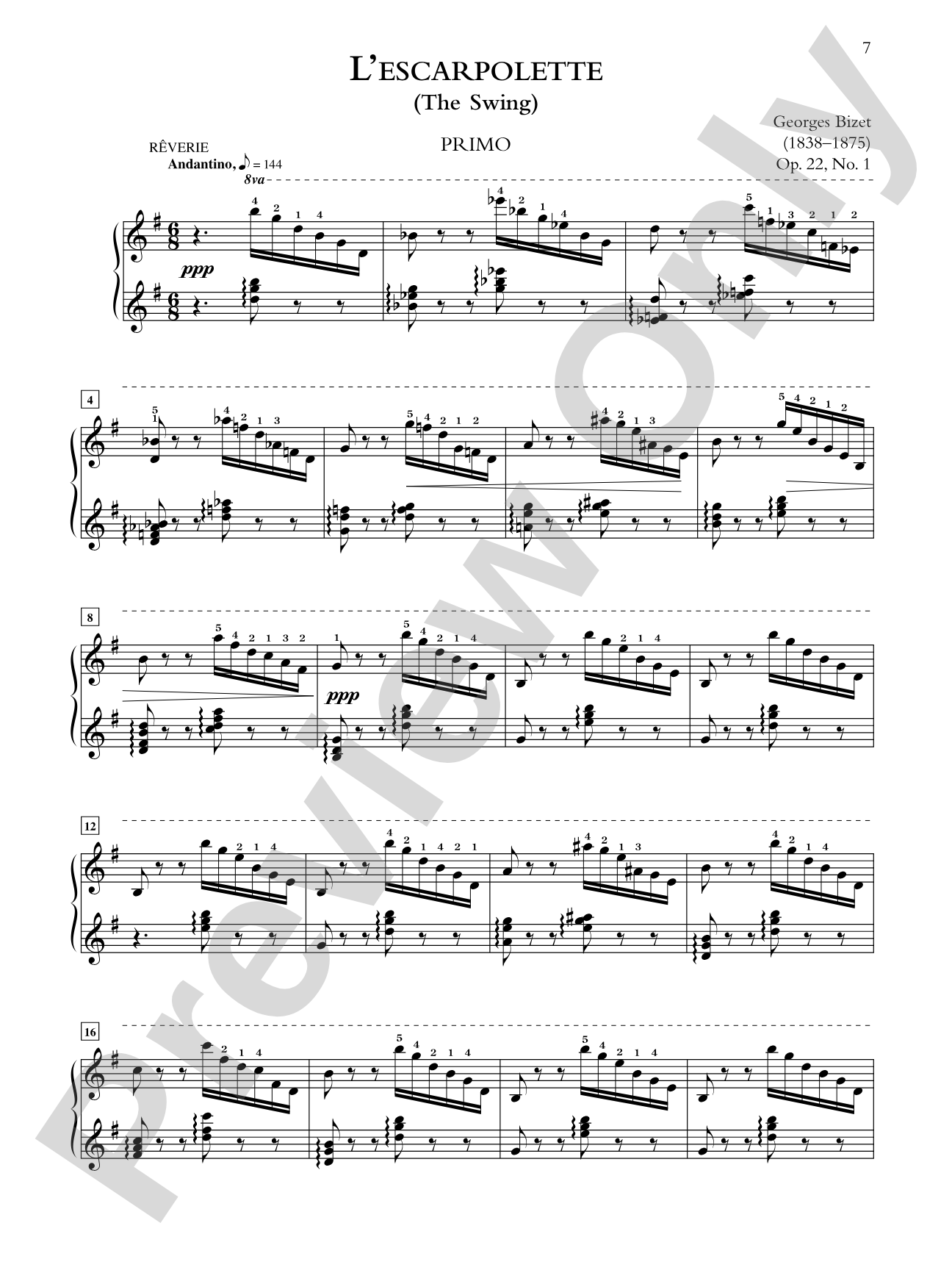
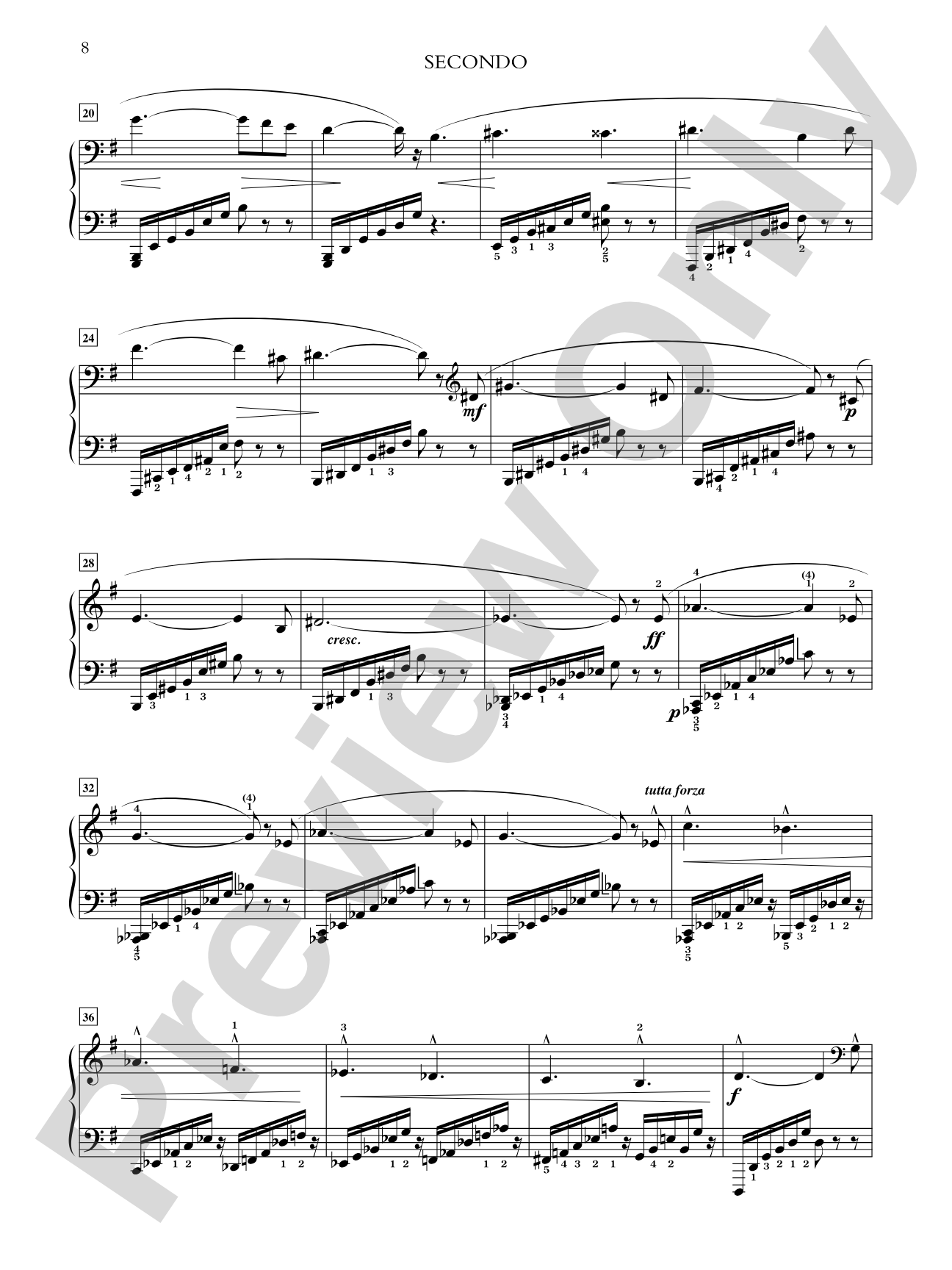
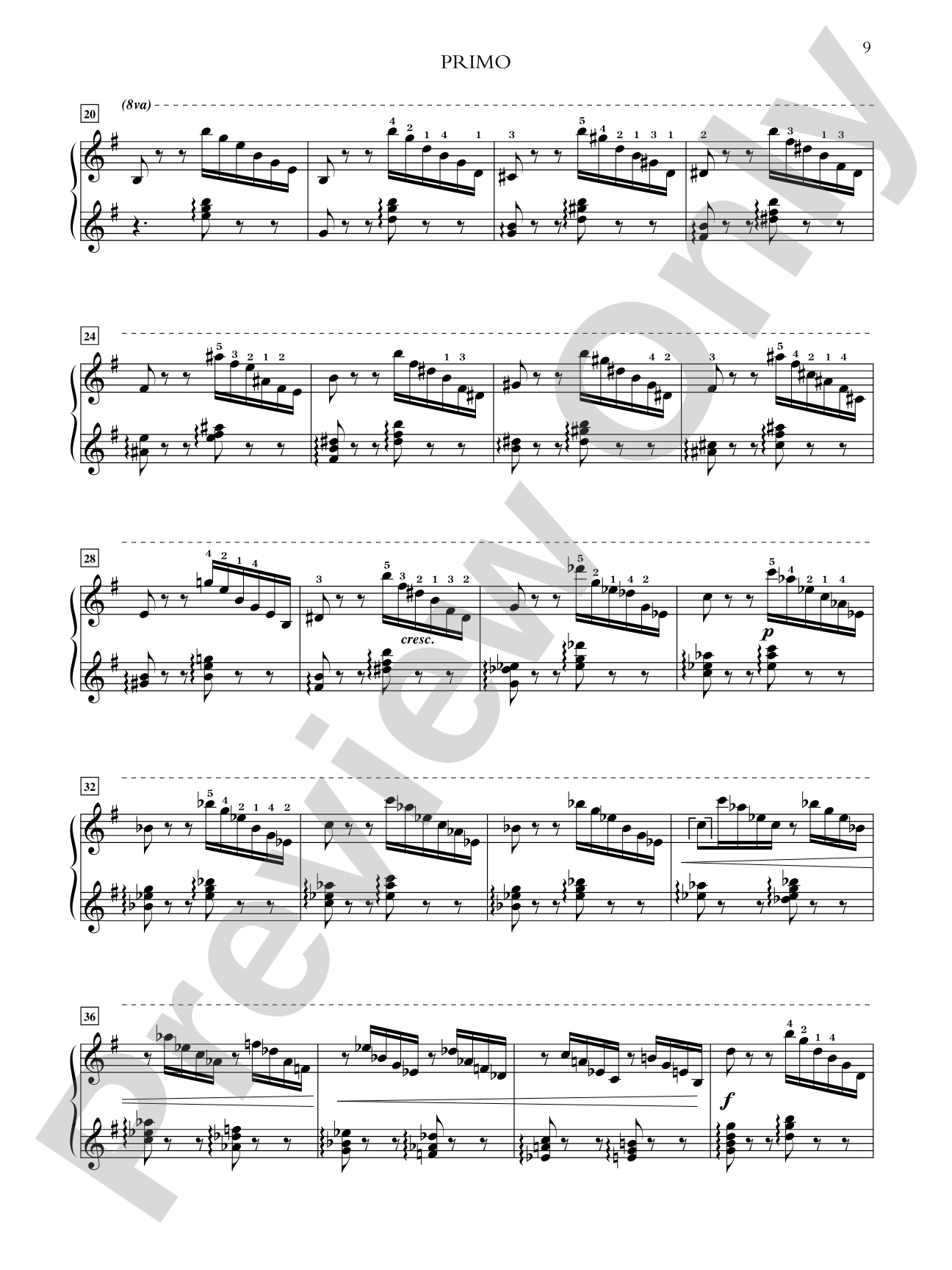
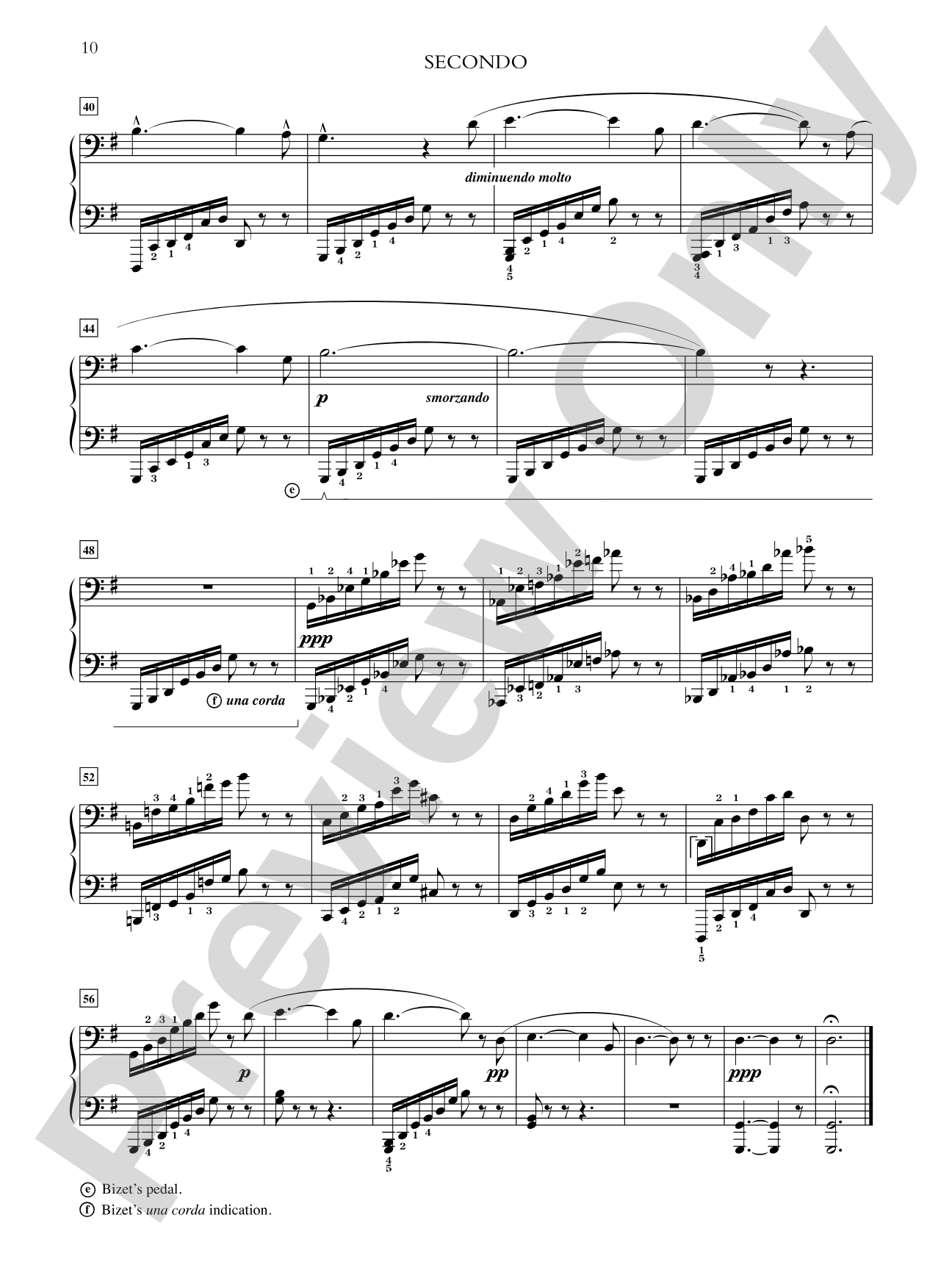
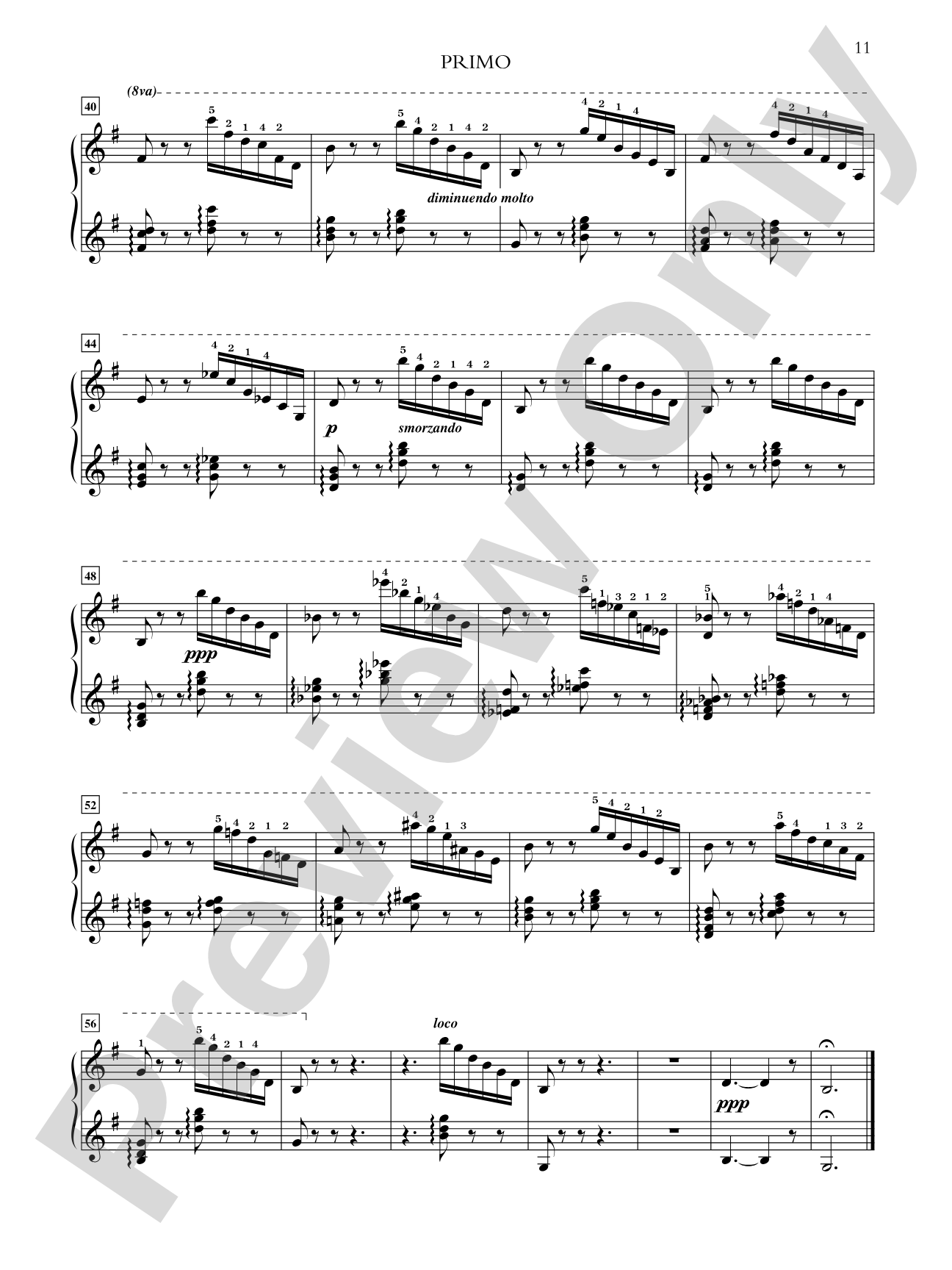
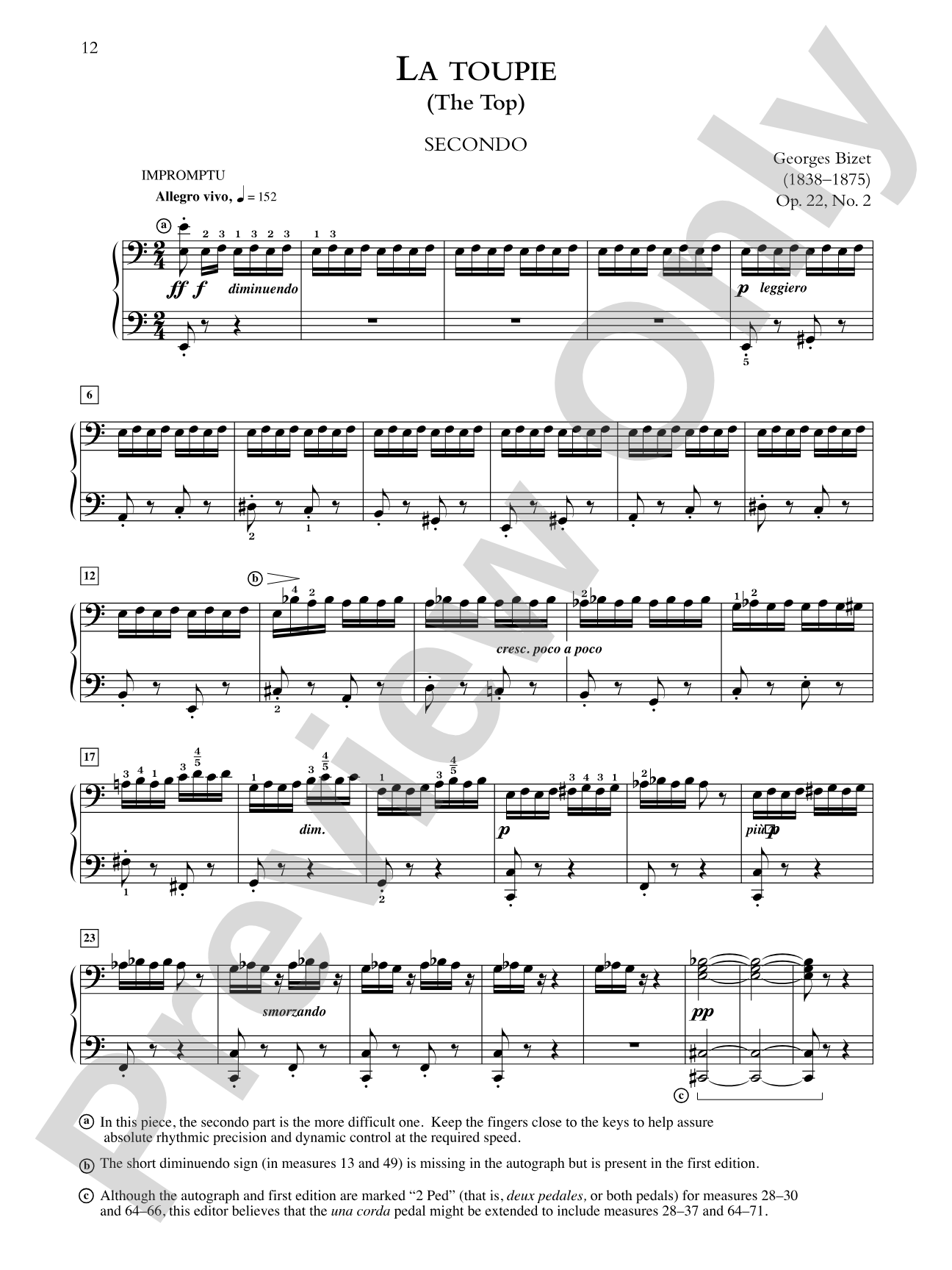
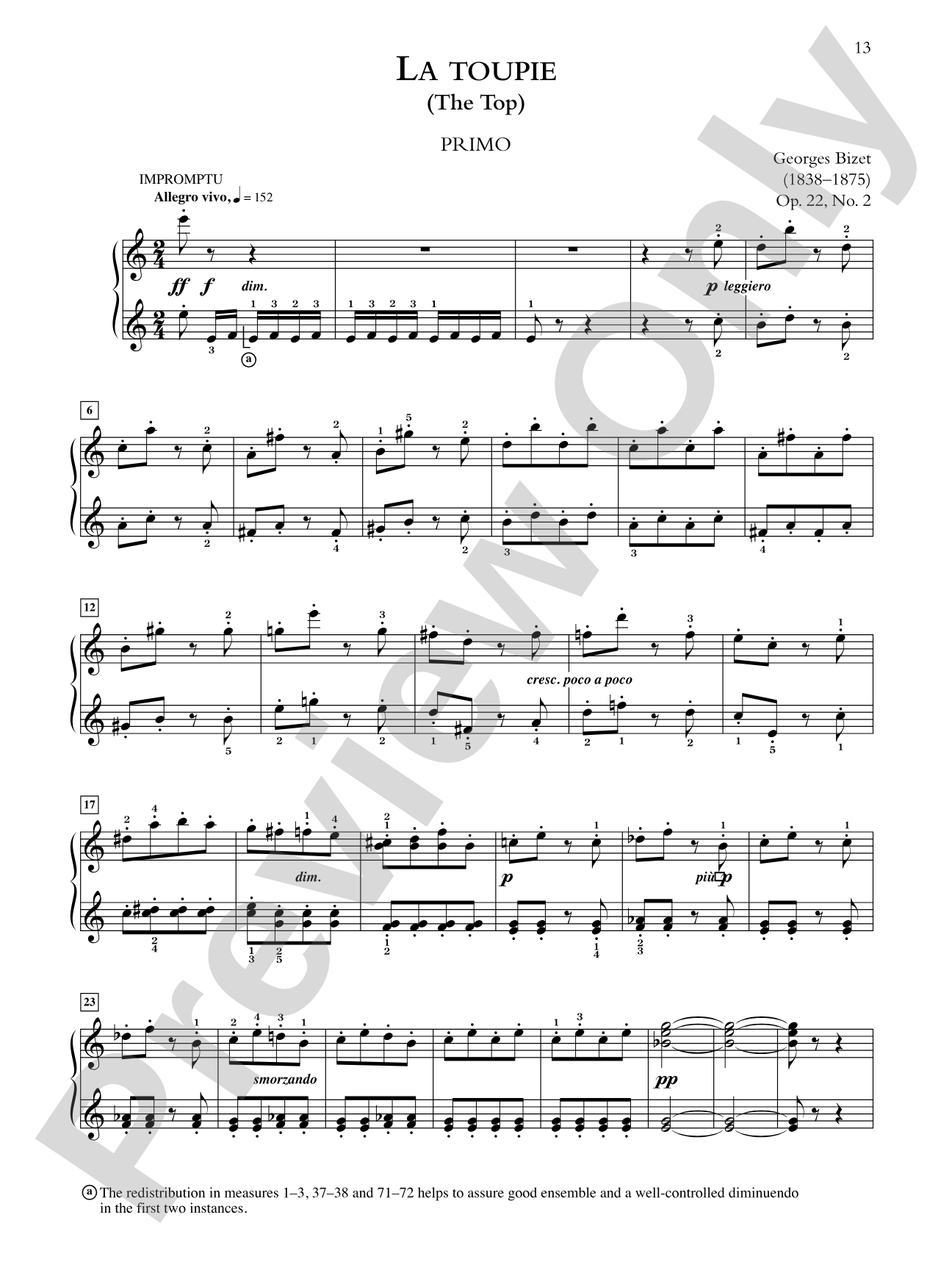
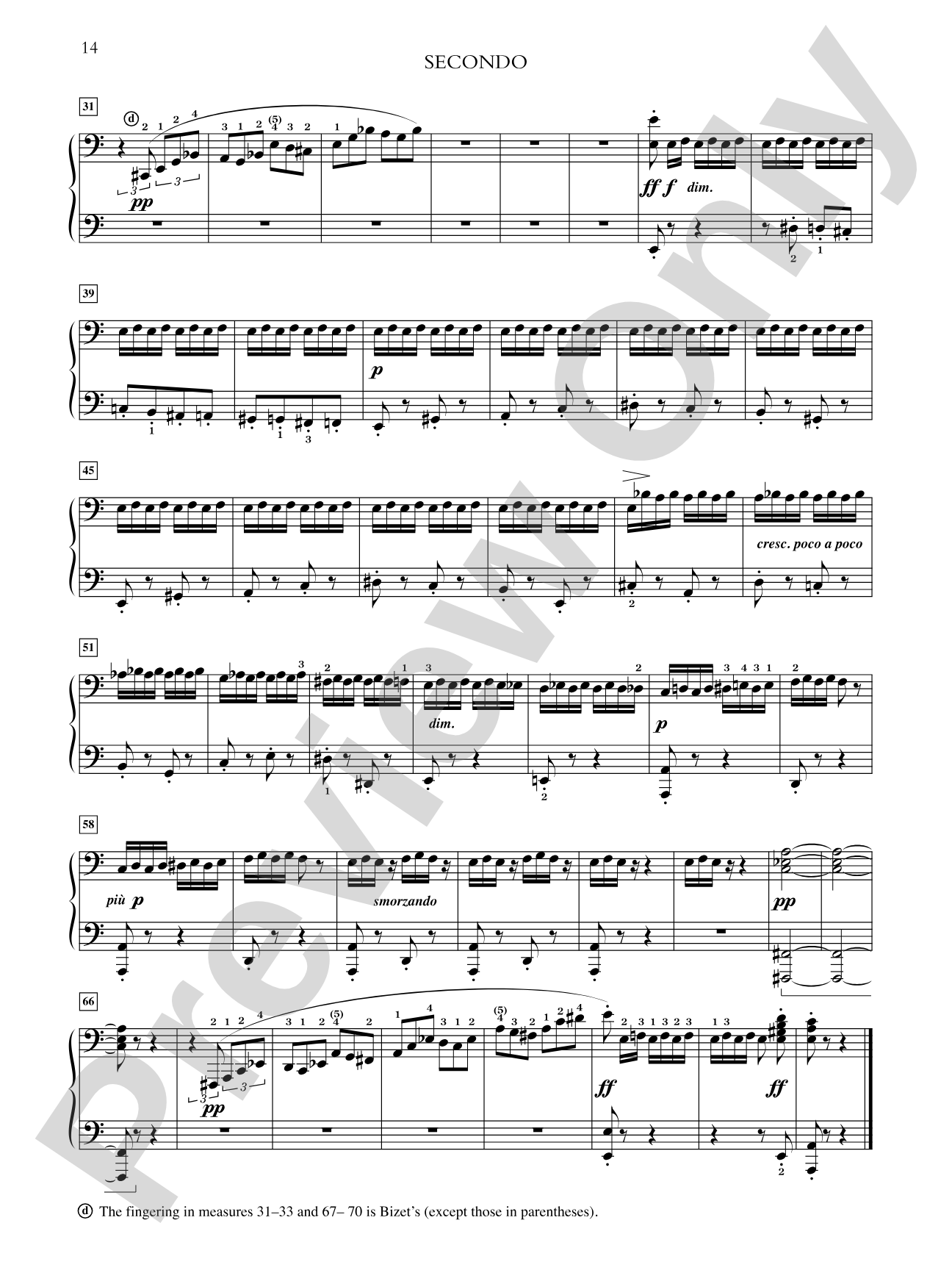
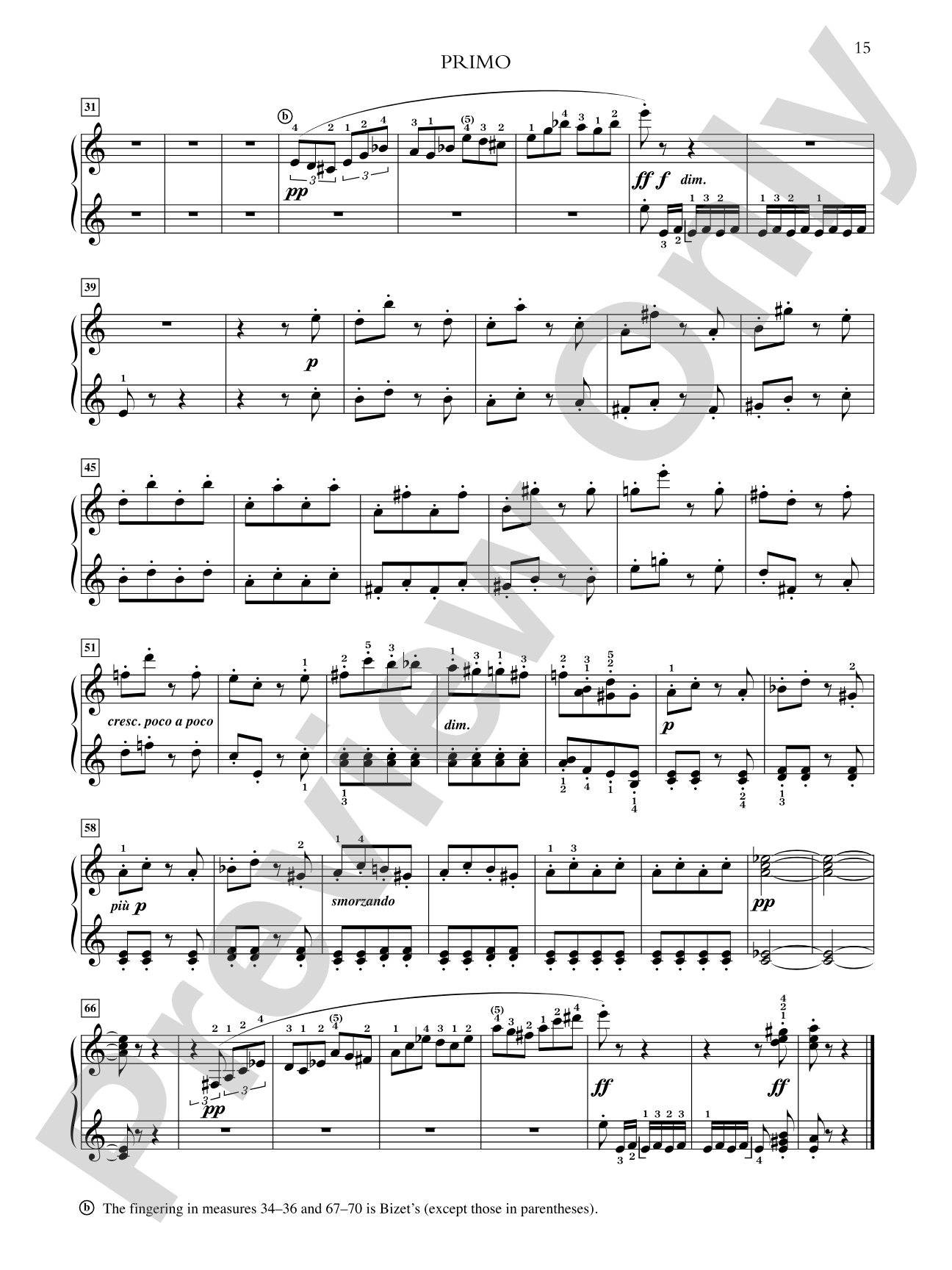
Jeux d'enfants, Bizet's last and finest piano work, is one of the gems of piano duet literature. These 12 colorful pieces describe various children's activities. This edition, based on the first edition and the autograph, includes editorial fingering and pedal markings that are clearly differentiated from Bizet's minimal indications. Interesting historical information on Bizet and his music is also included. "La poupée (The Doll)," "La toupee (The Top)," "Le bal (The Dance)," "Les chevaux de bois (The Merry-Go-Round)," and "Saute-mouton (Leap Frog)" are Federation Festivals 2016-2020 selections. A Federation Festivals 2020-2024 selection.


Don't just read it, hear it, play along with it, and watch your students grow with it. In MakeMusic Cloud, Bizet: Jeux d'enfants, Opus 22 - Piano Duet (1 Piano, 4 Hands): Piano Duets & Four Hands comes alive with professional accompaniment, adjustable tempo, and built-in practice tools that turn solo practice into real progress.
Open in the Player
Jump straight in and assign it today.
Start Your Free Trial
Open this title and explore the full library in minutes.
Sample Audio
No sample audio found.
Sample Video
No sample videos found.
Additional Details
Series:
Alfred Masterwork Edition
Publisher:
Alfred Music
Page Count:
72
SKU:
00-PB-0000631
More about this title
About the Composer: Georges Bizet
Georges Bizet (1838-1875) stands as one of the 19th century's most gifted melodists, yet his career was frustratingly brief. He composed Carmen just months before his death at 36, leaving behind a relatively small body of work that nonetheless reveals extraordinary craftsmanship across opera, orchestral music, and chamber pieces. His piano works, though few, demonstrate the same gift for memorable melody and harmonic color that defines his operatic writing.
Bizet's approach to piano composition was fundamentally different from his virtuosic contemporaries. Rather than seeking to dazzle with technical display, he focused on accessibility and musical substance. Jeux d'enfants exemplifies this philosophy: twelve miniatures that capture childhood experiences through elegant writing that rewards both players without demanding superhuman technique.
Why we love this
This collection hits that sweet spot where serious musical value meets genuine enjoyment at the keyboard. Each movement unfolds like a little character piece, giving both players equally engaging material and moments to shine individually. The programmatic titles anchor young musicians in a story, making rehearsal conversations about phrasing and character feel natural and intuitive rather than imposed.
What to expect
Charming without being precious. Each miniature glows with a specific character and color: some pieces shimmer with delicate figuration, others pulse with rhythmic vitality, and still others settle into tender lyricism. The musical language feels immediate and accessible, yet the craftsmanship reveals itself through clever part writing and harmonic touches that deepen with repeated hearings.
Who it's for
Student pianists at the early advanced level who are ready for genuine duet literature beyond pedagogical collections. Teachers preparing students for competitions, festival performances, or simply looking to build a duet repertoire that sounds substantial and pianistic.
How to get the most out of it
- Establish a clear hierarchy between primo and secondo voices early in rehearsal. The parts often trade melodic prominence, so marking who carries the main line in each section prevents the music from sounding muddled.
- Pay attention to the editorial pedal markings as guides rather than commands. These suggestions are differentiated from Bizet's own markings, giving you room to adjust based on your piano's acoustics and the tempo you choose.
- Balance rhythmic precision with rhythmic ease. Several pieces contain dance rhythms and repetitive figurations that benefit from a relaxed, natural pulse rather than mechanical metronomic adherence.
- Let the character titles inform your interpretation beyond the notes. "La toupée" spins; "Le bal" has social grace; "Saute-mouton" bounds. This vocabulary bridges the gap between technical instruction and expressive playing.
How to use it
These pieces work beautifully as a complete suite in a solo recital or as part of a duet showcase. Several movements appear regularly on festival lists, making them natural preparation for competition seasons. They also function well as pedagogical stepping stones toward contemporary duet literature, since students experience how two pianists can share musical weight and dialogue authentically.
Skills your students will build
- Balancing independent hand parts across two players
- Following and responding to a partner's phrasing and tempo nuance
- Reading from both primo and secondo scores with equal fluency
- Interpreting editorial fingering and pedal markings critically
- Shaping character and narrative through tempo and dynamic control within a short form
- Coordinating ensemble sound at the shared keyboard