

Bizet: Jeux D'Enfants, Op. 22: Piano Duet (1 Piano, 4 Hands) Book
By Georges Bizet
Level: Intermediate / Advanced
Item: 00-PK-0002950

$9.99
Pickup currently not available
Buy Extra Parts (Digital PDF Download)
| Product | Price | Quantity |
|---|---|---|
| Bizet: Jeux D'Enfants, Op. 22 | $0.99 | |
| Bizet: Jeux D'Enfants, Op. 22 | $0.99 | |
| Bizet: Jeux D'Enfants, Op. 22 | $0.99 | |
| Bizet: Jeux D'Enfants, Op. 22 | $0.99 | |
| Bizet: Jeux D'Enfants, Op. 22 | $0.99 | |
| Bizet: Jeux D'Enfants, Op. 22 | $0.99 | |
| Bizet: Jeux D'Enfants, Op. 22 | $0.99 |
Parts Added to Cart!
Related Items
Jeux D'Enfants, Opus 22: Piano Duet (1 Piano, 4 Hands) Book |
$9.95
|
View |
Description
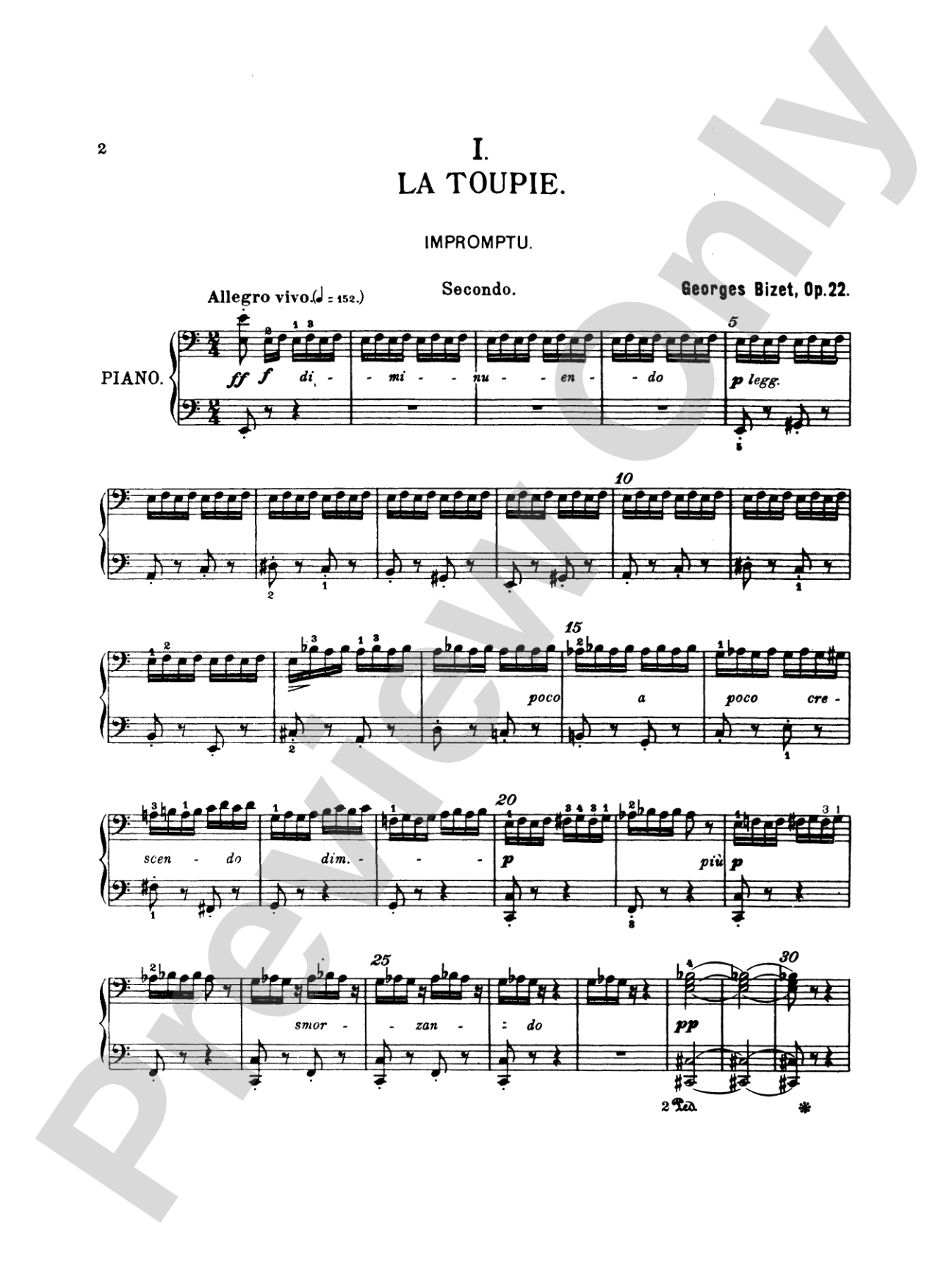
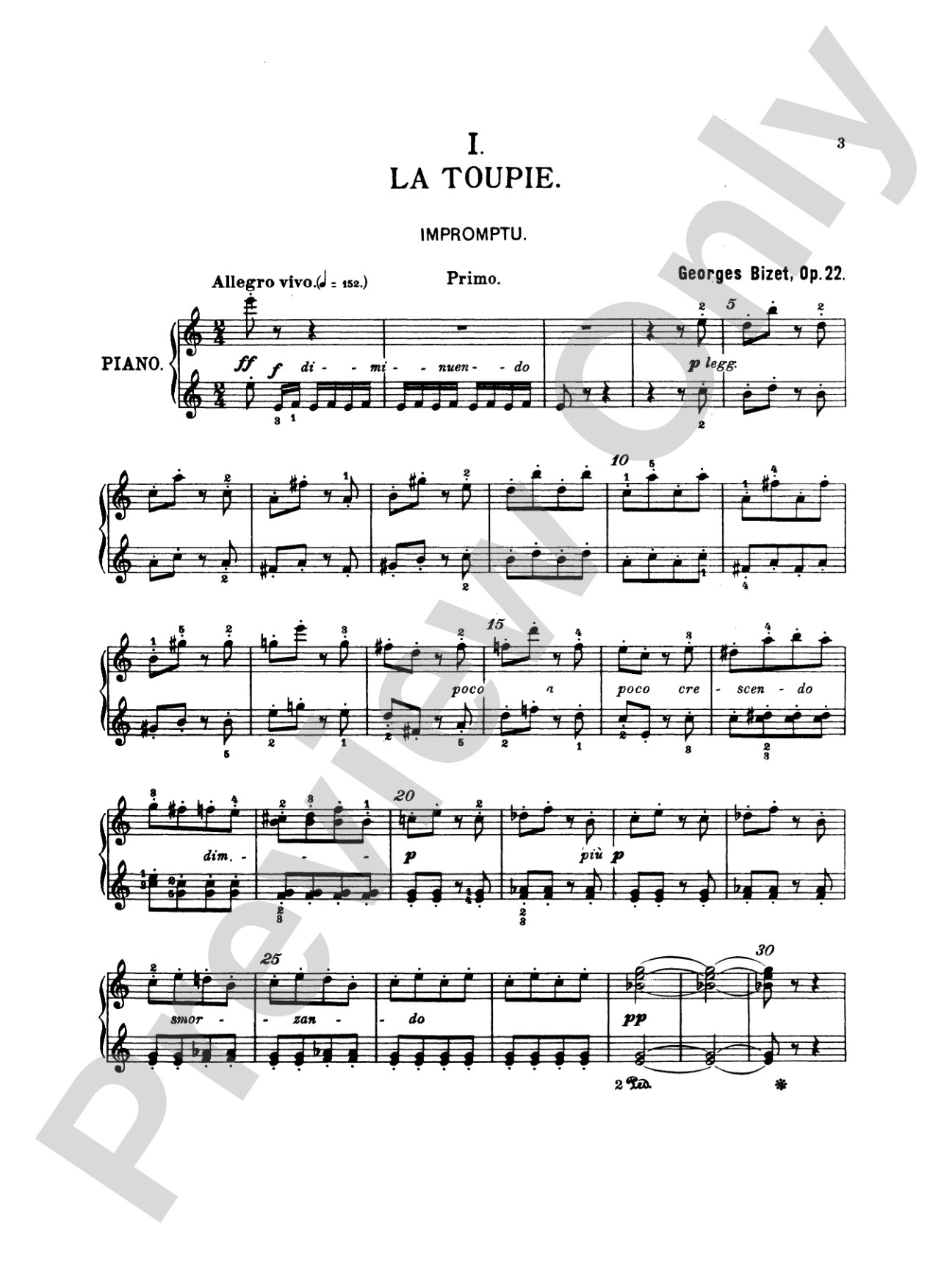
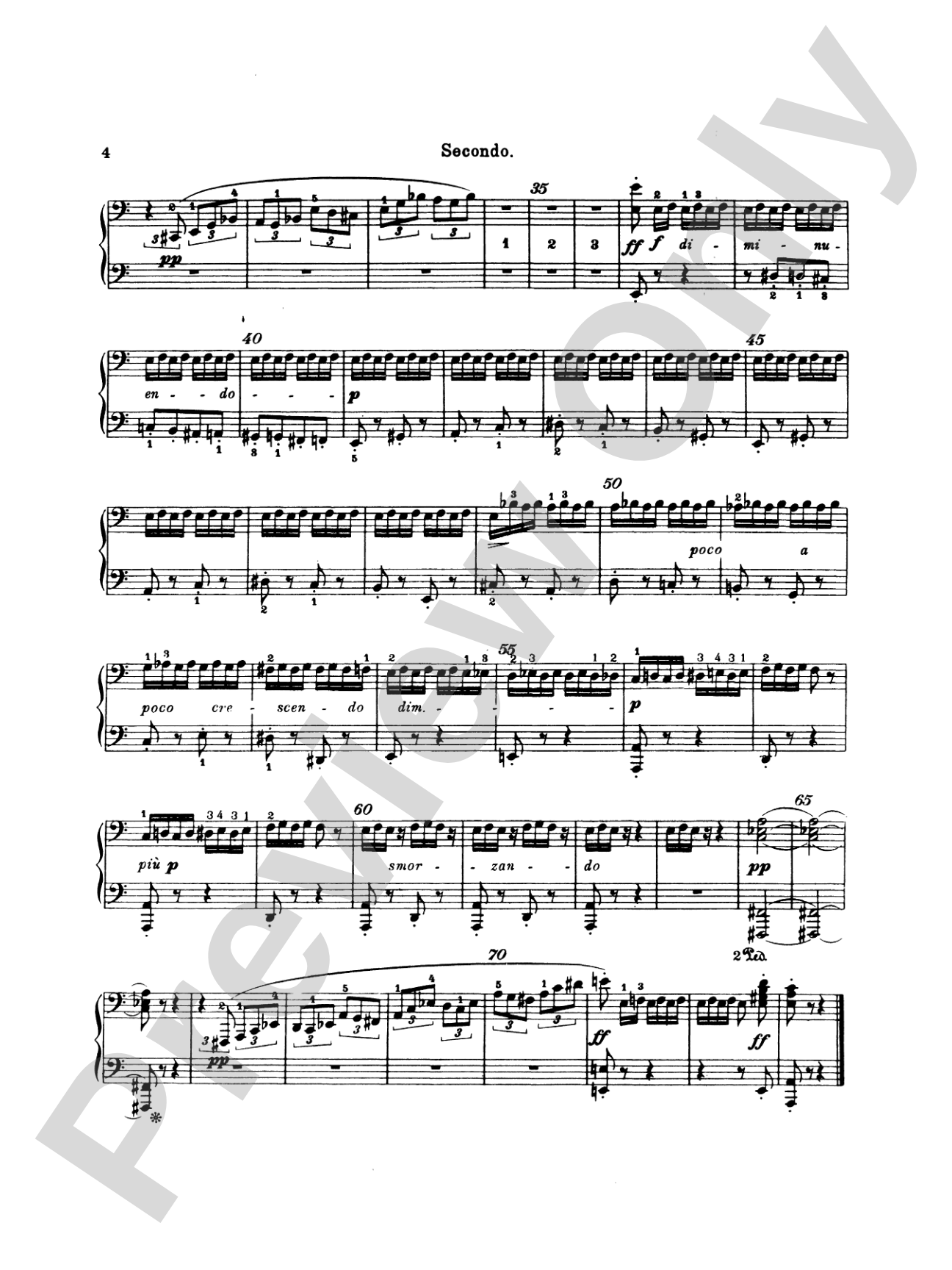
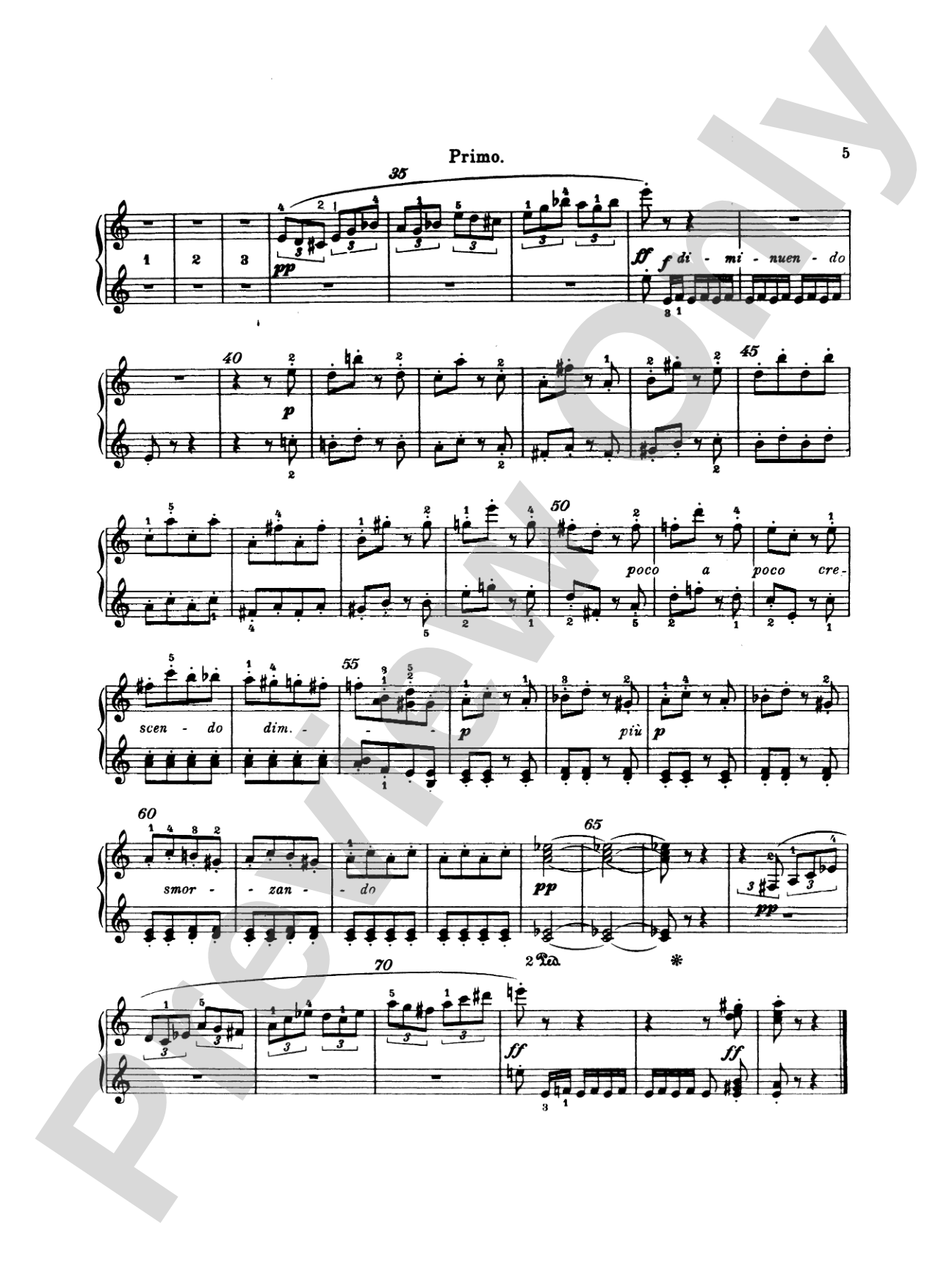
An Intermediate / Advanced piano duet for 1 Piano, 4 Hands, composed by Georges Bizet.


Don't just read it, hear it, play along with it, and watch your students grow with it. In MakeMusic Cloud, Bizet: Jeux D'Enfants, Op. 22: Piano Duet (1 Piano, 4 Hands) Book comes alive with professional accompaniment, adjustable tempo, and built-in practice tools that turn solo practice into real progress.
Open in the Player
Jump straight in and assign it today.
Start Your Free Trial
Open this title and explore the full library in minutes.
Sample Audio
No sample audio found.
Sample Video
No sample videos found.
Additional Details
Series:
Kalmus Edition
Publisher:
Alfred Music
Page Count:
40
SKU:
00-PK-0002950
More about this title
About the Composer: Georges Bizet
Georges Bizet (1838-1875) was a French composer whose gift for melody and orchestral color defined the Romantic operatic tradition. Though he died at just 36, his works remain central to the concert repertoire, particularly Carmen, which revolutionized opera through its vivid characterization and dramatic realism. Beyond opera, Bizet composed richly inventive instrumental music that showcases his gift for graceful themes and sophisticated harmony.
Why we love this
Jeux d'Enfants captures Bizet's lyrical gift in an accessible yet musically substantial package. Each movement offers genuine musical interest without sacrificing the playfulness the title promises, making it a rare duet that satisfies both partners equally. The Kalmus edition presents the full score clearly, giving pianists immediate access to material that bridges intermediate and advanced playing without pretension.
What to expect
These pieces dance with Parisian charm and wit. Moments of delicate lyricism sit alongside playful rhythmic games, and the harmonic language, while firmly Romantic, carries a lightness that keeps the music buoyant. There's an intimacy to four-hand piano writing that Bizet exploits beautifully, creating conversations between the players that feel both elegant and genuinely fun.
Who it's for
Pianists at the intermediate-advanced threshold who want to experience Bizet's compositional voice through a duet that demands musical maturity without excessive technical pyrotechnics. Teachers seeking repertoire that builds genuine ensemble listening and balance skills will find this a standout choice over lighter duet options.
How to get the most out of it
- Balance the primo and secondo parts carefully; neither should dominate, especially in passages where melody passes between the two players.
- Establish a steady shared pulse before rehearsing at tempo. These movements are deceptively rhythmic, and synchronized counting prevents rubato from becoming ragged.
- Listen actively to your partner's voice within the texture. Many passages gain their charm from how the four hands interact and answer one another.
- Pay attention to pedal coordination in the secondo part; coordinate changes with your partner to avoid muddying the harmonic clarity Bizet prizes.
How to use it
Program this duet as a refined recital opener or closer, where its musical sophistication reads as accessible entertainment. It also works well in a concert pairing advanced student performers with faculty, or as the centerpiece of a chamber recital focused on 19th-century keyboard music. The 40-page format allows for programming the complete work or selecting individual movements based on concert length.
Skills your students will build
- Balancing melody and accompaniment within a single keyboard
- Coordinating pedal changes with a partner
- Ensemble listening and responding to phrasing cues
- Reading two independent harmonic and rhythmic layers simultaneously
- Interpreting Romantic-era harmonic language and ornamentation