

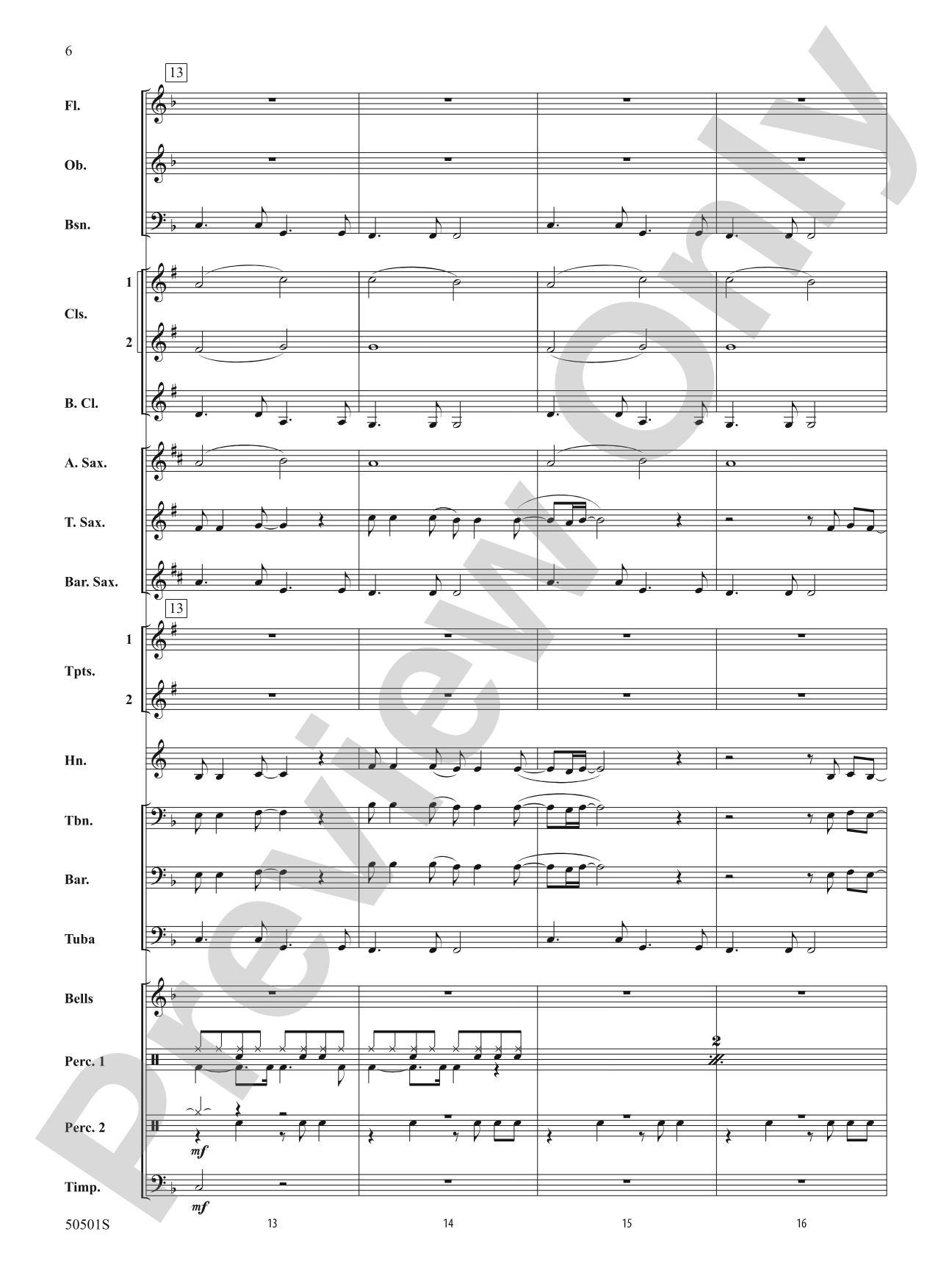
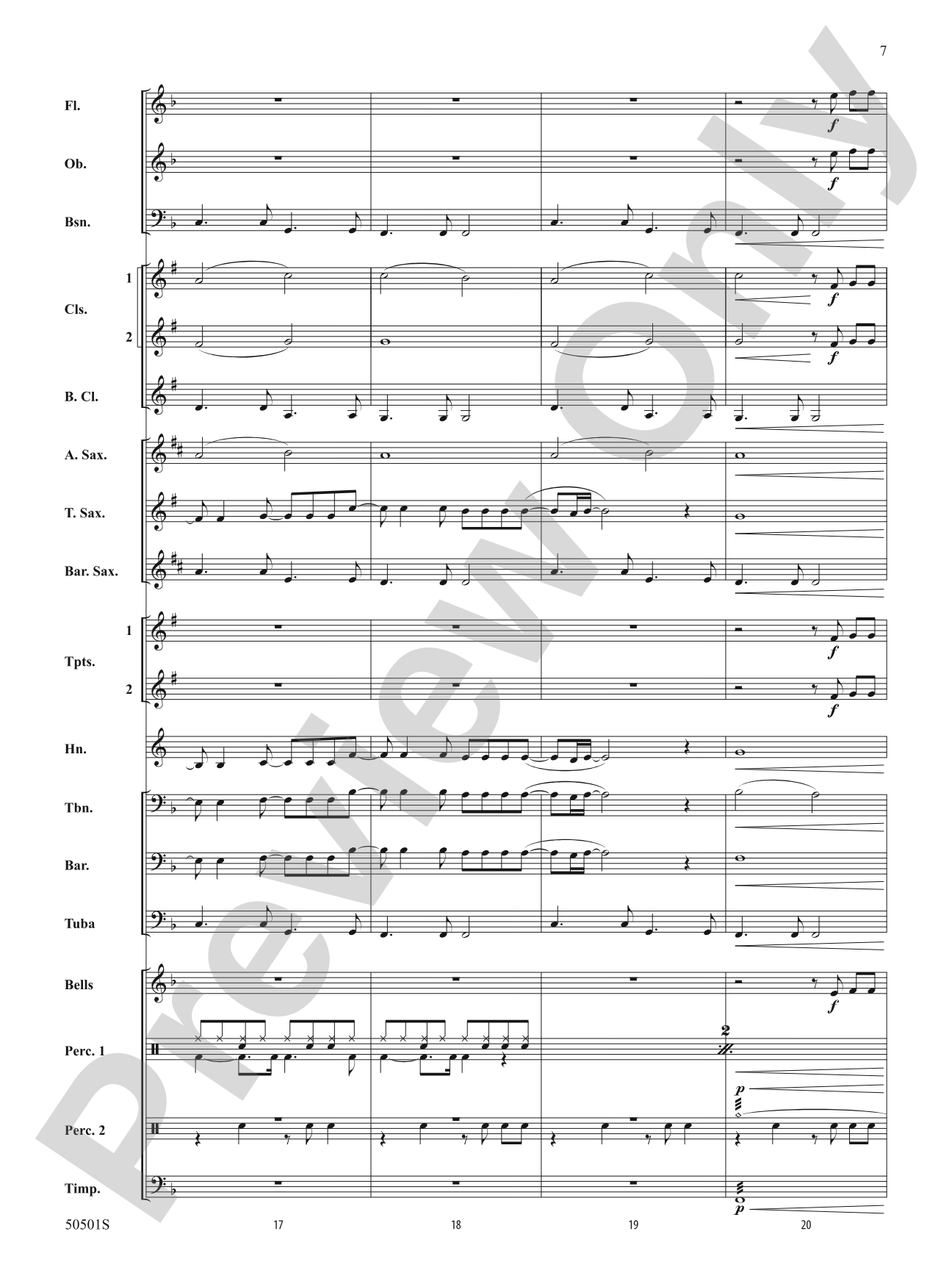
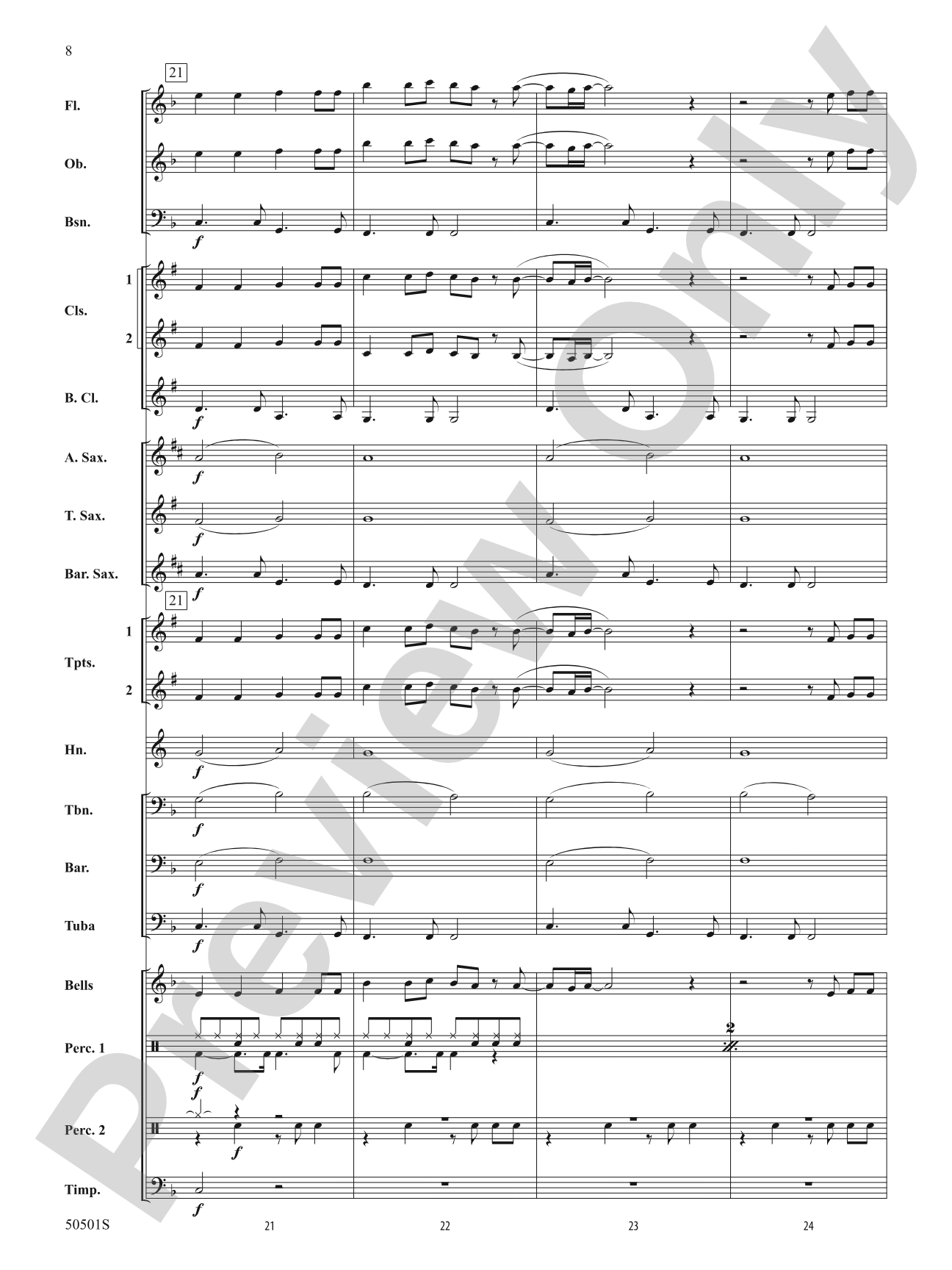
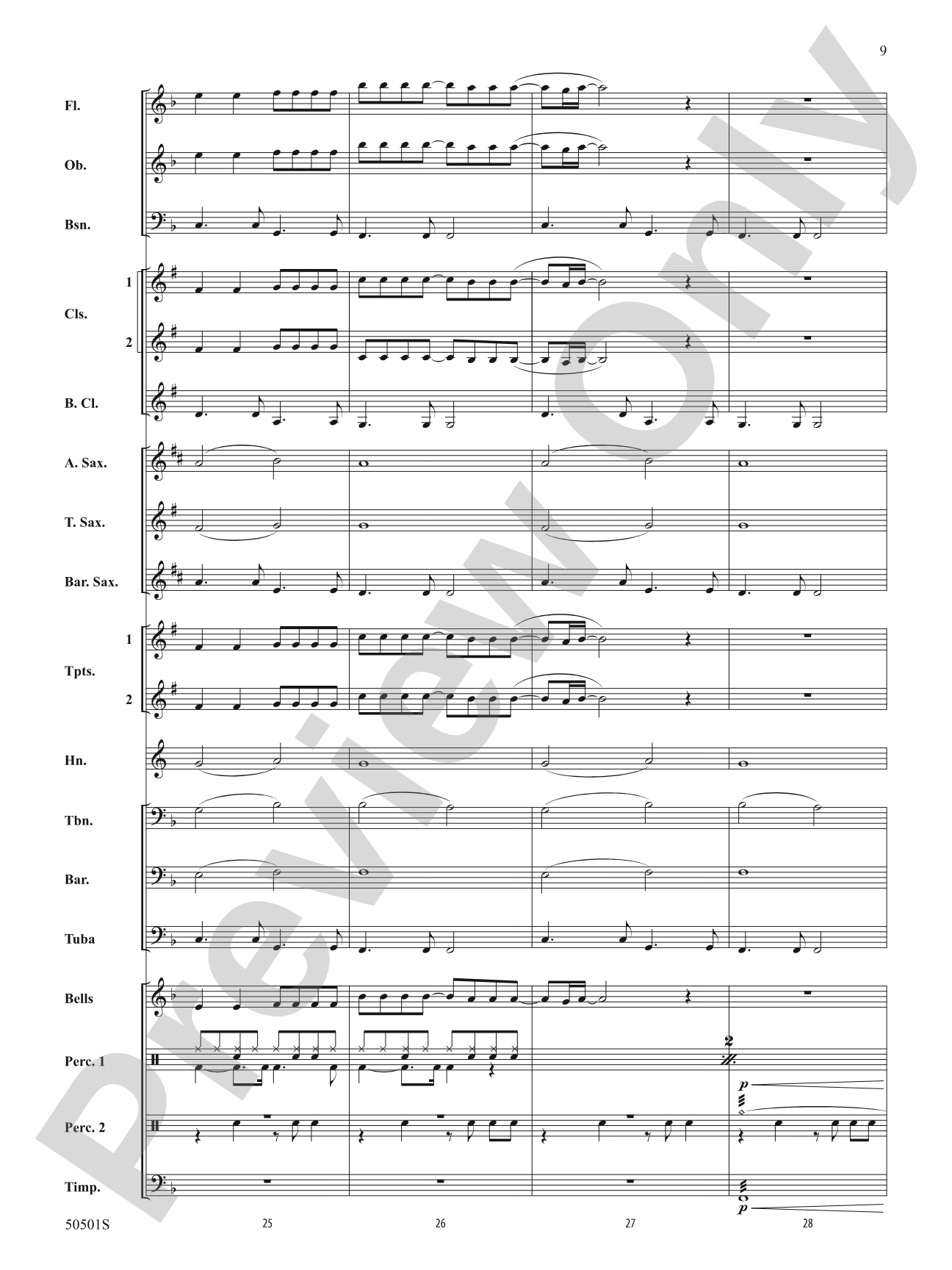
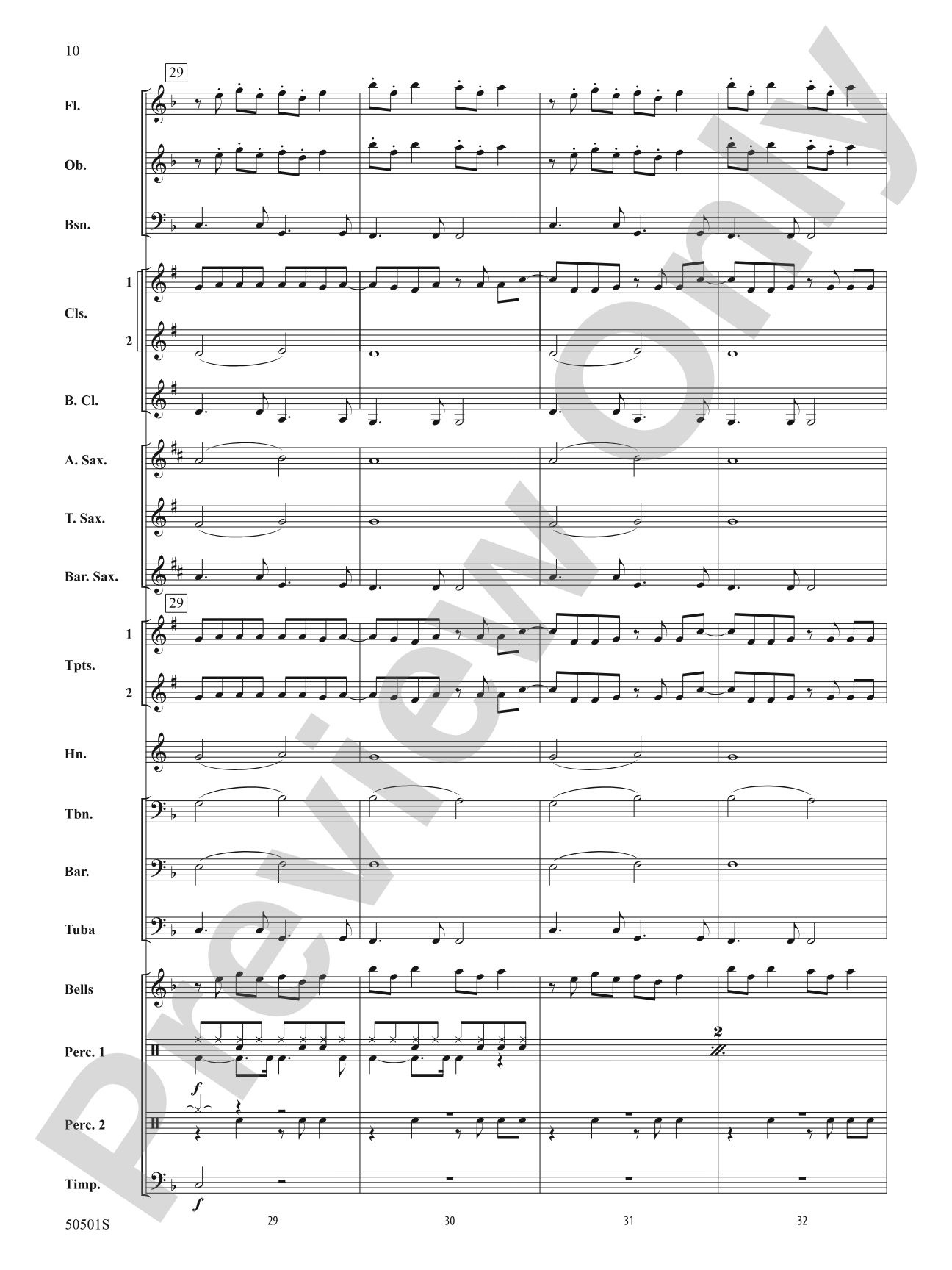
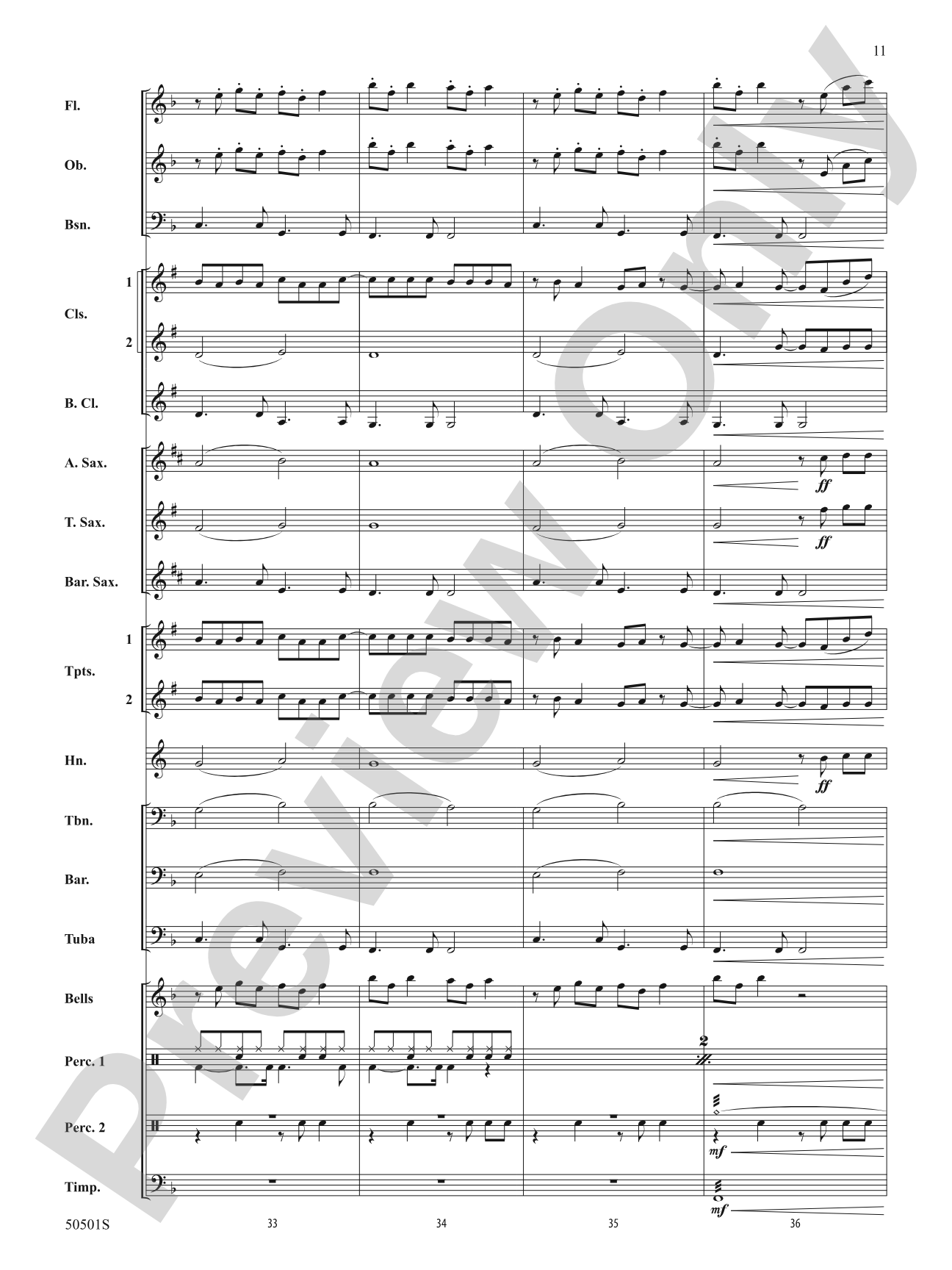
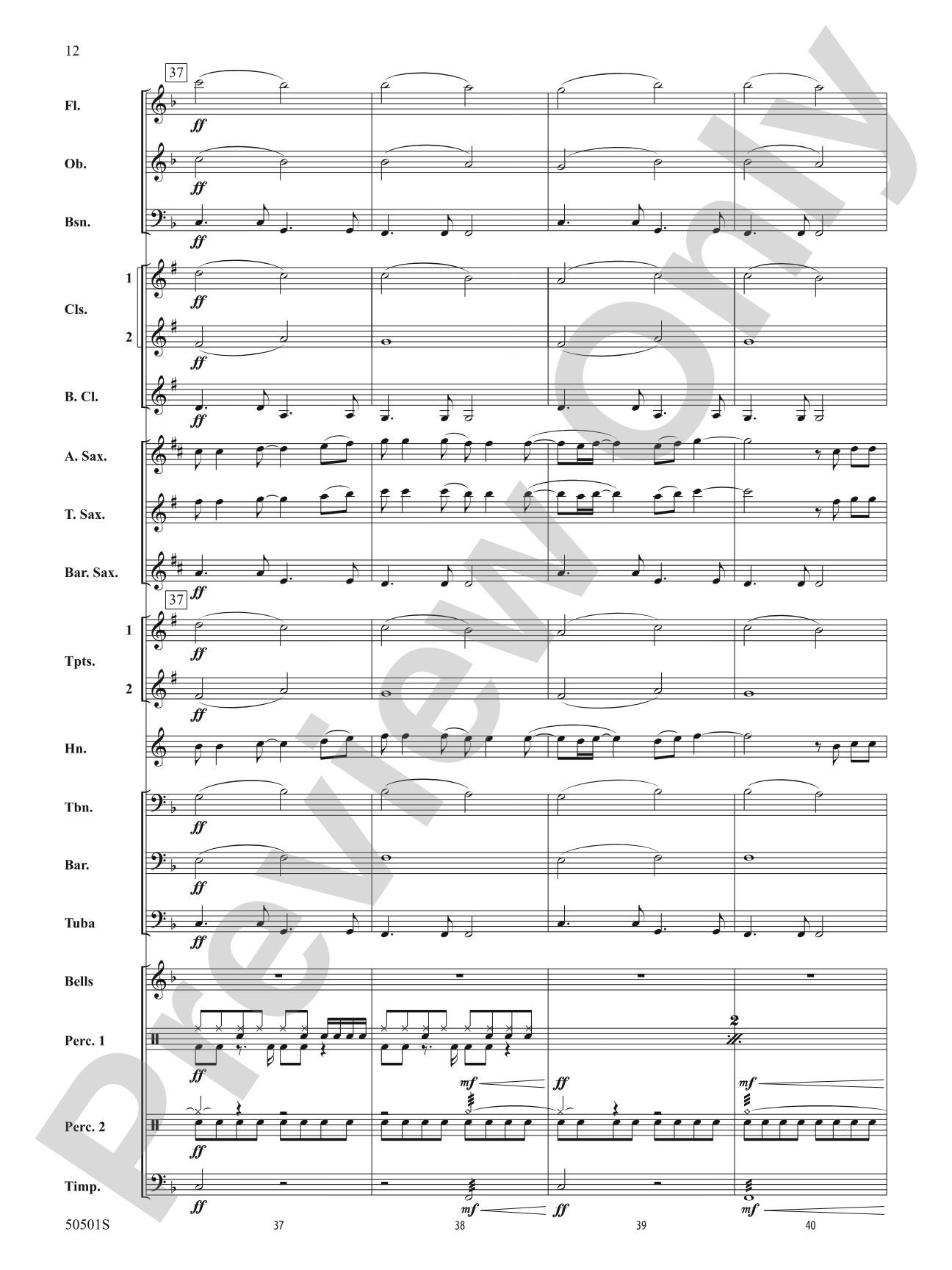
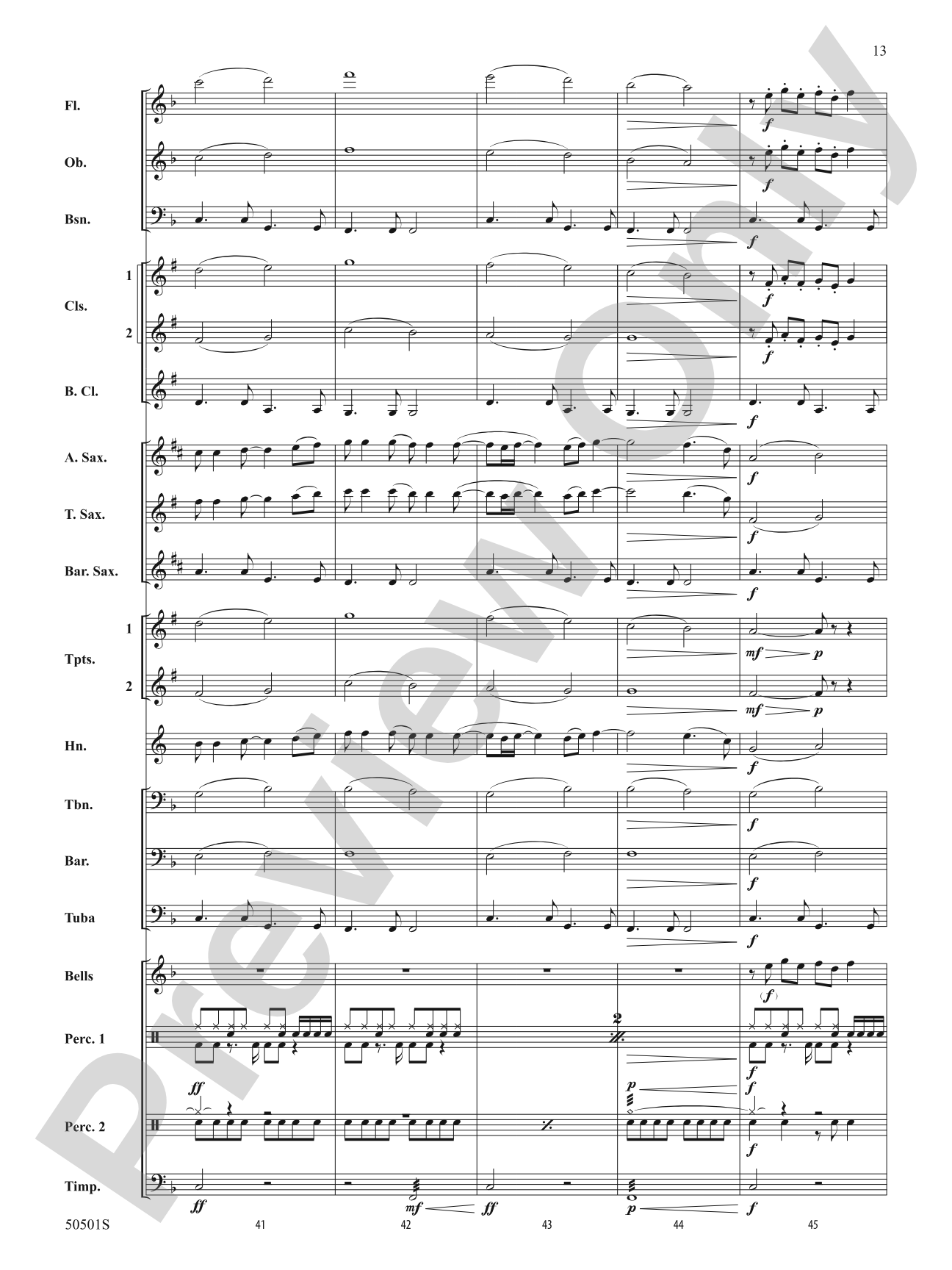
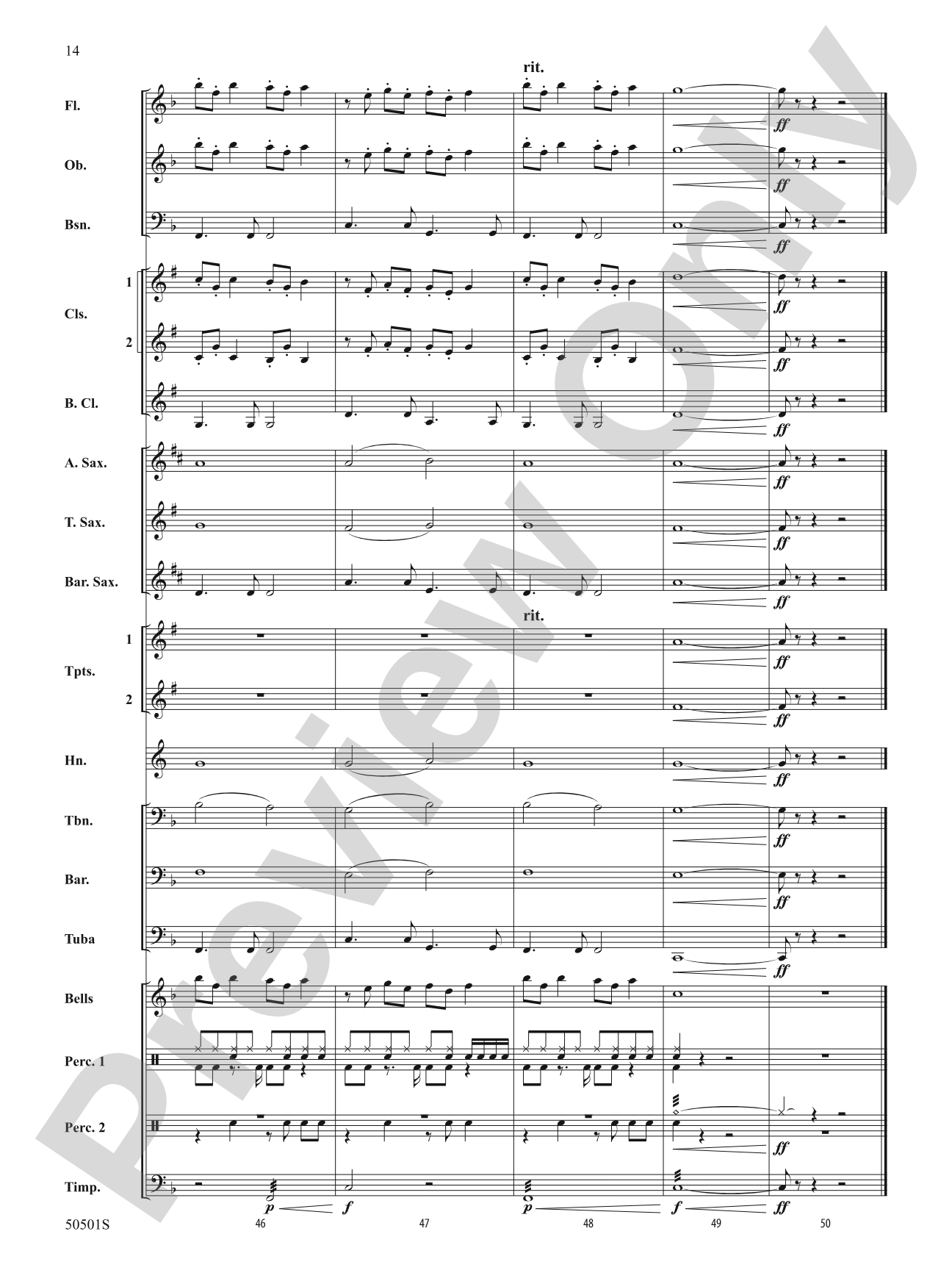

Bitter Sweet Symphony: Score
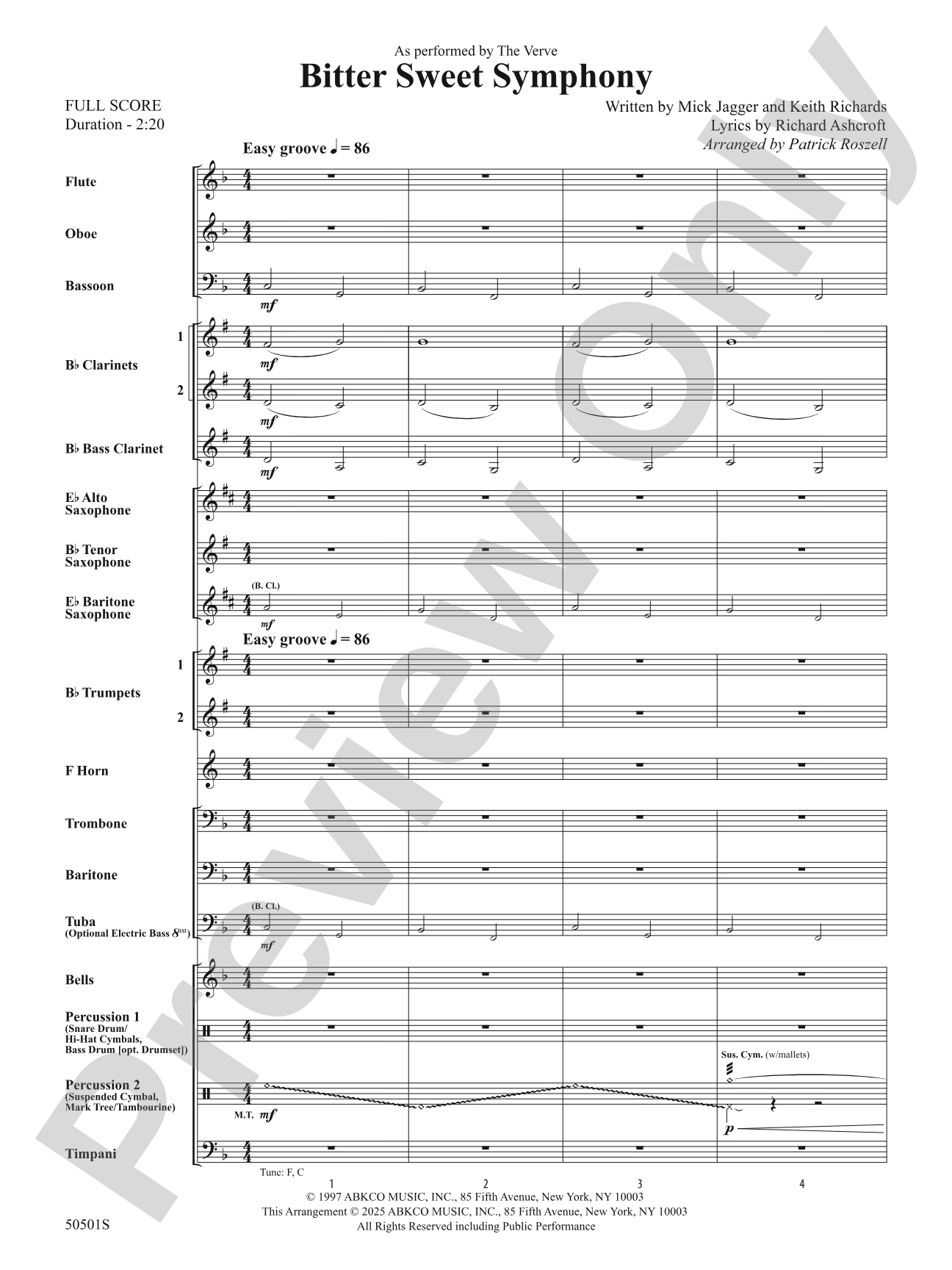
Written by Mick Jagger and Keith Richards, lyrics by Richard Ashcroft / arr. Patrick Roszell
Grade: 2.5
Item: 00-PR-0007877
$12.00
Pickup currently not available
Description
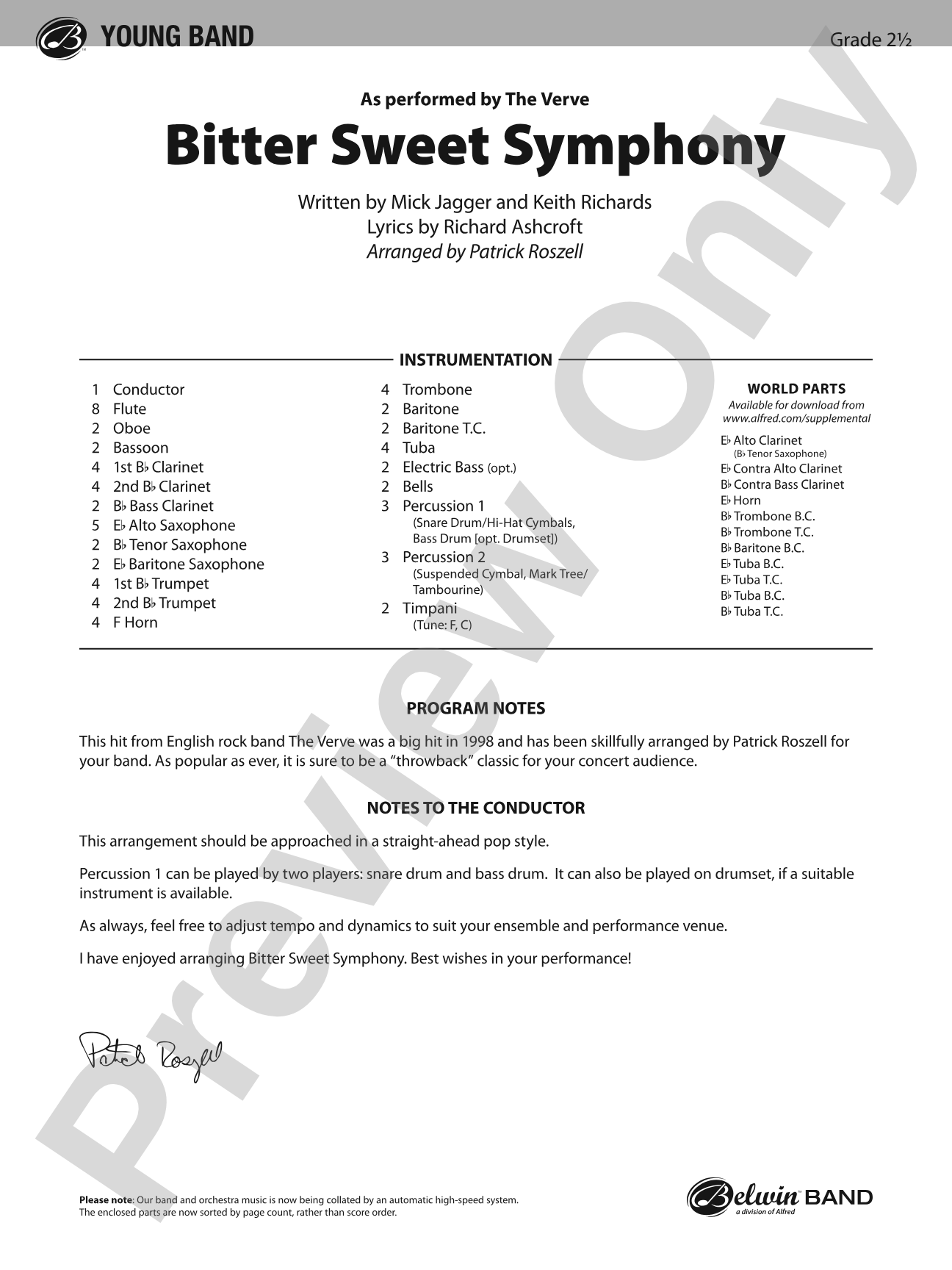
This hit from English rock band The Verve was a big hit in 1998 has been skillfully arranged by Patrick Roszell for your band. As popular as ever, it is sure to be a "throwback" classic for your concert audience.


Don't just read it, hear it, play along with it, and watch your students grow with it. In MakeMusic Cloud, Bitter Sweet Symphony: Score comes alive with professional accompaniment, adjustable tempo, and built-in practice tools that turn solo practice into real progress.
Open in the Player
Jump straight in and assign it today.
Start Your Free Trial
Open this title and explore the full library in minutes.
Sample Audio
1
Audio File
--:--
0:00
0:00
Sample Video
Additional Details
Series:
Belwin Pop Young Band
Publisher:
Alfred Music
SKU:
00-PR-0007877
More about this title
About the Composer: Mick Jagger
Mick Jagger has been the lead vocalist and primary lyricist of The Rolling Stones since the group's formation in 1962, earning his place as one of rock and roll's most influential performers. Beyond his role as frontman, Jagger has co-written countless songs with guitarist Keith Richards, defining the sound of popular music across six decades and influencing generations of musicians across all genres.
Why we love this
Patrick Roszell's arrangement makes this 1998 smash accessible to developing bands without sacrificing the song's irresistible melodic core and emotional depth. The Grade 2.5 scoring ensures your students can focus on musical phrasing and ensemble balance rather than wrestling with technical demands, while audiences instantly recognize and connect with the material. Programming a modern rock classic alongside traditional concert fare signals to your community that your band plays real music from the world students actually inhabit.
What to expect
Wistful and introspective, the arrangement preserves the original's reflective quality while letting each section contribute to the emotional arc. The band sound adds warmth and depth to the song's meditation on love and uncertainty, creating a moment of genuine tenderness in a concert program.
Who it's for
Concert bands at the secondary level or community programs seeking repertoire that engages both developing musicians and audiences with genuine contemporary material. Directors looking to program a ballad that showcases musicality and restraint rather than technical virtuosity will find this arrangement ideal.
How to get the most out of it
- Shape the opening section with dynamic restraint; resist the urge to push the volume until the arrangement naturally builds. The power of this ballad lives in its vulnerability.
- Balance the melody across sections as it passes around the band. Mark your parts clearly so no one doubts who leads each phrase.
- Lock the rhythmic foundation with your low brass and reeds; the steady pulse is what gives the lyrical lines room to breathe.
- Use the full dynamic range available at this level. Moving from the quiet verses to the fuller sections makes the arrangement's architecture audible to the audience.
How to use it
This works beautifully as a contrasting piece between more energetic selections, or as a concert closer that leaves your audience in a reflective mood. It also serves as an accessible entry point if you're introducing popular music and contemporary songwriting to your program alongside standard concert band literature.
Skills your students will build
- Dynamic control and phrasing in ballad style
- Passing sustained melodies between sections while maintaining continuity
- Ensemble balance when melody and accompaniment share equal importance
- Reading and executing articulation markings that serve the arrangement's musical intent