
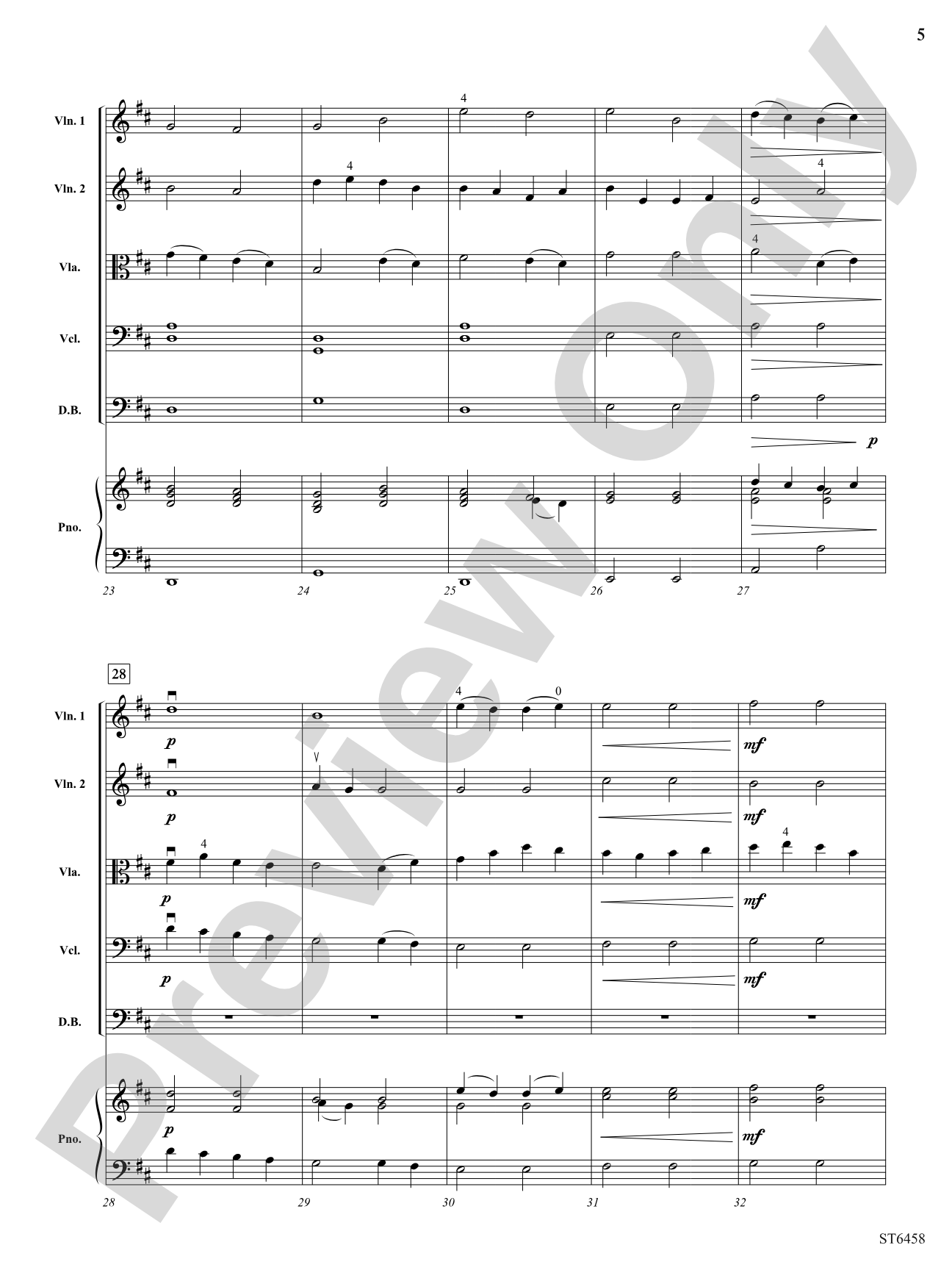
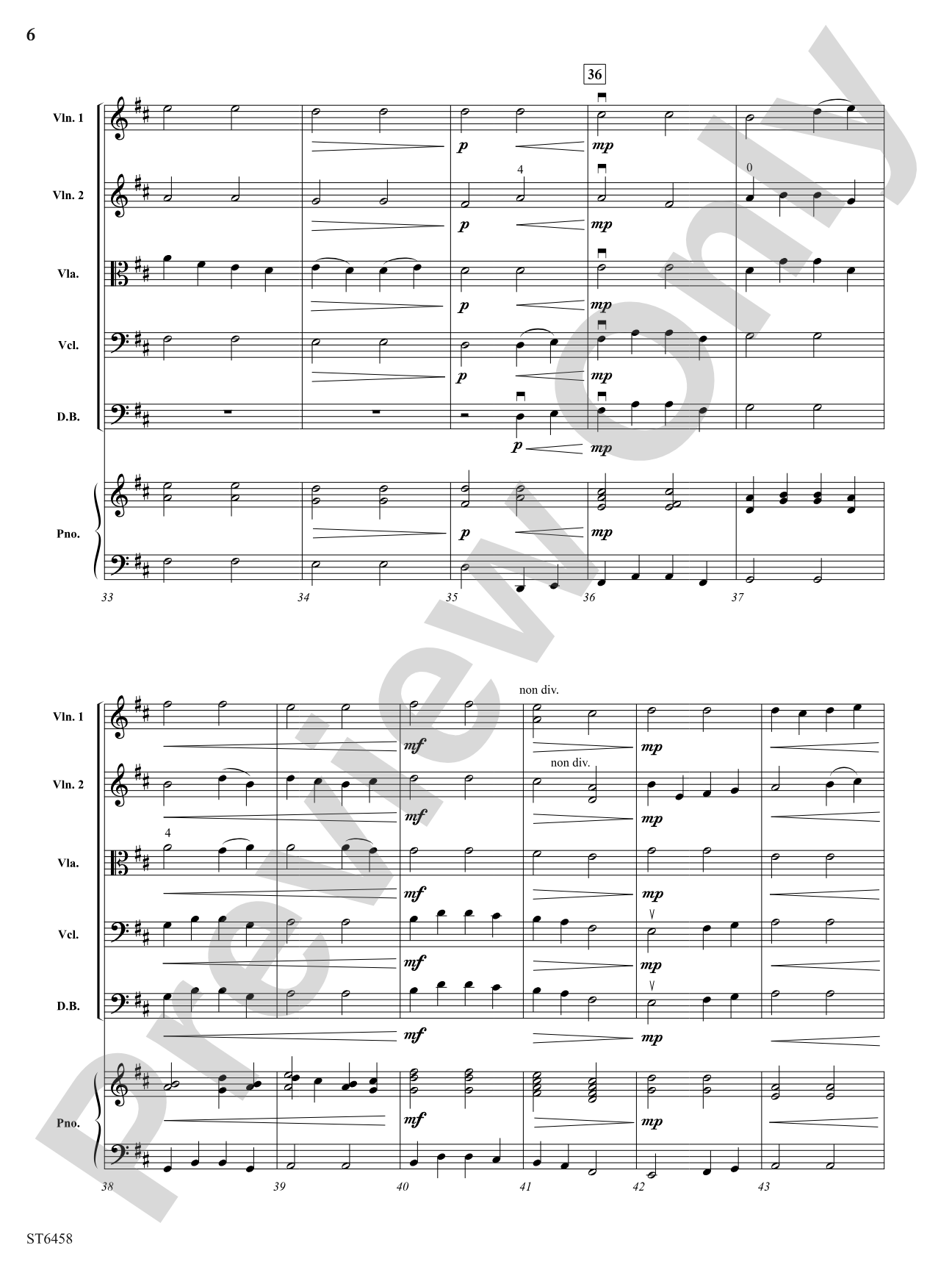
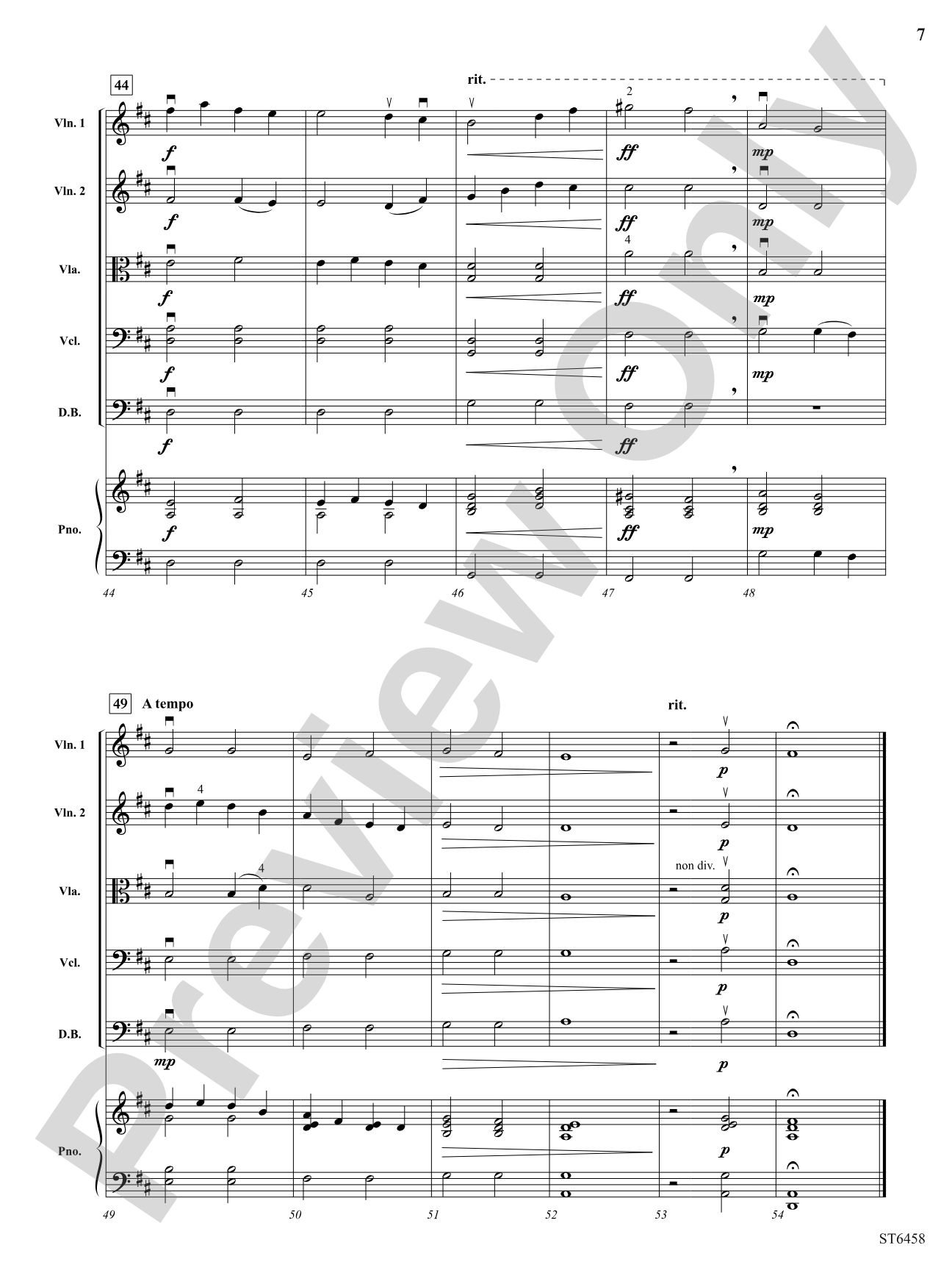

Bits of Brandenburg: String Orchestra Conductor Score & Parts
By J.S. Bach / arr. Carrie Lane Gruselle
Grade: 2
Item: 98-DST6548

$55.00
Pickup currently not available
Buy Extra Parts (Digital PDF Download)
| Product | Price | Quantity |
|---|---|---|
| Bits of Brandenburg: Score | $10.00 | |
| Bits of Brandenburg: Violin 1 | $7.00 | |
| Bits of Brandenburg: Violin 2 | $7.00 | |
| Bits of Brandenburg: Violin 3 (Viola T.C.) | $7.00 | |
| Bits of Brandenburg: Viola | $7.00 | |
| Bits of Brandenburg: Violoncello | $7.00 | |
| Bits of Brandenburg: Double Bass | $7.00 | |
| Bits of Brandenburg: Piano | $7.00 |
Parts Added to Cart!
Description
Let your students experience some of Bach's most famous melodies as they explore themes from Brandenburg Concerti 2, 3 and 5 in this single movement arrangement. The scoring retains the thick polyphonic texture of the originals while making the music accessible to young string players.


Don't just read it, hear it, play along with it, and watch your students grow with it. In MakeMusic Cloud, Bits of Brandenburg: String Orchestra Conductor Score & Parts comes alive with professional accompaniment, adjustable tempo, and built-in practice tools that turn solo practice into real progress.
Open in the Player
Jump straight in and assign it today.
Start Your Free Trial
Open this title and explore the full library in minutes.
Sample Audio
1
Audio File
--:--
0:00
0:00
Sample Video
Additional Details
Series:
FJH Developing Strings
Publisher:
The FJH Music Company, Inc.
SKU:
98-DST6548
More about this title
About the Composer: J.S. Bach
Johann Sebastian Bach (1685-1750) composed at the threshold between Baroque polyphony and modern harmony, creating works of such structural integrity that they remain foundational to music education. His Brandenburg Concerti exemplify his genius for combining independent melodic lines into unified wholes—a principle that continues to shape how we teach musicians to listen and play together.
Why we love this
Grade 2 orchestras rarely encounter Bach with this much textural sophistication intact. Carrie Lane Gruselle has preserved the counterpoint that makes these concerti matter as compositions, not flattened them into simple arrangements. Your students will feel like they're playing real Bach, and they actually are.
What to expect
Lively and intricate, with the intellectual clarity of the Baroque floating above a steady harmonic foundation. Each melodic line seems to dance around the others, creating moments of sudden brightness when familiar themes emerge from the texture.
Who it's for
String orchestra conductors seeking substantial repertoire for Grade 2 ensembles who are ready for polyphonic writing but not yet prepared for full symphonic literature. Students benefit from direct contact with masterworks while building the listening skills that counterpoint demands.
How to get the most out of it
- Balance the inner voices carefully during thick polyphonic passages. Young players often bury the viola and second violin lines; isolate those parts in sectionals and bring them forward in full rehearsal.
- Shape the famous melodies with gentle direction rather than exaggeration. Bach's lines speak for themselves when intonation is secure and vibrato is controlled.
- Observe all articulations as written. The distinction between slurred and separate bowing patterns defines the Baroque character and prevents the piece from sounding modern.
How to use it
Program this as a contest or festival selection where the combination of musical substance and accessibility will impress adjudicators. It also serves well on a concert pairing Bach with later orchestral writing to show students how harmony and structure evolved.
Skills your students will build
- Listening for and maintaining independent melodic lines in polyphonic texture
- Baroque articulation and phrasing conventions
- Intonation in complex harmonic progressions
- Rhythmic precision with sustained notes and rests