
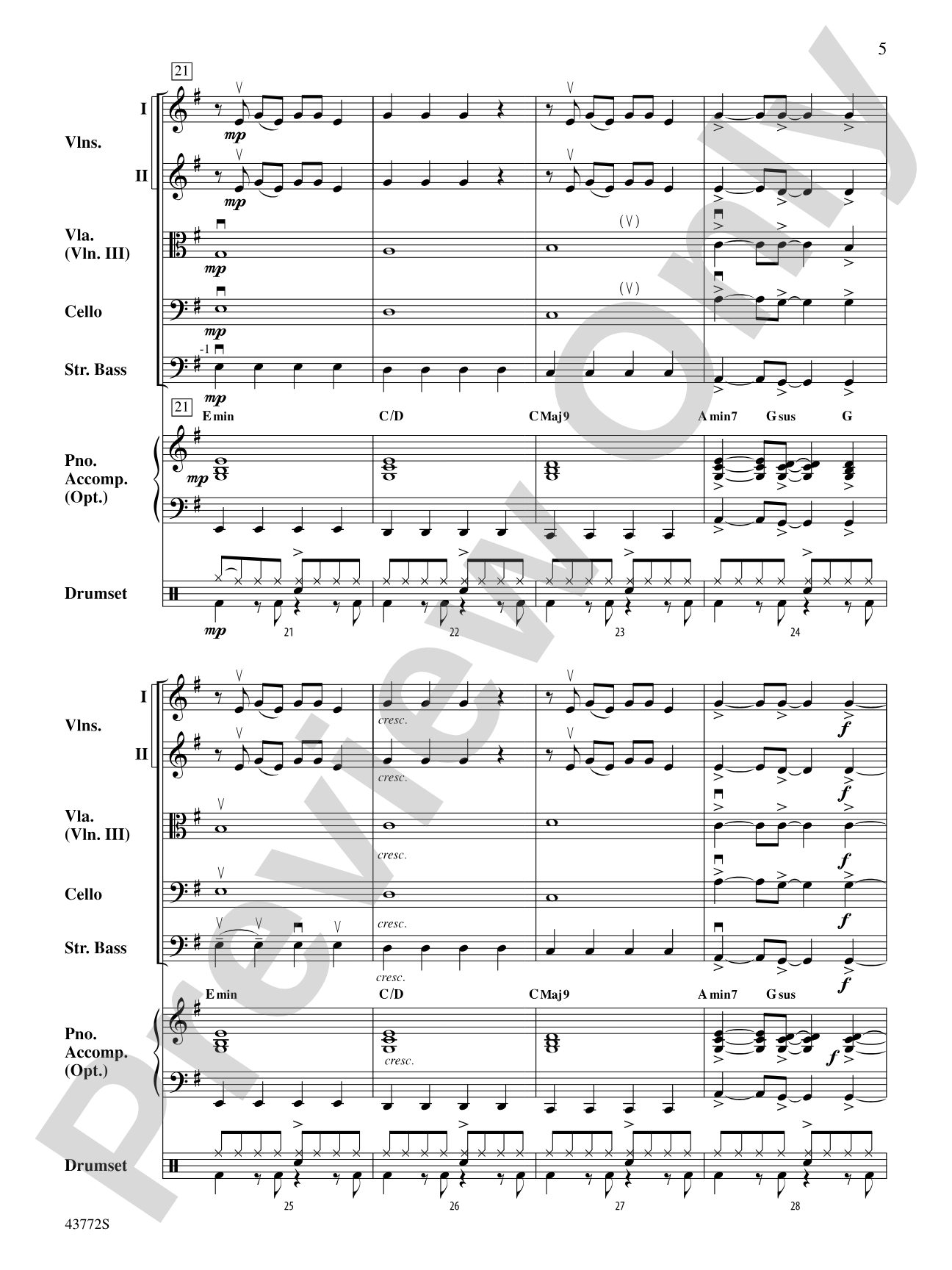
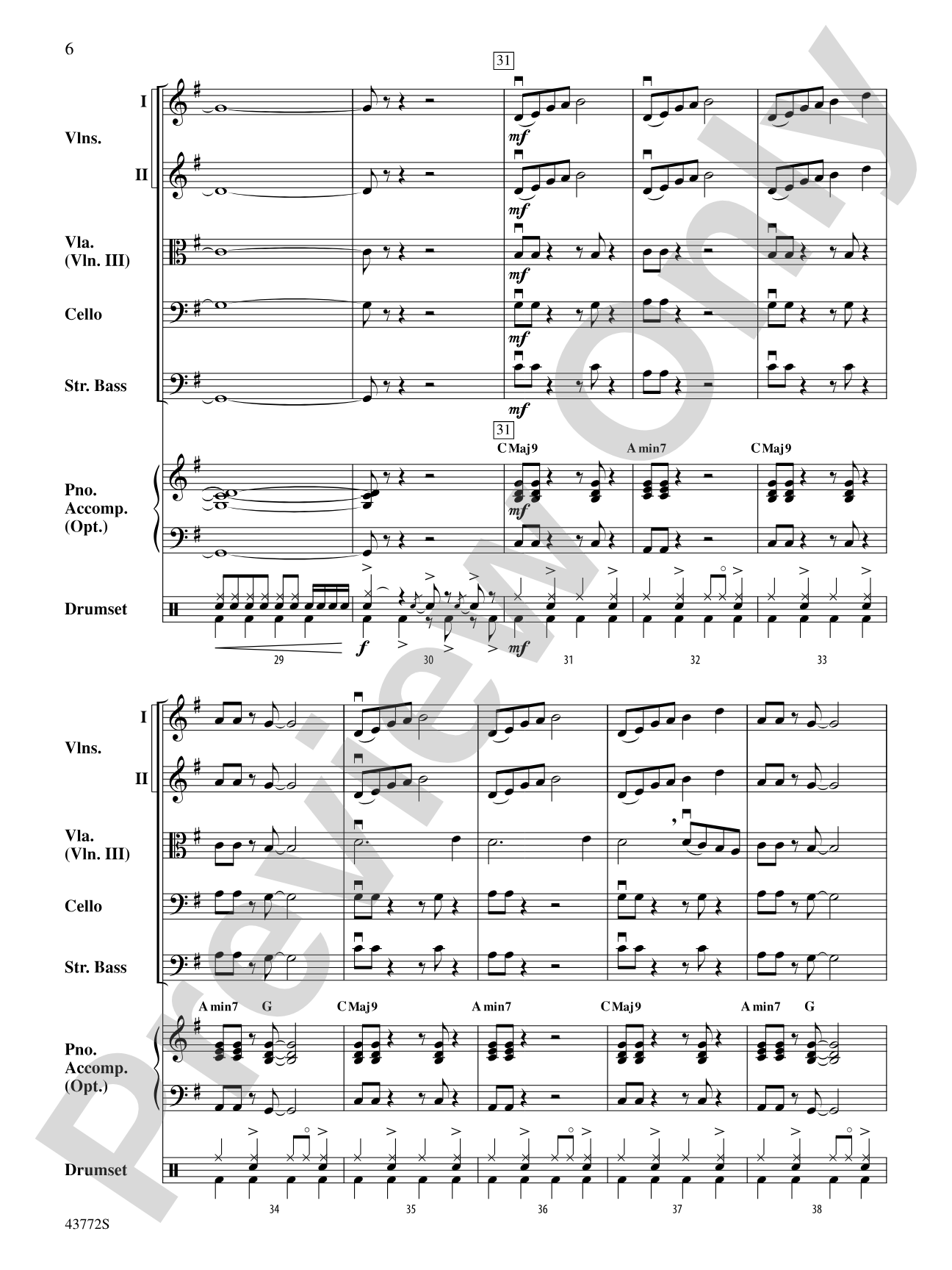
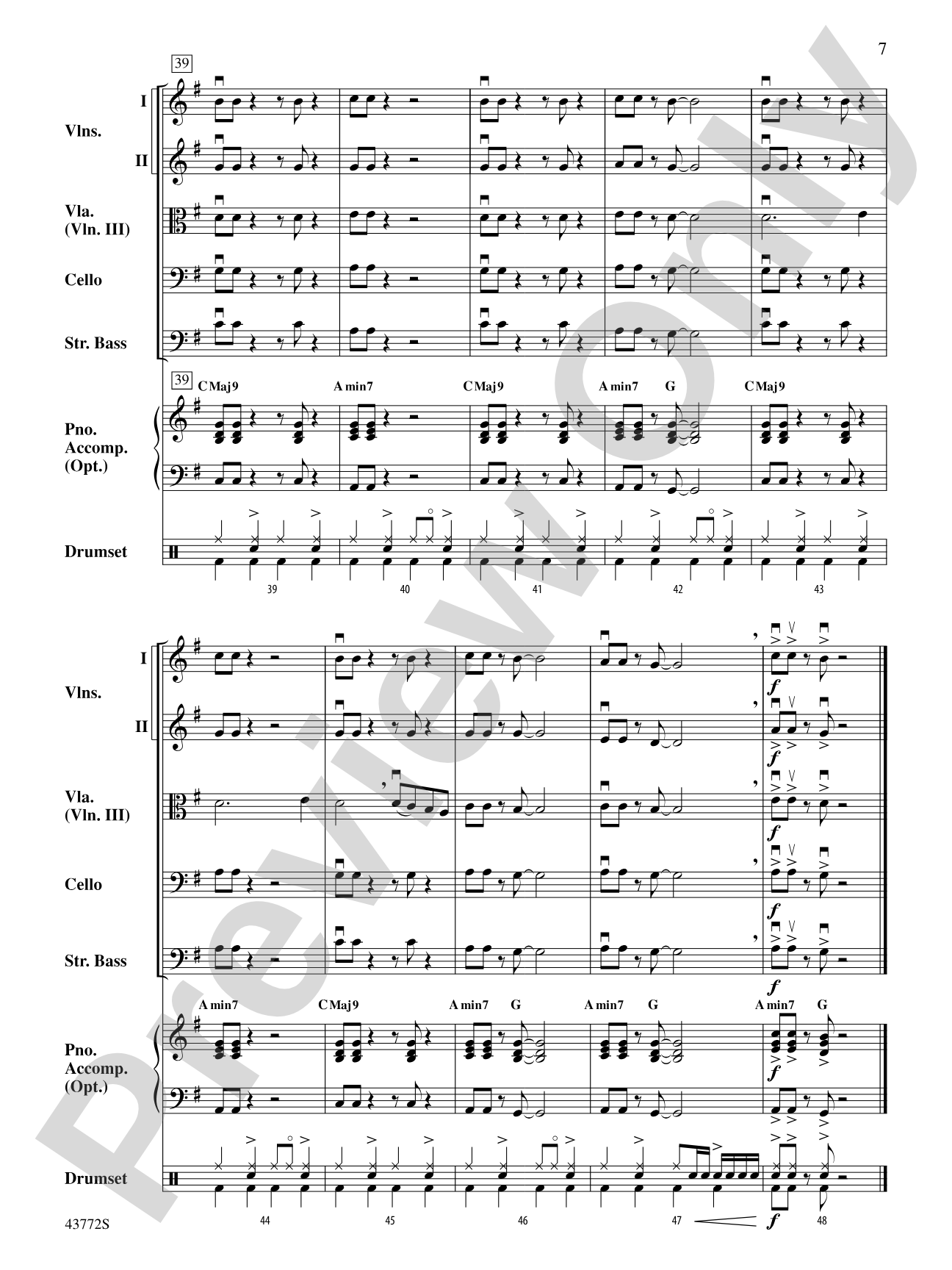

Birthday: String Orchestra Conductor Score & Parts
From Katy Perry's Album PRISM
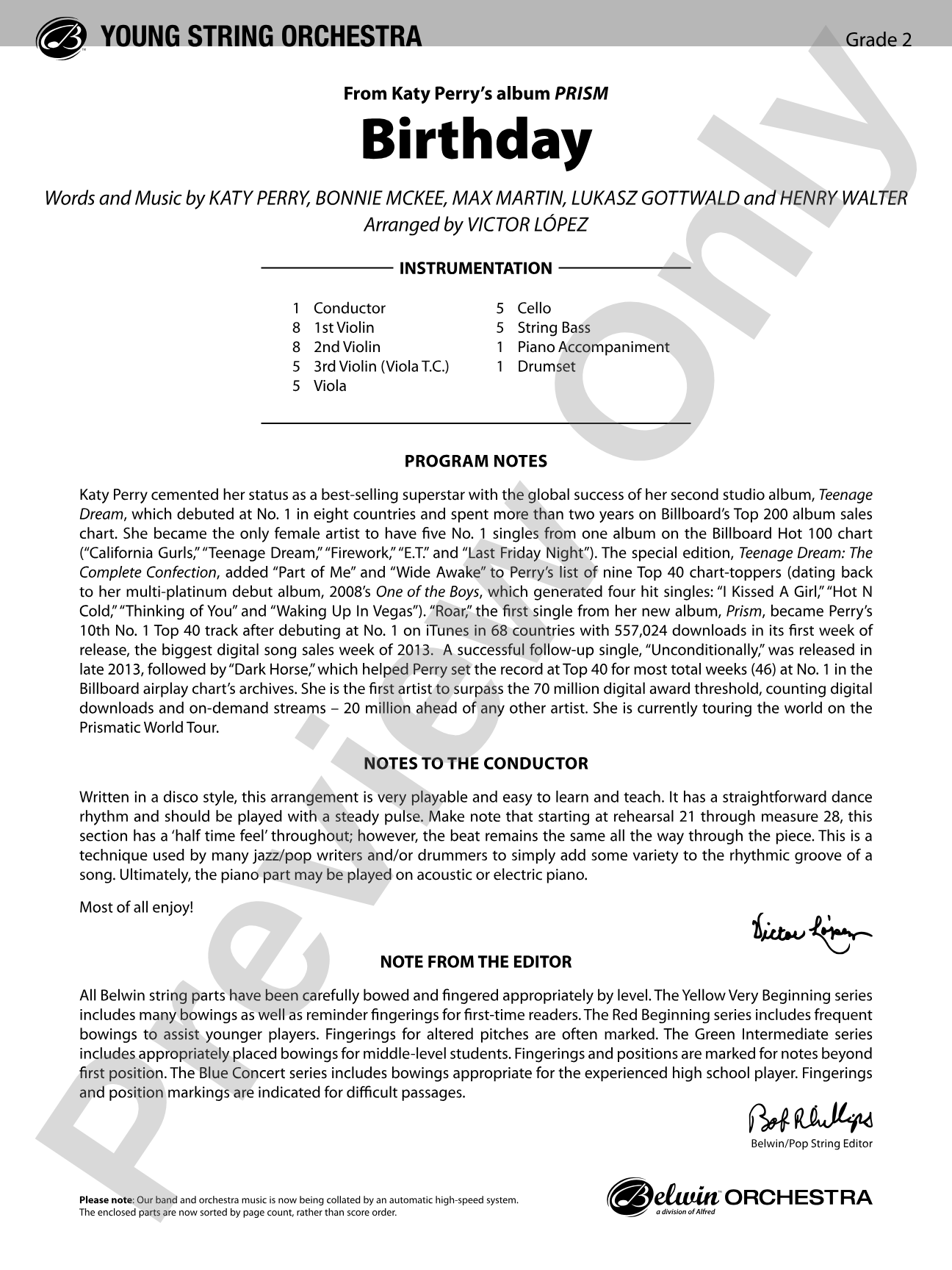
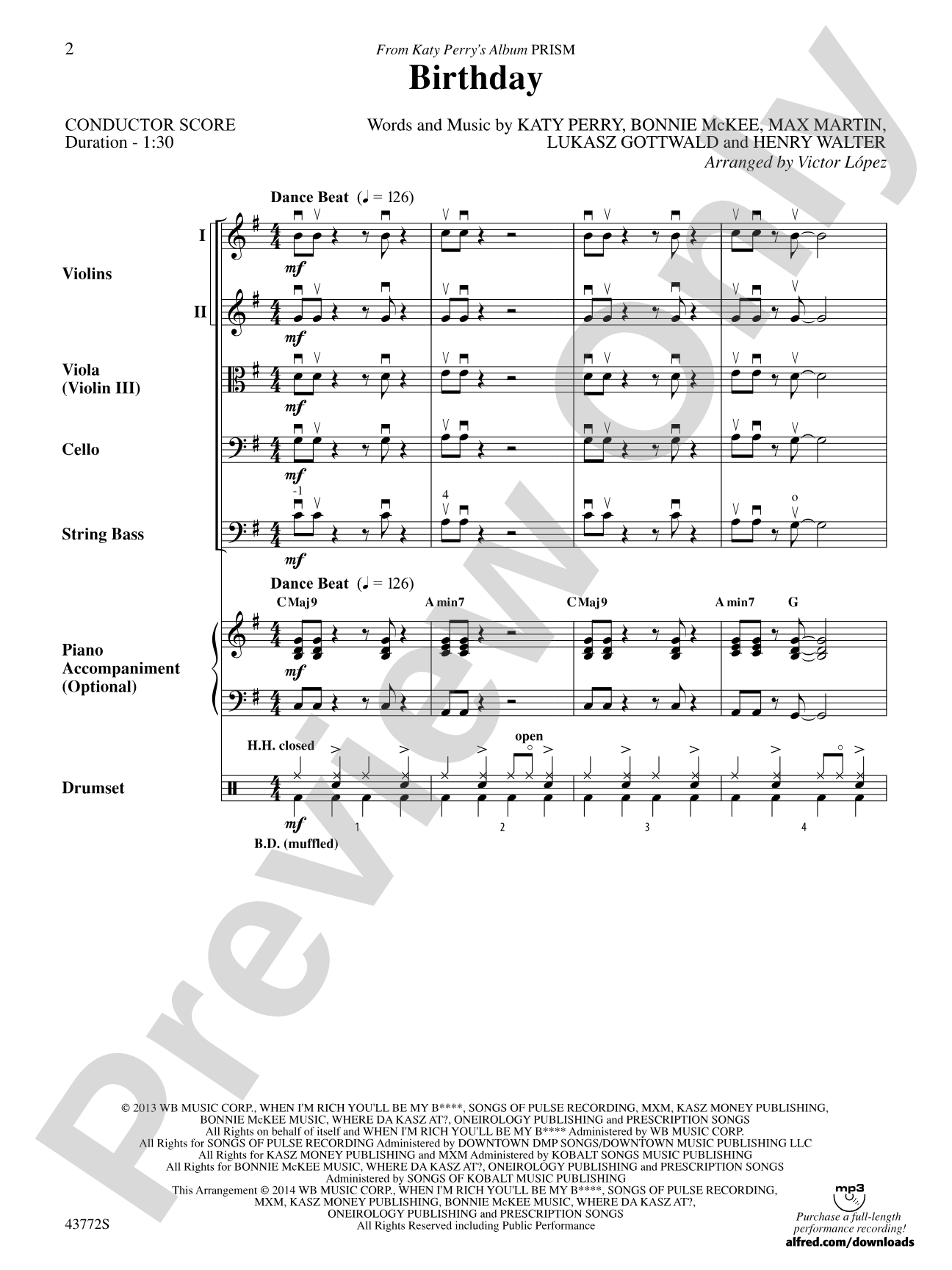
Words and music by Katy Perry, Bonnie McKee, Max Martin, Lukasz Gottwald, and Henry Walter / arr. Victor López
Grade: 2
Item: 00-PK-0006627

$50.00
One moment…
Description
Music from one of the hottest, new music legends that all your students will know! This song is very playable and will certainly add energy and excitement to your next concert. (1:30)


Don't just read it, hear it, play along with it, and watch your students grow with it. In MakeMusic Cloud, Birthday: String Orchestra Conductor Score & Parts comes alive with professional accompaniment, adjustable tempo, and built-in practice tools that turn solo practice into real progress.
Open in the Player
Jump straight in and assign it today.
Start Your Free Trial
Open this title and explore the full library in minutes.
Sample Audio
1
Audio File
--:--
0:00
0:00
Sample Video
No sample videos found.
Additional Details
Series:
Pop Intermediate String Orchestra
Publisher:
Alfred Music
Page Count:
78
SKU:
00-PK-0006627
More about this title
About the Composer: Katy Perry
Katy Perry emerged as one of pop music's defining voices in the 2010s, known for crafting anthemic songs with immediate melodic hooks and infectious energy. Her compositional style, often developed collaboratively with producers like Max Martin and Lukasz Gottwald, emphasizes memorable hooks and accessible harmonic structures that translate remarkably well to student instrumental arrangements.
Why we love this
This arrangement captures exactly why students connect with contemporary pop: the melody is instantly singable, the harmonic progression feels fresh but grounded, and the energy never flags. Rather than diluting the original, the string orchestration heightens the song's emotional directness, giving young players a piece that feels current and genuinely exciting to perform.
What to expect
Bright, propulsive, and celebratory. The arrangement sparkles with rhythmic vitality and clean articulation, creating the sense of a joyful moment captured in sound. It's the kind of piece that makes an audience immediately lean forward, recognizing the song while appreciating how the string writing elevates it.
Who it's for
String orchestra directors working with Grade 2 ensembles who want to program music their students actually know and care about. This works equally well for middle school orchestras and high school groups looking to add a pop selection to a concert without sacrificing musicianship standards.
How to get the most out of it
- Keep the tempo crisp and consistent; the 1:30 runtime depends on rhythmic precision across all parts rather than dragging for effect.
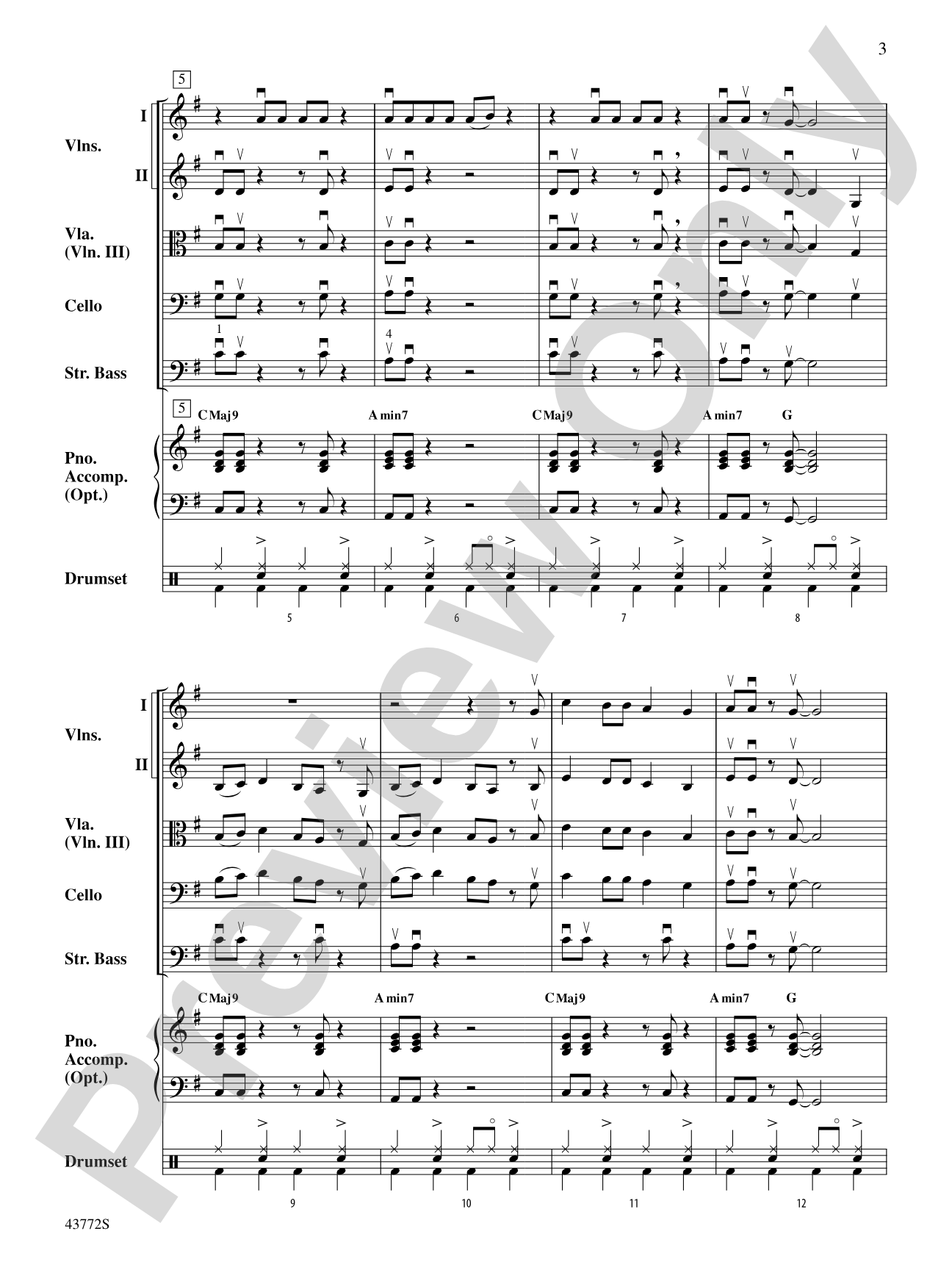
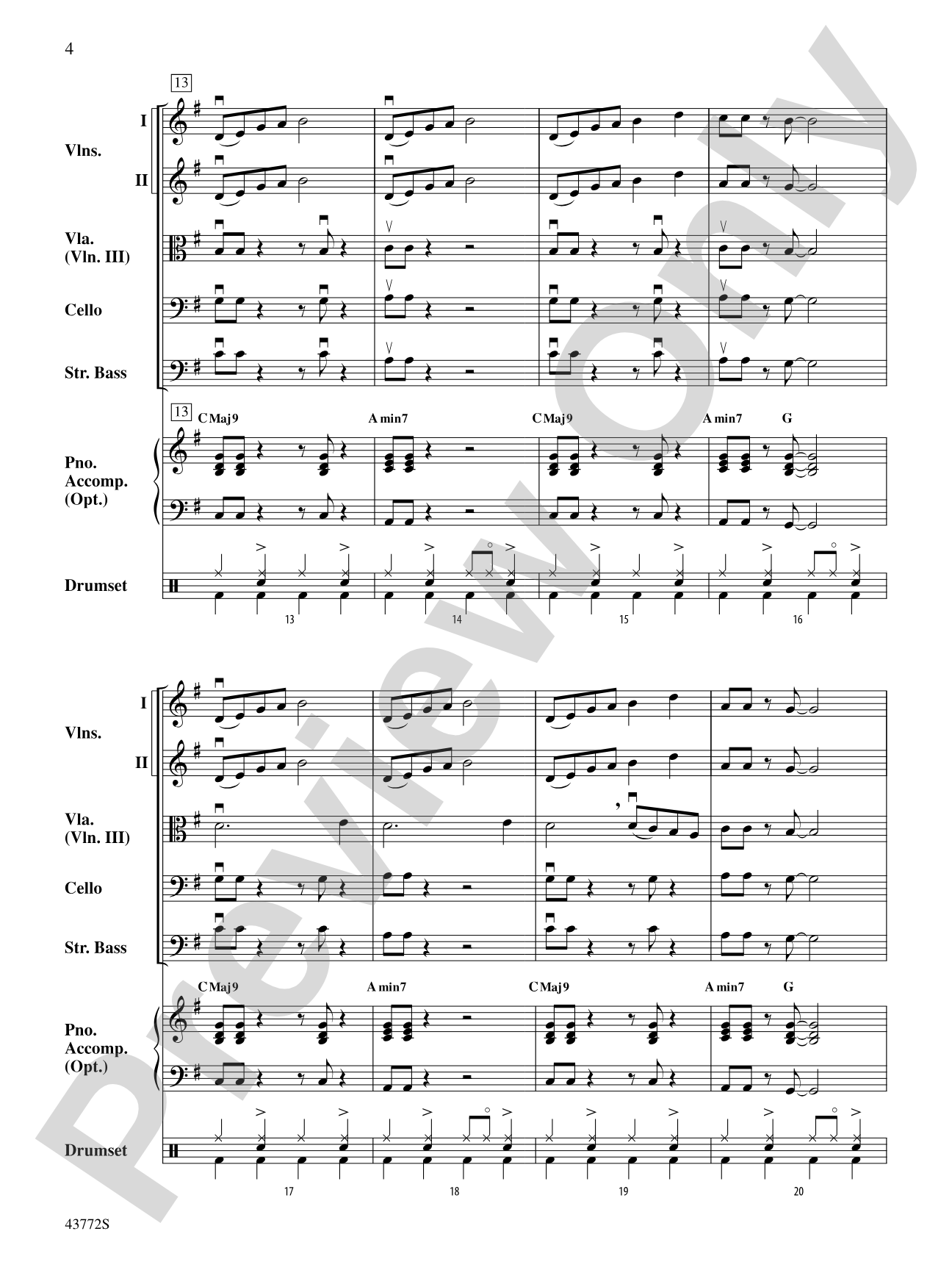
- Balance melody and accompaniment by identifying which section carries the primary line in each section of the score; this shifts between parts and prevents a muddy blend.
- Lock in the rhythmic figures that repeat throughout; they're simple enough that students can master them quickly, freeing attention for intonation and blend.
- Use the recorded accompaniment as a reference for tempo and style, but rehearse without it regularly so students internalize the pulse independently.
How to use it
Place this as an energizer in the second half of a concert, where it provides essential tonal and stylistic contrast to classical repertoire. The short duration and high entertainment value make it ideal for pops concerts, youth orchestra showcases, or community outreach events where visibility and student engagement matter as much as technical depth.
Skills your students will build
- Reading and executing rhythmic figures across multiple simultaneous parts
- Balancing melodic and accompaniment roles within a full ensemble texture
- Playing with consistent articulation and rhythmic precision at a moderate tempo
- Sustaining tone quality while maintaining rhythmic accuracy in homophonic textures
- Following conductor direction while listening across the full ensemble for blend