
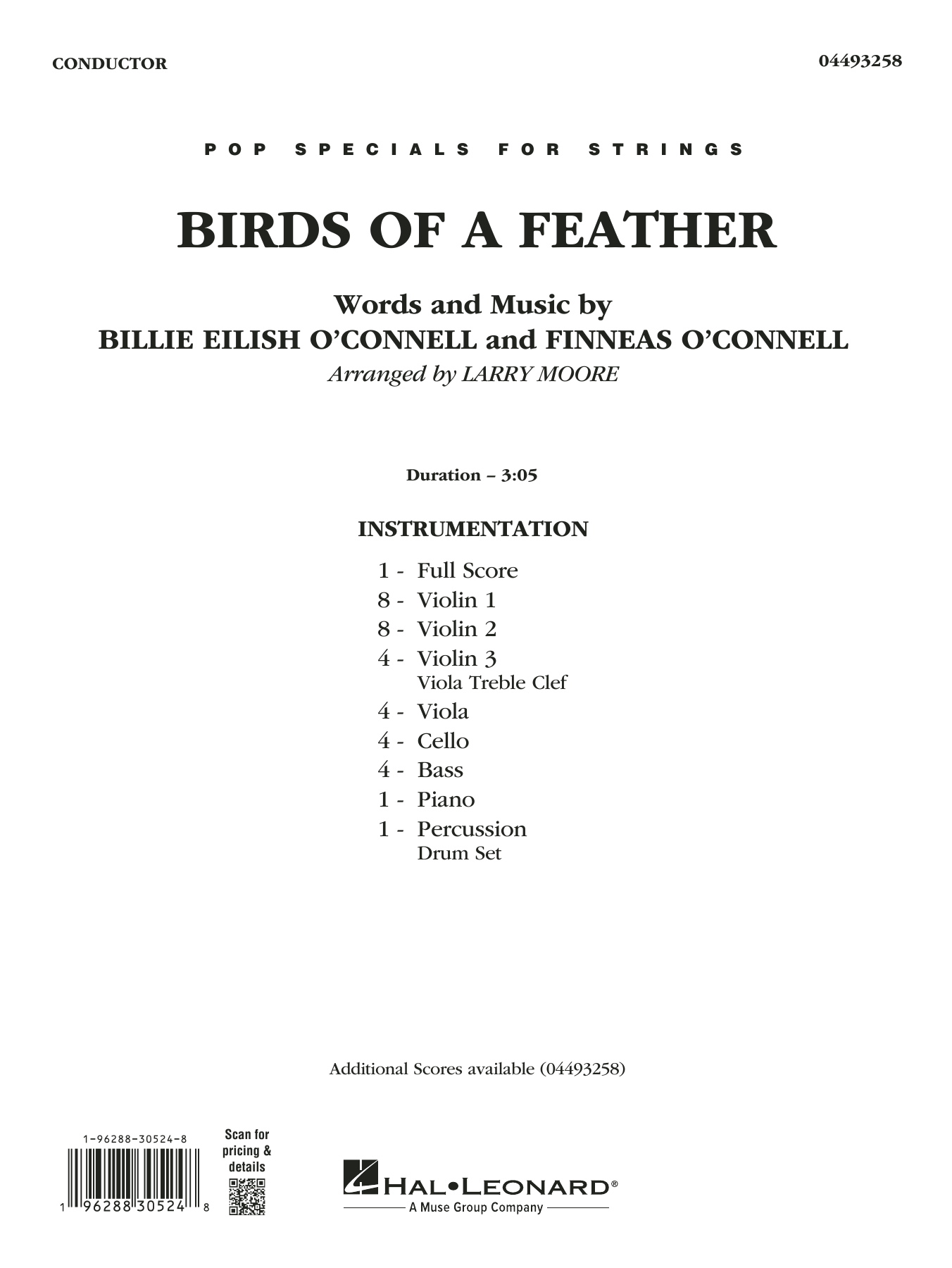

Birds Of A Feather (arr. Larry Moore): String Orchestra Conductor Score & Parts
As performed by Billie Eilish / Arranged by Larry Moore
Grade: 3-4
Item: 35-PK01593367
$60.00
Pickup currently not available
Buy Extra Parts (Digital PDF Download)
Parts Added to Cart!
Description
Orchestras don't often get the chance to rock, until now! Your young string players won't want to stop practicing this great arrangement of the popular hit from Billie Eilish. Great unison rhythms and easy ranges make this very accessible. Perfect for teaching simple 16th note rhythms and articulations. A piano and drum set part complete the infectious groove.


Birds Of A Feather (arr. Larry Moore): String Orchestra Conductor Score & Parts isn't in MakeMusic Cloud just yet...but it could be. Let us know you'd like to see it, and you'll help shape what comes next. In the meantime, start a free trial and dive into thousands of interactive titles your students can play along with today.
Request This Title
Tell us you want it.
Start Your Free Trial
Explore everything that's ready to play right now.
Sample Audio
No sample audio found.
Sample Video
No sample videos found.
Additional Details
Publisher:
Hal Leonard
SKU:
35-PK01593367
More about this title
About the Artist: Billie Eilish
Billie Eilish emerged as a defining voice of her generation through whisper-vocal intimacy paired with stark, minimalist production. Her songwriting emphasizes mood and restraint over traditional pop maximalism, creating songs that resonate across age groups and musical backgrounds.
For music educators, her catalog offers contemporary material that students already know and care about. Her work demonstrates how effective arrangement can translate modern production aesthetics into acoustic ensemble settings, making it valuable for teaching arranging principles and ensemble cohesion.
Why we love this
Larry Moore's arrangement strips away the original's electronic elements and replaces them with string textures and acoustic groove that keep the song's sly character intact. The writing opens doors for younger orchestras to play something genuinely current without sacrificing technical clarity or conductability. String players spend most rehearsals in classical and traditional pops; a chance to own a recognizable contemporary hit builds genuine enthusiasm for the entire ensemble.
What to expect
Cool and understated, with an infectious shuffle that makes you want to move. The arrangement captures the original's deadpan attitude while letting string players feel the satisfaction of locking into a groove. There's an ease and confidence to the sound that makes young orchestras feel like they're playing something real.
Who it's for
Grade 3 and 4 orchestras ready to explore contemporary music and build rhythmic confidence. String players at this level benefit enormously from repertoire that demands precision without requiring advanced left-hand facility. This works equally well for ensembles focused on traditional classical training and those balancing classical, pops, and crossover styles.
How to get the most out of it
- Lock the unison rhythms between strings and rhythm section first. Once these align, the groove locks and everything else follows naturally.
- Shape the 16th note articulations with consistent bow direction and pressure. Crisp attacks here define the song's character without sounding sterile.
- Keep the dynamic palette relatively narrow and controlled. The power of this arrangement lives in groove and precision, not in volume swells.
- Support the piano and drums by treating them as section leaders, not accompanists. The strings follow their pocket, not the other way around.
How to use it
Schedule this in a pops concert to draw family members who know the song from streaming services or radio. Pair it with one or two other contemporary arrangements to create a concert section that demonstrates arranging versatility. Late-season programming works well, too; the accessibility frees rehearsal time for deeper work on longer classical pieces earlier in the year.
Skills your students will build
- 16th note rhythm reading and execution
- Articulation control and ensemble consistency in rhythmic passages
- Groove-based ensemble alignment and rhythmic pocket
- Unison playing with precision and stylistic cohesion
- Contemporary music interpretation and phrasing