
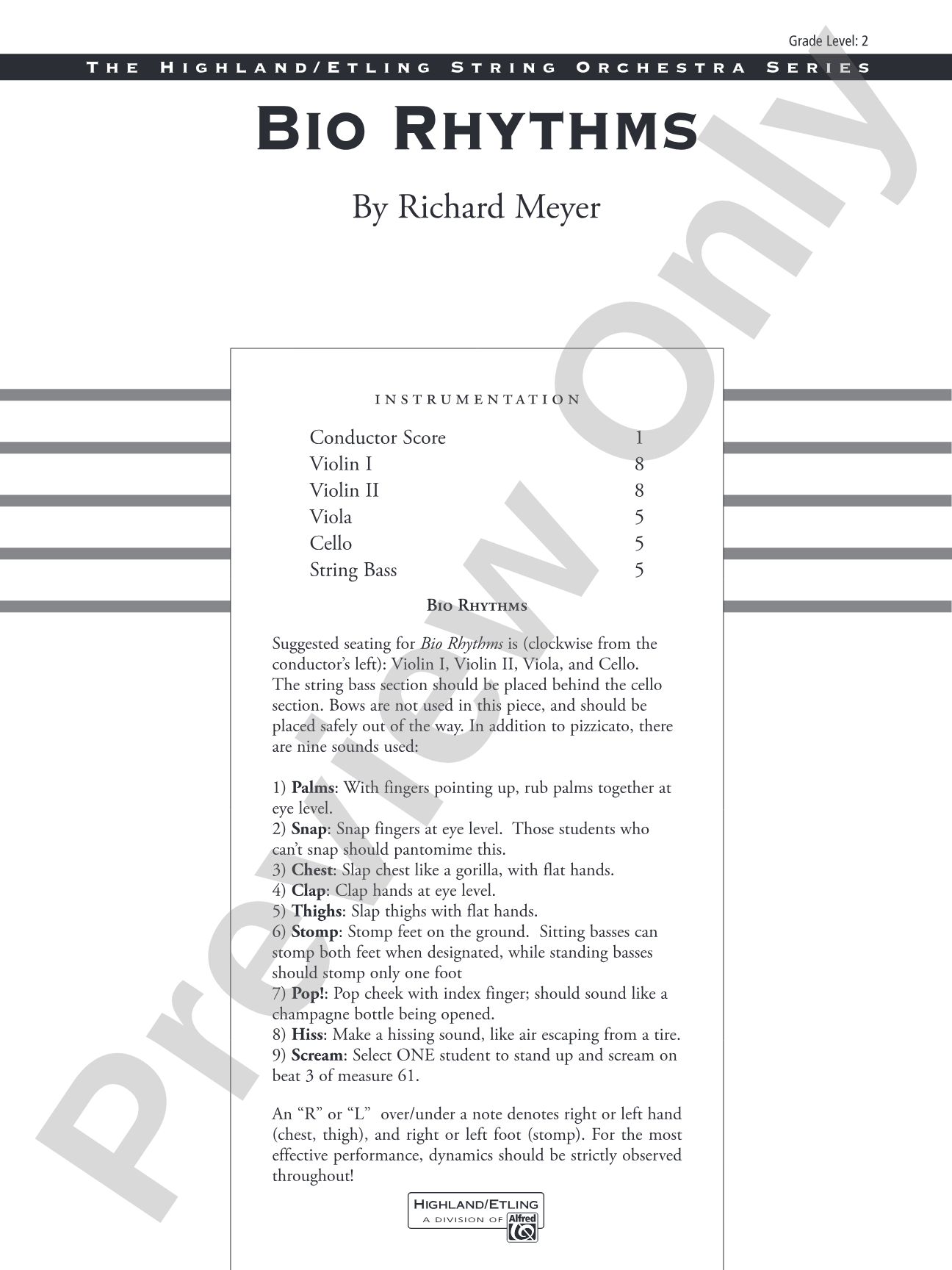
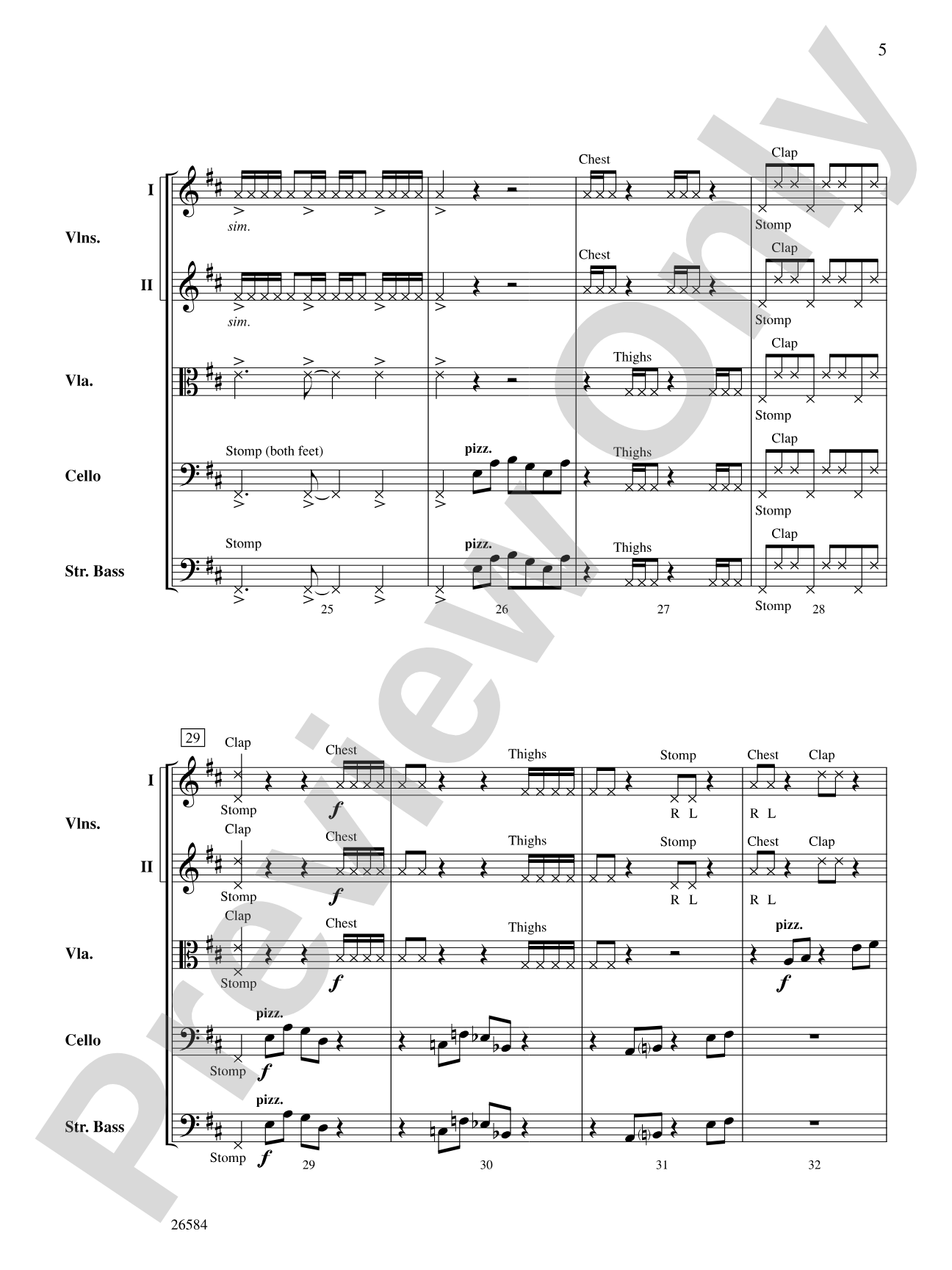
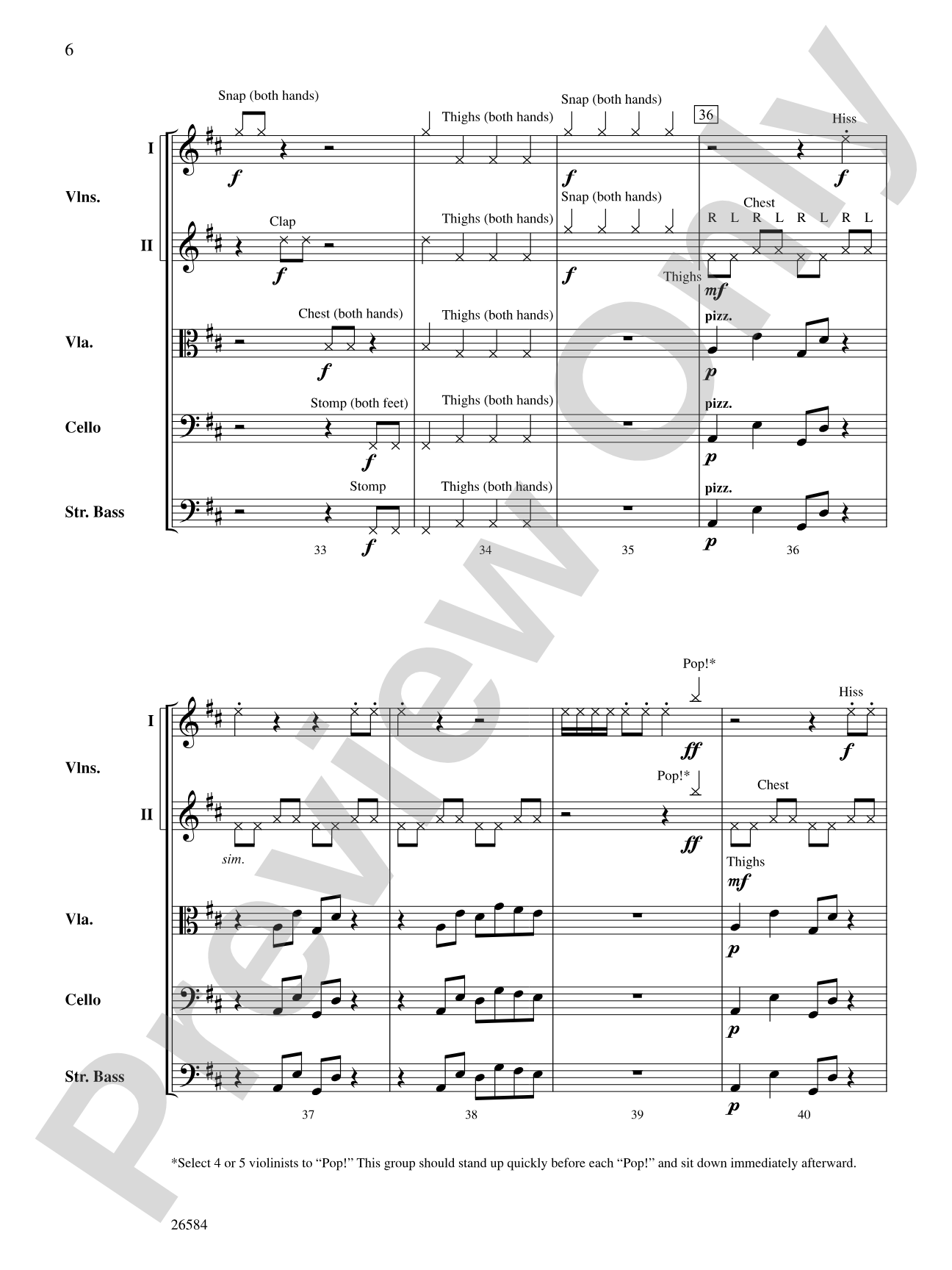
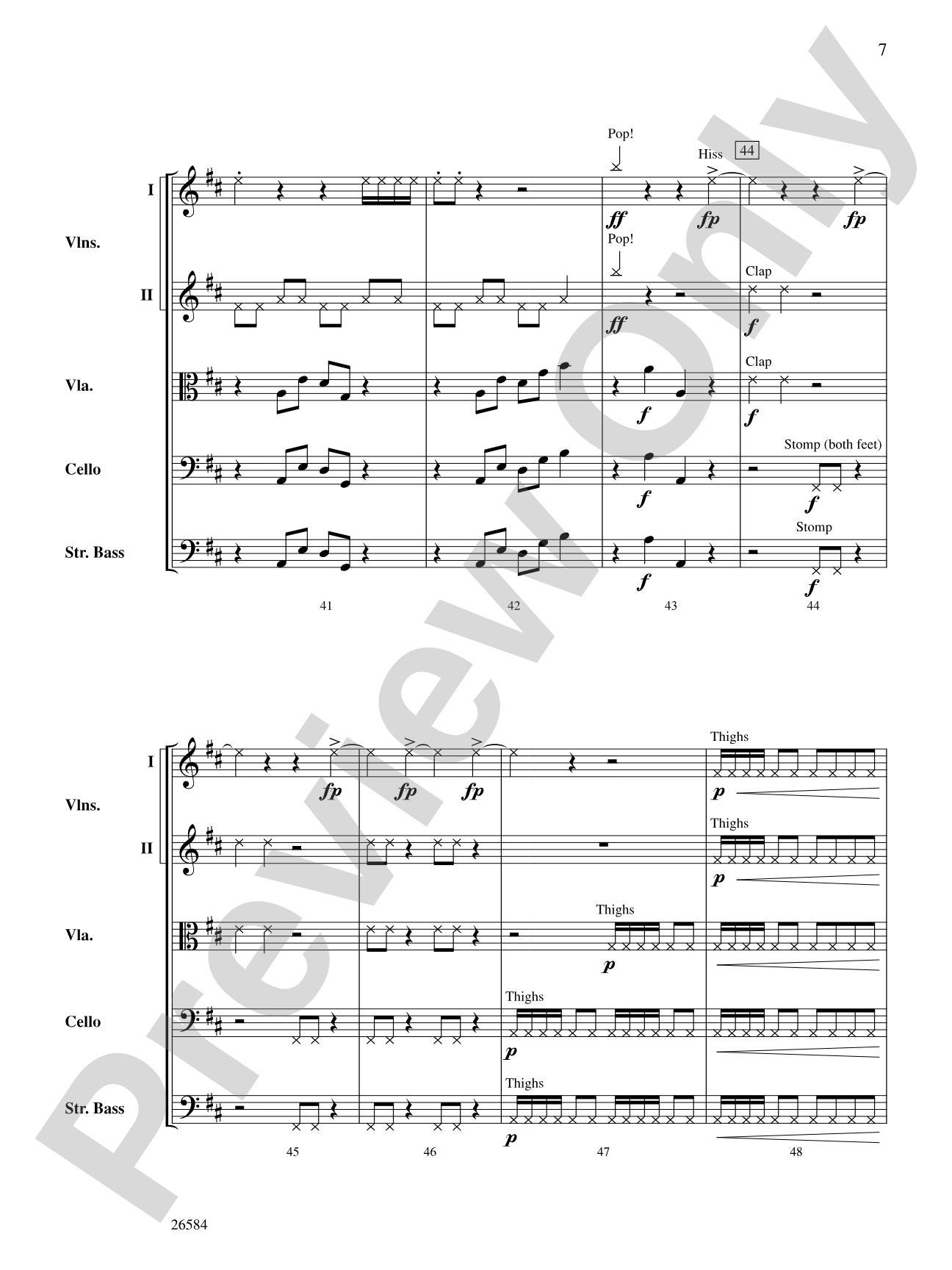
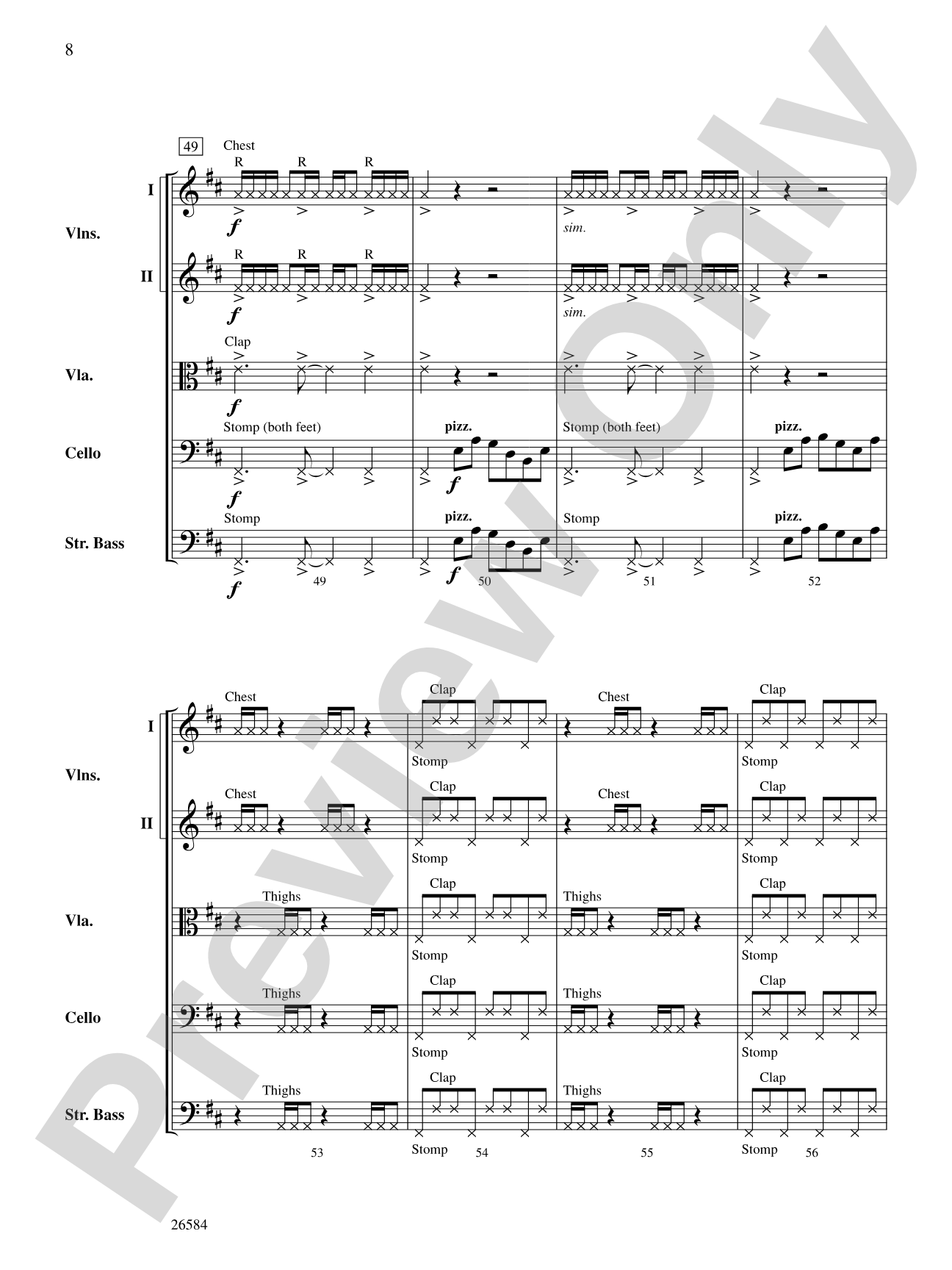


Bio Rhythms: String Orchestra Conductor Score & Parts
By Richard Meyer
Grade: 2
Item: 00-PK-0001108

$48.00
Pickup currently not available
Buy Extra Parts (Digital PDF Download)
| Product | Price | Quantity |
|---|---|---|
| Bio Rhythms: Score | $9.00 | |
| Bio Rhythms: 1st Violin | $5.99 | |
| Bio Rhythms: 2nd Violin | $5.99 | |
| Bio Rhythms: Viola | $5.99 | |
| Bio Rhythms: Cello | $5.99 | |
| Bio Rhythms: String Bass | $5.99 |
Parts Added to Cart!
Description
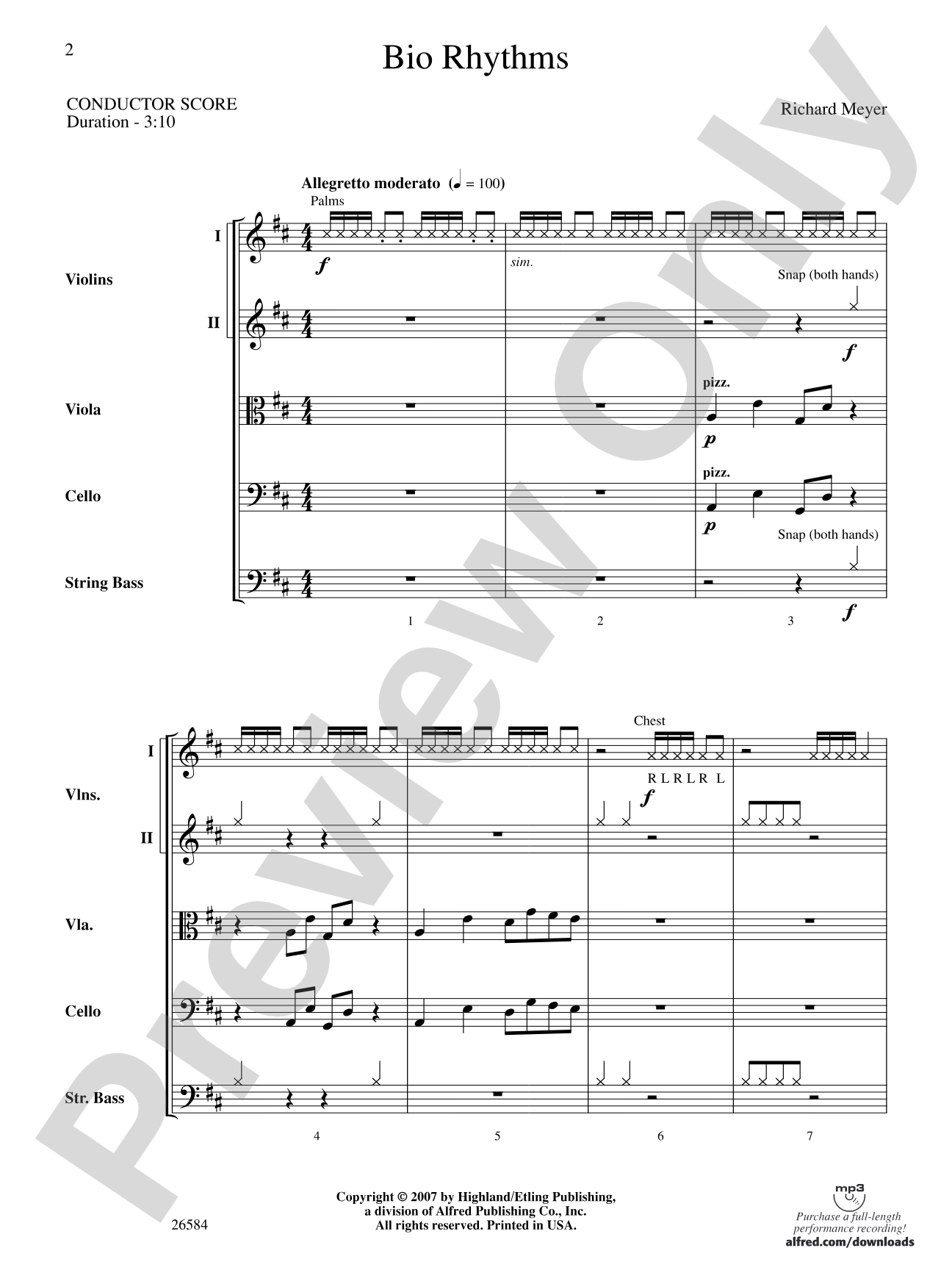
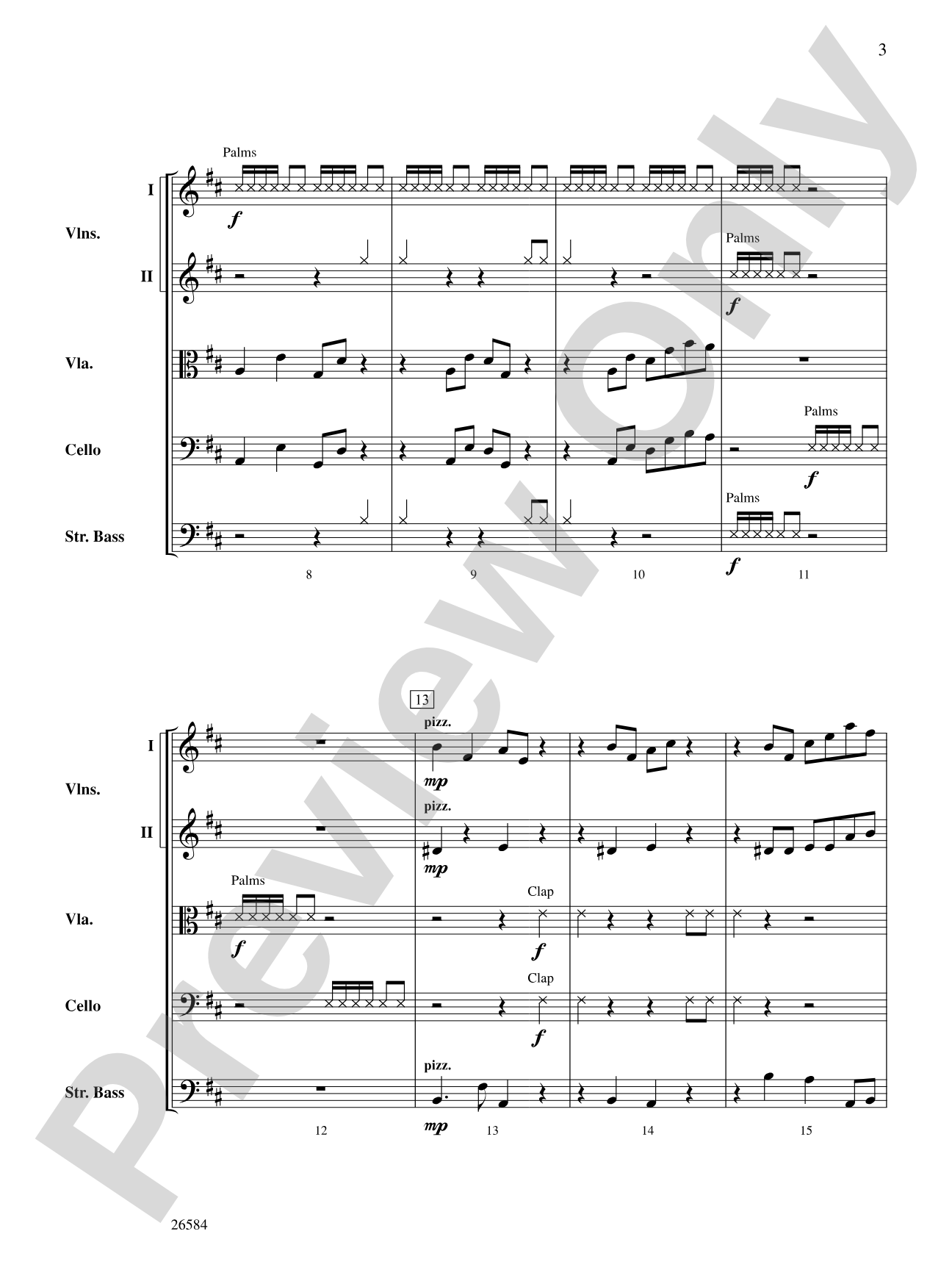
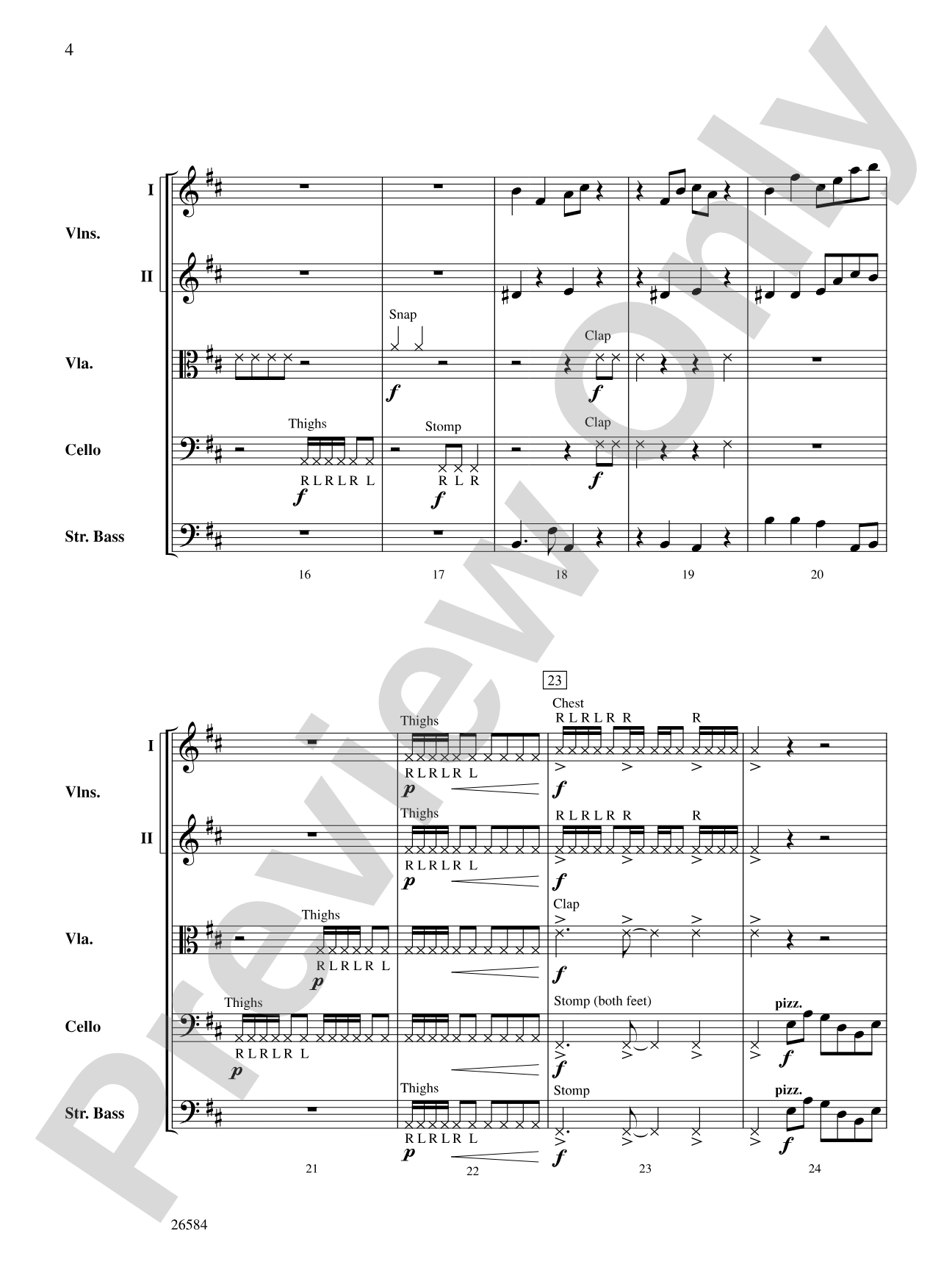
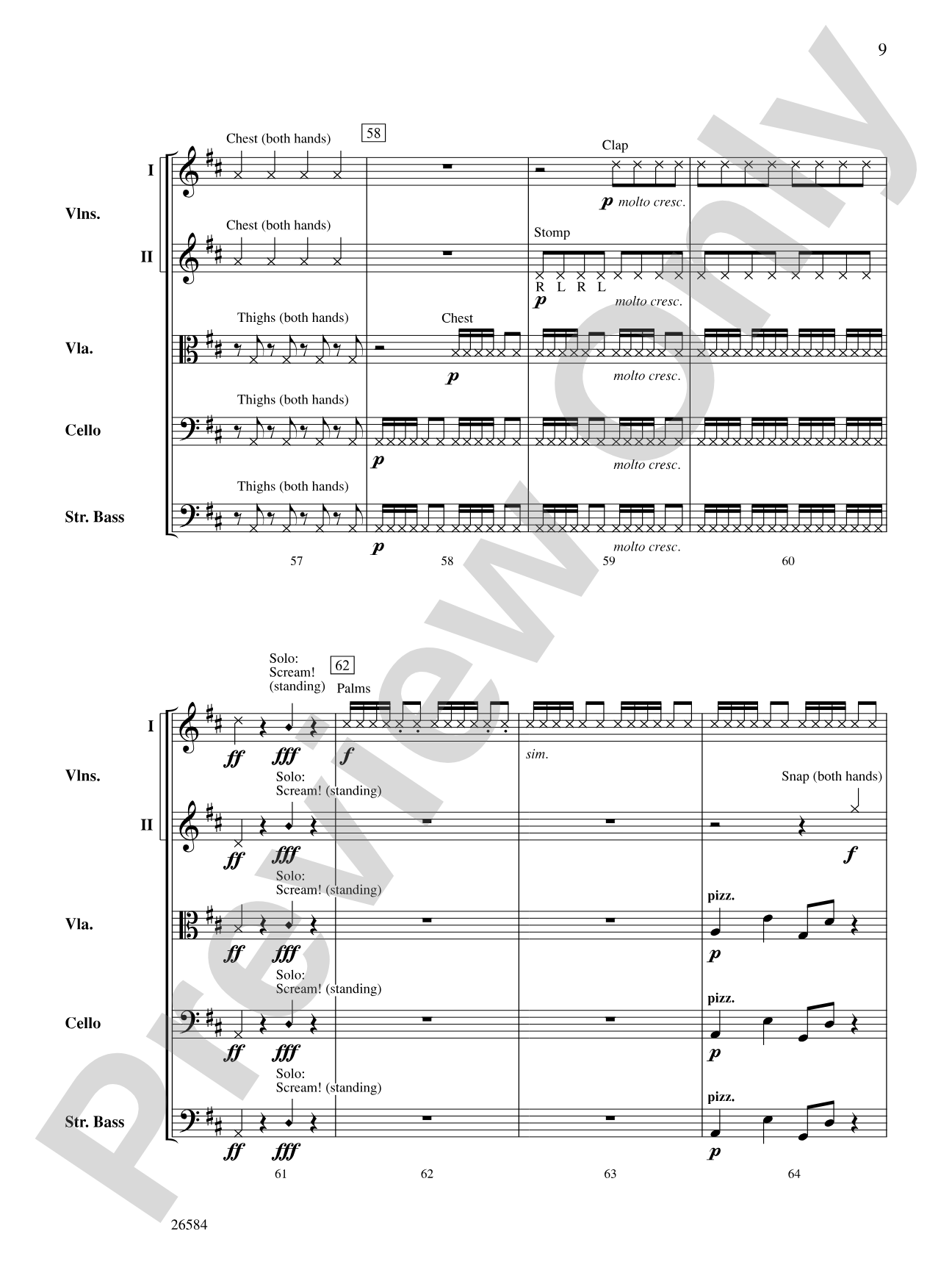
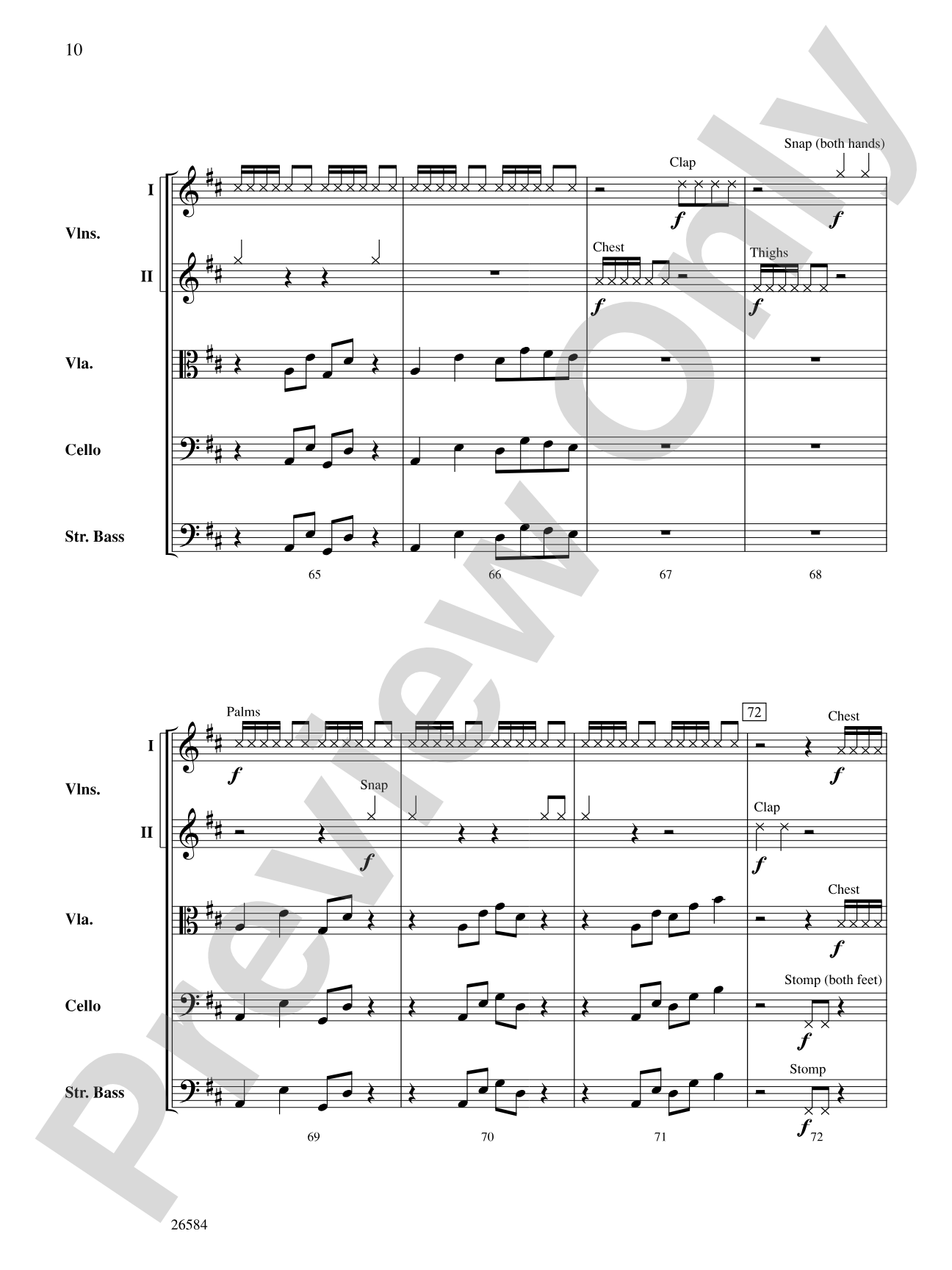
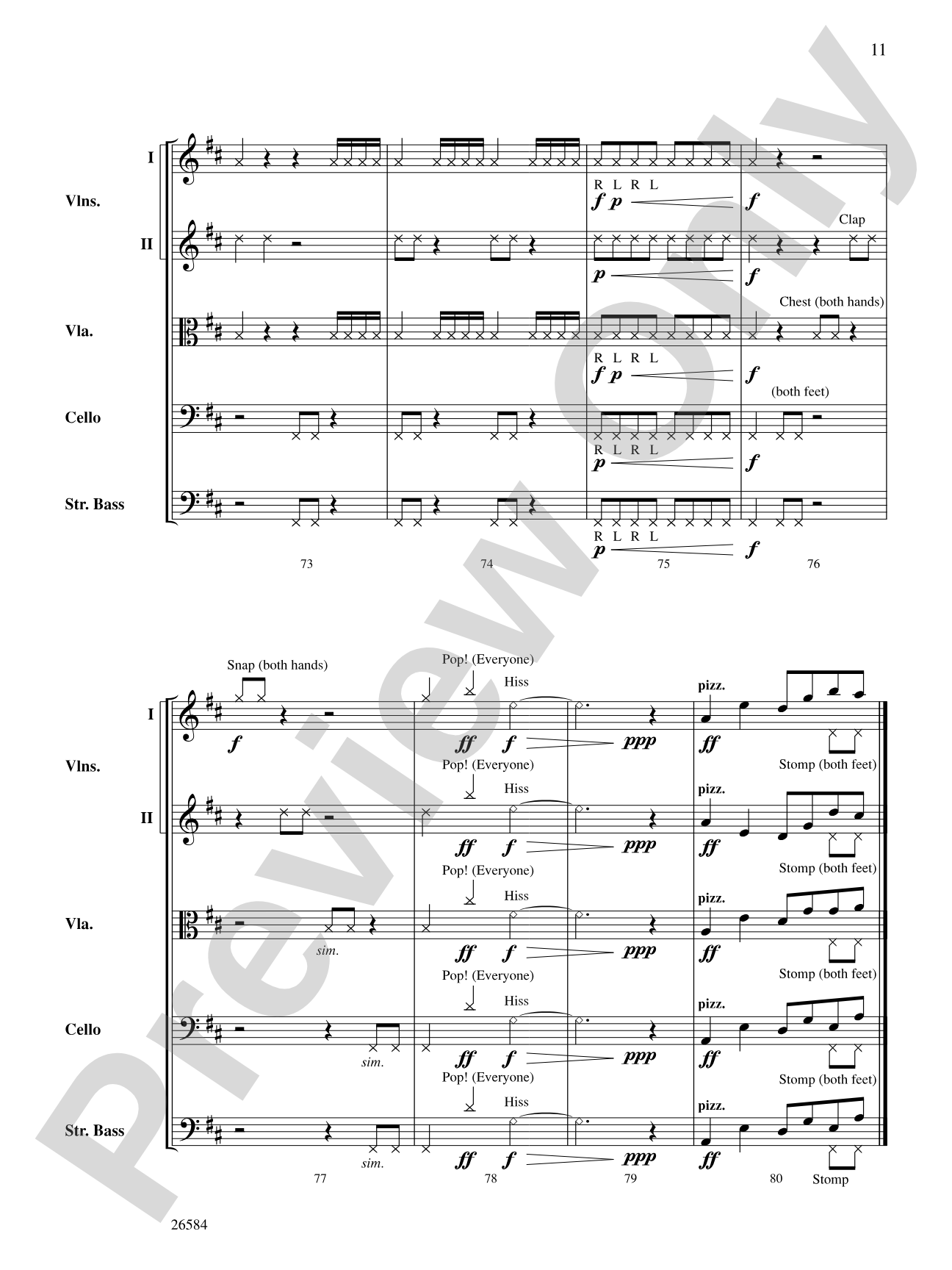
Using pizzicato and body percussion, Meyer has created an intriguing journey into the realm of sound that is sure to fascinate! Full of unexpected surprises, all sections get a chance to explore a wide variety of percussive sounds that include the traditional snapping, stomping, and clapping combined with a myriad of much more unusual effects! Humorous, dramatic, and magical, Bio Rhythms is a definite "showstopper!" This title is available in MakeMusic Cloud.


Don't just read it, hear it, play along with it, and watch your students grow with it. In MakeMusic Cloud, Bio Rhythms: String Orchestra Conductor Score & Parts comes alive with professional accompaniment, adjustable tempo, and built-in practice tools that turn solo practice into real progress.
Open in the Player
Jump straight in and assign it today.
Start Your Free Trial
Open this title and explore the full library in minutes.
Sample Audio
1
Audio File
--:--
0:00
0:00
Sample Video
No sample videos found.
Additional Details
Series:
Highland/Etling String Orchestra
Publisher:
Alfred Music
Page Count:
62
SKU:
00-PK-0001108
More about this title
About the Composer: Richard Meyer
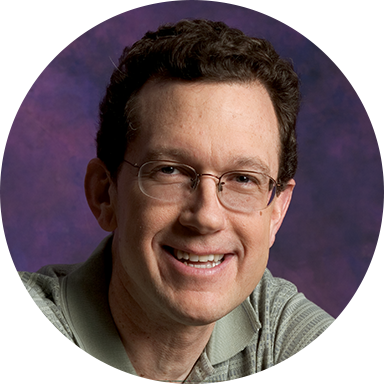
Richard Meyer has spent decades shaping string programs across Southern California, transforming a small group of 29 students into a thriving orchestra of 200 at Oak Avenue Intermediate School in Temple City. His work extends beyond the classroom; he led the Pasadena Youth Symphony Orchestra for 16 years, taking students on performance tours to Vienna, Australia, Canada, and major U.S. cities, and has been a featured clinician at ASTA's National Conference and regional string workshops.
Beyond his conducting and teaching career, Meyer is a prolific composer with nearly 200 published works and arrangements to his credit. He spent 16 years as string editor for Alfred Publishing Company and co-authored the String Explorer Series and Sight-read It for Strings. His "Giving Bach" program, launched in 2009, has earned national recognition for using interactive concerts to bring music education to underserved and special needs students throughout Southern California.
Why we love this
Meyer understands exactly what makes a piece sing in front of middle school audiences: infectious energy, visual spectacle, and moments that reward every player with something fun to do. The body percussion elements and varied pizzicato techniques turn a standard rehearsal into something genuinely theatrical, giving students reasons to stay engaged beyond the written notes.
What to expect
Bio Rhythms bounces between playful mischief and genuine wonder, guided by Meyer's confident hand as a showman. The unexpected percussion effects and pizzicato explorations create moments of delight and surprise, building toward sequences that feel both magical and deeply physical.
Who it's for
Grade 2 string orchestras ready to move beyond traditional playing techniques and engage with creative sound design. This work rewards students who can handle pizzicato while introducing body percussion, making it ideal for ensembles with solid rhythmic fundamentals but hunger for something unexpected and fun.
How to get the most out of it
- Establish clear hand signals for the body percussion cues so all sections enter the pizzicato and percussion effects together; mark these in your score well in advance
- Encourage students to experiment with the tone quality of their pizzicato strokes in rehearsal before polishing; let them hear the difference between tight, percussive attacks and softer, resonant plucks
- Differentiate the rhythmic precision required for snapping and stomping sections from the more legato passages; these percussion moments need tight ensemble timing, so rehearse them as deliberately as any melodic passage
- Balance the novelty elements with musical intention; the humor lands harder when the ensemble performs with committed musicality rather than novelty for its own sake
How to use it
This makes an excellent centerpiece for a concert that celebrates ensemble versatility and student musicianship beyond the traditional string sound. Use it as a bridge between classical repertoire and contemporary techniques, or pair it with a more formal piece to demonstrate the range of your program's capabilities.
Skills your students will build
- Pizzicato articulation and tone control
- Rhythmic precision with body percussion (clapping, snapping, stomping)
- Listening and ensemble balance while managing non-traditional sound sources
- Musical interpretation of novelty and character elements
- Coordination between pitched and unpitched percussion effects