
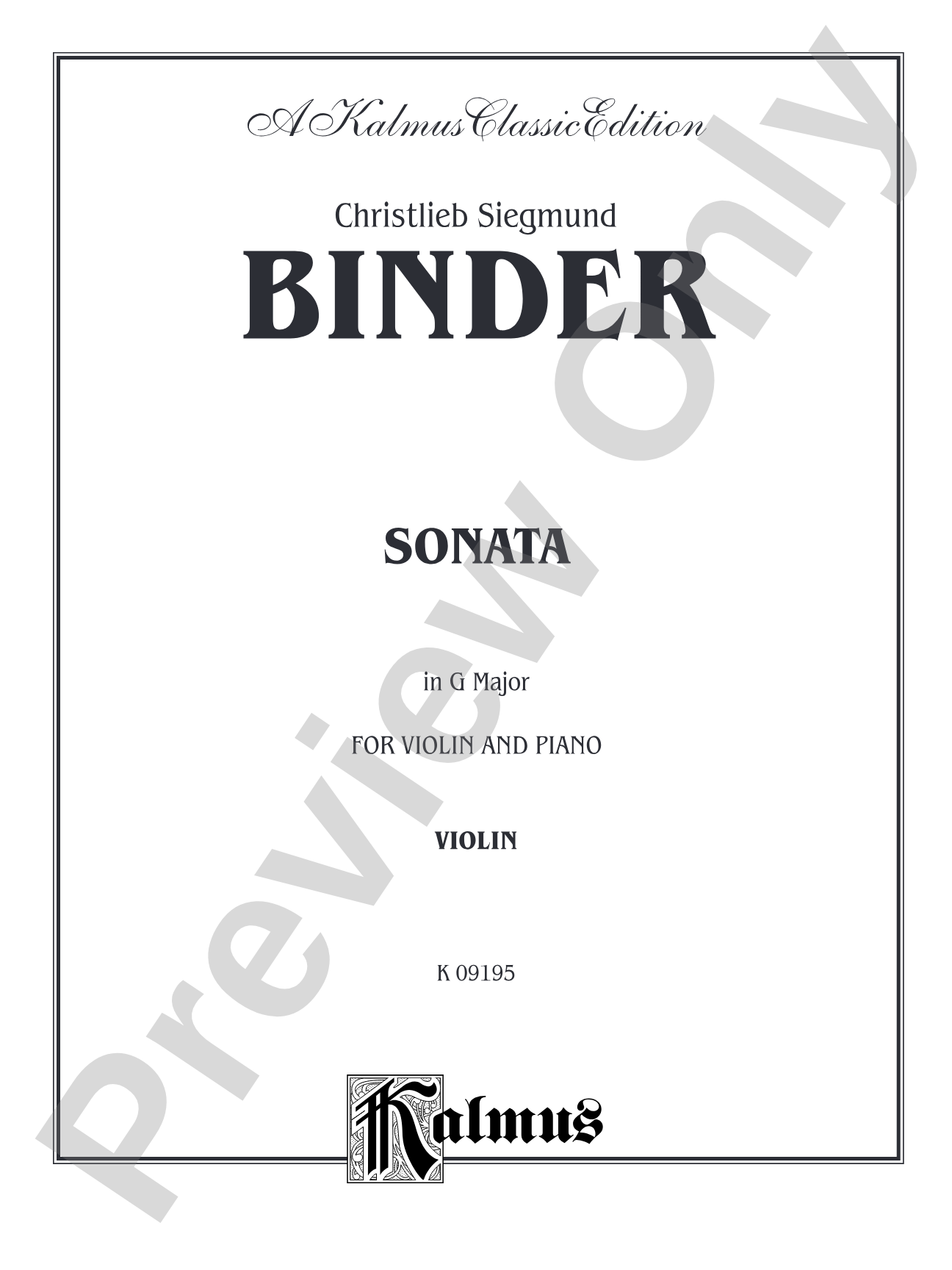
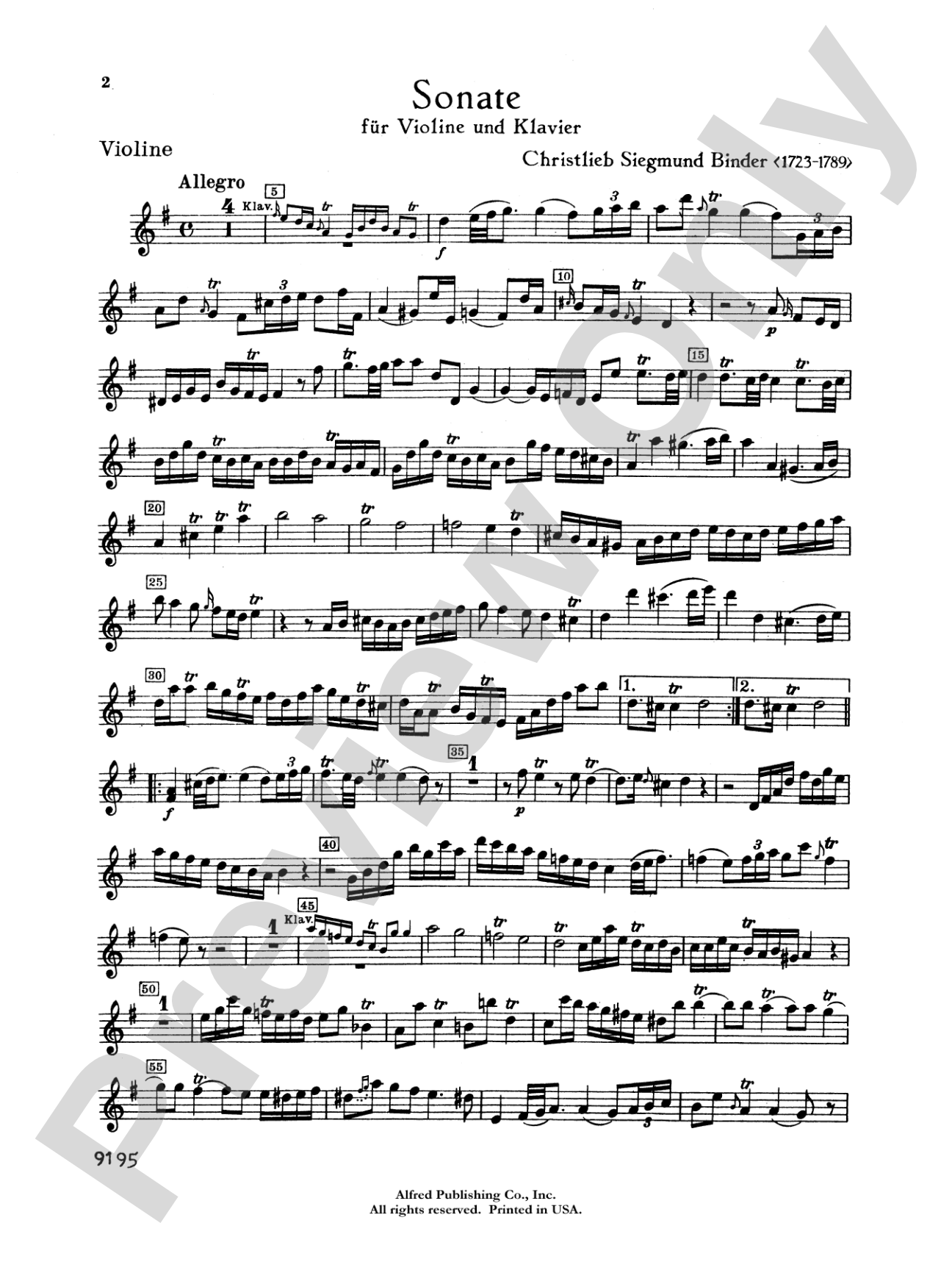
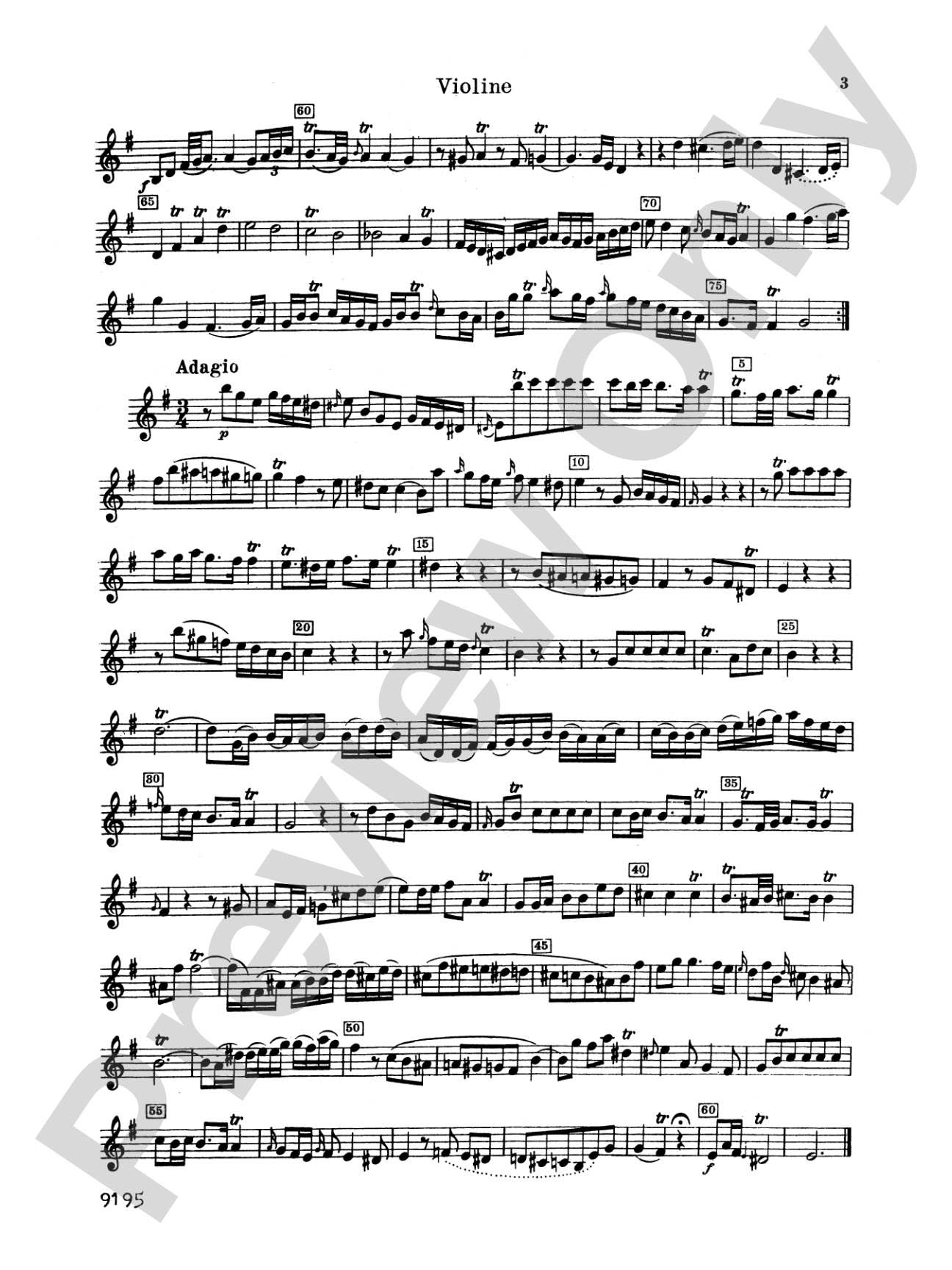
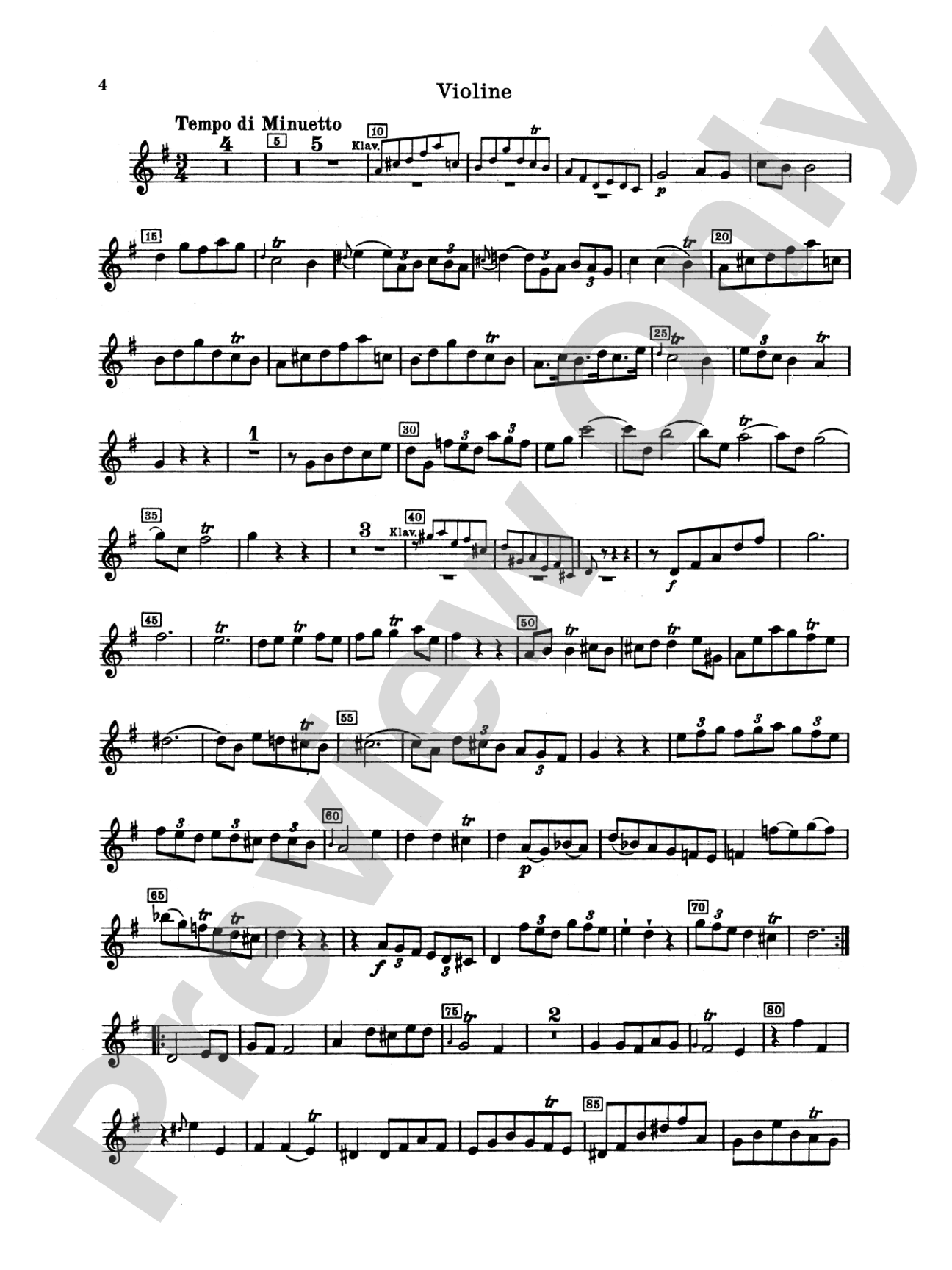
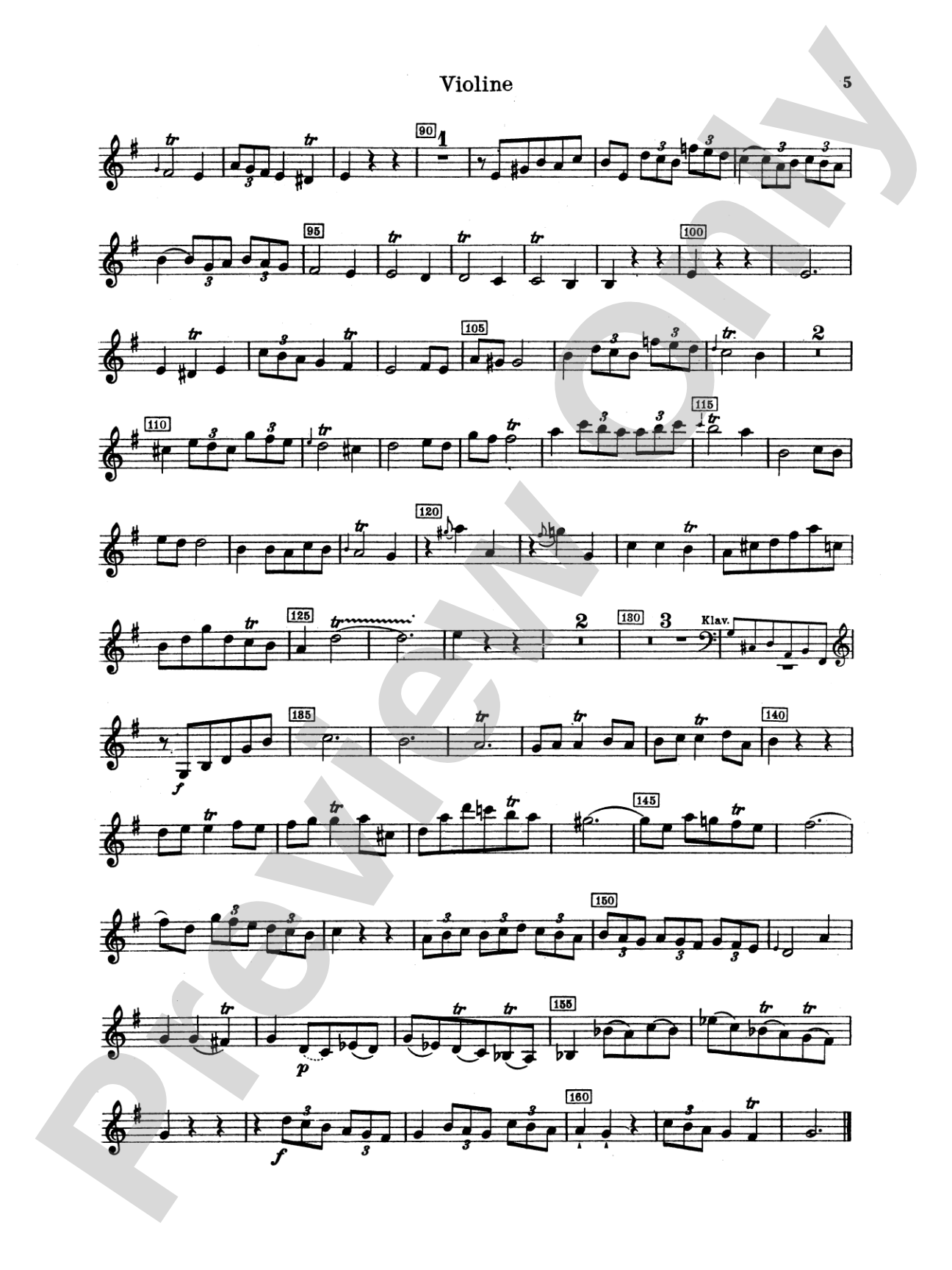




Binder: Sonata in G Major: Violin
By Christlieb Siegmund Binder
Item: 00-PK-0003700

$9.99
Pickup currently not available
Buy Extra Parts (Digital PDF Download)
| Product | Price | Quantity |
|---|---|---|
| Binder: Sonata in G Major | $3.99 | |
| Binder: Sonata in G Major | $3.99 |
Parts Added to Cart!
Related Items
Sonata in G Major: Violin |
$9.95
|
View |
Description


Don't just read it, hear it, play along with it, and watch your students grow with it. In MakeMusic Cloud, Binder: Sonata in G Major: Violin comes alive with professional accompaniment, adjustable tempo, and built-in practice tools that turn solo practice into real progress.
Open in the Player
Jump straight in and assign it today.
Start Your Free Trial
Open this title and explore the full library in minutes.
Sample Audio
No sample audio found.
Sample Video
No sample videos found.
Additional Details
Series:
Kalmus Edition
Publisher:
Alfred Music
Page Count:
28
SKU:
00-PK-0003700
More about this title
About the Composer: Christlieb Siegmund Binder
Christlieb Siegmund Binder (1723, 1799) was a German composer and violinist active during the Classical period. Though less celebrated than his contemporaries, Binder contributed substantial chamber and solo repertoire, particularly for violin, and his works reflect the structural clarity and melodic elegance characteristic of mid-to-late 18th-century German composition.
Why we love this
This sonata offers violinists a substantial Classical-era work that sits comfortably in the contest and festival circuit without requiring virtuosic fireworks. The writing balances lyrical passages with genuine technical interest, giving students a chance to play real music rather than étude-like studies, and the G Major tonality sits naturally under the fingers.
What to expect
The G Major key brings brightness and elegance to the Classical sonata form, with the kind of clear harmonic language and balanced phrase structure that makes the Classical era so satisfying to play. Expect lyrical, singing lines alongside moments of gentle virtuosity that keep the listener engaged across all three movements.
Who it's for
This sonata suits intermediate to advanced high school violinists preparing for festivals or competitions, as well as college students building a recital repertoire of Classical works. It also works well for private studio teachers seeking a multi-movement piece that demonstrates musicianship beyond single-movement showpieces.
How to get the most out of it
- Attend carefully to the articulation markings in the piano part; they often clarify the phrasing you should shape on the violin.
- Balance your tone against the piano accompaniment so that neither drowns the other. Classical sonatas thrive on dialogue, not dominance.
- Take time with tempo changes between movements to reset both your breathing and the pianist's sense of the new character.
- Mark the spots where you return to earlier thematic material and find ways to vary your approach slightly, even if the notes are identical.
How to use it
Program this alongside other Classical sonatas by composers like Mozart or Beethoven to create a thematic concert segment, or use it as the centerpiece of a student recital where it anchors a mixed program. Its 28-page length and multi-movement structure make it ideal for festival competitions that reward complete, polished performances over single movements.
Skills your students will build
- Reading and executing Classical articulation conventions (staccato, legato, accent placement)
- Maintaining consistent tone across wide dynamic ranges within single phrases
- Listening and responding to a piano partner's phrasing and accompaniment texture
- Managing technique in longer multi-movement works with varying technical demands
- Interpreting Classical form (sonata, rondo, minuet) through informed musical decisions