Bill Bailey, Won't You Please Come Home?: Lead Sheet Digital Sheet Music

Bill Bailey, Won't You Please Come Home?: Lead Sheet Digital Sheet Music

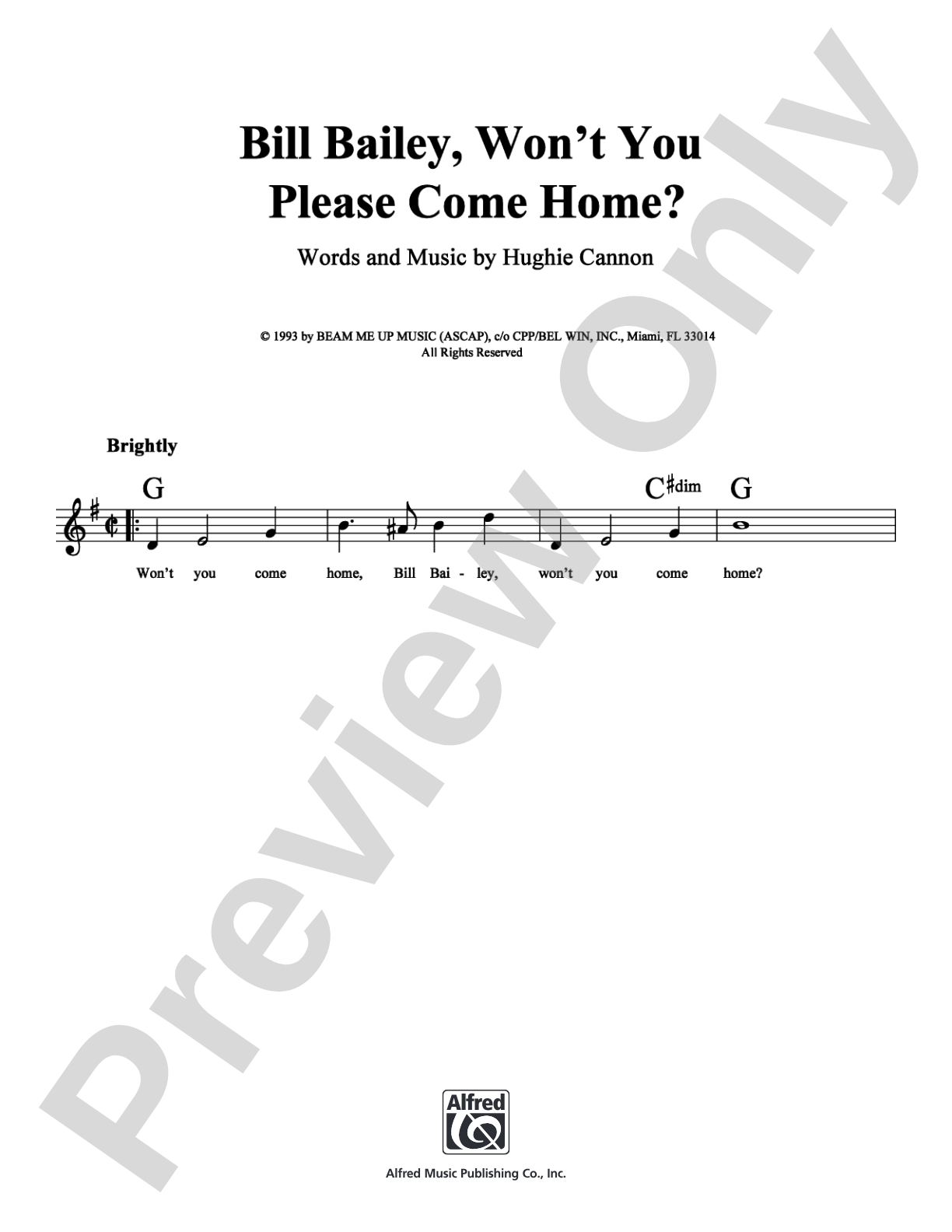
Hughie Cannon, Louis Armstrong, Pearl Bailey

Item: 00-PS-0006585

Digital Download
$1.99
Description

Bill Bailey, Won't You Please Come Home?: Lead Sheet Digital Sheet Music isn't in MakeMusic Cloud just yet...but it could be. Let us know you'd like to see it, and you'll help shape what comes next. In the meantime, start a free trial and dive into thousands of interactive titles your students can play along with today.

Sample Audio
No sample audio found.
Sample Video
Additional Details
SKU: 00-PS-0006585

More about this title

About the Artist: Louis Armstrong

Louis Armstrong revolutionized jazz trumpet and vocal performance in the early twentieth century, setting the standard for improvisation, phrasing, and expressive soloing that defined the art form. His distinctive raspy voice and unmatched musicality made him one of the most influential and recognizable musicians in American history, bridging jazz and popular music across generations and continents.

Why we love this

This lead sheet captures a jazz standard that has entertained audiences for over a century, offering singers and instrumentalists a chance to inhabit Armstrong's legacy of infectious swing and playful sincerity. The tune's conversational melody and good-natured charm make it ideal for demonstrating how to balance technical swing articulation with the storytelling that defines great jazz singing and playing.

What to expect

Warm, nostalgic, and gently humorous. The tune bounces with a friendly charm that invites listeners in, supported by a melody that feels as comfortable as an old familiar story told with affection and a knowing smile.

Who it's for

Jazz vocalists and instrumentalists looking for an accessible standard with real historical weight and personality. Teachers programming jazz repertoire or building students' understanding of jazz idiom through classic material will find this lead sheet straightforward enough for intermediate musicians while rich enough to reward deeper interpretation.

How to get the most out of it

  • Shape the melody with subtle pushes and pulls against the beat rather than straight rhythmic accuracy; Armstrong's magic lives in his space and timing, not mechanical precision.
  • Approach the lyrics as spoken conversation set to music—each phrase should sound as natural as calling out to an old friend, which is exactly what the song asks.
  • Listen closely to how the harmony supports the melody, especially at phrase turns; a good comping player will enhance rather than overshadow your line.
  • Treat swing eighth notes as a constant, letting them define the groove even in the rubato moments where the melody breathes.

How to use it

Include this in a jazz ensemble concert or recital to connect audiences with a piece of American musical heritage while showcasing your ensemble's ability to swing with character and subtlety. Pair it with other early jazz standards to create a themed set, or use it as an opener to establish a warm, accessible tone for a longer jazz program.

Skills your students will build

  • Swing eighth-note articulation and feel
  • Jazz phrasing and rubato within a written melody
  • Conversational vocal delivery and storytelling in jazz singing
  • Reading lead sheet notation and working with chord changes
  • Understanding call-and-response structure in melodic conversation

You May Also Like