Big Yellow Taxi (arr. Jetse Bremer) Sheet Music Preview

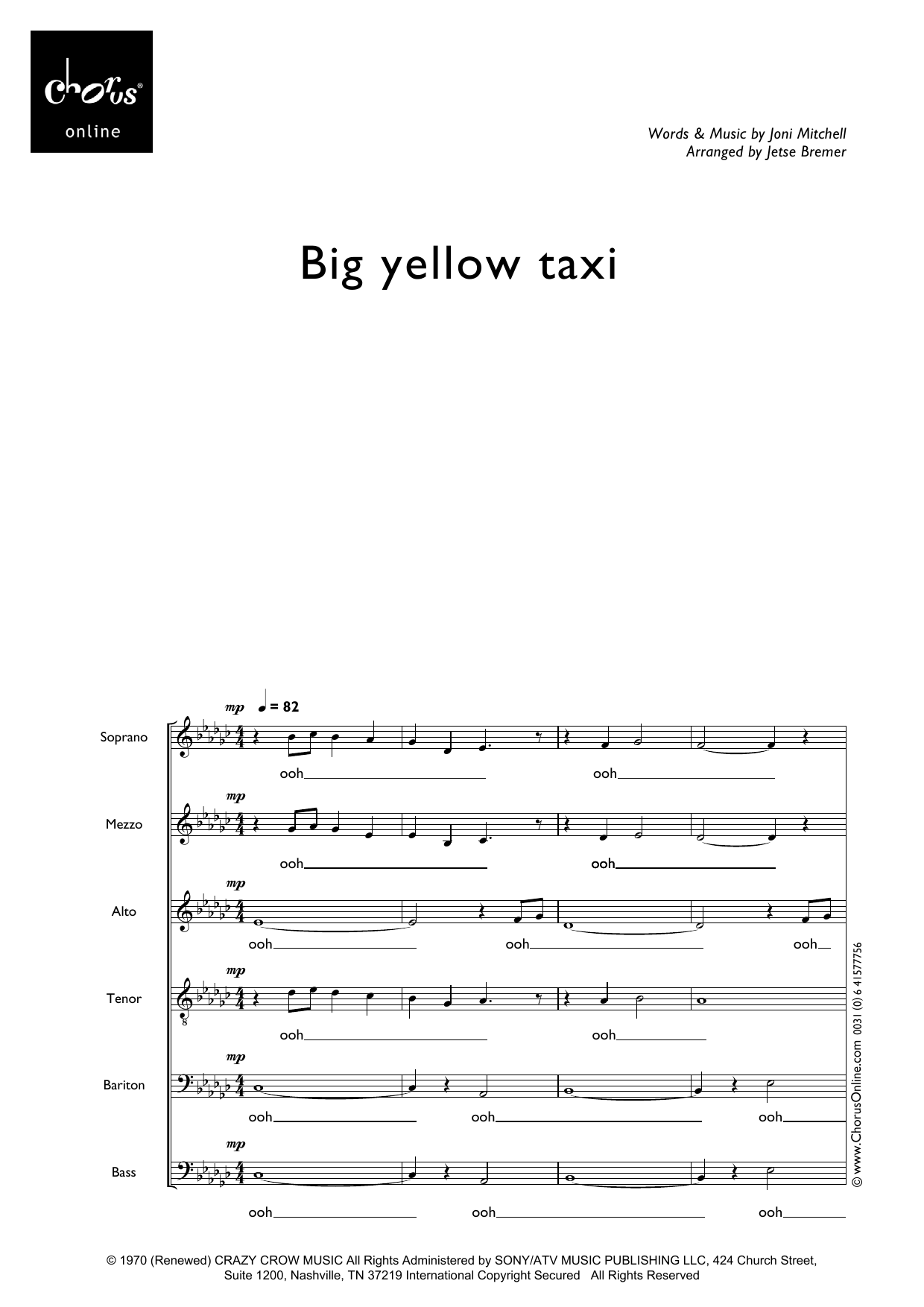
Big Yellow Taxi (arr. Jetse Bremer): SSMATBarB Choral Octavo

As performed by Counting Crows / Arranged by Jetse Bremer

Item: 35-DS00481465

Digital Download
$2.99
Description

Big Yellow Taxi (arr. Jetse Bremer): SSMATBarB Choral Octavo isn't in MakeMusic Cloud just yet...but it could be. Let us know you'd like to see it, and you'll help shape what comes next. In the meantime, start a free trial and dive into thousands of interactive titles your students can play along with today.

Sample Audio
No sample audio found.
Sample Video
Additional Details
Publisher: Hal Leonard
Page Count: 13
SKU: 35-DS00481465

More about this title

About the Artist: Counting Crows

Counting Crows emerged from the San Francisco Bay Area in the 1990s and became one of the defining voices of alternative rock, known for their introspective lyricism and richly layered arrangements. Lead singer Adam Duritz's poetic sensibility and the band's distinctive sound made them fixtures on both radio and in serious music collections, earning them multiple Grammy nominations and a devoted following that spans decades.

Their influence extends well beyond rock radio into music education spaces, where their catalog offers directors accessible yet musically substantive material for contemporary choral programming. The band's emphasis on vocal storytelling and harmonic sophistication makes them natural choices for arrangers seeking to bridge pop culture and concert music.

Why we love this

Jetse Bremer's arrangement respects the contemplative core of this Joni Mitchell classic while opening it up for a six-part ensemble, creating genuine harmonic interest without sacrificing the song's environmental urgency. The fact that this exists for SSMATBarB voicing means you can program it with groups of varying size and maturity, and the pop context makes it the kind of choice that reminds singers why they joined choir in the first place.

What to expect

Wistful and grounded, with the kind of melancholy that feels earned rather than performed. The a cappella texture creates intimate space around the lyrics, letting each voice contribute to a folk-like transparency even as the harmony becomes more sophisticated.

Who it's for

Any director seeking contemporary pop repertoire that treats students like musicians, not just singers of current hits. This works particularly well for groups with solid blend and intonation skills who are ready for the harmonic density a six-part arrangement demands.

How to get the most out of it

  • Let the text drive the phrasing rather than forcing it into strict metric boxes. The lyrical message about environmental loss will land harder if singers treat it conversationally.
  • Balance the soprano line carefully so it doesn't overshadow the harmonic foundation; this piece lives in its vertical sonorities, not its top note.
  • Consider recording the arrangement at a comfortable range for your ensemble's lowest voices. Transposition can unlock accessibility without compromising the arrangement's identity.
  • Attend to the a cappella demands by locking in precise tuning at sectionals. Six parts with no instrumental reference means your pitch integrity becomes the entire foundation.

How to use it

Pair this with other environmental or protest song repertoire for a thematic concert, or use it as a palate cleanser between larger classical works to remind your audience (and your singers) that meaningful music exists everywhere. It's substantial enough to anchor a pop arrangement set but accessible enough to program when you're building toward a specific concert theme.

Skills your students will build

  • Balancing independent lines within a six-part texture
  • Maintaining intonation in a cappella context
  • Interpreting lyrical intent across contemporary material
  • Singing with folk-influenced phrasing in a choral setting
  • Blending across octaves and voice ranges without traditional soprano dominance

You May Also Like