
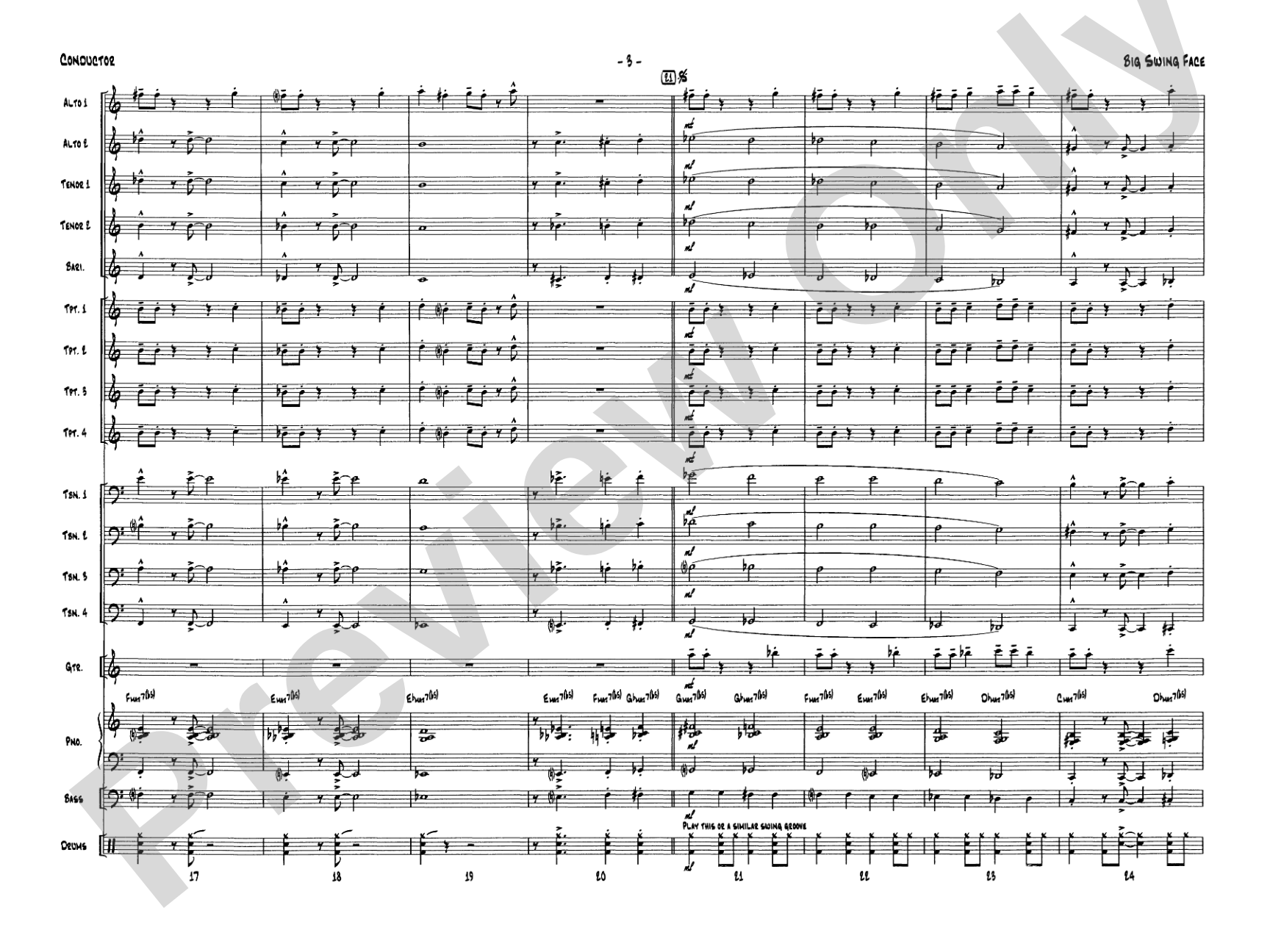
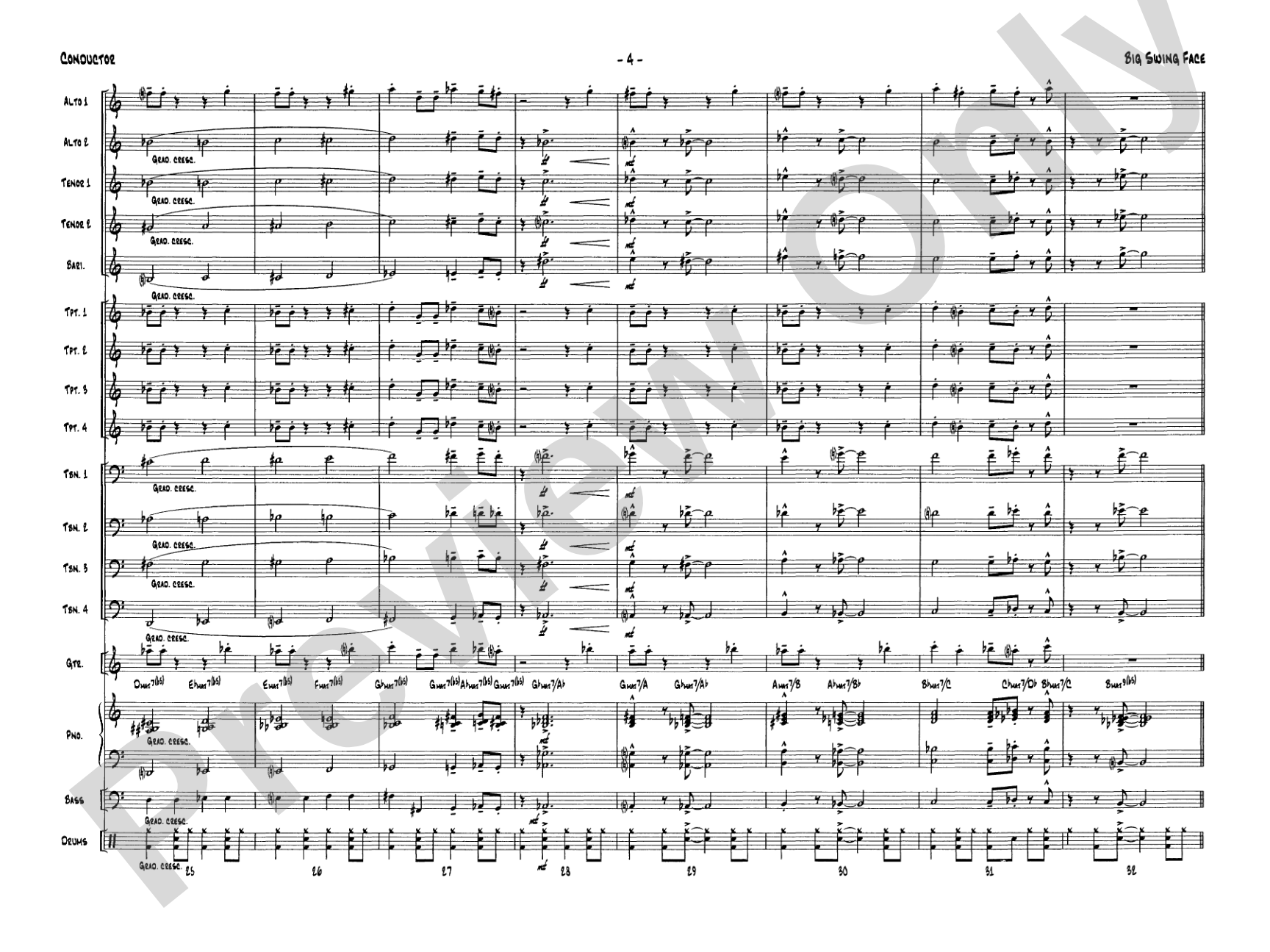
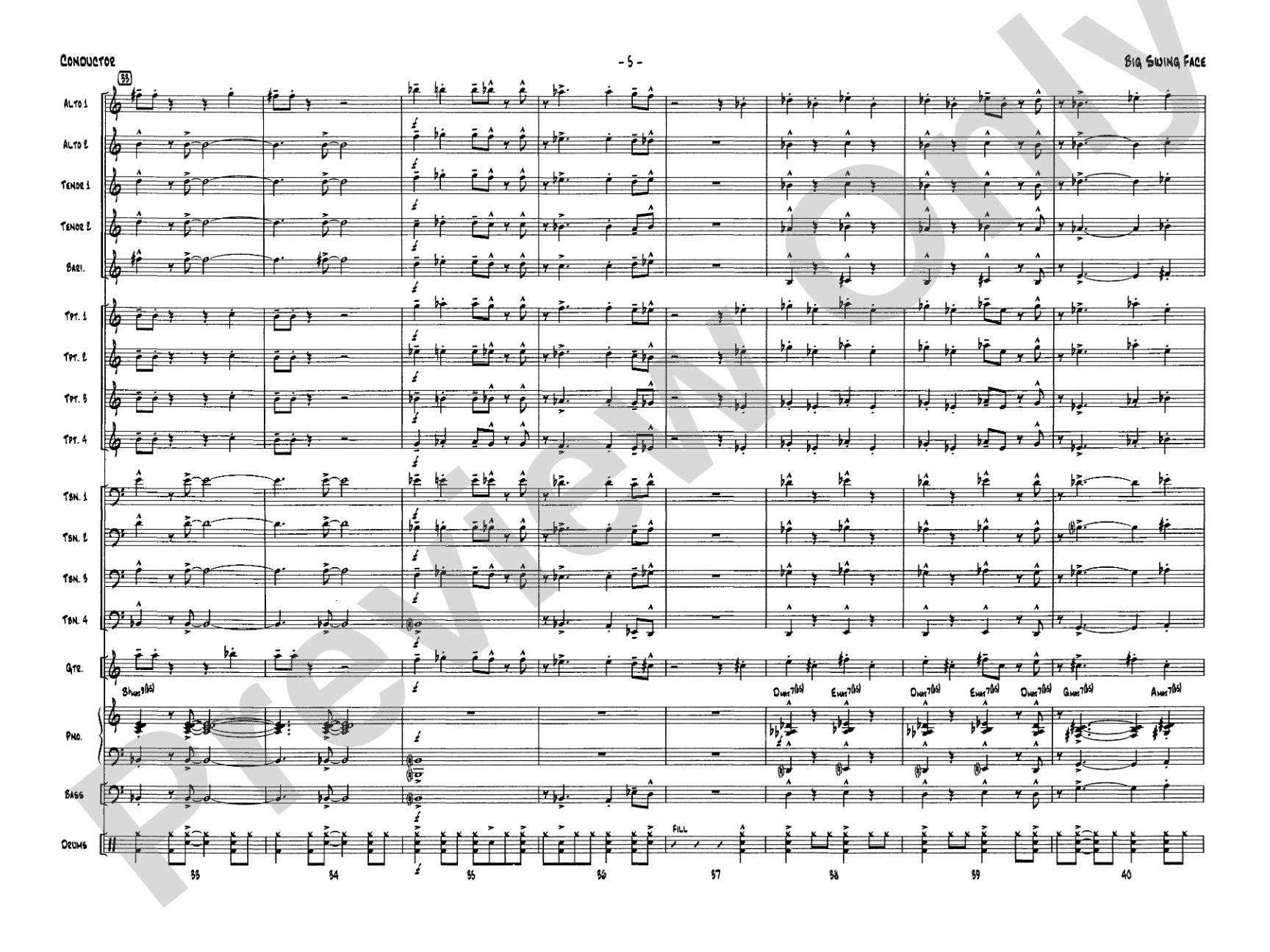
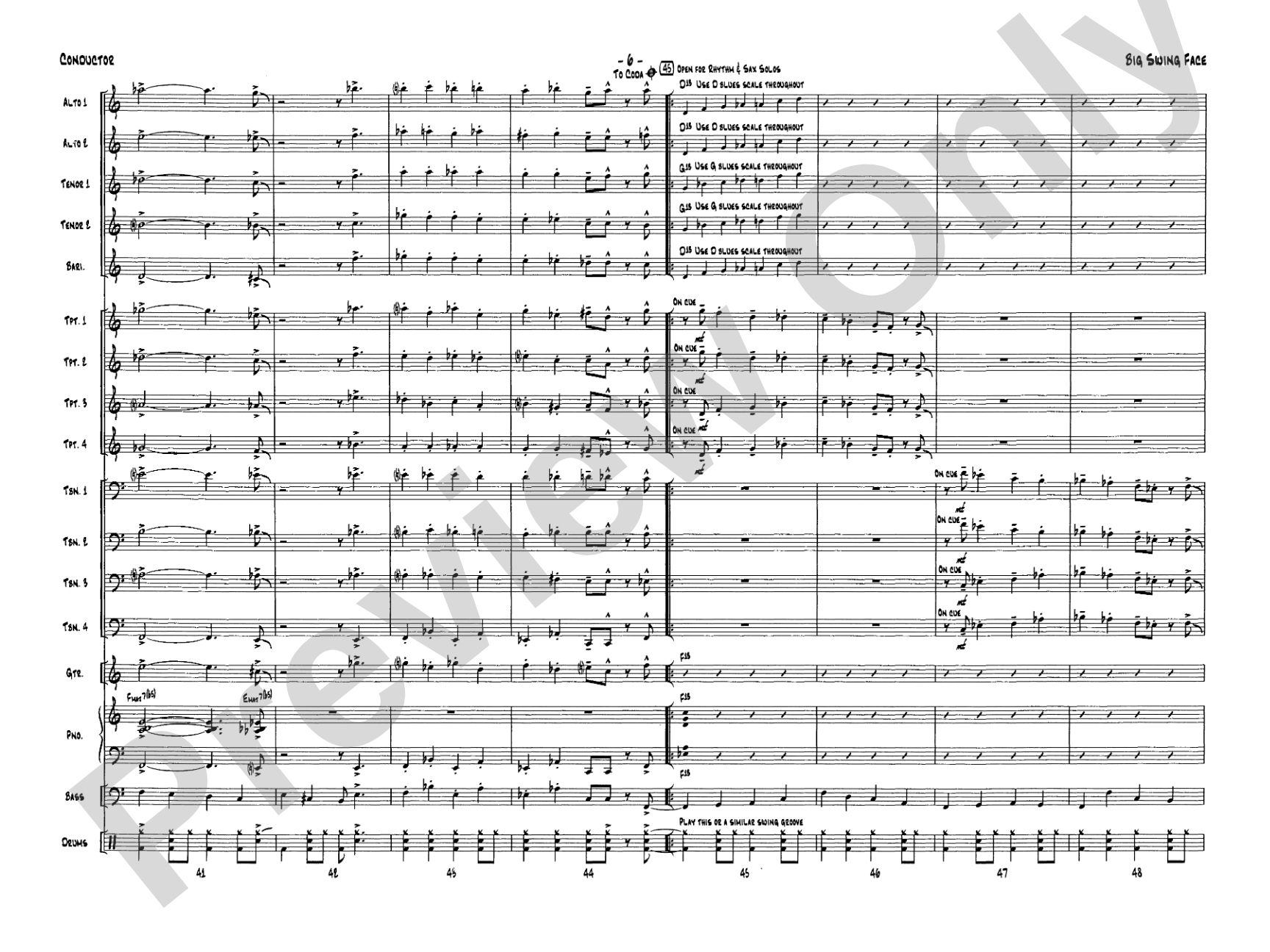
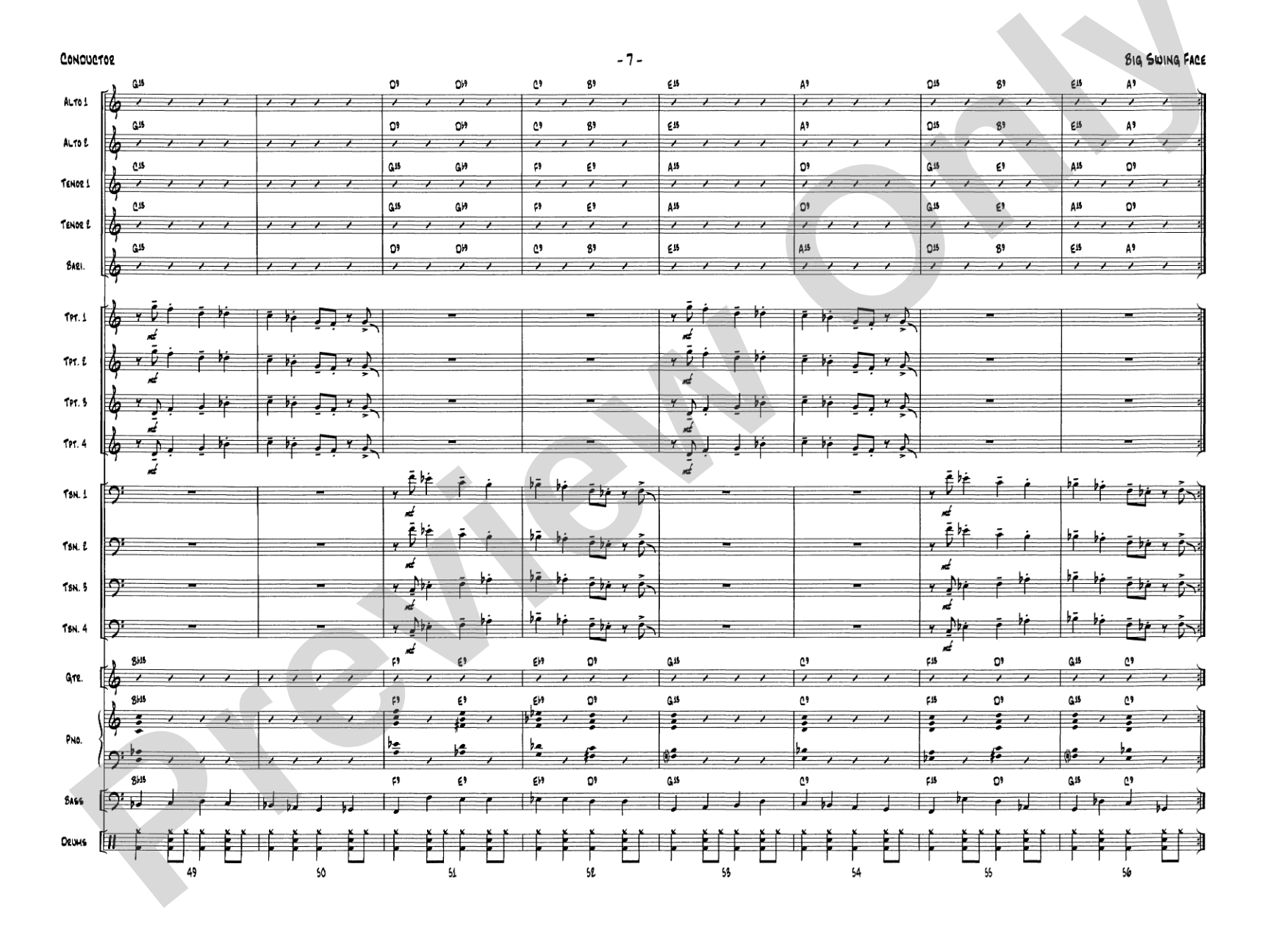
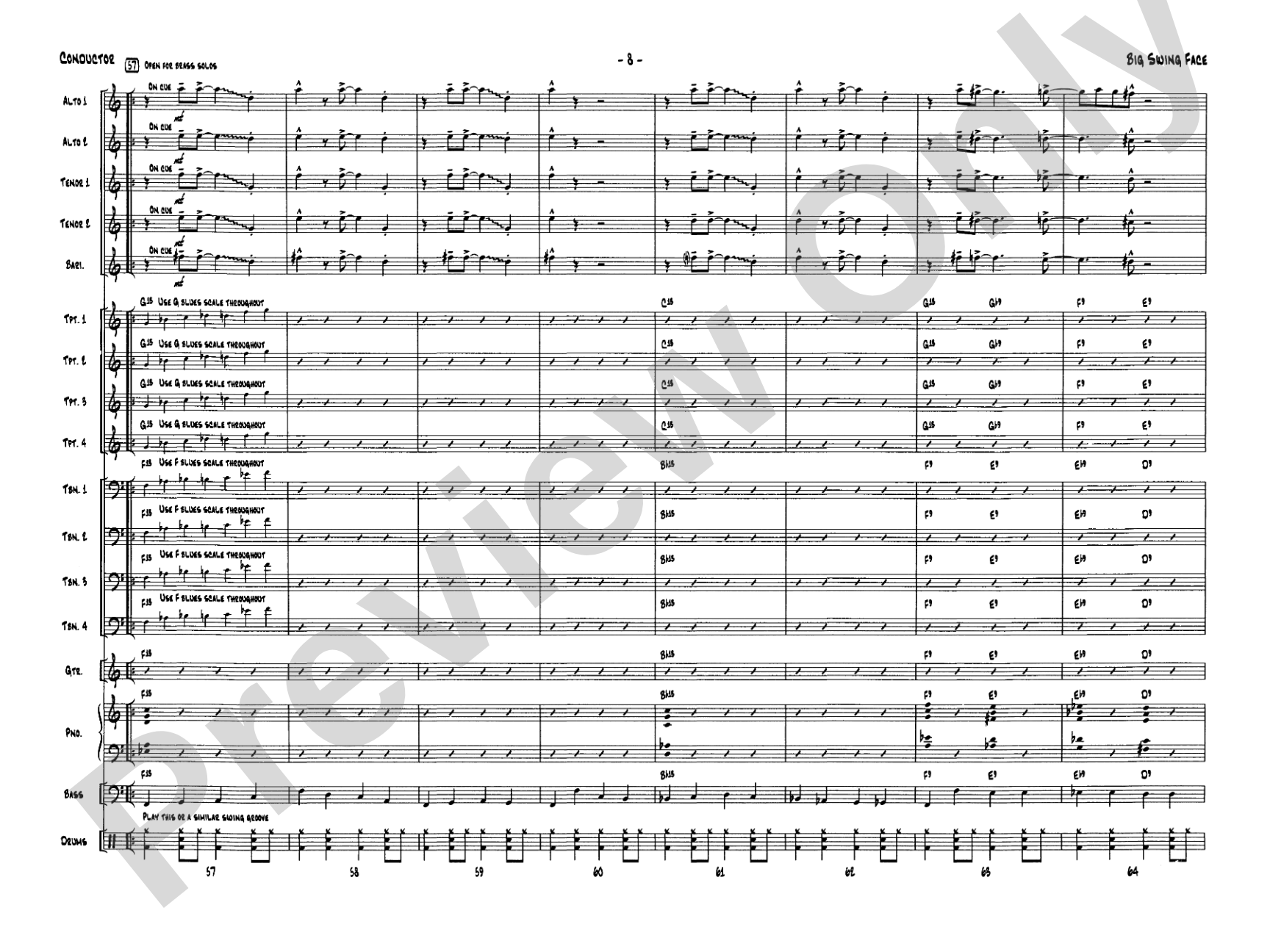
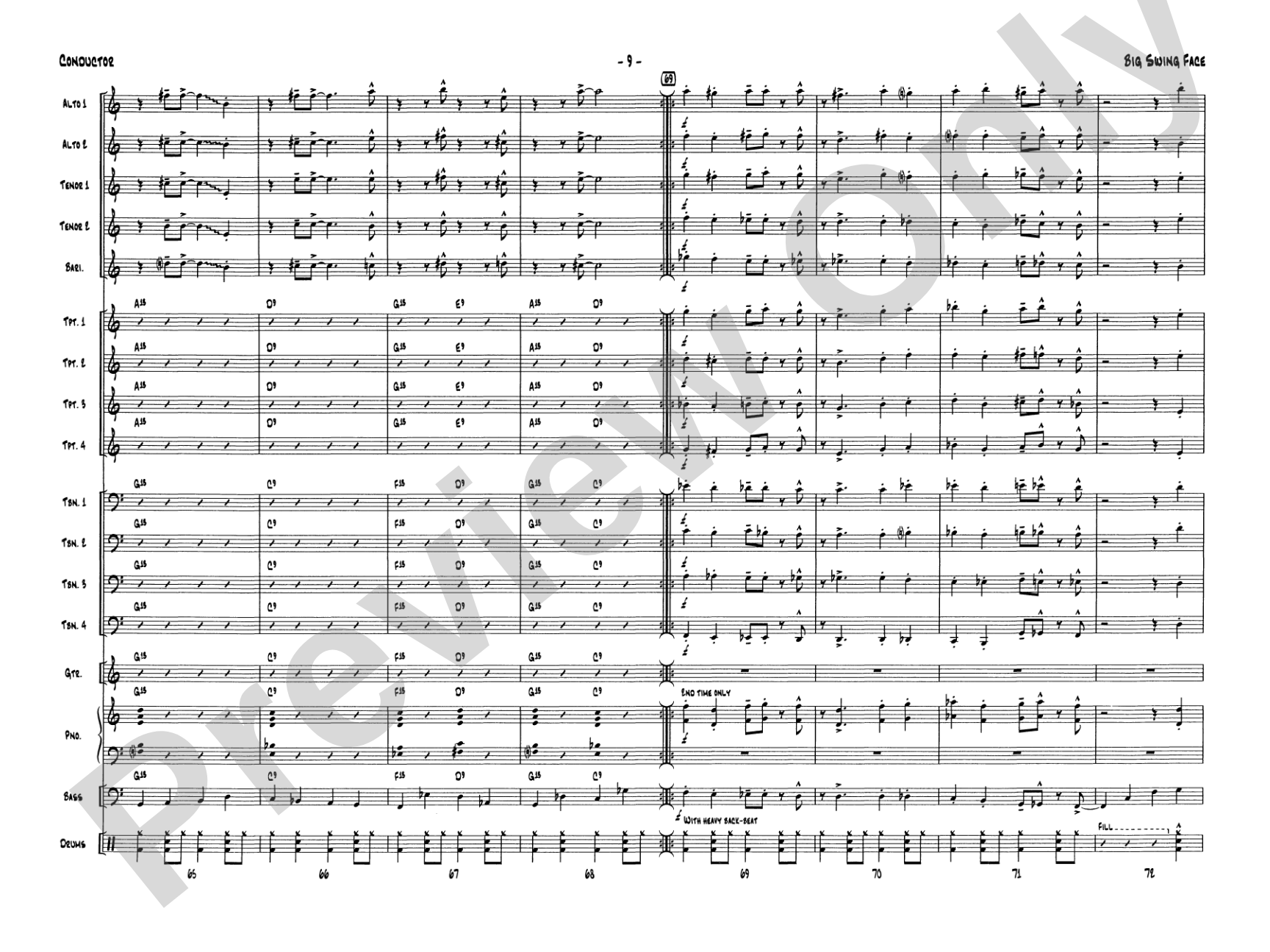
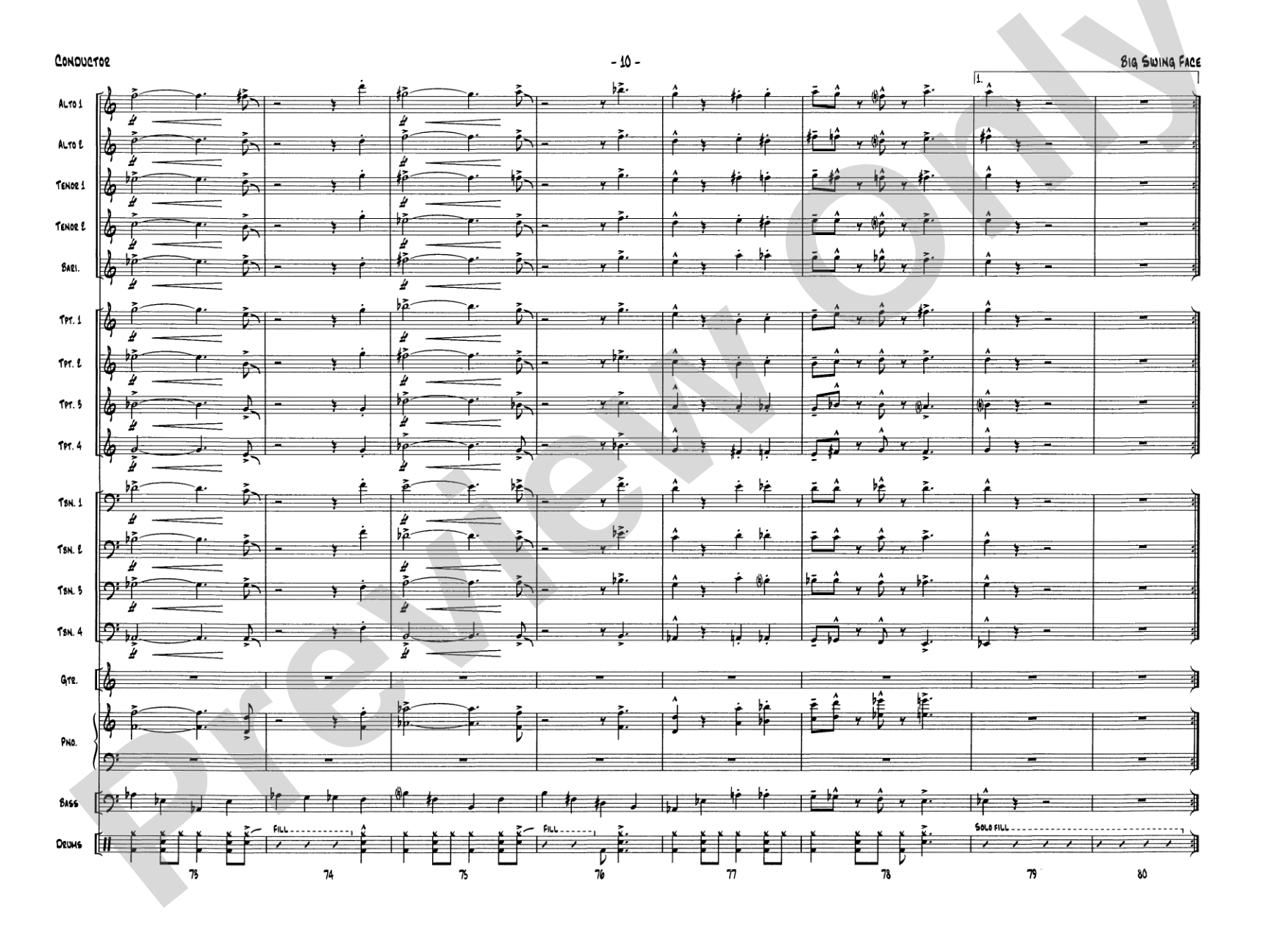
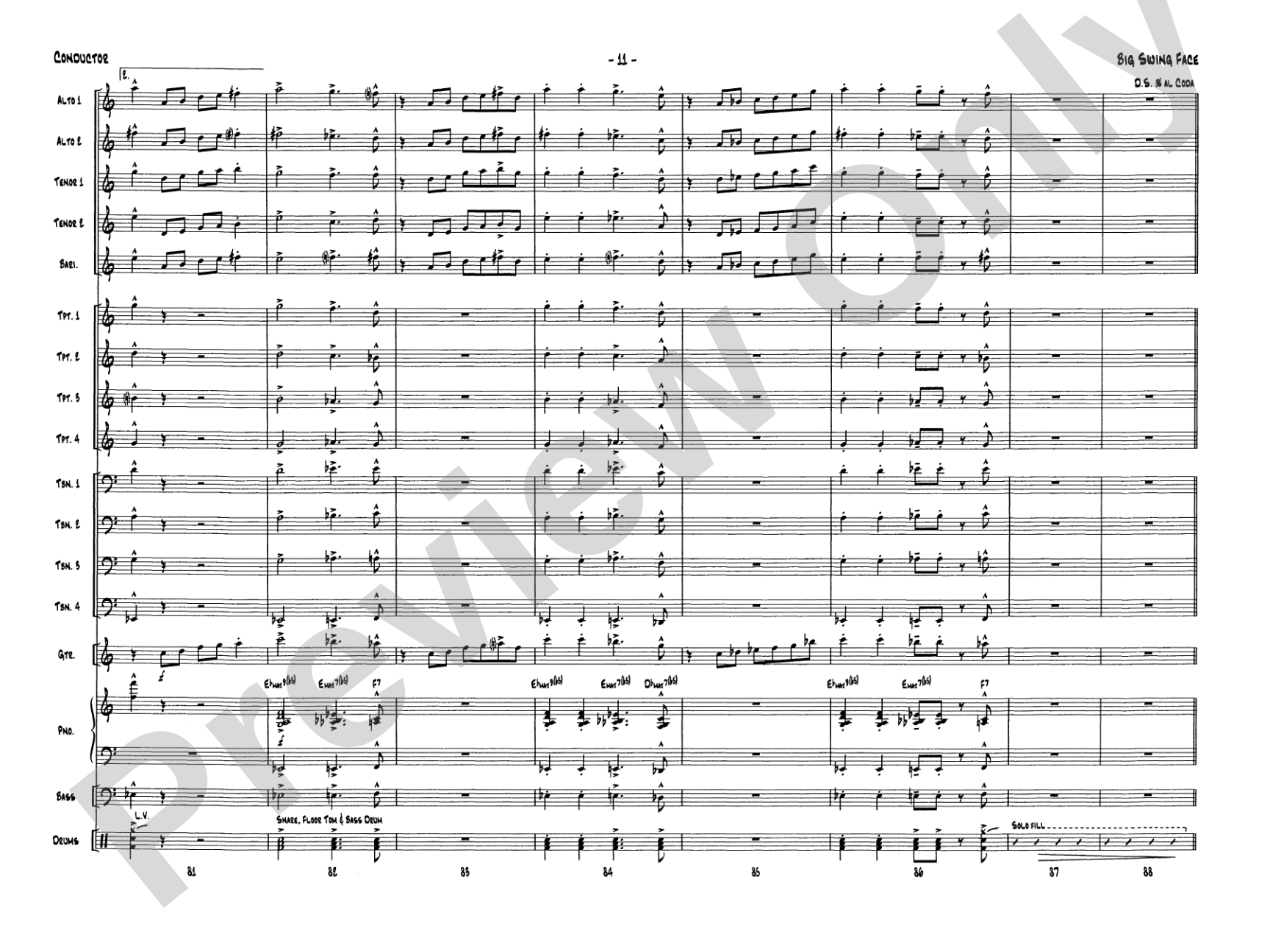
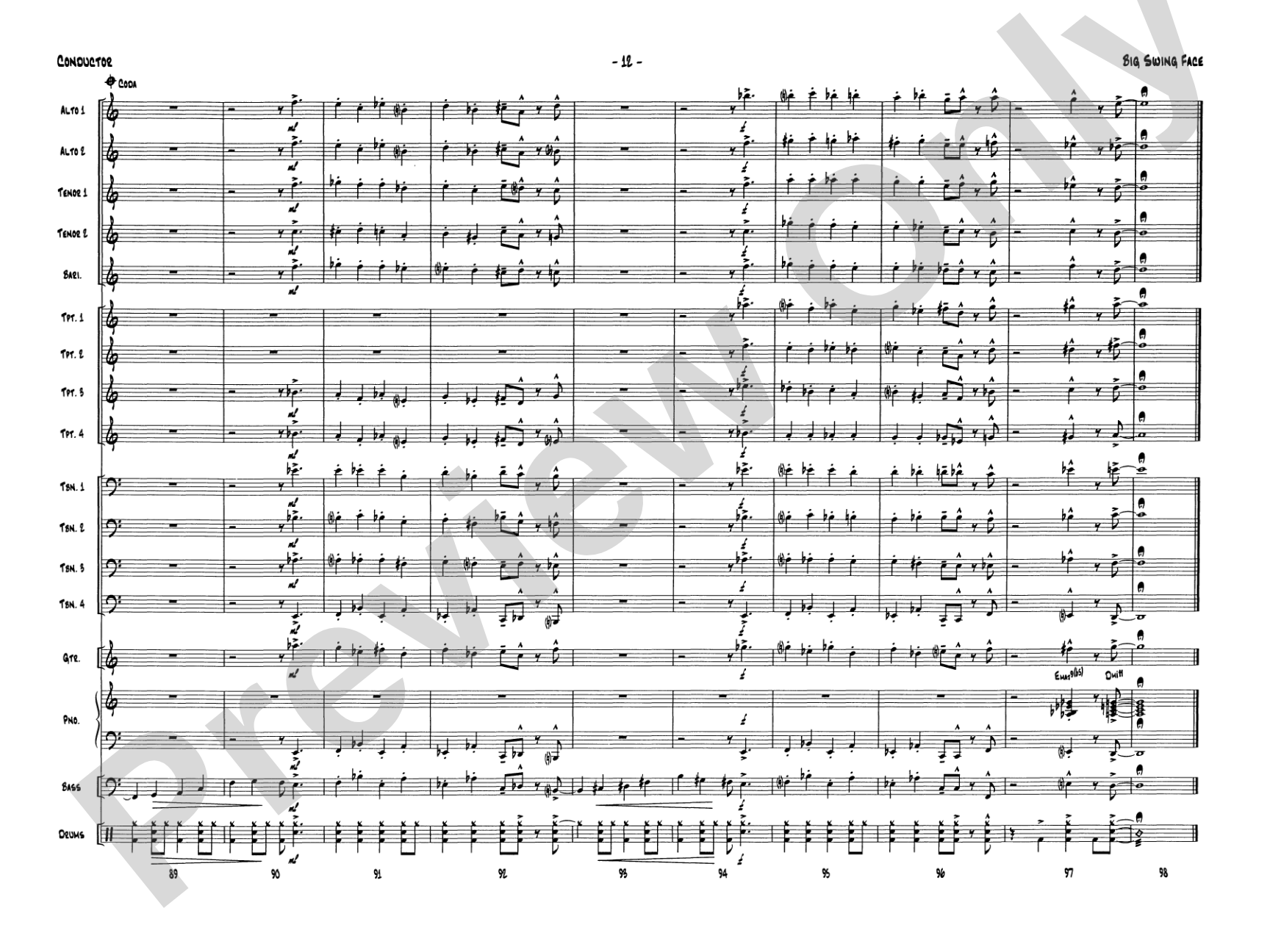

Big Swing Face: Score
By Bill Potts / arr. Alan Baylock
Grade: 3 (Medium)
Item: 00-PR-0004821
$9.00
Pickup currently not available
Description
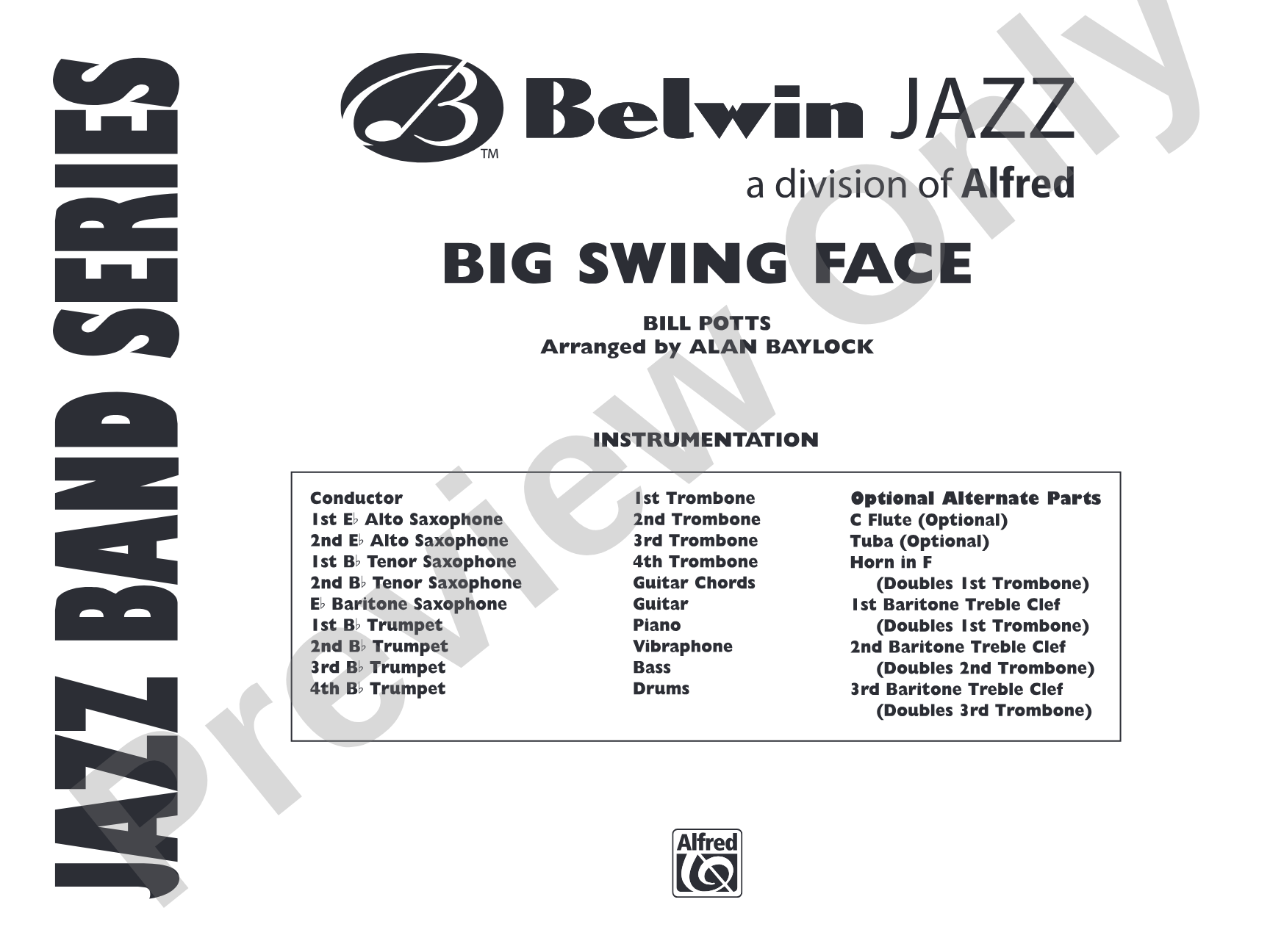
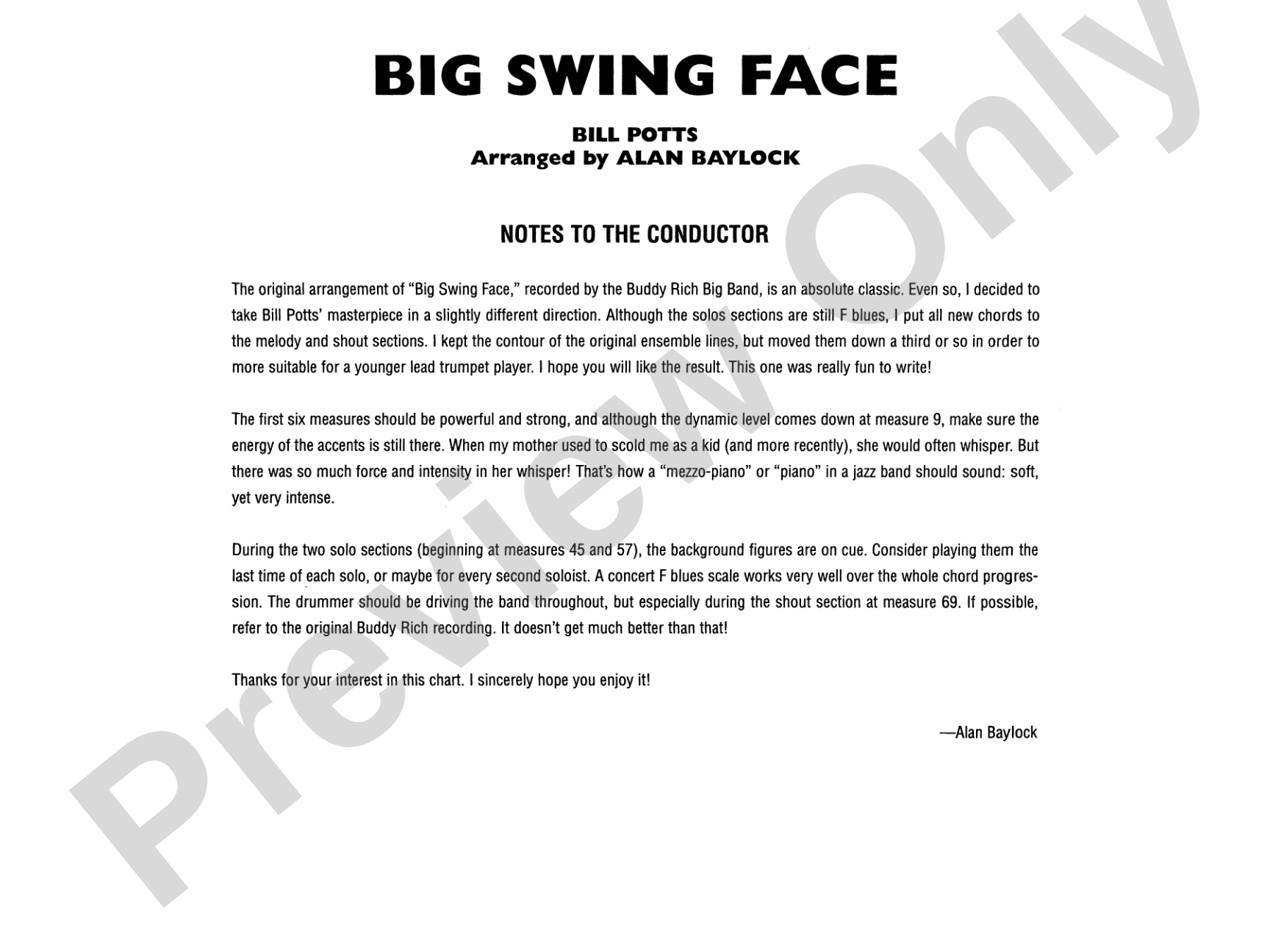
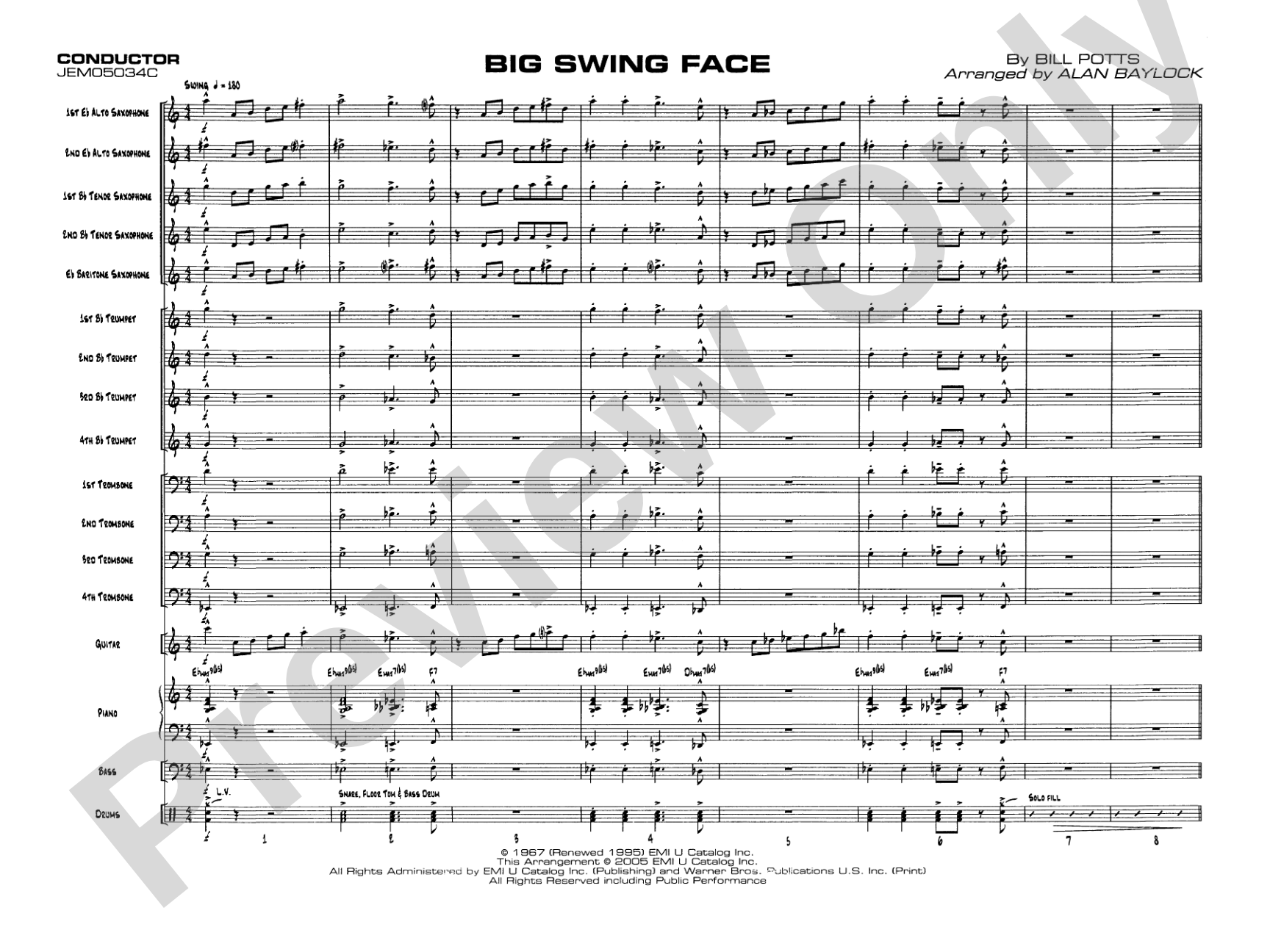
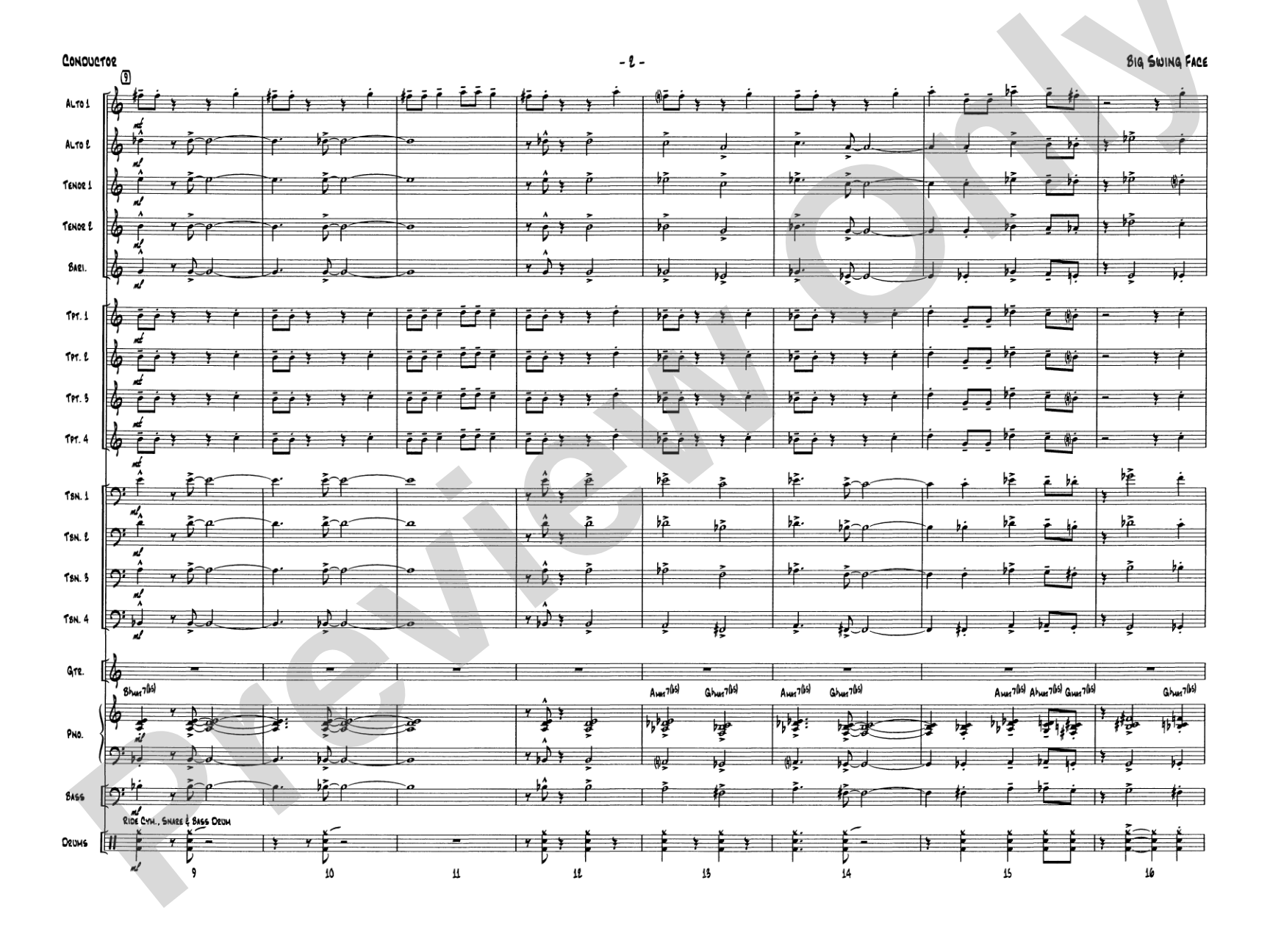
Arranger Alan Baylock takes this classic swing chart, composed by Bill Potts, and performs the Baylock harmonic magic. Features include lots of contemporary flat 5 chords, lead trumpet to B-flat above staff, and plenty of solo space for all saxes, trumpets, and bones. Based on the blues scale, this chart has swing figures galore and an optional vibe part, too. Swing! (3:32)


Don't just read it, hear it, play along with it, and watch your students grow with it. In MakeMusic Cloud, Big Swing Face: Score comes alive with professional accompaniment, adjustable tempo, and built-in practice tools that turn solo practice into real progress.
Open in the Player
Jump straight in and assign it today.
Start Your Free Trial
Open this title and explore the full library in minutes.
Sample Audio
1
Audio File
--:--
0:00
0:00
Sample Video
No sample videos found.
Additional Details
Series:
Jazz Band Series
Publisher:
Alfred Music
Page Count:
118
SKU:
00-PR-0004821
More about this title
About the Arranger: Bill Potts
Bill Potts composed and arranged for big band and jazz ensemble throughout his career, contributing significantly to the jazz education repertoire. His charts are known for accessible voicings that don't compromise on harmonic sophistication, making them reliable choices for student ensembles tackling contemporary jazz language.
Why we love this
Alan Baylock's reharmonization transforms a solid swing foundation into something with real harmonic teeth. Contemporary flat 5 chords and generous solo space across all sections give your ensemble room to develop individual voice while staying grounded in blues vocabulary—exactly what a Grade 3 group needs to sound intentional and mature.
What to expect
Straight-ahead swing with modern harmonic flavor. The blues scale keeps everything accessible and singable, but Baylock's flat 5 colors and chromatic movement prevent any stuffiness. Soloists get room to breathe over an energetic ensemble groove that locks into a tight three-and-a-half minute package.
Who it's for
Jazz ensembles at the Grade 3 level with players ready to navigate contemporary harmony and solo confidently over a blues foundation. Your group needs solid section readers, at least one capable lead trumpet, and soloists willing to take risks on reeds and brass.
How to get the most out of it
- Balance the lead trumpet carefully at the upper register moments, especially when the part sits above the staff; the section will hear it clearly and adjust accordingly if you model restraint in rehearsal.
- Work the swing figures in isolation during sectional rehearsals. These are the backbone of the chart's groove, and rhythmic precision here makes the solos sit on top of something solid.
- Give soloists space to own their eight or sixteen bars. Use full-ensemble rehearsals to establish form and energy, then carve out time for individuals to find their voice within the blues scale.
- The vibe part, though optional, adds color and harmonic definition if you have the player available. Even tacit through full sections, it enriches those moments where vibes do enter.
How to use it
Program this as a festival or contest selection where you need a chart that sounds polished without sounding overcooked. It also works well as a morale booster mid-rehearsal season, offering clear wins for soloists and ensemble alike before tackling more complex demands.
Skills your students will build
- Reading and interpreting flat 5 and chromatic harmony in a swing context
- Solo phrasing and blues scale navigation
- Ensemble groove and rhythmic cohesion in swing figures
- Balancing lead voice clarity with section support
- Listening and responding to other soloists' phrasing and intensity