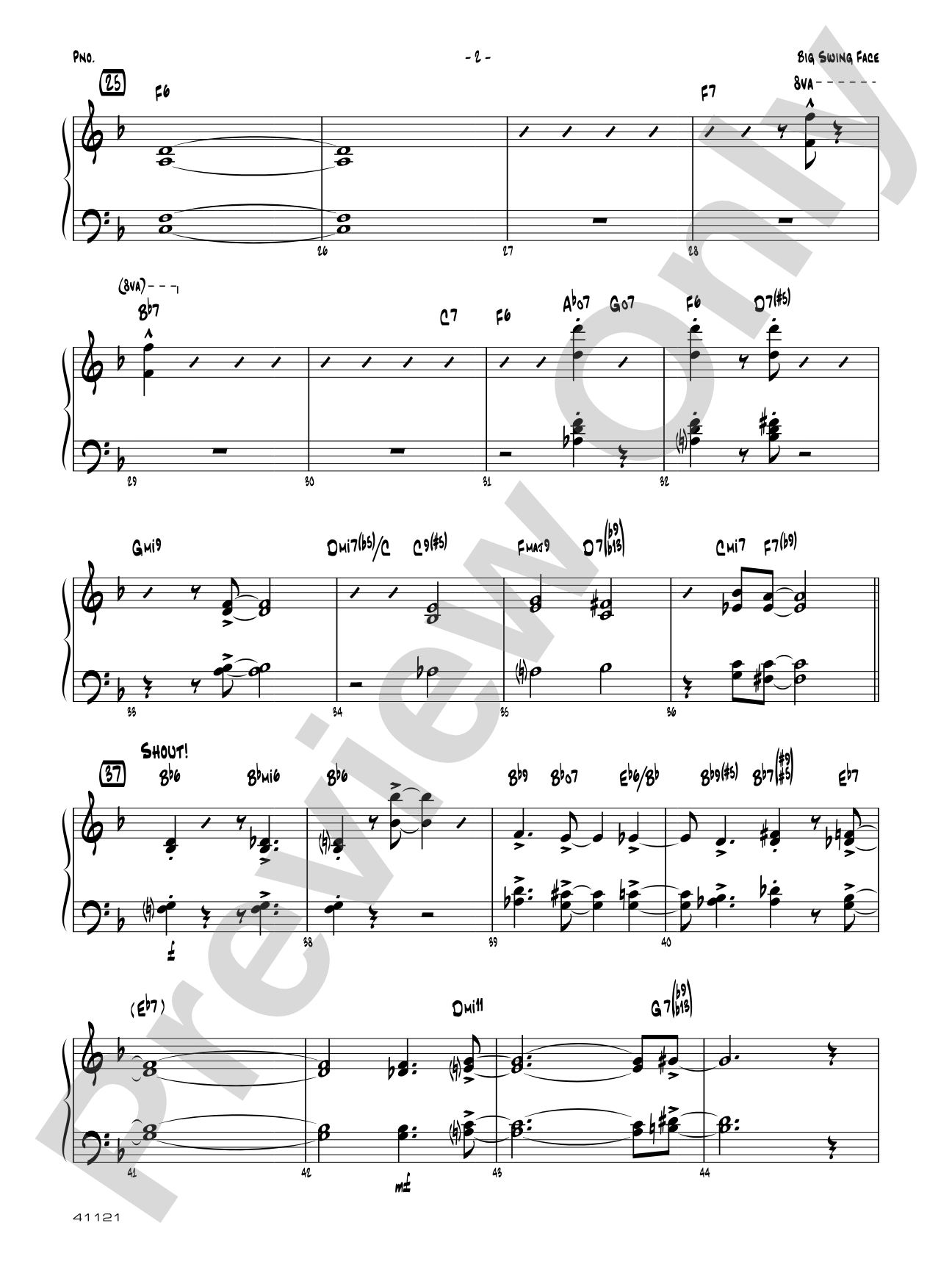
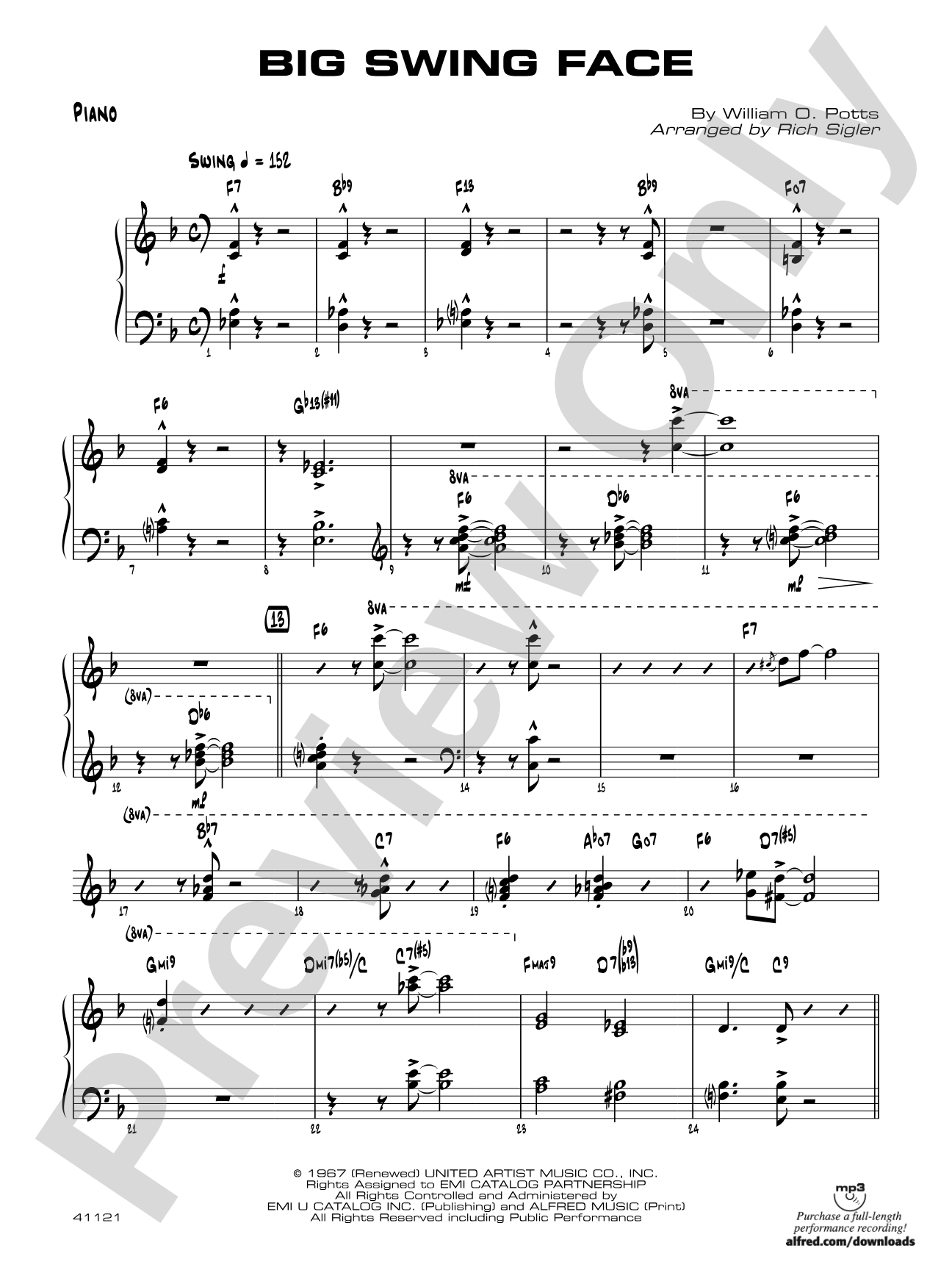
Big Swing Face: Piano Accompaniment Sheet Music Preview

Big Swing Face: Piano Accompaniment

Composed by William O. Potts / arr. Rich Sigler

Grade: 2 (Medium Easy)

Item: 00-PC-0016260_K

Digital Download
$3.00
Description
This chart, originally done by Buddy Rich, has been scored for grade 2 while maintaining the essence of the original and more. The tempo is around 154 BPM, and the chart contains written solos for tenor and trumpet 2, as well as nice dynamics to show off your band. A fun chart that you'll play for years to come. (4:17) This title is available in MakeMusic Cloud.

Don't just read it, hear it, play along with it, and watch your students grow with it. In MakeMusic Cloud, Big Swing Face: Piano Accompaniment comes alive with professional accompaniment, adjustable tempo, and built-in practice tools that turn solo practice into real progress.

Sample Audio
0:00
0:00
Sample Video
Additional Details
Series: Young Jazz Ensemble
Publisher: Alfred Music
Page Count: 102
SKU: 00-PC-0016260_K

More about this title

About the Composer: William O. Potts

William O. Potts has built a reputation as an arranger who understands what makes jazz accessible without sacrificing style. His work for young ensembles demonstrates a clear grasp of how to scale down sophisticated swing vocabulary into charts that students can execute with confidence while still feeling the swing.

Potts brings orchestration knowledge and genuine respect for the jazz tradition to his scoring decisions. His arrangements have found homes in school programs across the country, where directors value his ability to capture the character of classic material while writing idiomatically for developing players.

Why we love this

Rich Sigler's arrangement captures the swagger and energy of the original Buddy Rich recording while making it accessible to younger ensembles. The written solos for tenor and trumpet 2 give featured players real musical material to sink their teeth into, and the dynamic writing creates plenty of opportunities to showcase your band's sound without requiring advanced technical facility.

What to expect

A propulsive, straightforward swing with personality and attitude. The chart grooves at a comfortable mid-tempo pace and delivers the kind of brass-forward energy that energizes both players and audiences without demanding virtuosic chops.

Who it's for

Jazz ensemble directors working with Grade 2 groups who want accessible repertoire with genuine musical substance. This arrangement works for bands at the upper end of medium-easy playing, where students are ready for written solos and nuanced dynamics but don't yet have the technical demands of Grade 3 swing charts.

How to get the most out of it

  • Establish the groove early in rehearsal. Lock the rhythm section (bass and drums) into the 154 BPM pocket before layering in horn voicings; a tight rhythmic foundation makes everything else cleaner.
  • Shape the dynamic contrasts deliberately. The chart uses dynamics as a compositional tool, so resist the urge to flatten dynamics out at this grade level; use them to build intensity through sections.
  • Give your tenor and trumpet 2 soloists advance notice and time to prepare. Written solos require careful balancing between the soloist and the ensemble, so feature them in rehearsal and help them find the right voice level early.

How to use it

Program this as a crowd-pleasing opener or closer on a jazz concert, or use it as a festival selection where judges appreciate accessible arrangements that still demonstrate genuine arranging craft. At 4:17, it fits comfortably on most concert formats and gives newer ensemble members a chance to experience the satisfaction of playing a recognizable, well-known chart.

Skills your students will build

  • Reading and executing swing articulation across all sections
  • Balancing ensemble dynamics to feature soloists
  • Maintaining consistent tempo and groove in a mid-tempo swing context
  • Interpreting written jazz solos with appropriate phrasing and feel

You May Also Like