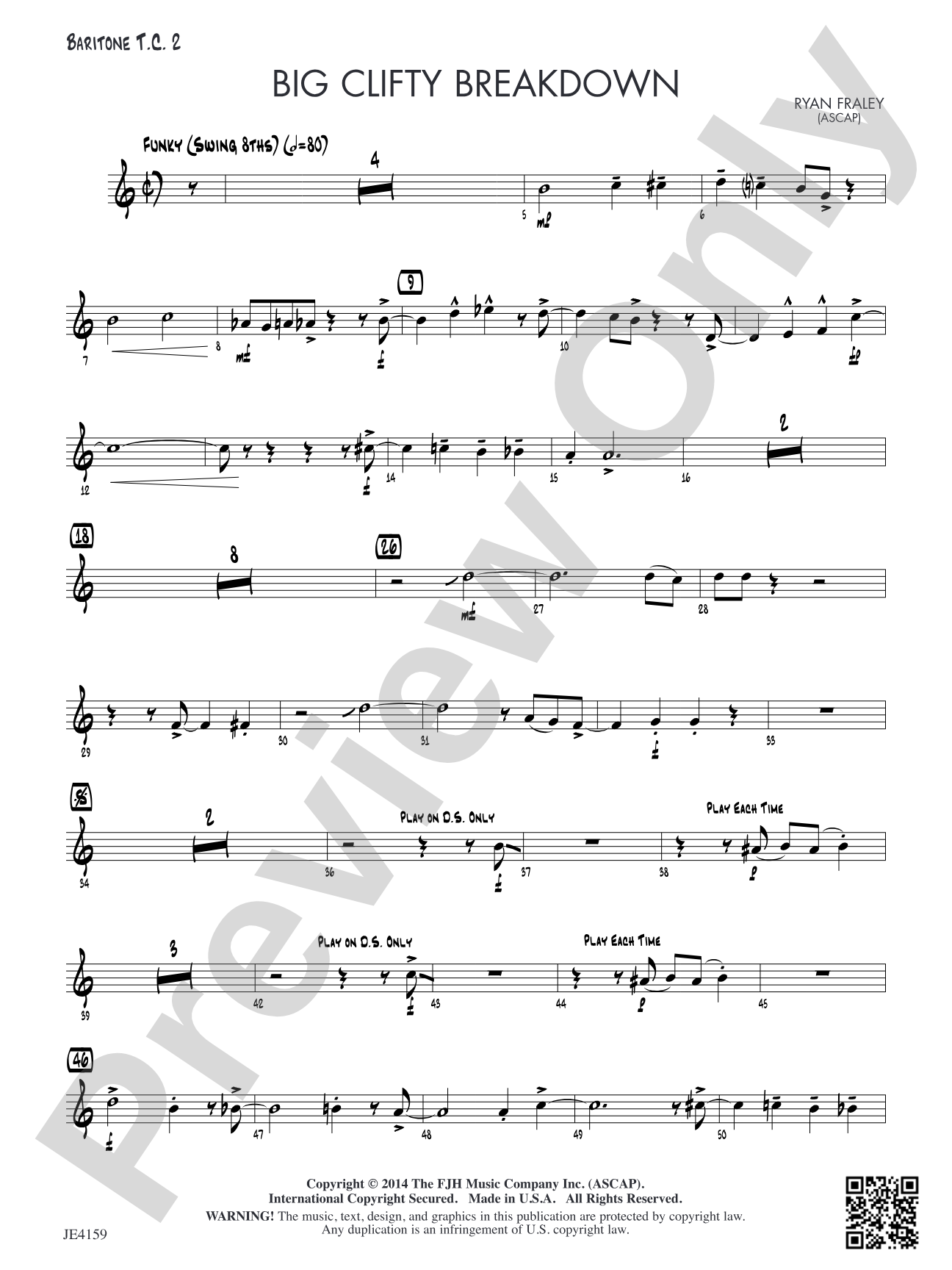
Big Clifty Breakdown: Alternate Baritone T.C. 2 Sheet Music Preview

Big Clifty Breakdown: Alternate Baritone T.C. 2

By Ryan Fraley

Grade: 2.5

Item: 98-PC-DJE4159_ALTBTC2

Digital Download
$7.00
Description
This funky swing chart uses modest ranges, a catchy melody, and features ensemble playing all the way. Students will enjoy grooving with the hip bass line and well-conceived rhythm section parts. Includes optional parts so you can involve members of your concert band!

Don't just read it, hear it, play along with it, and watch your students grow with it. In MakeMusic Cloud, Big Clifty Breakdown: Alternate Baritone T.C. 2 comes alive with professional accompaniment, adjustable tempo, and built-in practice tools that turn solo practice into real progress.

Sample Audio
0:00
0:00
Sample Video
Additional Details
Series: FJH Developing Jazz Ensemble
Publisher: The FJH Music Company, Inc.
SKU: 98-PC-DJE4159_ALTBTC2

More about this title

About the Composer: Ryan Fraley

Ryan Fraley

Ryan Fraley is an accomplished composer and arranger whose work for developing jazz ensembles combines strong pedagogical instincts with genuine musicality. His charts prioritize student engagement without sacrificing musical substance, making him a trusted voice in jazz education.

Why we love this

Ryan Fraley writes for developing ensembles with genuine musicality rather than compromise. The bass line here is the real star; it's funky enough to hold the groove but simple enough that players focus on locking in together, and that ensemble cohesion translates immediately to your audience.

What to expect

Hip and unpretentious. The groove sits comfortably in a moderate swing pocket with no high-wire act required, just good-natured funkiness and a melody that sticks with you long after rehearsal ends. Students feel the ease of playing together from the first run-through.

Who it's for

Grade 2.5 jazz ensembles with developing rhythm sections and intermediate-level soloists. The modest ranges keep players focused on phrasing and swing interpretation rather than technical struggle, making it ideal for groups building their ensemble vocabulary.

How to get the most out of it

  • Lock the rhythm section first. Have drums, bass, and piano establish the swing feel before adding horns; once that pocket is solid, the whole chart lifts off the page.
  • Shape the melody with light articulation in the horns. The catchiness works best when players land notes cleanly but stay relaxed, avoiding any stiffness that would fight the swing.
  • Use the optional parts strategically. Adding concert band woodwinds or brass thickens the texture without cluttering it; rehearse without them first to hear the core arrangement clearly.

How to use it

Program this as a crowd-pleaser in the middle of a jazz concert, where it can reset the energy after a ballad or showcase a younger ensemble's command of swing feel. It also works well as a rehearsal morale booster or in informal performances where fun and groove matter more than flashy technique.

Skills your students will build

  • Swing articulation and phrasing
  • Locking rhythm section parts (bass, drums, and comping harmony)
  • Reading chord symbols and walking bass lines
  • Listening and responding to the groove in real time
  • Ensemble blend and balance across sections

You May Also Like