
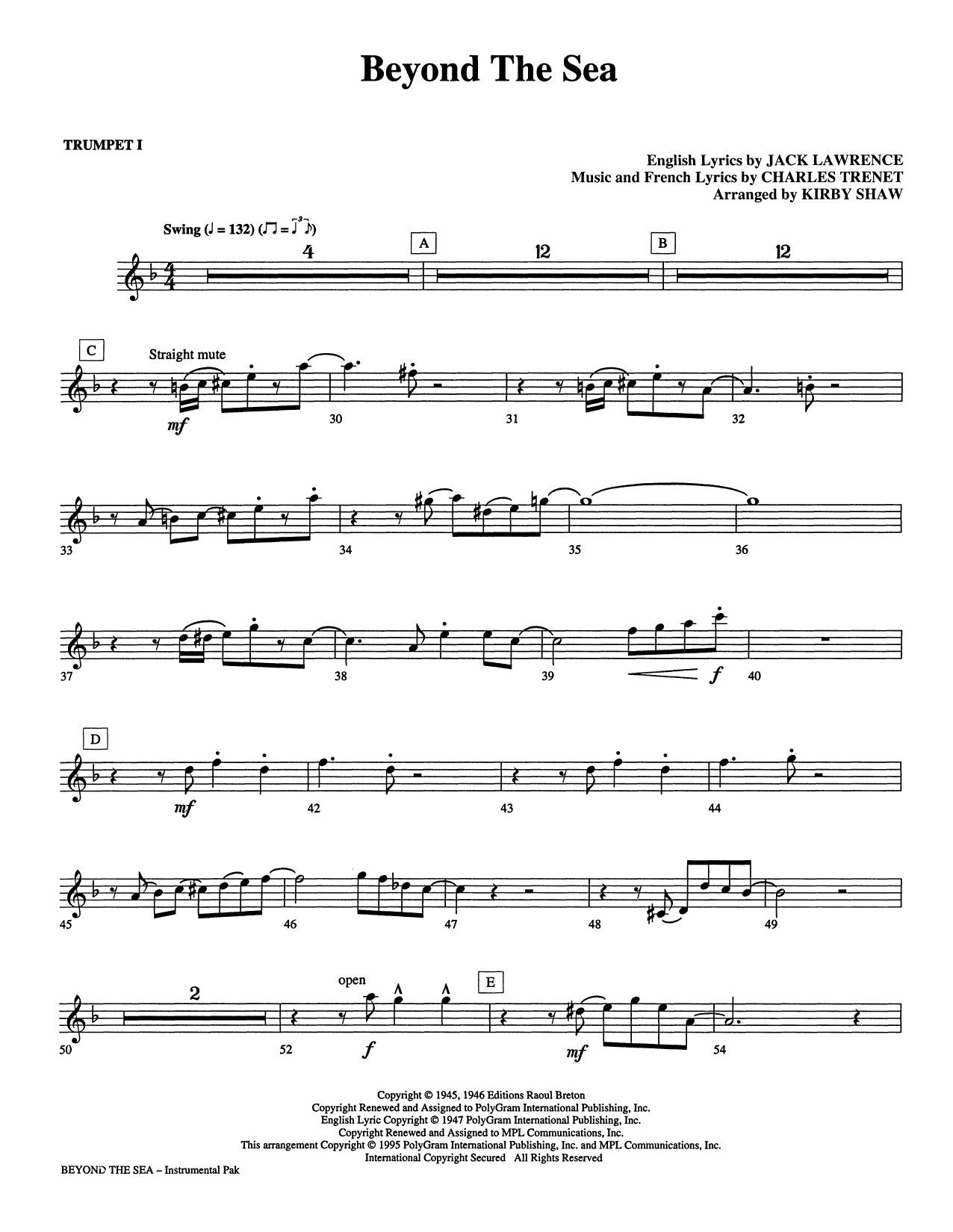

Beyond The Sea (arr. Kirby Shaw): Choral Instrumental Pak
Arranged by Kirby Shaw
Item: 35-PK01700761
$49.00
Pickup currently not available
Buy Extra Parts (Digital PDF Download)
Parts Added to Cart!
Description
This swingin' pop standard starts quietly with unison vocals and a walking bass line, then builds to a sensational finish!


Beyond The Sea (arr. Kirby Shaw): Choral Instrumental Pak isn't in MakeMusic Cloud just yet...but it could be. Let us know you'd like to see it, and you'll help shape what comes next. In the meantime, start a free trial and dive into thousands of interactive titles your students can play along with today.
Request This Title
Tell us you want it.
Start Your Free Trial
Explore everything that's ready to play right now.
Sample Audio
No sample audio found.
Sample Video
No sample videos found.
Additional Details
Publisher:
Hal Leonard
SKU:
35-PK01700761
More about this title
About the Arranger: Kirby Shaw

Kirby Shaw has established himself as a formative voice in choral music education, conducting and teaching across North America, Europe, and beyond. He holds degrees in Music Education and Choral Composition from San Jose State University and earned his DMA in Choral Conducting from the University of Washington. His career spans founding and directing acclaimed vocal jazz ensembles at the College of the Siskiyous, Colorado State University, and the University of Missouri at Kansas City; he currently directs the Jefferson State Choral Coalition at Southern Oregon University.
With over 2,500 choral arrangements and compositions in print, Shaw has shaped the musical landscape of thousands of choirs worldwide. His arrangements have sold nearly 20 million copies and earned multiple ASCAP awards. He has worked one-on-one with jazz legends including Bobby McFerrin, Al Jarreau, and Jon Hendricks, and overseen hundreds of educational recordings. Shaw's creative reach extends beyond arrangements into original musical theater; he and his wife Markita co-wrote Scroogical, an adaptation of A Christmas Carol.
Why we love this
Shaw's arrangement strips the jazz standard to its essentials, starting with unison vocals and a clean walking bass that gives singers room to lock into the groove. The architecture builds naturally from intimate opening to a powerful finish, which means your singers experience the satisfaction of genuine musical development rather than just singing louder.
What to expect
Breezy and sophisticated, with the understated cool of a jazz club set against the accessibility of a pop standard. The arrangement lets the melody breathe early on before inviting singers into a full-bodied, rhythmically engaged finish that feels earned rather than forced.
Who it's for
Choirs with solid rhythmic foundation and singers ready to explore jazz phrasing within a pop standard framework. This works for high school, college, and community ensembles comfortable with unison singing and light swing interpretation.
How to get the most out of it
- Nail the unison entrance first. A unified sound during the quiet opening sets the tone for everything that follows and gives the walking bass something solid to anchor against.
- Coordinate the bass line's harmonic movement with your chord changes; a steady walking pulse only works if everyone understands where the harmony sits underneath it.
- Manage the crescendo intentionally by tracking dynamics section by section rather than assuming the arrangement builds itself. Your singers need clear benchmarks for what 'sensational finish' means in terms of volume and energy.
- Record the rhythm section separately if you're rehearsing without live accompaniment. Hearing those walking bass lines and steady time will train your singers' ears to sit comfortably in the pocket.
How to use it
Pair this with other Shaw arrangements or similar standards if you're building a jazz or pop concert segment. The relatively compact scope makes it an excellent opener that establishes groove and energy for the rest of the program without demanding excessive rehearsal time for the payoff.
Skills your students will build
- Walking bass line comprehension and rhythmic precision
- Swing phrasing and jazz articulation
- Ensemble unison singing with blend and intonation
- Dynamic control from soft sustained passages to full ensemble statements
- Chord awareness and harmonic listening