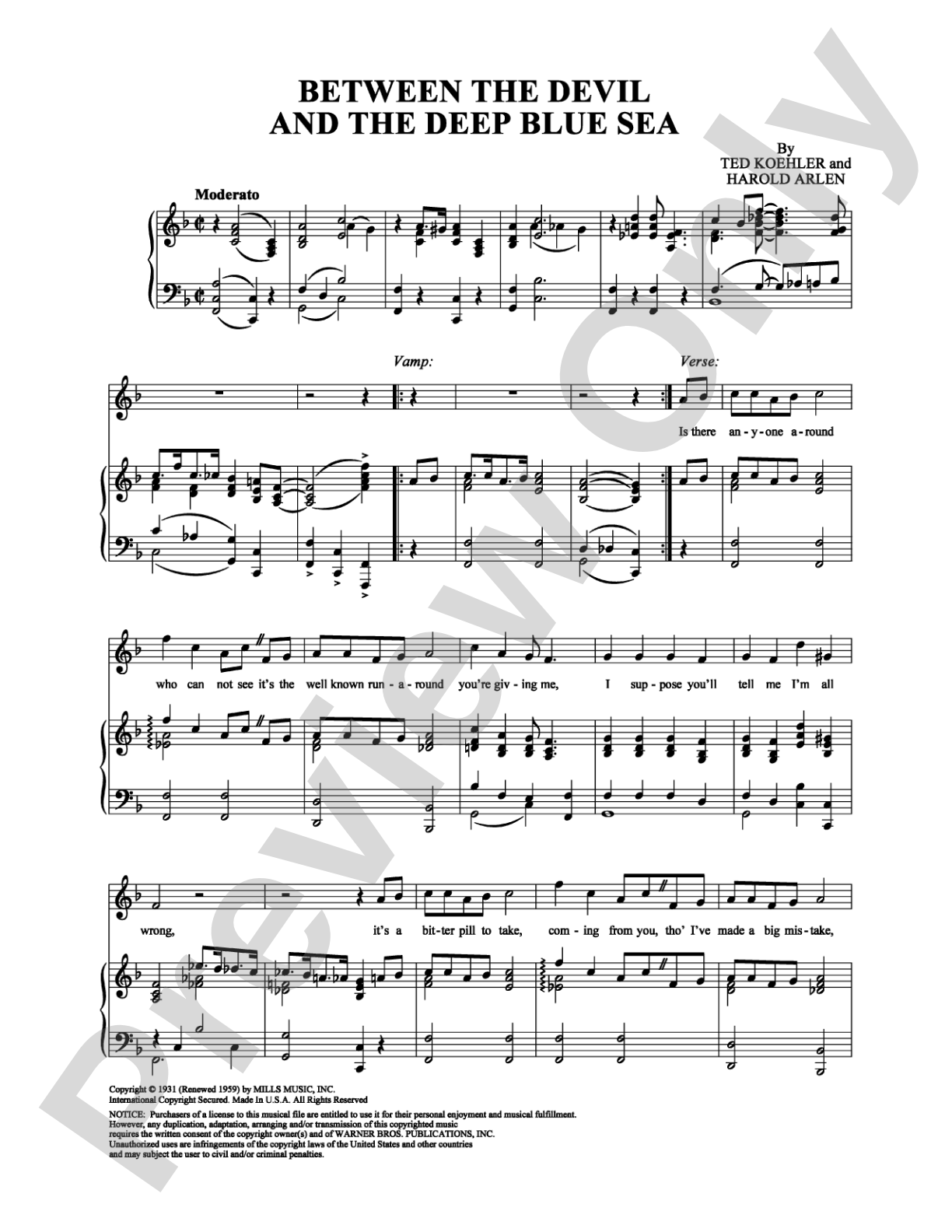
Between the Devil and the Deep Blue Sea: Piano/Vocal/Chords Digital Sheet Music

Between the Devil and the Deep Blue Sea: Piano/Vocal/Chords Digital Sheet Music

Harold Arlen, Ted Koehler

Item: 00-PS-0009122

Digital Download
$3.99
Description

Between the Devil and the Deep Blue Sea: Piano/Vocal/Chords Digital Sheet Music isn't in MakeMusic Cloud just yet...but it could be. Let us know you'd like to see it, and you'll help shape what comes next. In the meantime, start a free trial and dive into thousands of interactive titles your students can play along with today.

Sample Audio
No sample audio found.
Sample Video
Additional Details
SKU: 00-PS-0009122

More about this title

Why we love this

This standard captures everything that makes the Great American Songbook endure: a memorable melody, clever lyrics that twist a familiar phrase, and harmonic movement that feels both sophisticated and singable. The piano/vocal/chords format gives you flexibility to perform it solo at the keyboard, feature a vocalist with accompaniment, or use it as a learning tool for understanding jazz harmony.

What to expect

The song radiates the sophistication and world-weary charm of 1930s entertainment, blending minor-key melancholy with the kind of witty resignation that defines the era. There's a playful tension between the title's predicament and the smooth, almost conversational way the melody unfolds, creating that distinctive standard-song blend of lightness and depth.

Who it's for

Pianists who want to add a classic standard to their repertoire, vocalists exploring American songbook literature, and piano teachers working with intermediate to advanced students who are ready for jazz harmony and vintage swing style. It's equally valuable for anyone preparing material for a cabaret, jazz combo, or nostalgic entertainment context.

How to get the most out of it

  • Lean into the swing feel of the rhythm section. Even in a ballad tempo, the syncopation and off-beat accents define the song's character.
  • Balance the vocal line so it sits naturally above the piano voicings rather than fighting them. The accompaniment is written to support, not compete.
  • Use the chord symbols to experiment with comping styles if you're accompanying a singer. A stride pattern works beautifully here, as do contemporary jazz voicings.
  • Shape the melody with rubato, particularly on the bridge. This song rewards singers who breathe musically and let the phrasing breathe.

How to use it

Feature this as a solo piano interlude in a concert that celebrates American songbook standards, or program it as an accompaniment vehicle if you have a strong vocalist in your studio or ensemble. It also serves as an excellent teaching piece for students exploring how chord symbols, melody, and harmony interact in jazz and popular styles.

Skills your students will build

  • Reading and interpreting jazz chord symbols and voicings
  • Balancing melody and accompaniment in a vocal score
  • Understanding swing rhythm and syncopation
  • Stylistic interpretation of early 20th-century popular song
  • Rhythmic flexibility and rubato in phrasing

You May Also Like