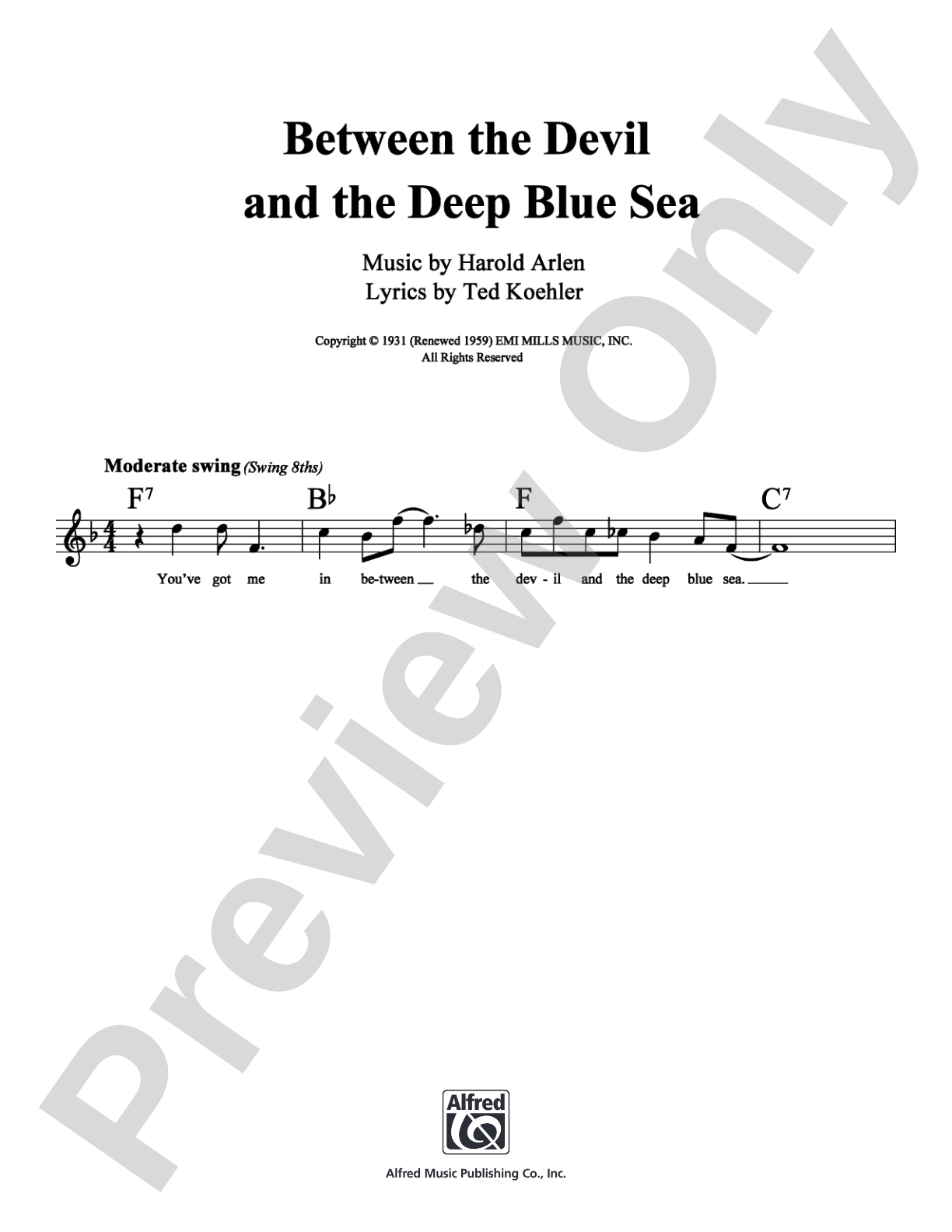
Between the Devil and the Deep Blue Sea: Lead Sheet Digital Sheet Music

Between the Devil and the Deep Blue Sea: Lead Sheet Digital Sheet Music

Harold Arlen, Cab Calloway, Louis Armstrong

Item: 00-PS-0002575

Digital Download
$1.99
Description

Between the Devil and the Deep Blue Sea: Lead Sheet Digital Sheet Music isn't in MakeMusic Cloud just yet...but it could be. Let us know you'd like to see it, and you'll help shape what comes next. In the meantime, start a free trial and dive into thousands of interactive titles your students can play along with today.

Sample Audio
No sample audio found.
Sample Video
Additional Details
SKU: 00-PS-0002575

More about this title

About the Artist: Louis Armstrong

Louis Armstrong (1901-1971) revolutionized jazz and American music through his distinctive trumpet playing and gravelly vocals. His improvisational gift, rhythmic sophistication, and infectious swing transformed jazz from a regional novelty into a universal language, influencing musicians across every genre for generations.

Why we love this

This standard captures the sophisticated swing sensibility of the early jazz era in a format that's instantly accessible to any ensemble or soloist. The melody is memorable enough to anchor an arrangement yet flexible enough to welcome improvisation, making it equally valuable in a jazz history unit or as a solo vehicle for a confident singer or instrumentalist.

What to expect

Sophisticated yet playful, with a swagger that comes from the harmonic richness of the changes and the natural elasticity of the melody. The tune balances rhythmic momentum with lyrical phrasing, inviting both rhythmic precision and expressive breathing room.

Who it's for

Jazz combos, singers working in the standards repertoire, instrumentalists building jazz vocabulary, and educators teaching the language and style of swing-era jazz. This lead sheet works equally well as a reference for ensemble arrangements or as a practice tool for developing jazz interpretation skills.

How to get the most out of it

  • Lean into the triplet feel characteristic of swing era phrasing; don't let the notation flatten the rhythmic lift that makes this tune groove.
  • Use the lead sheet as a springboard for melodic interpretation rather than a strict blueprint. Armstrong's performances of this tune varied night to night, and that spirit of spontaneity belongs in your version too.
  • Pay close attention to the harmonic rhythm and chord changes. This tune moves thoughtfully through its progression, and a solid understanding of each chord shift will open up melodic and improvisational possibilities.

How to use it

Program this as a window into jazz standards within a concert, or use it as a vehicle for a featured soloist in a jazz ensemble setting. It works well alongside other swing-era repertoire to establish a cohesive era and style, and it's substantial enough to anchor a segment while remaining instantly recognizable to audiences.

Skills your students will build

  • Reading lead sheet notation and chord symbols
  • Swing phrasing and rhythmic interpretation
  • Jazz improvisation over a 32-bar song form
  • Understanding harmonic movement and chord-scale relationships
  • Stylistic interpretation of early jazz idioms

You May Also Like