
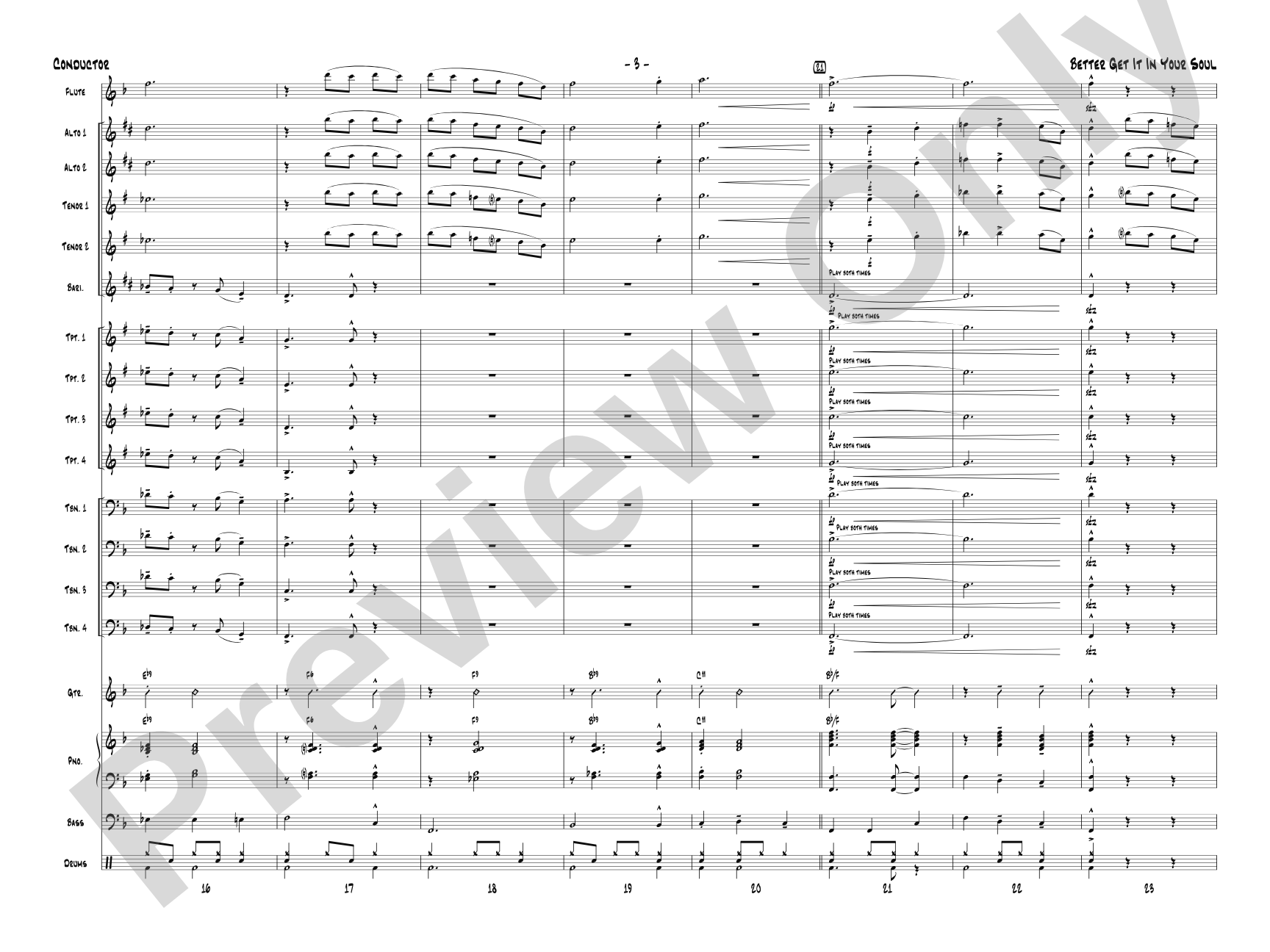
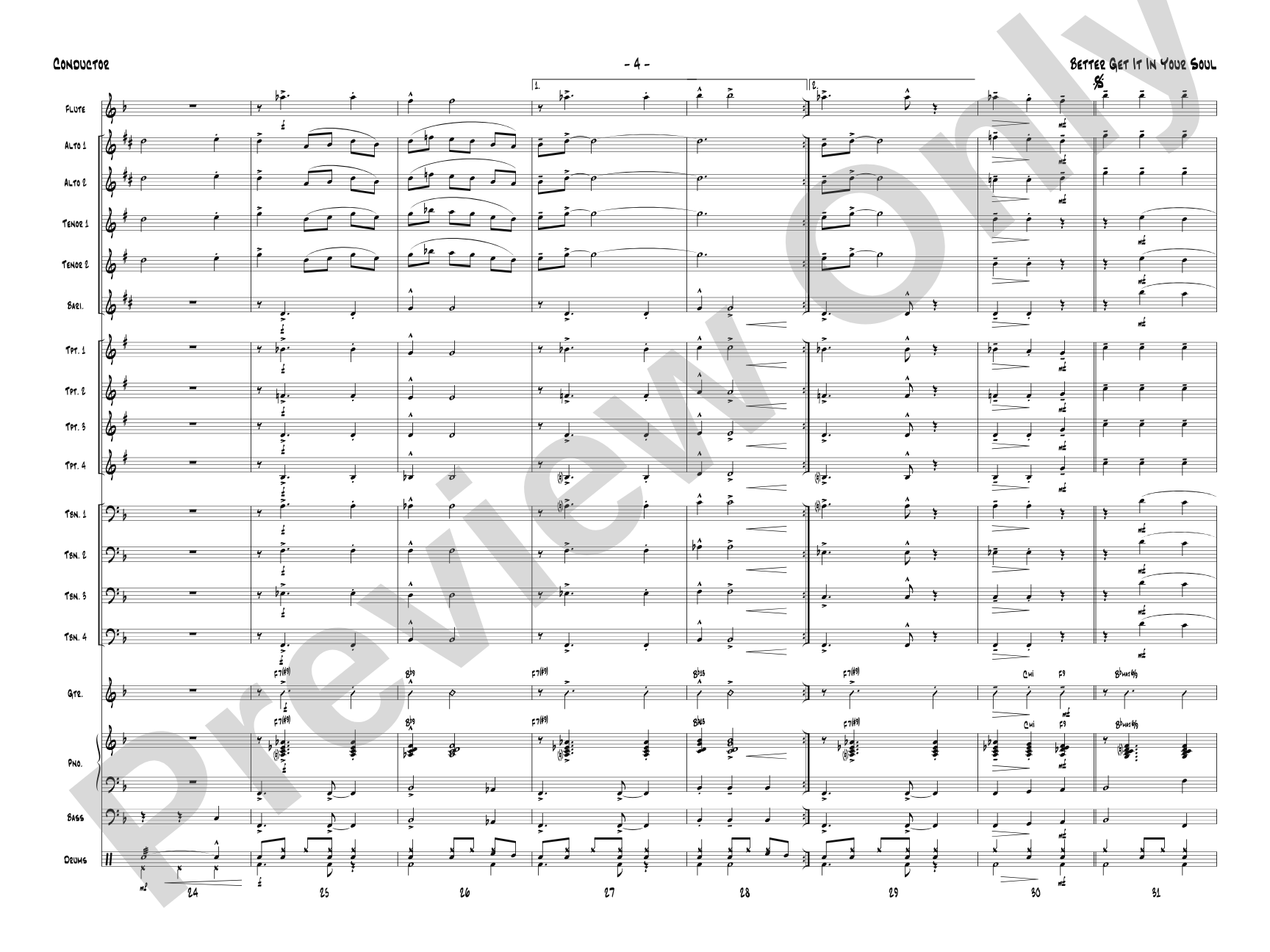
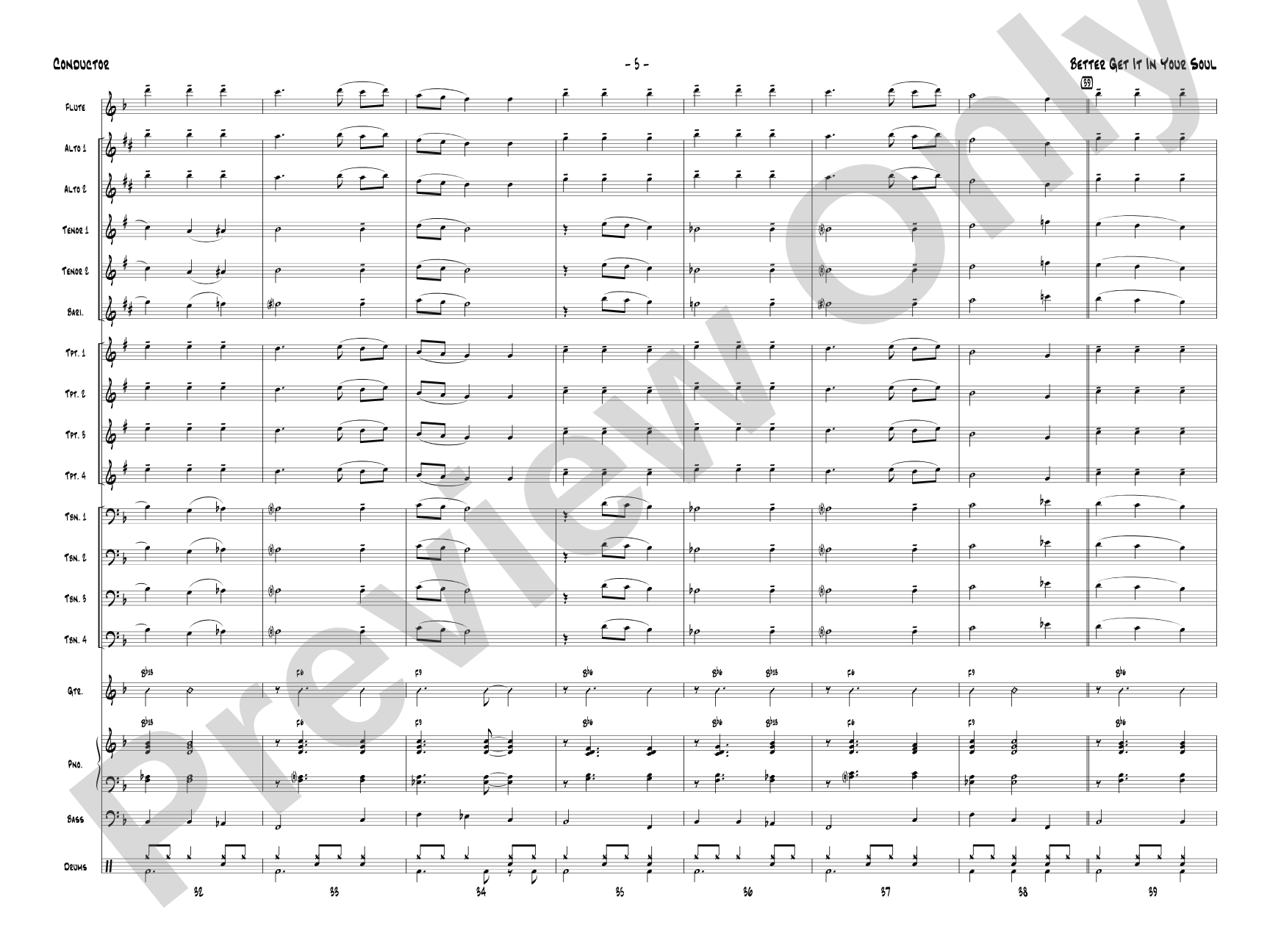
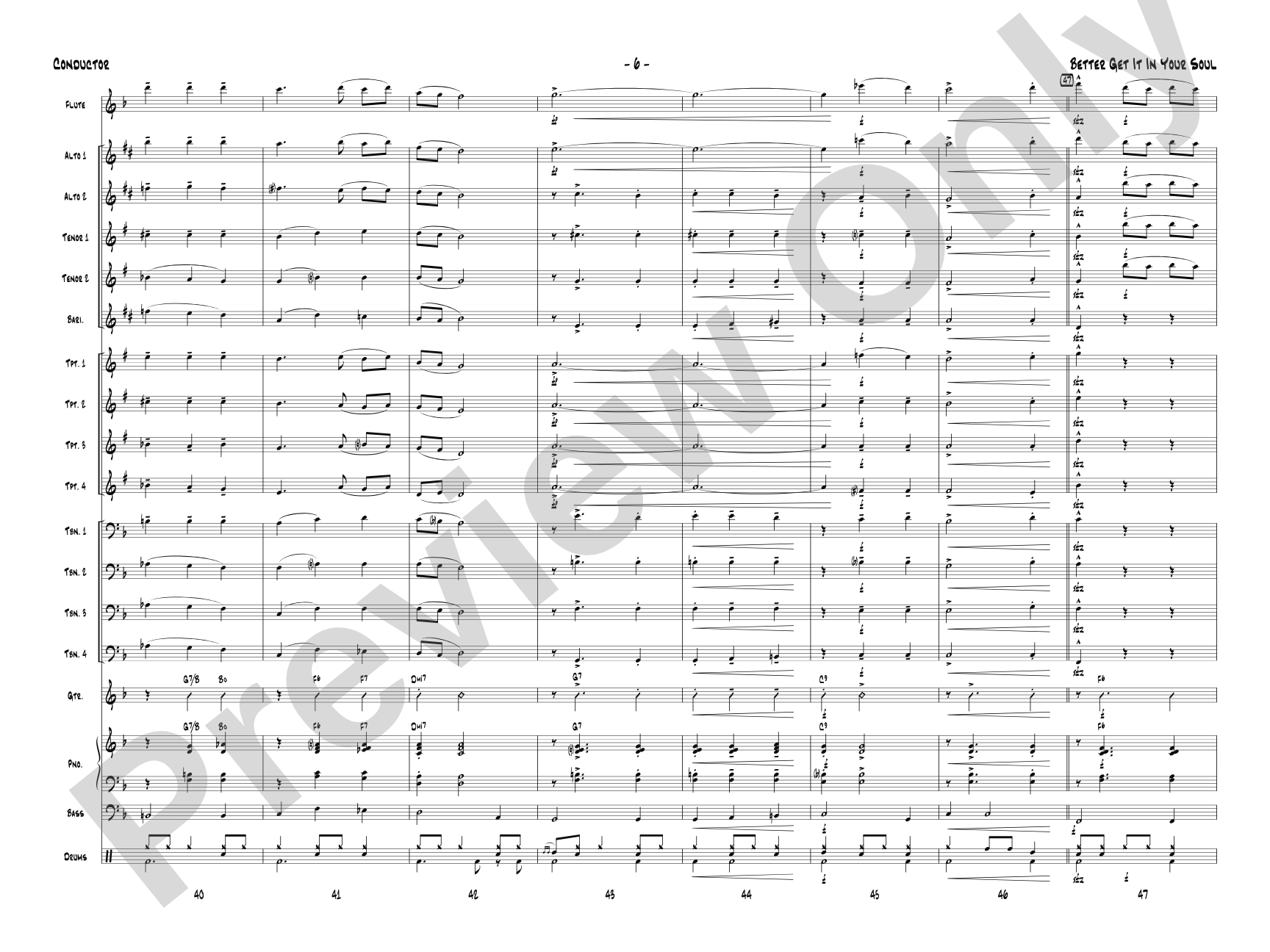
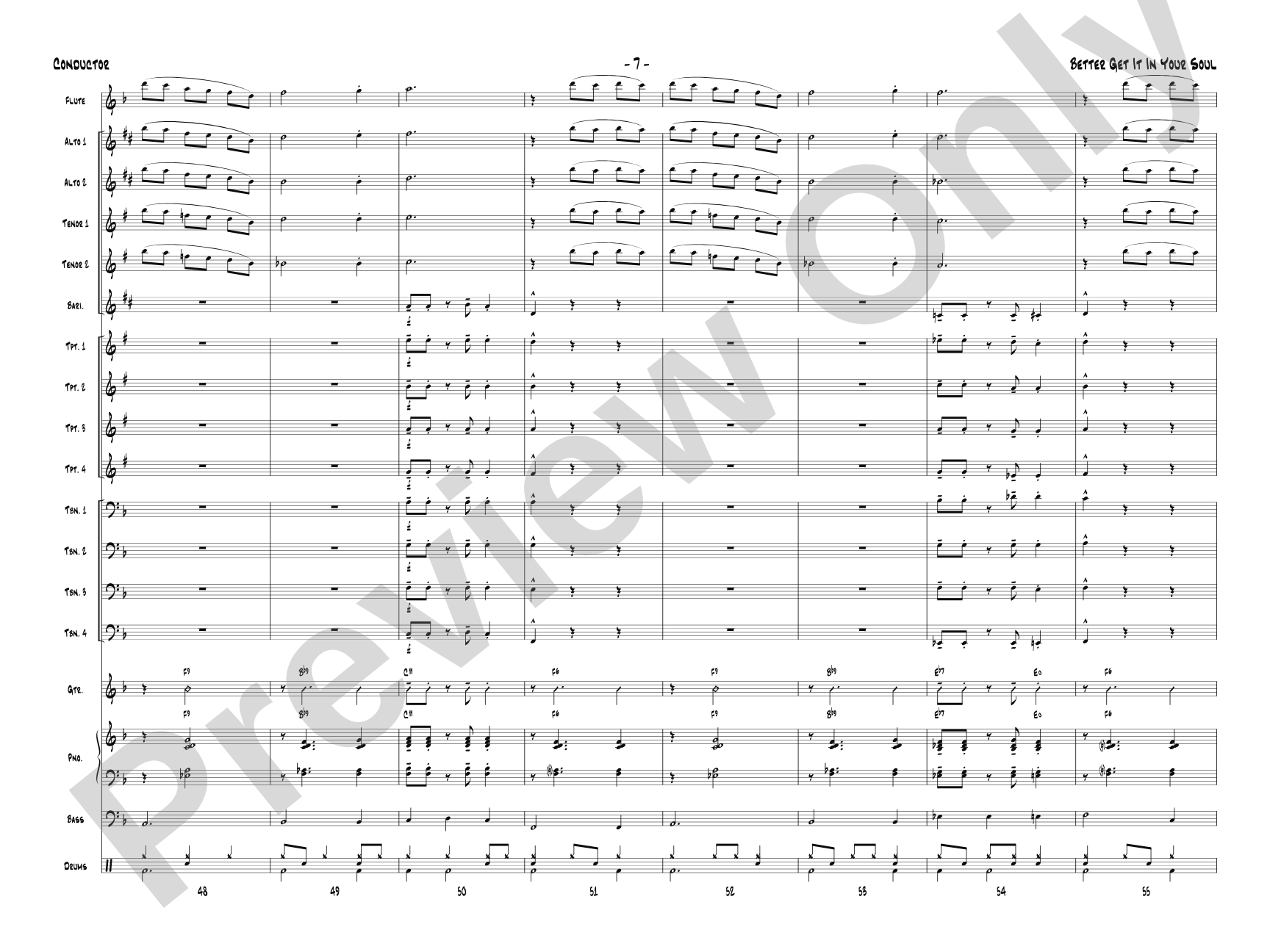
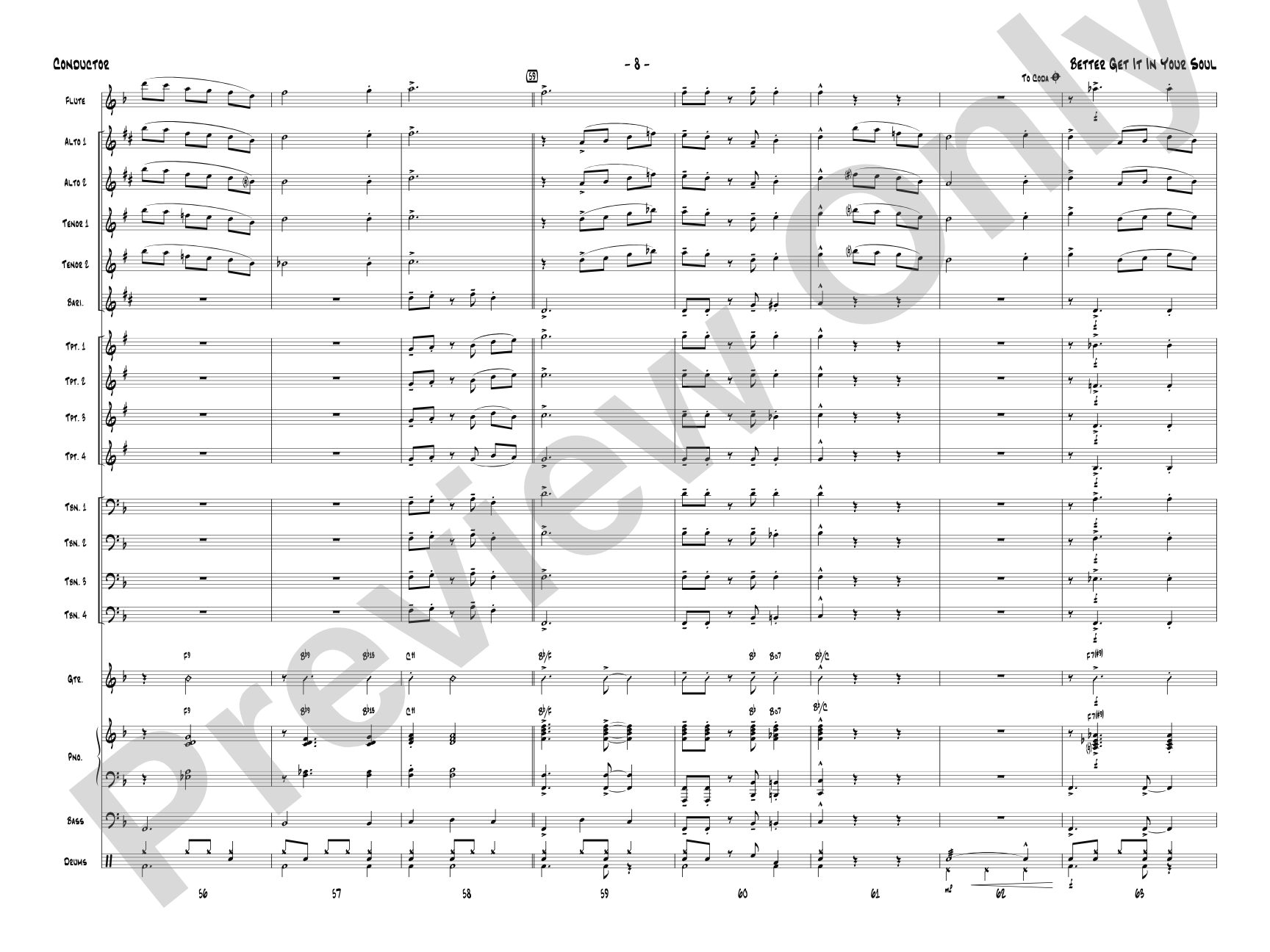
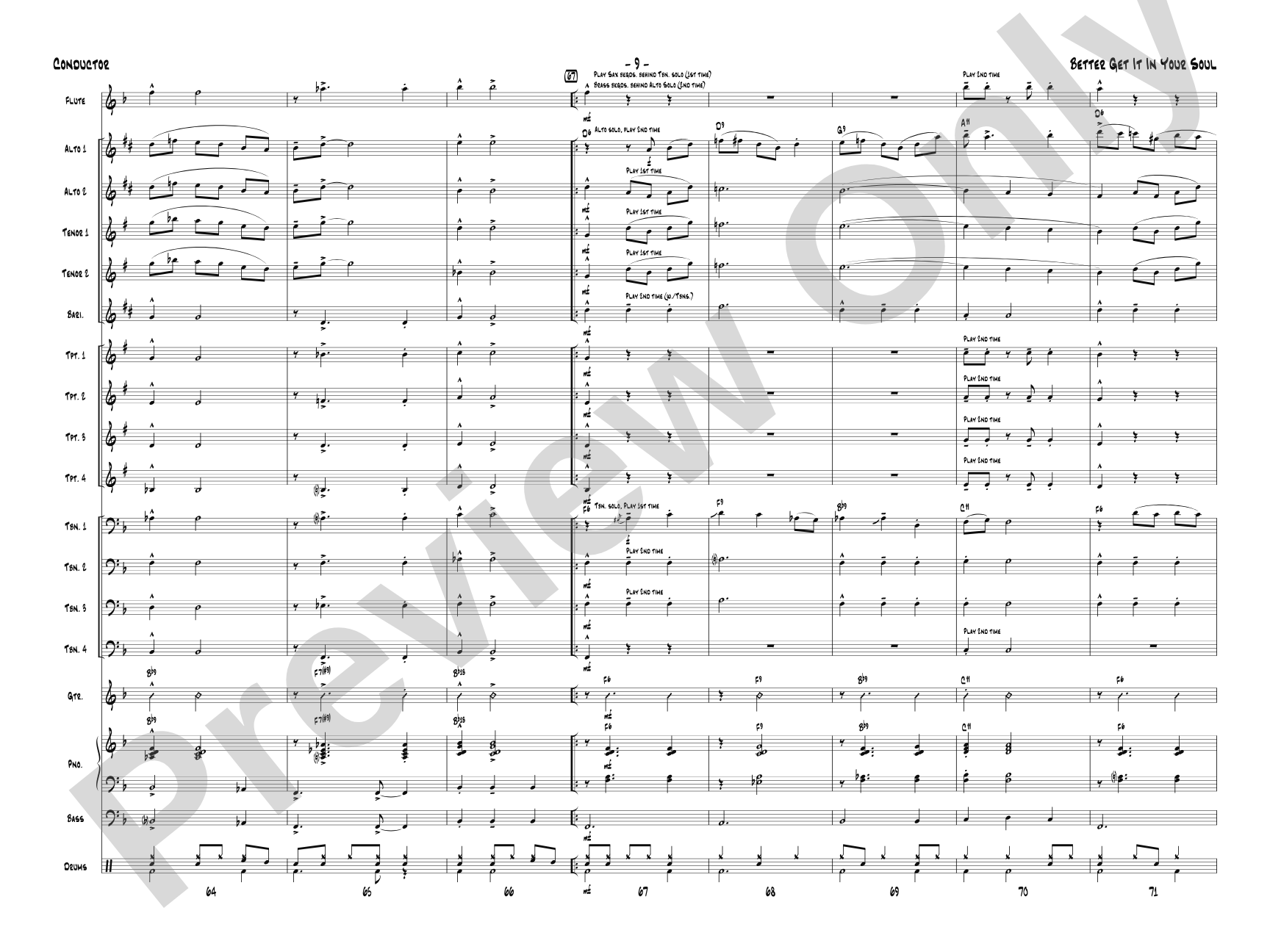
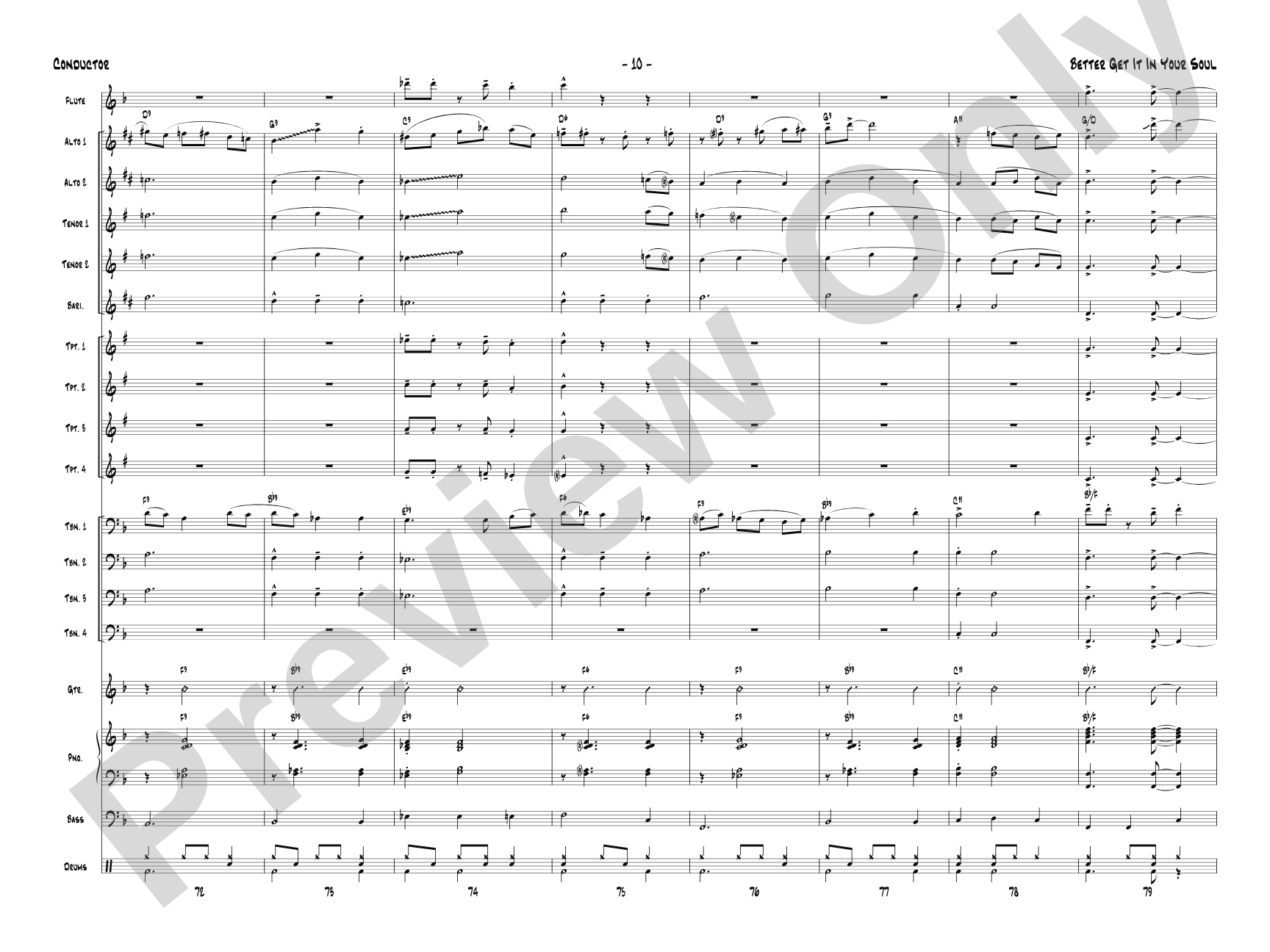
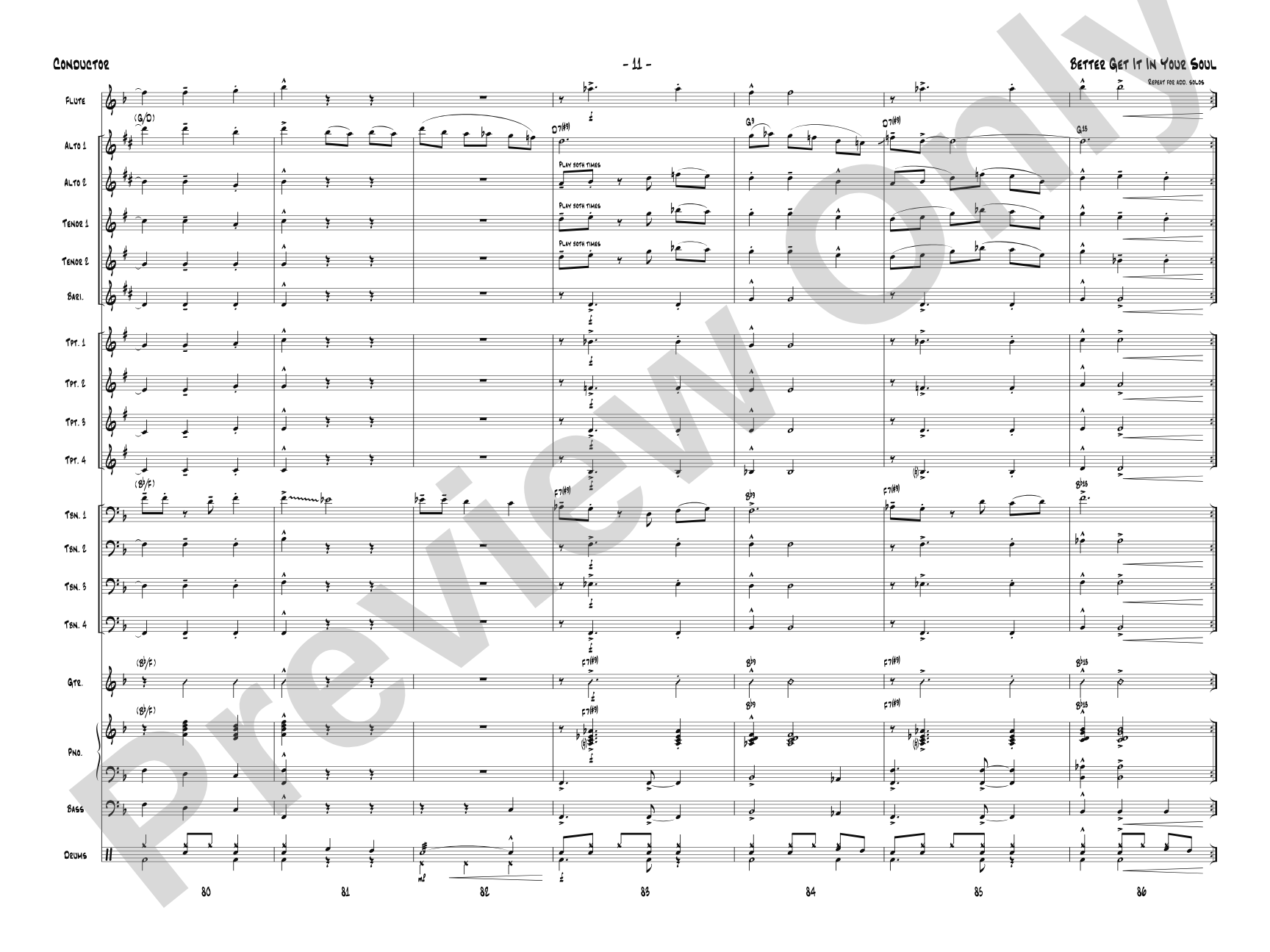
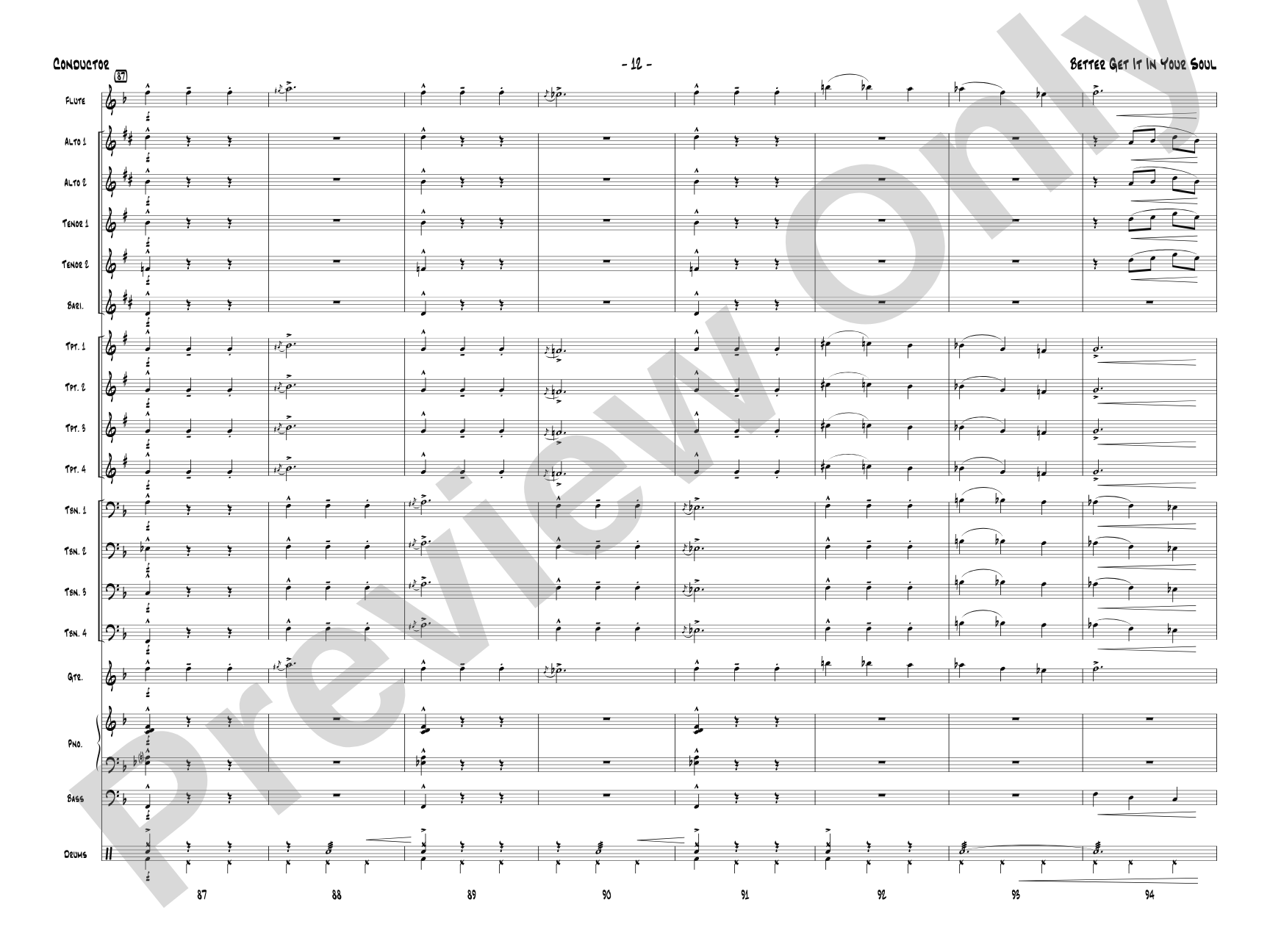
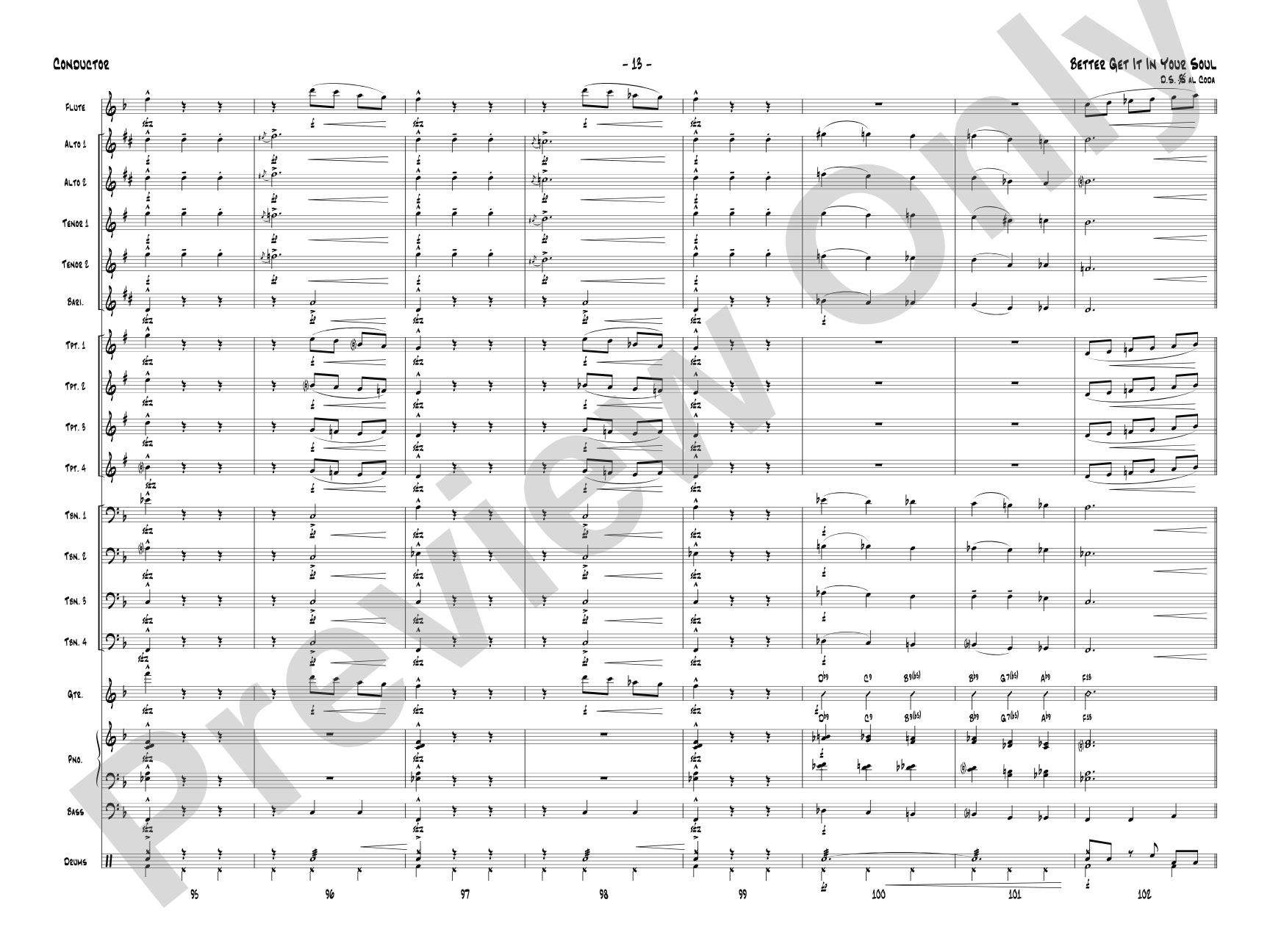
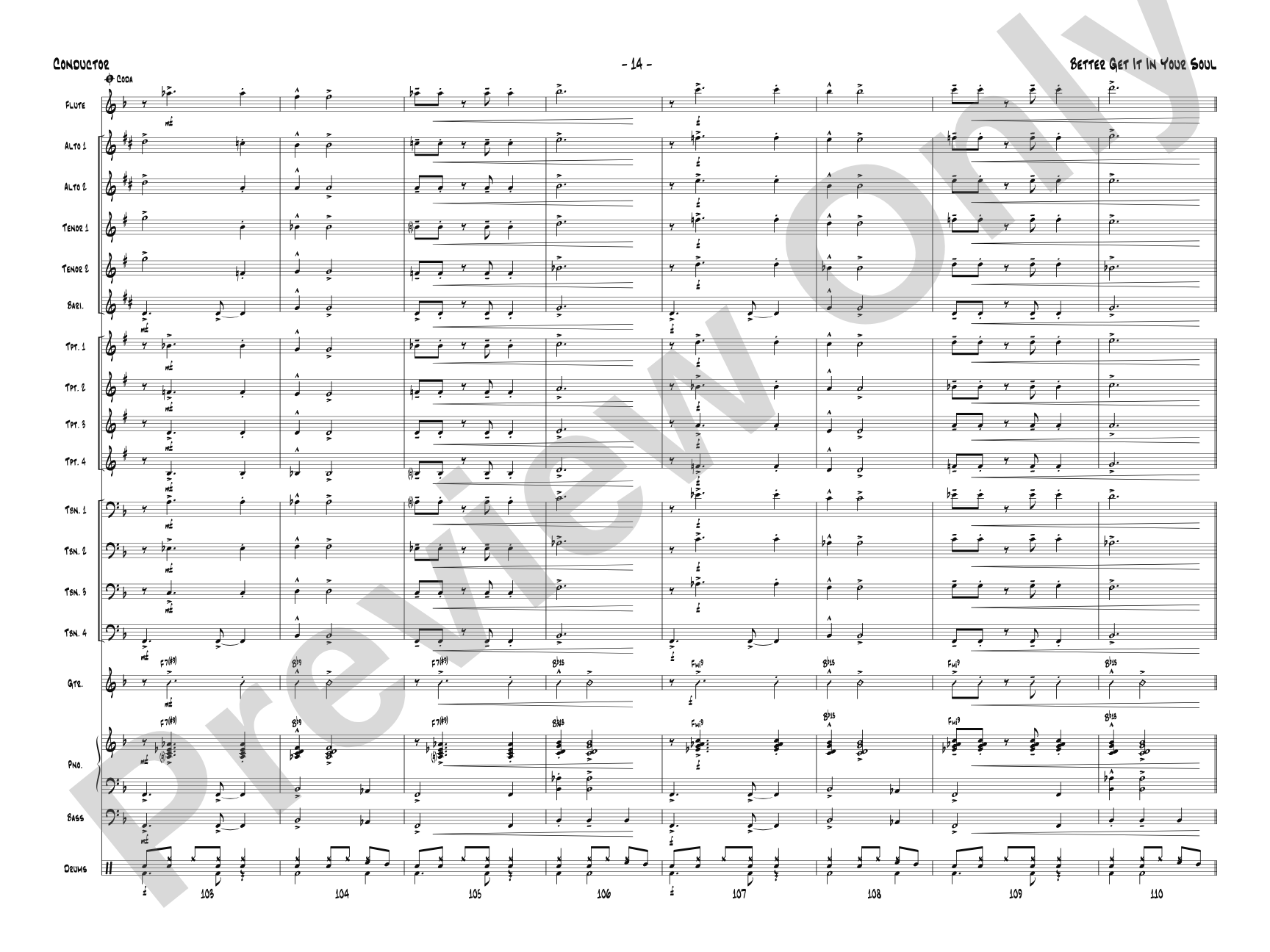
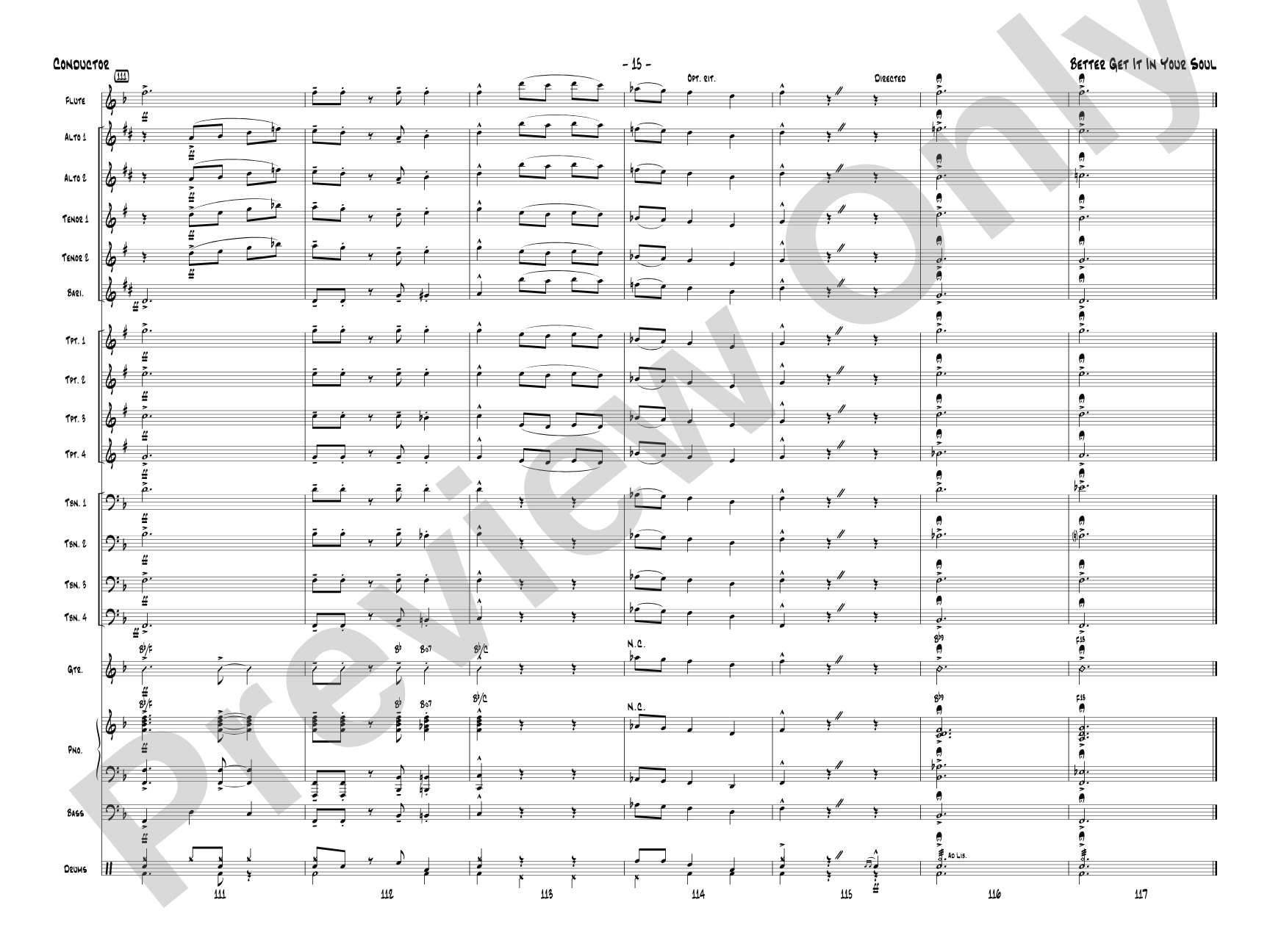

Better Get It in Your Soul: Jazz Ensemble Conductor Score & Parts
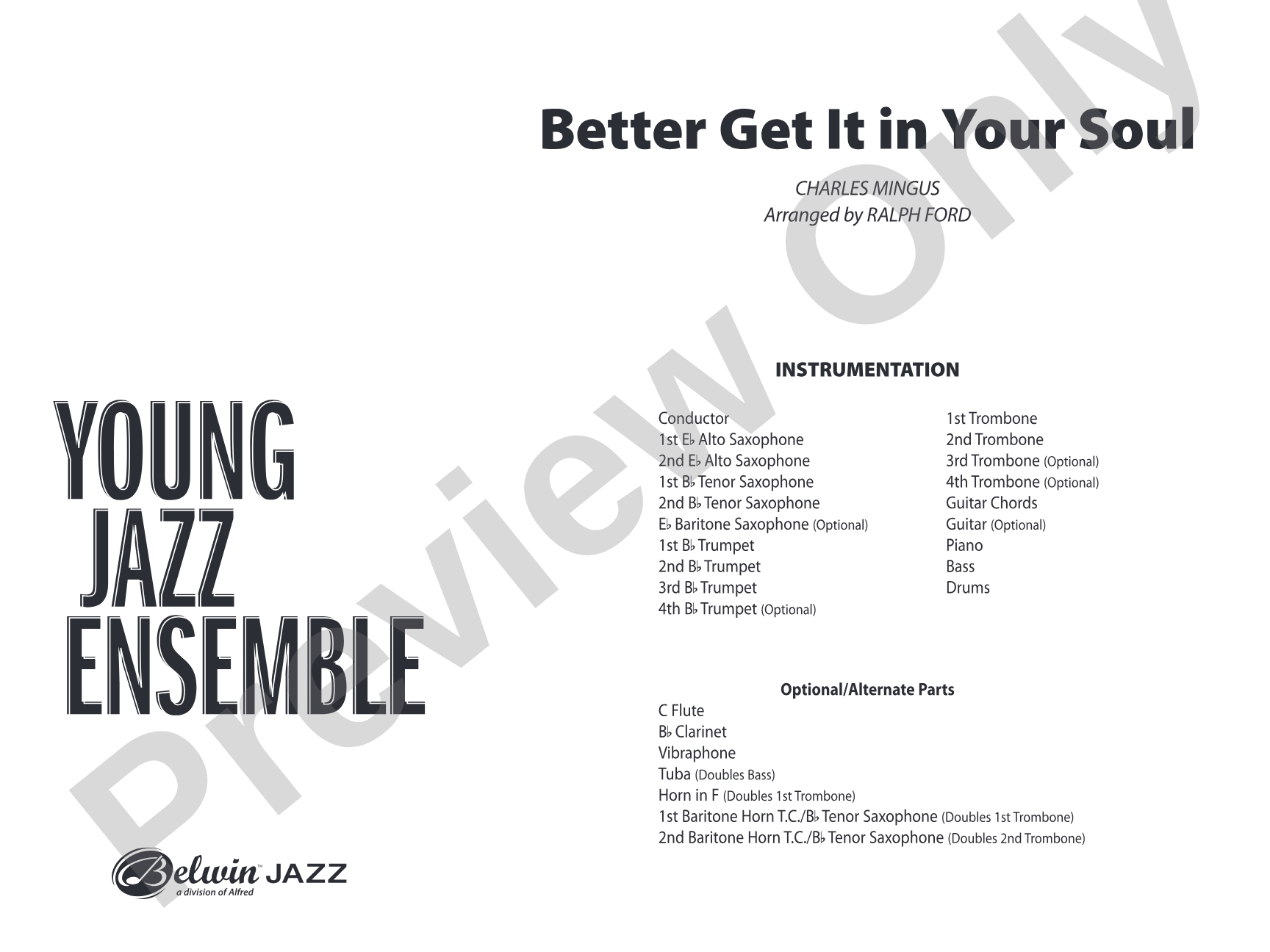
By Charles Mingus / arr. Ralph Ford
Grade: 2 (Medium Easy)
Item: 00-PK-0006040

$48.00
One moment…
Description
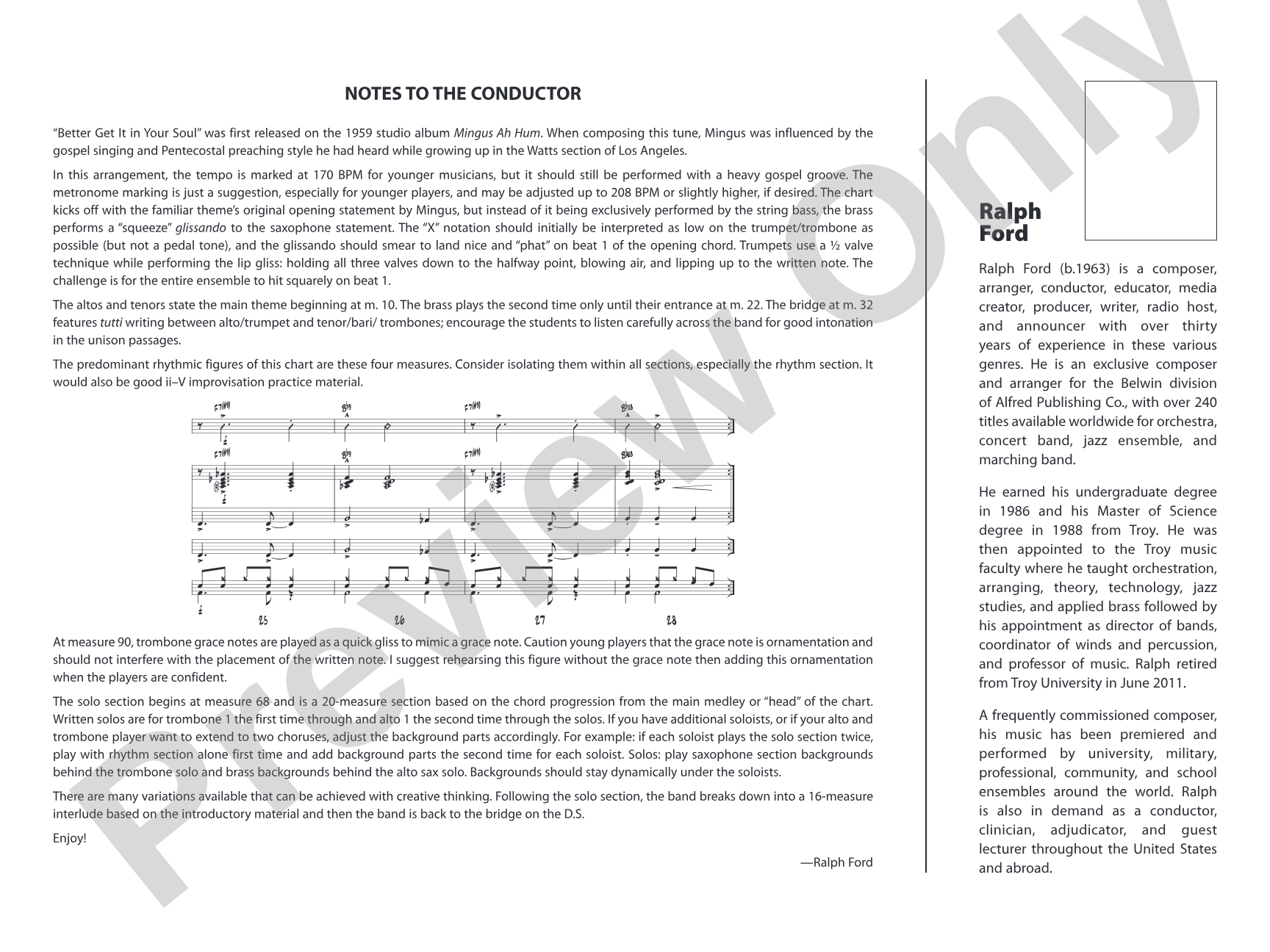
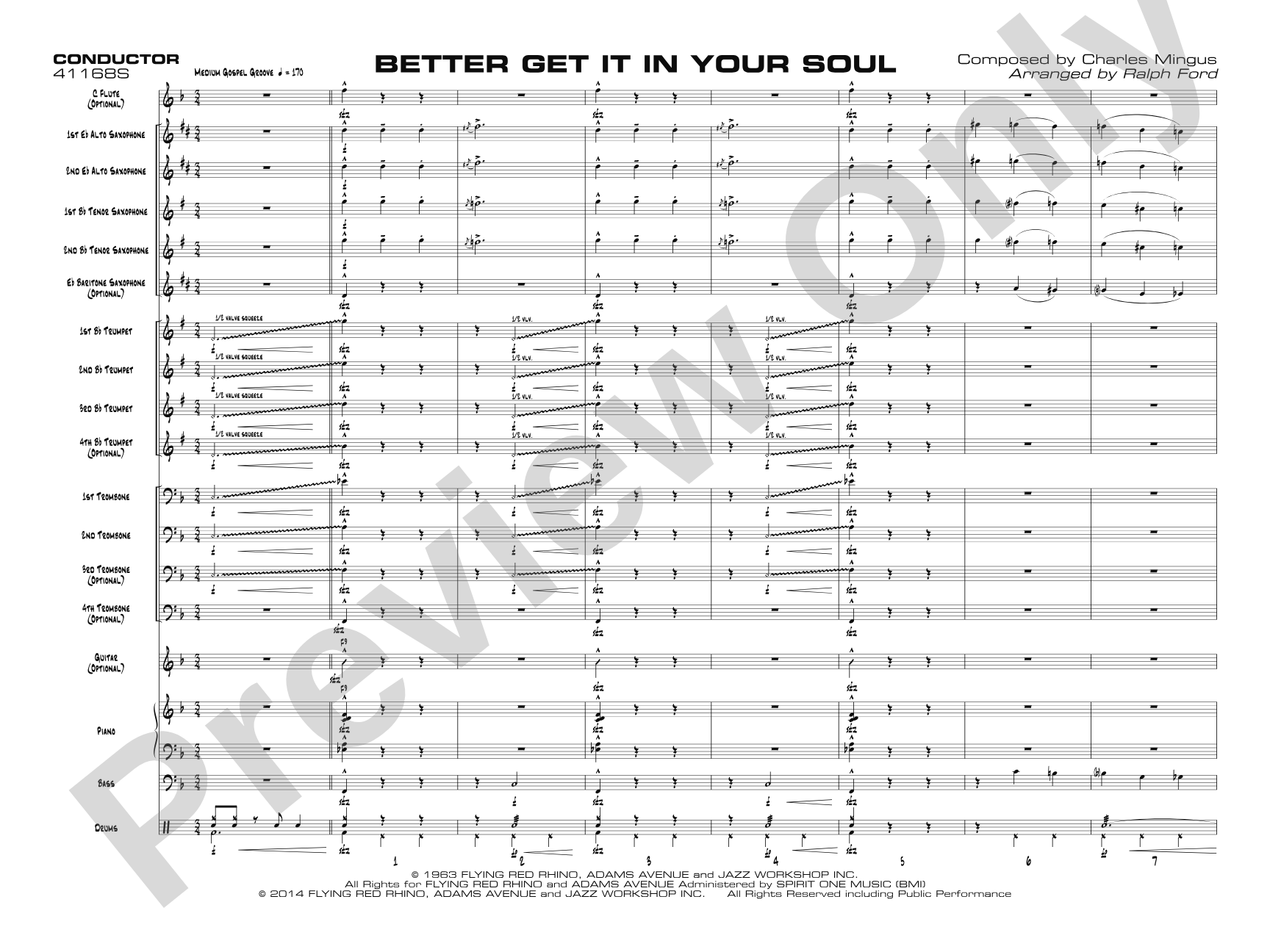
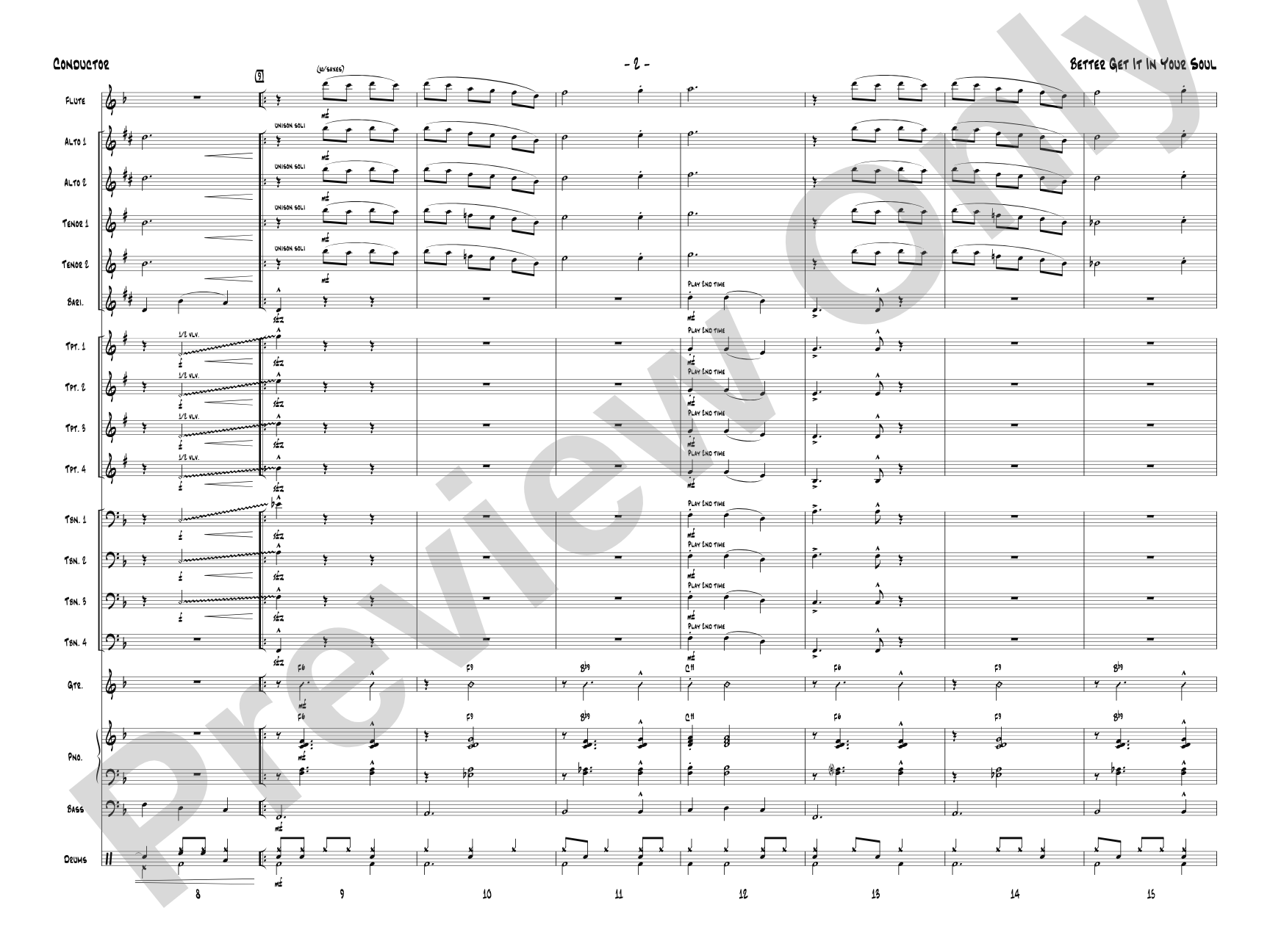
A jazz waltz that swings at 170 BPM. A great hook melody by the great Mingus that grabs you, written solos for alto and trombone 1, and trumpet 1 range is to written G top space. All the ingredients you need for a fine chart. (3:30) This title is available in MakeMusic Cloud.


Don't just read it, hear it, play along with it, and watch your students grow with it. In MakeMusic Cloud, Better Get It in Your Soul: Jazz Ensemble Conductor Score & Parts comes alive with professional accompaniment, adjustable tempo, and built-in practice tools that turn solo practice into real progress.
Open in the Player
Jump straight in and assign it today.
Start Your Free Trial
Open this title and explore the full library in minutes.
Sample Audio
1
Audio File
--:--
0:00
0:00
Sample Video
No sample videos found.
Additional Details
Series:
Young Jazz Ensemble
Publisher:
Alfred Music
Page Count:
98
SKU:
00-PK-0006040
More about this title
About the Composer: Charles Mingus
Charles Mingus (1922-1979) was a bassist, composer, and bandleader whose radical approach to jazz composition challenged the genre's conventions. He wrote complex, emotionally direct pieces that blended bebop, blues, and avant-garde techniques, often drawing on themes of social justice and personal experience. His compositions remain central to jazz education because they demand serious musicianship while retaining immediate accessibility and swing.
Mingus led working ensembles throughout his career and was deeply invested in how his music sounded in the room. He arranged and rearranged his own pieces constantly, listening to what his players could do and what the moment required. His legacy in jazz pedagogy lies in proving that challenging harmony and extended techniques need not diminish a tune's soul or memorability.
Why we love this
Mingus wrote melodies that stick without ever feeling simple. The hook here is strong enough to anchor a rehearsal right away, which means your ensemble can focus on the waltz feel and the swing at 170 BPM rather than fighting to lock onto the tune. The written solos for alto and trombone give developing improvisers something concrete to learn from, and the trumpet range sits where it needs to for a medium-easy chart without feeling timid.
What to expect
The waltz sits somewhere between ballroom lightness and the snap of bebop. That 170 BPM keeps the pulse moving without rushing it; the tune swings rather than lumbers, and the melody is confident and warm. There's forward motion throughout, the kind that makes a room listen.
Who it's for
Jazz ensembles at the high school or college level working to build a mixed repertoire of standards, originals, and accessible Mingus. Directors seeking a piece that bridges pedagogical soundness with real jazz idiom will find the balance here. Ensembles preparing for festivals or contests need strong melody, clear voices for soloists, and arrangement that doesn't demand years of experience.
How to get the most out of it
- Listen to the original recording and notice how the rhythm section sits slightly behind the beat. That pocket feeling won't happen by accident; spend rehearsal time on the walk and the ride cymbal groove until they're not fighting each other.
- The alto and trombone solos are orchestrated choices, not placeholders. Treat them with the same attention you'd give any section work. If a student improvises over them, they're improvising in a specific harmonic and rhythmic space that the arranger has already defined.
- Lock the trumpet 1 player into the high passages early. Written G top space is accessible but demands consistent support from the rhythm section; if the drums and bass aren't anchoring it, the trumpet will float.
- Waltz time at a swing tempo can feel stilted if the ensemble thinks in three single quarter notes. Emphasize the dotted-quarter, eighth-note architecture that gives waltzes their forward momentum.
How to use it
This works as either a mid-set energizer or a closer, depending on what comes before it. If you're programming a concert that opens with a ballad or blues, the waltz swing here resets the room without losing sophistication. It's also a natural fit for a repertoire-in-progress concert where you want to show off both your ensemble's swing feel and your improvisers.
Skills your students will build
- Swinging eighth-note subdivision in waltz time
- Reading and executing written jazz solos from the page
- Comping rhythms in a medium-tempo swing feel
- Phrasing in a three-beat architecture without losing the forward groove
- Balance between ensemble precision and jazz relaxation