
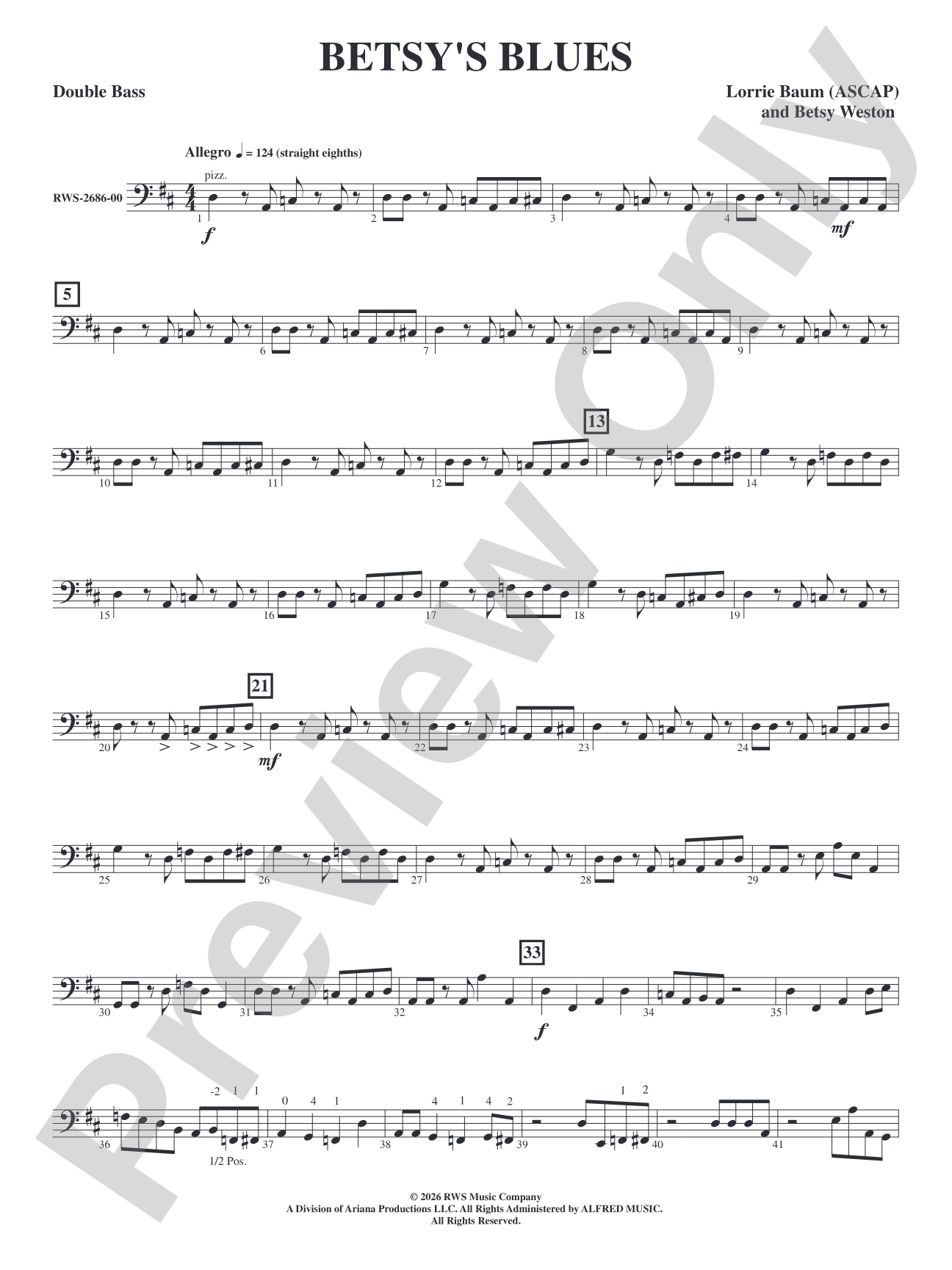

Betsy's Blues: String Bass
By Lorrie Baum and Betsy Weston
Grade: 3
Item: 98-PC-0000060_SB
$3.00
Pickup currently not available
Description
Betsy's Blues brings together the creative talents of composer Lorrie Baum and her sister, Betsy Weston, in a lively and spirited piece for Grade 2 string orchestra. Students will discover a variety of musical treats in Betsy's Blues, including finger slides, catchy melodies that move through every section, and the delightful surprise of unexpected rhythms. A brief pizzicato section adds color and character, giving the music a fresh, toe-tapping energy, while the optional piano and drum set parts add an extra touch of pizzazz. Betsy's Blues is a crowd-pleaser that brings energy and excitement to any classroom or concert stage---making it a must-have addition to your orchestra library.


Betsy's Blues: String Bass isn't in MakeMusic Cloud just yet...but it could be. Let us know you'd like to see it, and you'll help shape what comes next. In the meantime, start a free trial and dive into thousands of interactive titles your students can play along with today.
Request This Title
Tell us you want it.
Start Your Free Trial
Explore everything that's ready to play right now.
Sample Audio
1
Audio File
--:--
0:00
0:00
Sample Video
Additional Details
Series:
RWS - Concert Strings
Publisher:
RWS Music Company
SKU:
98-PC-0000060_SB
More about this title
Why we love this
Lorrie Baum and Betsy Weston have crafted something rare at the Grade 2 level: a piece that sounds sophisticated without demanding technical heroics. The interplay between melodic interest, rhythmic surprise, and textural variety (finger slides, pizzicato sections, optional rhythm section) keeps both players and audiences engaged from start to finish.
What to expect
Betsy's Blues has the swagger of a blues number without the harmonic complexity. It bounces along with infectious energy, courtesy of unexpected rhythmic turns and the contrast between singing melodic passages and the bright, percussive character of the pizzicato sections. The overall effect is refreshing and alive, like a piece designed by composers who remember what it feels like to sit in a student orchestra.
Who it's for
String orchestras at the Grade 2 level seeking repertoire that balances accessibility with genuine musicality. This works equally well for classroom ensembles building foundational skills and serious young orchestras ready to tackle articulation, texture, and rhythmic variety.
How to get the most out of it
- Shape the catchy melodies expressively as they pass between sections. Have violins and violas practice trading phrases with cellos and basses to ensure each voice sings clearly.
- Coordinate the finger slides with your section leaders first. Once they own the technique and timing, the rest of the ensemble will follow with confidence and style.
- If using the optional drum set and piano parts, bring them in for rehearsals early and let them anchor the rhythmic character, especially during sections with unexpected rhythms.
- Nail the pizzicato section in isolation before putting it back into context. Clean attacks and unified release make all the difference in capturing that toe-tapping energy.
How to use it
Open a concert with this piece to establish an energetic, welcoming tone. Alternatively, pair it with a contrasting slow work to showcase your orchestra's range in a single program. It also serves as an excellent mid-year or end-of-year performance that celebrates student progress without requiring months of rehearsal.
Skills your students will build
- Executing finger slides with control and musicality
- Trading melodic lines between instrumental sections
- Reading and performing rhythmic syncopation and unexpected metric shifts
- Producing clean pizzicato attacks and releases
- Balancing ensemble texture when optional piano and drum set are included