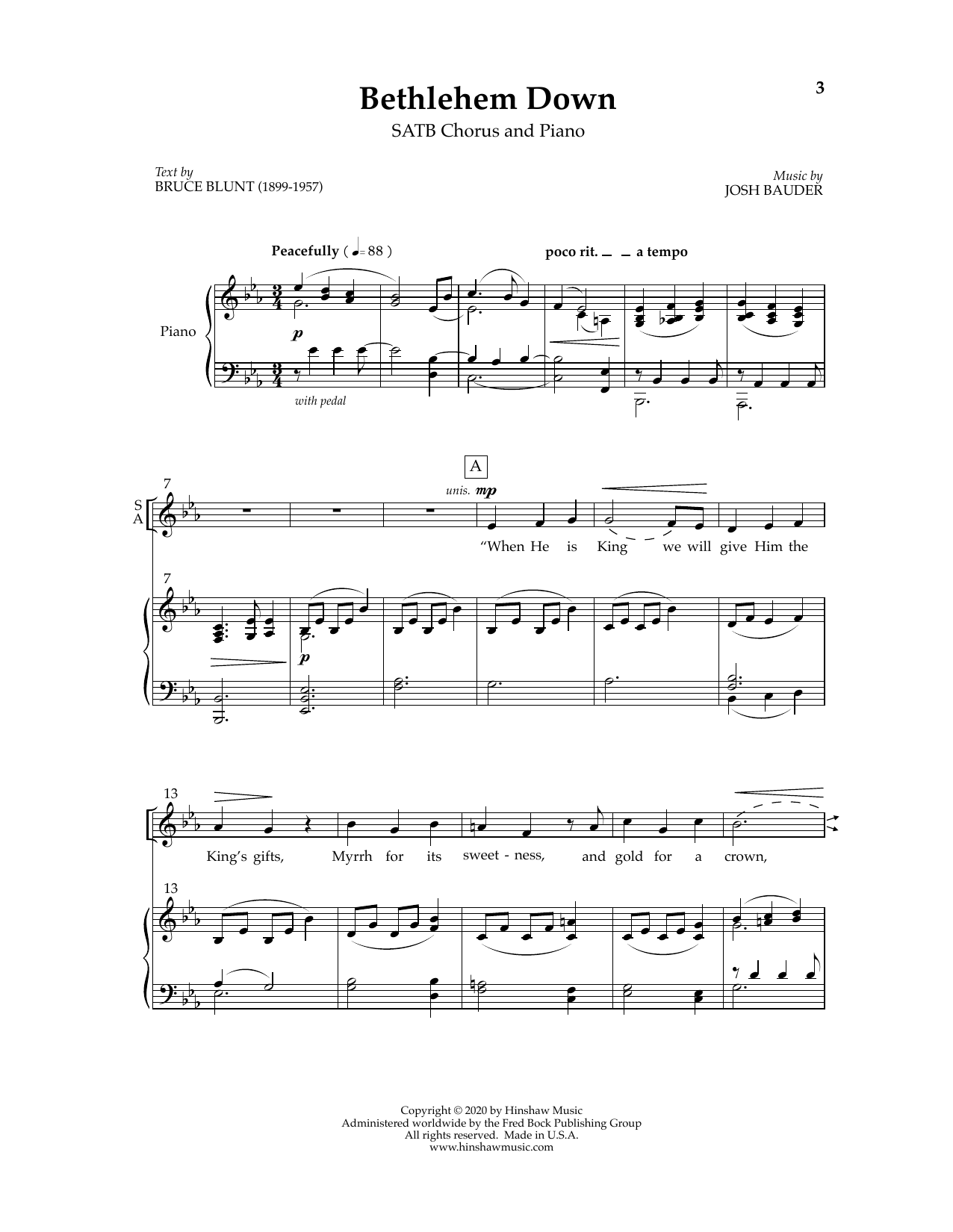
Bethlehem Down: SATB Choral Octavo

By Josh Bauder

Item: 35-DS00468025

Digital Download
$2.99
Description

Bethlehem Down: SATB Choral Octavo isn't in MakeMusic Cloud just yet...but it could be. Let us know you'd like to see it, and you'll help shape what comes next. In the meantime, start a free trial and dive into thousands of interactive titles your students can play along with today.

Sample Audio
No sample audio found.
Sample Video
Additional Details
Publisher: Hal Leonard
Page Count: 11
SKU: 35-DS00468025

More about this title

Why we love this

Bauder brings fresh harmonic language to a beloved carol, creating something that feels both rooted in tradition and distinctly contemporary. The writing sits comfortably for SATB voices while offering enough textural variety to keep singers engaged throughout the piece.

What to expect

Intimate and reflective, with harmonic warmth that shifts subtly beneath the familiar melody. The piece invites quiet attention rather than grand proclamation, making space for the carol's gentle, contemplative character to emerge.

Who it's for

Intermediate to advanced SATB choirs seeking a concert arrangement of Bethlehem Down that steps beyond standard holiday fare. Directors programming mixed sacred and secular repertoire will find this a sophisticated addition to winter programming.

How to get the most out of it

  • Attend to the harmonic color in each phrase. Bauder's chord choices reward careful intonation, particularly in moments where voices move in parallel motion.
  • Balance the melodic material between sections. The tune may migrate among voices, so mark who carries the primary line at each moment to avoid muddiness.
  • Let the accompaniment breathe. This arrangement benefits from slight space between harmonic shifts rather than pushing straight through.

How to use it

This works beautifully in a December concert focused on lesser-known carols or as a bridge between sacred and secular winter music. Consider pairing it with other modern carol arrangements to showcase how contemporary composers expand the genre.

Skills your students will build

  • Singing in contemporary harmonic language while maintaining traditional melodic roots
  • Balancing ensemble blend across multiple vocal lines with non-traditional voice leading
  • Interpreting dynamic and textural variety within a single melody

You May Also Like