
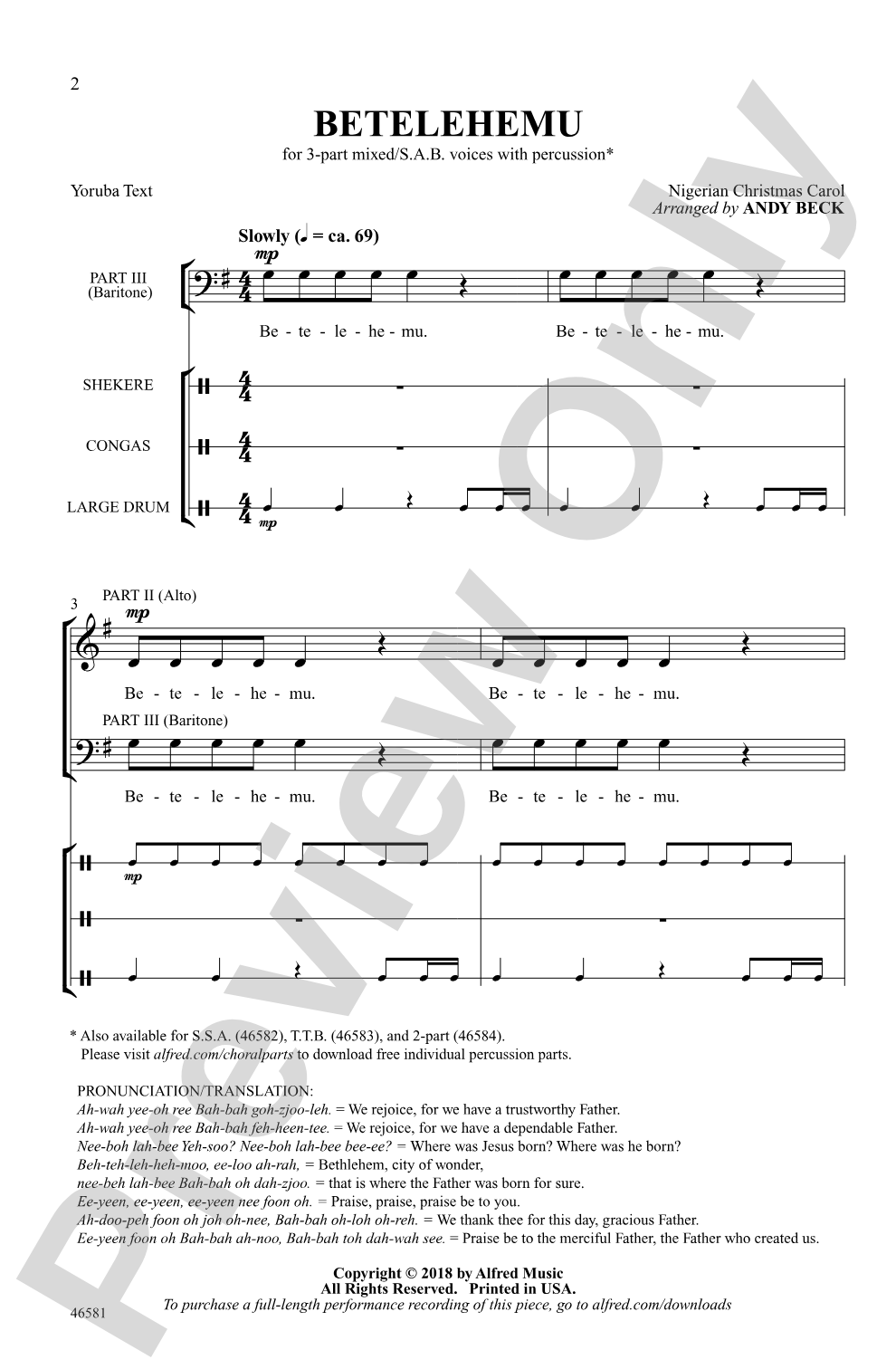
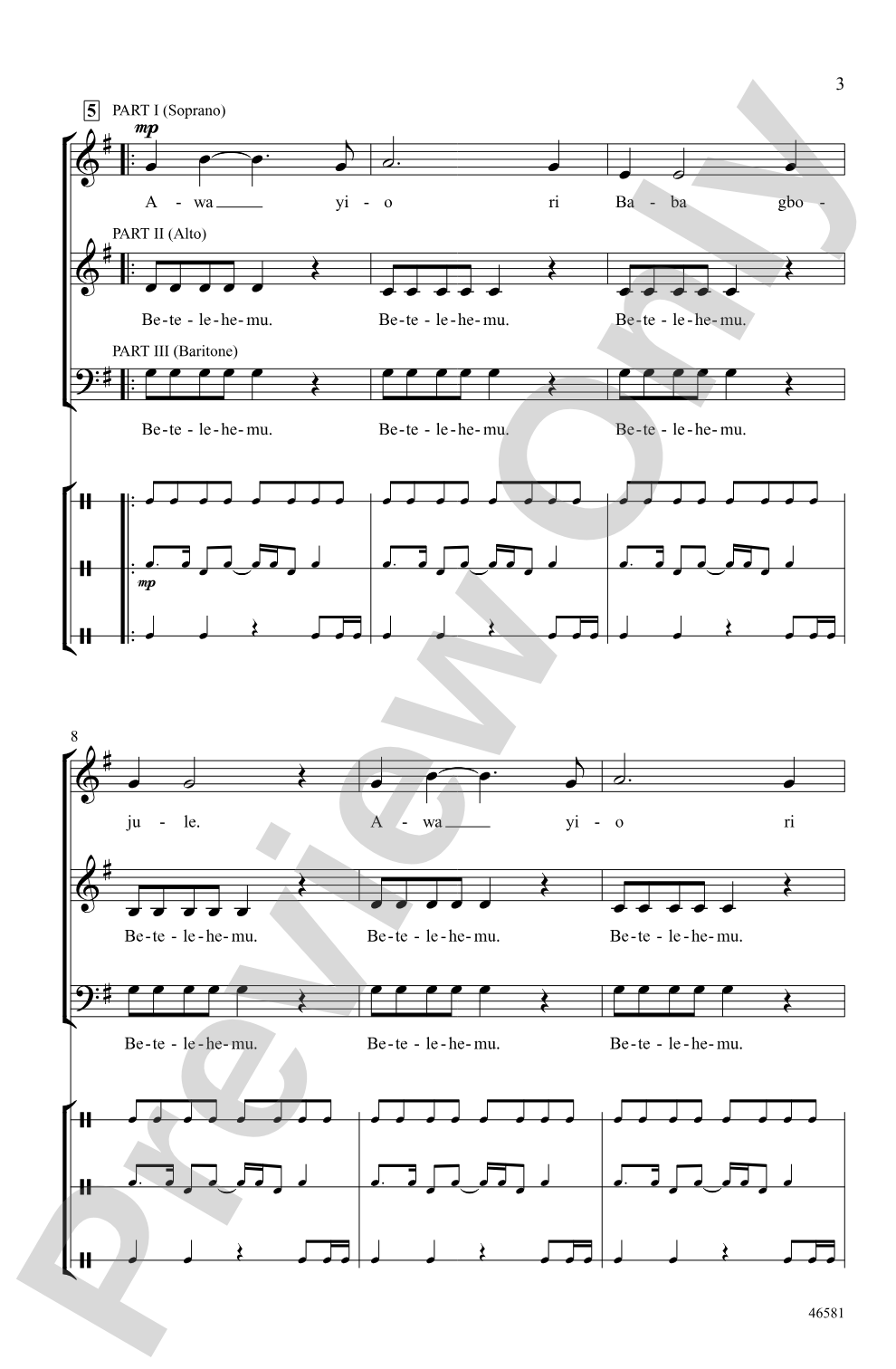
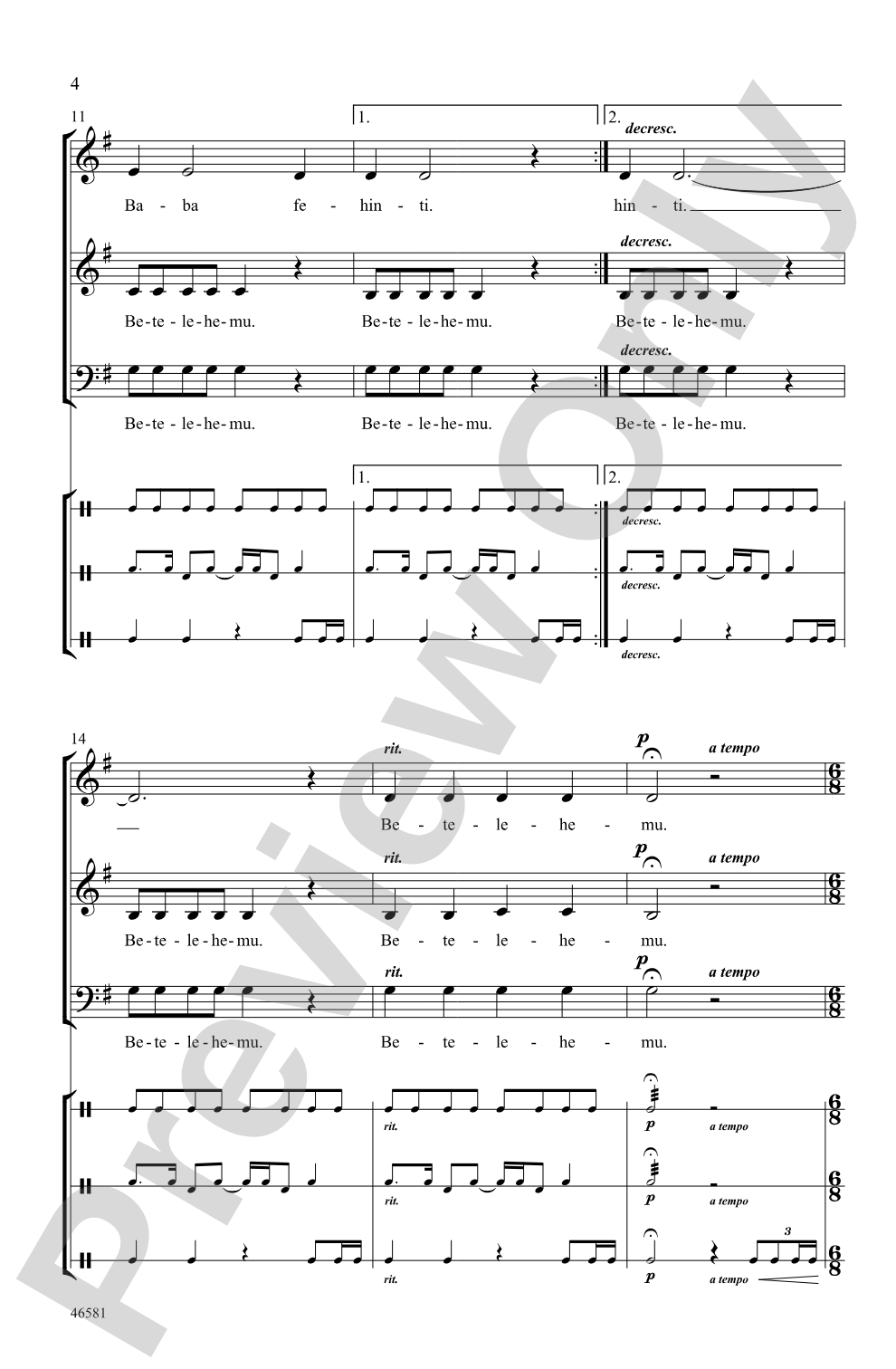

Betelehemu: 3-Part Mixed / SAB, Choral Octavo
Nigerian Christmas Carol, arr. Andy Beck
Item: 00-PO-0005747

$2.05
Minimum order quantity: 10 copies
Please note: Under U.S. copyright law, you must purchase the exact number of copies needed for your ensemble. Printing, duplicating or sharing additional copies is strictly prohibited.
Pickup currently not available
Related Items
Betelehemu: SSA Choral Octavo |
$2.05
|
View | |
Betelehemu: TTB Choral Octavo |
$2.05
|
View | |
Betelehemu: 2-Part Choral Octavo |
$2.05
|
View | |
Betelehemu: 3-Part Mixed / SAB, Choral Octavo |
$2.50
|
View | |
Betelehemu: SSA Choral Octavo |
$2.05
|
View | |
Betelehemu: TTB Choral Octavo |
$2.05
|
View | |
Betelehemu: 2-Part Choral Octavo |
$2.05
|
View |
Description
A captivating chant opens this a cappella arrangement of the Nigerian Christmas carol, before breaking into a joyous, rhythmic celebration. This well-voiced adaptation allows even developing groups to sing a beloved staple of choral repertoire. Optional percussion parts add to the multicultural excitement!


Don't just read it, hear it, play along with it, and watch your students grow with it. In MakeMusic Cloud, Betelehemu: 3-Part Mixed / SAB, Choral Octavo comes alive with professional accompaniment, adjustable tempo, and built-in practice tools that turn solo practice into real progress.
Open in the Player
Jump straight in and assign it today.
Start Your Free Trial
Open this title and explore the full library in minutes.
Sample Audio
1
Audio File
--:--
0:00
0:00
Sample Video
Additional Details
Series:
Alfred Choral Designs
Publisher:
Alfred Music
Page Count:
12
SKU:
00-PO-0005747
Instrumentation:
with Percussion
More about this title
About the Arranger: Andy Beck

Andy Beck leads choral publications at Alfred Music and has established himself as one of the most performed arrangers in American choral music, with over 450 works in print spanning choral octavos, vocal resources, and children's musicals. His pedagogical contributions include three widely adopted sight-singing resources: Sing at First Sight, Foundations in Choral Sight Singing, and Vocalize! 45 Vocal Warm-Ups That Teach Technique. A trained tenor with degrees from Ithaca College and Northwest Missouri State University, Beck actively conducts honor choirs across the Southeast, guest clinics throughout North America, and serves as both composer and adjudicator for state-level choral festivals.
Beyond his publishing role, Beck remains deeply invested in performance and education. He has sung with the North Carolina Master Chorale Chamber Choir and worked as an Alfred studio singer since 1992, combining his conducting and performance experience with a commitment to music literacy and choral artistry. His arrangements consistently reflect both accessibility for developing choirs and musical sophistication, making his catalog a trusted resource for directors seeking quality repertoire that engages singers at multiple levels.
Why we love this
Beck's arrangement respects the carol's spiritual opening while capturing the infectious rhythmic energy that makes this Nigerian piece so rewarding to perform. The SAB voicing sits genuinely singable for mixed ensembles still building their ranges and confidence, without sacrificing the harmonic color that draws audiences in. Optional percussion parts invite groups to lean into the cultural context and add orchestral polish without requiring advanced instrumental skill.
What to expect
The piece opens in contemplative space, with voices moving in unison and near-unison over a spiritual foundation. When the rhythmic celebration arrives, the mood shifts to warmth and movement, driven by percussion that feels organic rather than added-on. The overall arc moves listeners from reflection into participatory joy.
Who it's for
Directors of developing mixed choirs, community ensembles, and holiday programs seeking substantive Christmas repertoire beyond standard arrangements. This works equally well for high school groups building confidence and for mature community choirs wanting to add multicultural depth to their concert programming.
How to get the most out of it
- Establish the chant opening with clarity and restraint; let the unaccompanied voices define the spiritual character before the rhythmic material enters.
- Bring out the percussion parts during rehearsal even if your group hasn't added them yet. Hearing the full rhythmic tapestry helps singers lock into the groove and understand the arrangement's architecture.
- Balance the parts so upper voices cut through without strain. SAB textures can muddy if sopranos aren't singing with space and line above altos and basses.
- Consider staging the transition from chant to rhythmic section as a moment of transformation. A small shift in body posture or spacing can signal to the audience that the piece is about to lift.
How to use it
Place this strategically in a Christmas concert to bridge secular and sacred repertoire, or build an entire set around African and diaspora carols. The spiritual opening pairs beautifully before festive seasonal fare, allowing programmers to tell a more complete cultural story about Christmas music. Works especially well in January concerts or winter celebrations that reach beyond December.
Skills your students will build
- Reading rhythmic patterns in unison and simple harmony
- Sustaining open vowels in a cappella singing
- Ensemble balance in three-part mixed voicing
- Responding to percussion cues and rhythmic integrity
- Navigating the shift from lyrical to rhythmic material within a single piece