

Betelehemu: SATB Choral Octavo
Nigerian Christmas Song
By Via Olatunji and Wendell Whalum / arr. Barrington Brooks
Item: 00-PO-0002681

$2.05
Minimum order quantity: 20 copies
Pickup currently not available
Description
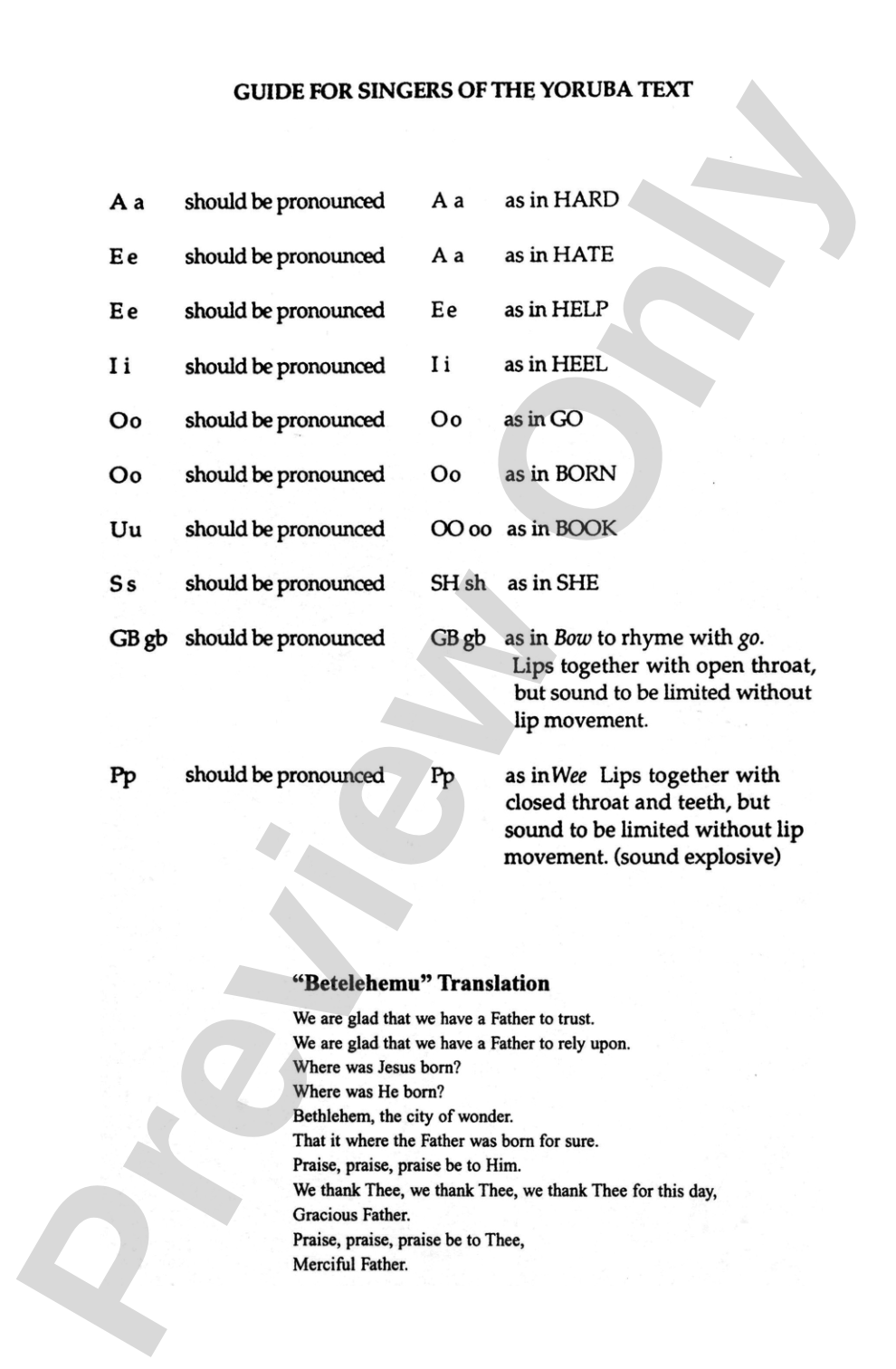
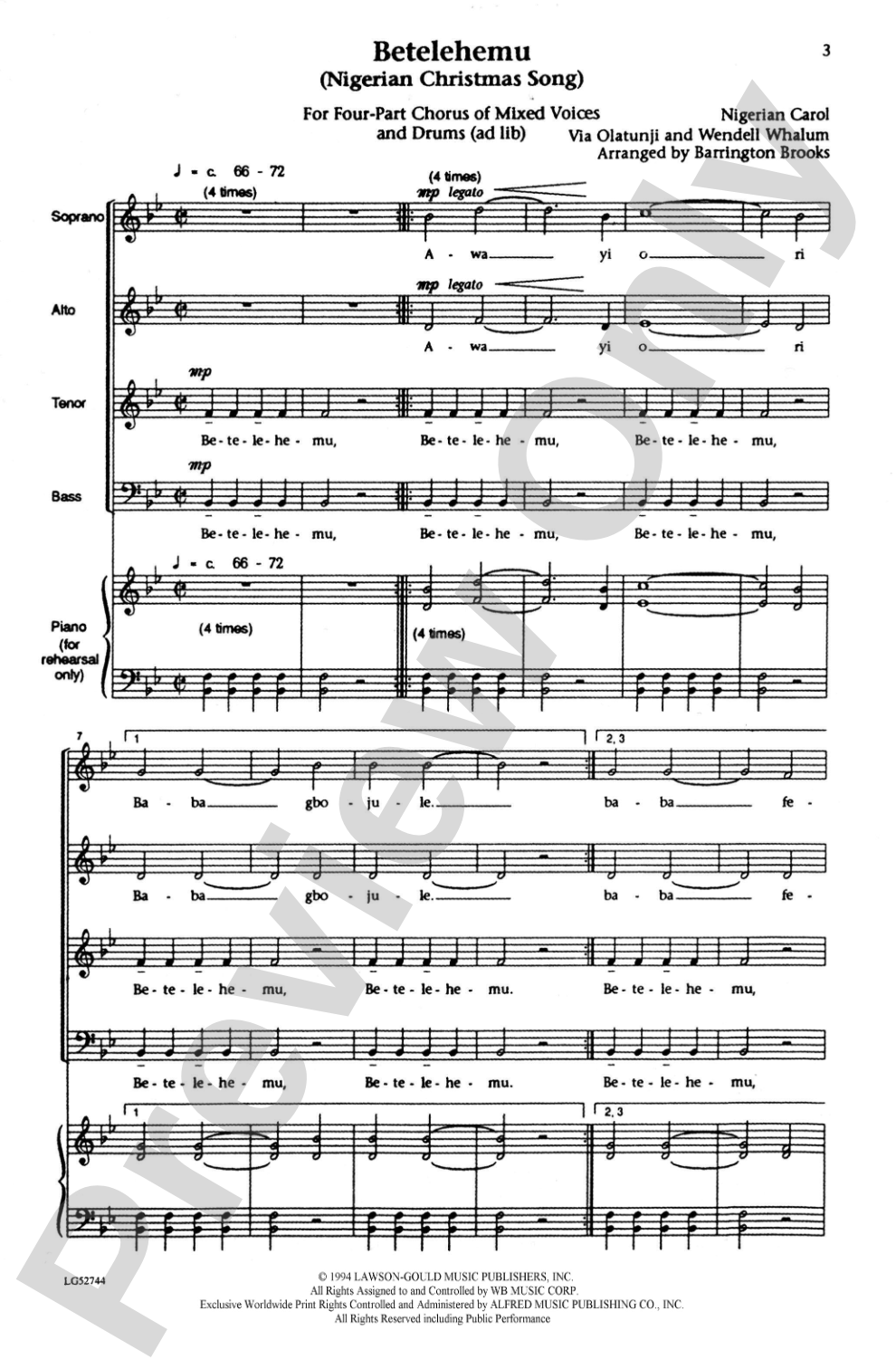
This Nigerian carol, sung a cappella or with optional percussion (conga, bongos, tambourines), is a remarkable piece, with the original Yoruba text throughout. A pronunciation guide is included. This title is available in Music Prodigy.


Don't just read it, hear it, play along with it, and watch your students grow with it. In MakeMusic Cloud, Betelehemu: SATB Choral Octavo comes alive with professional accompaniment, adjustable tempo, and built-in practice tools that turn solo practice into real progress.
Open in the Player
Jump straight in and assign it today.
Start Your Free Trial
Open this title and explore the full library in minutes.
Sample Audio
1
Audio File
--:--
0:00
0:00
Sample Video
Additional Details
Series:
Lawson-Gould
Publisher:
Alfred Music
Page Count:
12
SKU:
00-PO-0002681
More about this title
About the Composer: Babatunde Olatunji
Babatunde Olatunji (1927-2003) was a Nigerian percussionist, composer, and cultural ambassador who brought African rhythms and traditions to global audiences. His groundbreaking work in the 1960s and beyond demonstrated that African music could stand alongside Western classical traditions, not as a novelty but as a vital artistic voice. Olatunji's compositions and arrangements honor his Yoruba heritage while creating entry points for singers worldwide to engage authentically with African sacred music.
Why we love this
This arrangement captures the warmth and rhythmic vitality of a Nigerian Christmas celebration without requiring your singers to compromise the integrity of the original Yoruba text. The optional percussion parts invite meaningful collaboration with your rhythm section, and the included pronunciation guide removes the barrier that often keeps choirs away from music in non-English languages. It's a sophisticated, accessible way to diversify your holiday programming.
What to expect
Betelehemu radiates joy and communal warmth, with a melody that feels both grounded in African soil and immediate in its emotional directness. The rhythmic propulsion under the voices creates forward motion that invites movement and physical engagement. Singing this piece connects you to a centuries-old celebration tradition while honoring a specific cultural voice.
Who it's for
This octavo works for choirs with SATB voices ready to engage with non-English repertoire and pronunciation challenges. Intermediate to advanced choirs benefit most, though the accessibility of the melody and the support of the pronunciation guide make it viable for community and educational ensembles seeking authentic global holiday music.
How to get the most out of it
- Spend time with the pronunciation guide before rehearsal, then isolate the opening phrases with your ensemble so singers feel confident with the Yoruba text. This builds ownership of the piece rather than treating it as phonetic recitation.
- If adding percussion, begin rehearsals without it to establish vocal blend and phrasing, then layer in the congas and bongos gradually so the drums enhance rather than overshadow the voices.
- Shape the dynamic contour with attention to the call-and-response character of the piece; the alternation between sections should feel conversational, not mechanical.
- Consider the acoustics of your performance space when deciding between a cappella presentation and the percussion-accompanied version. A cappella emphasizes vocal purity; percussion adds celebratory energy.
How to use it
Place this as a centerpiece in a multi-cultural holiday concert, where it can anchor a set of carols from different traditions. It works equally well as a concert opener that sets a celebratory tone, or paired with other sacred choral works to demonstrate the breadth of Christmas music beyond European sources. The percussion option makes it flexible for both concert and community festival settings.
Skills your students will build
- Reading and pronouncing Yoruba text with linguistic accuracy
- Sustaining blend in SATB voicing while maintaining rhythmic precision
- Responding to call-and-response phrasing across voice sections
- Balancing vocal parts with optional percussion accompaniment
- Engaging with African musical traditions and their historical context