

Best of Beethoven: 1st Violin
Music by Ludwig van Beethoven / arr. John O'Reilly
Grade: 2
Item: 00-PC-0000406_VN1
$5.99
Pickup currently not available
Description
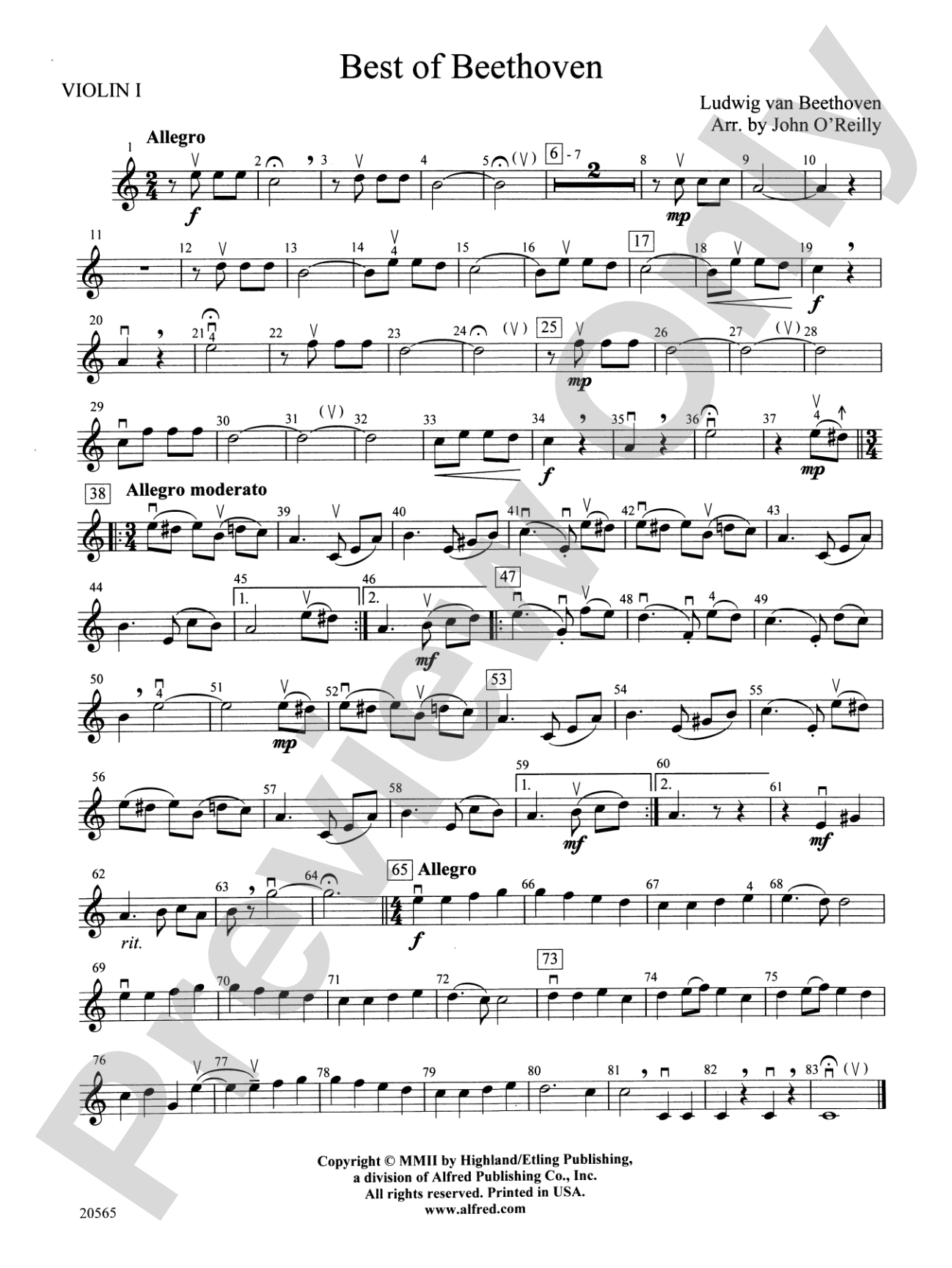
Three of Beethoven's most well-known compositions are combined in this wonderful arrangement by John O'Reilly. The opening features the powerful beginning section of the fifth symphony followed by the flowing theme of the piano classic Für Elise. The arrangement concludes with a stirring rendition of the "Ode to Joy" theme from the ninth symphony. Correlated with Strictly Strings, Book 2, page 17.


Don't just read it, hear it, play along with it, and watch your students grow with it. In MakeMusic Cloud, Best of Beethoven: 1st Violin comes alive with professional accompaniment, adjustable tempo, and built-in practice tools that turn solo practice into real progress.
Open in the Player
Jump straight in and assign it today.
Start Your Free Trial
Open this title and explore the full library in minutes.
Sample Audio
1
Audio File
--:--
0:00
0:00
Sample Video
No sample videos found.
Additional Details
Series:
Highland/Etling Strictly Strings
Publisher:
Alfred Music
Page Count:
36
SKU:
00-PC-0000406_VN1
More about this title
About the Composer: Ludwig van Beethoven
Ludwig van Beethoven (1770-1827) fundamentally changed what symphonic music could express. Working across the Classical and Romantic periods, he expanded the emotional range and structural ambition of instrumental music, creating works that balanced formal clarity with unprecedented passion and depth. His nine symphonies stand as cornerstones of the repertoire, and pieces like the Fifth Symphony and the "Ode to Joy" remain instantly recognizable across the world.
Beethoven's influence on music education runs deep. His works teach young musicians how to shape thematic material, build dramatic tension, and sustain long musical lines. Even in arrangement, his music demonstrates the power of clear melodic writing and purposeful harmonic movement.
Why we love this
John O'Reilly has crafted an exceptional package here by pairing three of classical music's most iconic moments at a grade where young orchestras can actually engage with them meaningfully. The opening impact of the Fifth Symphony's famous motif, the lyrical beauty of Für Elise, and the triumphant conclusion with "Ode to Joy" create an arc that builds confidence and sustains audience interest. This arrangement proves that Grade 2 orchestras can program repertoire that sounds substantial and purposeful.
What to expect
Opening with dramatic urgency, the Fifth Symphony's famous four-note gesture immediately establishes presence and command. The arrangement then opens into the graceful, introspective beauty of Für Elise, allowing players to explore legato playing and expressive phrasing. The piece closes with the joy and affirmation of "Ode to Joy," a theme so familiar that even young musicians feel the satisfaction of bringing it to life together.
Who it's for
Grade 2 string orchestras looking to build repertoire that feels substantial and recognizable. This arrangement is ideal for groups ready to step beyond pedagogical pieces and encounter masterworks that reward careful ensemble work. Directors seeking program variety and pieces that generate genuine audience engagement will find this a smart choice.
How to get the most out of it
- Shape the Fifth Symphony opening with a clear pulse and unified articulation; the power comes from ensemble precision, not force. Let the silence between phrases breathe.
- The Für Elise section invites legato playing and attention to phrase shape. Help your violins understand where the melody wants to land within each phrase.
- Enter the "Ode to Joy" with confidence and lift. This familiar theme carries its own momentum; trust the straightforward harmony and focus on clean ensemble sound.
- Balance the three sections as distinct movements within one piece. A clear ritardando or brief pause between sections helps the ear reset and anticipate what comes next.
How to use it
This three-movement arrangement works beautifully as a standalone concert piece or as a centerpiece in a thematic program exploring Classical and Romantic masters. The dramatic arc and recognizable material make it particularly effective for family concerts, school assemblies, or contests where connecting with a broad audience matters. Consider pairing it with one shorter contemporary piece to balance the program.
Skills your students will build
- Reading and executing articulation across different musical styles
- Shaping phrases with attention to melodic contour and harmonic arrival
- Maintaining ensemble precision through rapid tempo changes and sectional transitions
- Building tonal control across lyrical passages and dramatic climaxes
- Understanding thematic development through three well-contrasted movements