Bertini: Twenty-four Melodious Pieces Sheet Music Preview

Bertini: Twenty-four Melodious Pieces

By Henri Bertini

Item: 00-PC-0005464

Digital Download
$0.99
Description
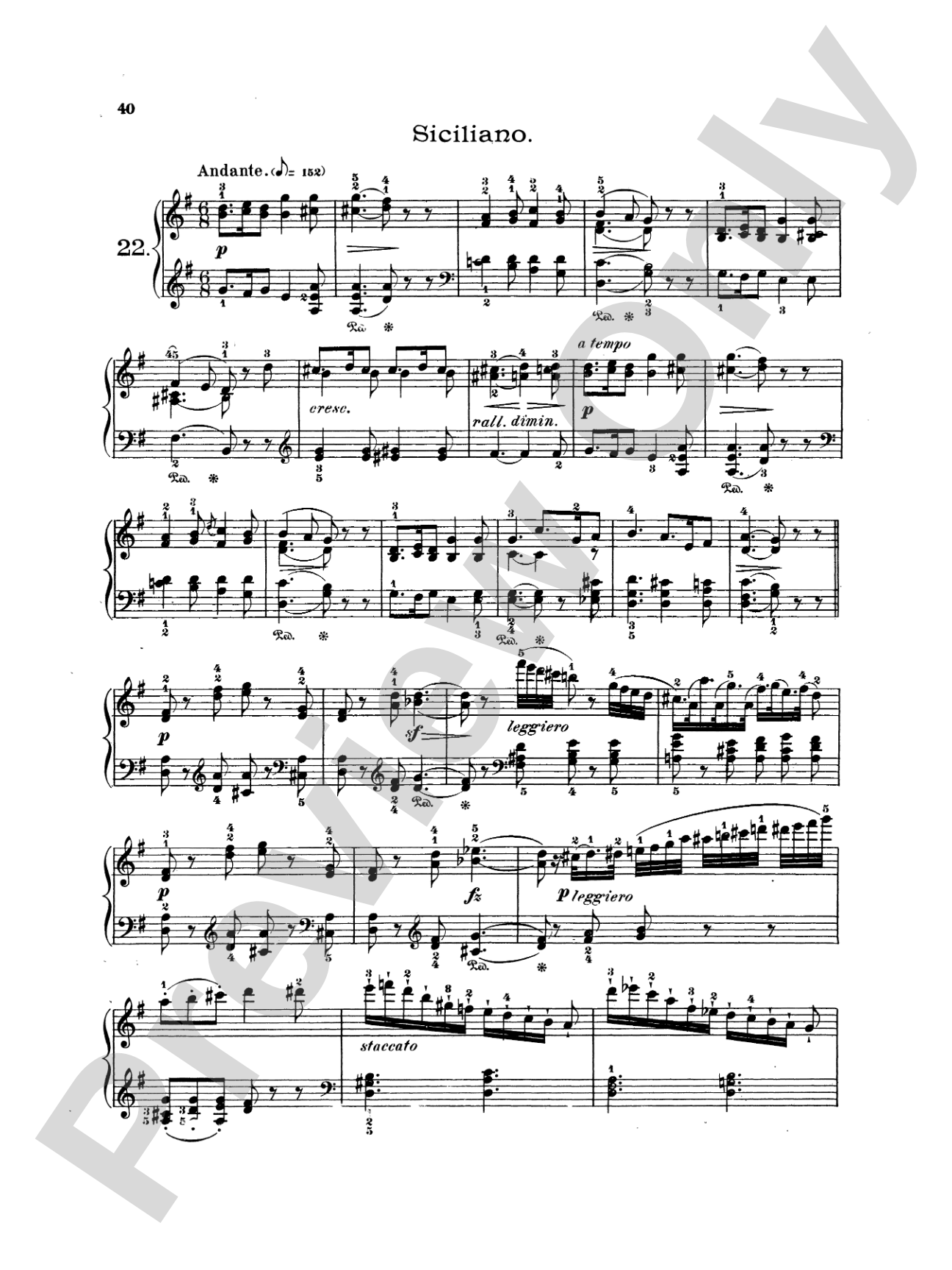
Henri Jérôme Bertini (1798--1876) was a well-known French classical composer and pianist in his time. This collection, Opus 101, includes: Adagio* Aria (A) * Aria (F) * Ballade * Barcarole * Canzonetta * Danse des Montagnards * Marche * Marche Funèbre * Minuet * Nocturno * Polacca Militaire * Polonaise * Priere * Romanza * Rondino (F) * Rondino (G) * Rondo-Valse * Siciliano * Theme * Tyrolienne * Tyrolienne with Variations * Valse (B-flat) * Valse (D).

Don't just read it, hear it, play along with it, and watch your students grow with it. In MakeMusic Cloud, Bertini: Twenty-four Melodious Pieces comes alive with professional accompaniment, adjustable tempo, and built-in practice tools that turn solo practice into real progress.

Sample Audio
No sample audio found.
Sample Video
Additional Details
Series: Kalmus Edition
Publisher: Alfred Music
Page Count: 48
SKU: 00-PC-0005464

More about this title

About the Composer: Henri Bertini

Henri Jérôme Bertini (1798–1876) was a French pianist and composer whose prolific output helped define the character piece repertoire for nineteenth-century keyboard players. Though less remembered today than his contemporaries Chopin and Liszt, Bertini commanded respect as both a virtuoso and a composer of elegantly crafted works that balanced technical display with genuine musical substance.

Bertini's compositions, particularly his numerous opuses for solo piano, were standard fare in conservatory curricula across Europe and America. His writing favors clear melody, transparent harmony, and textures that reward careful voicing without demanding extreme technical demands. This collection exemplifies his gift for producing musically satisfying pieces at intermediate levels of difficulty.

Why we love this

This collection offers 24 distinct character pieces in a single volume, giving students genuine variety without forcing them to hunt through multiple publications. Each piece is self-contained, lyrical, and pianistically rewarding, making this ideal for building repertoire in the intermediate years when students need material beyond studies but before full-length sonatas. The mix of dance forms, nocturnes, and shorter rondos means you can select pieces that match individual student interests and technical focus.

What to expect

The collection breathes with the elegance and restraint of the drawing room; these are pieces meant for intimate performance rather than concert grandeur. You move from the introspection of nocturnes to the sprightly energy of tyroliennes and polonaises, with each piece offering a distinct emotional or stylistic world that feels complete in itself.

Who it's for

Intermediate pianists (approximately grades 4–5) seeking character piece repertoire that builds melody awareness and Romantic-era style without extreme technical hurdles. This collection works equally well for students pursuing classical technique and those exploring piano literature more broadly.

How to get the most out of it

  • Shape the melody with clear phrasing and appropriate rubato; Bertini's Romantic idiom invites gentle flexibility without sacrificing rhythmic integrity.
  • Listen for opportunities to voice inner lines, especially in the slower pieces like the Adagio and Nocturno, where accompaniment patterns can obscure harmonic color if played too uniformly.
  • Approach the dance forms (Polacca Militaire, Polonaise, Tyrolienne) with appropriate character and rhythmic clarity; these pieces rely on stylistic conviction rather than speed.
  • Use the pedal judiciously in the Ballade and Priere, where atmospheric effect matters, but keep articulation crisp in the lighter rondos and valses.

How to use it

Assign individual pieces from this collection as recital repertoire throughout the year, allowing each student to choose based on their current technical and musical focus. You might also pair selections from contrasting pieces in student recitals to showcase interpretive range within a cohesive compositional language.

Skills your students will build

  • Pedal control and release in Romantic character contexts
  • Phrasing across asymmetrical phrase lengths and formal structures
  • Voicing and independence of accompanimental lines
  • Stylistic interpretation of dance forms (polonaise, valse, siciliano)
  • Tempo flexibility and rubato while maintaining metric clarity

You May Also Like